12 Jyotirlinga List: Story, Map and Yatra Guide for Families
Somnath to Grishneshwar: the 12 jyotirlinga list with where each one is, the story behind the pillar of light, and realistic yatra circuits.
It starts with an argument between two gods. According to the Shiva Purana, Brahma and Vishnu once fought over which of them was greater. Suddenly a pillar of fire appeared between them, so tall it had no top and so deep it had no bottom. Vishnu became a boar and dug down. Brahma became a swan and flew up. Neither found the end. Out of that endless column of light stepped Shiva, and the argument was over.
That pillar of light is the idea behind the 12 jyotirlinga list: twelve places where, by tradition, Shiva appeared as jyoti, light, and stayed. Here is the list, the story behind each one, and how families actually plan the yatra.
What is a jyotirlinga?
Every Shiva temple has a linga. Not every linga is a jyotirlinga. The twelve are believed to be places where Shiva manifested himself, which is why bhakts save up for years, plan around exams and harvests and office leave, and still try to "complete the twelve" in one lifetime.
Many devotees learn the list as a child through one short shloka, the Dwadasha Jyotirlinga Stotram. It begins "Saurashtre Somanatham cha, Shrishaile Mallikarjunam" and ends with Ghushmesh at Shivalaya. Nani usually knows it by heart. The grandkids know it by the second day of the trip.
The shloka order runs: Somnath, Mallikarjuna, Mahakaleshwar, Omkareshwar, Baidyanath, Bhimashankar, Rameshwaram, Nageshwar, Kashi Vishwanath, Trimbakeshwar, Kedarnath and Grishneshwar.
Did you know? For three of the twelve, more than one place claims the title. Nageshwar is revered at Dwarka, at Aundha in Maharashtra and at Jageshwar in Uttarakhand; Baidyanath at Deoghar and at Parli; and Bhimashankar has rival claims too. Bhakts visit all of them with equal faith.
The 12 jyotirlinga list, with places
| Jyotirlinga | Where | Nearest city | Best paired with |
|---|---|---|---|
| Somnath | Prabhas Patan, Gujarat | Veraval | Dwarka, Gir, Diu |
| Mallikarjuna | Srisailam, Andhra Pradesh | Hyderabad | Hyderabad city |
| Mahakaleshwar | Ujjain, Madhya Pradesh | Indore | Omkareshwar |
| Omkareshwar | Narmada island, Madhya Pradesh | Indore | Ujjain, Maheshwar |
| Kedarnath | Garhwal Himalaya, Uttarakhand | Rishikesh | Badrinath |
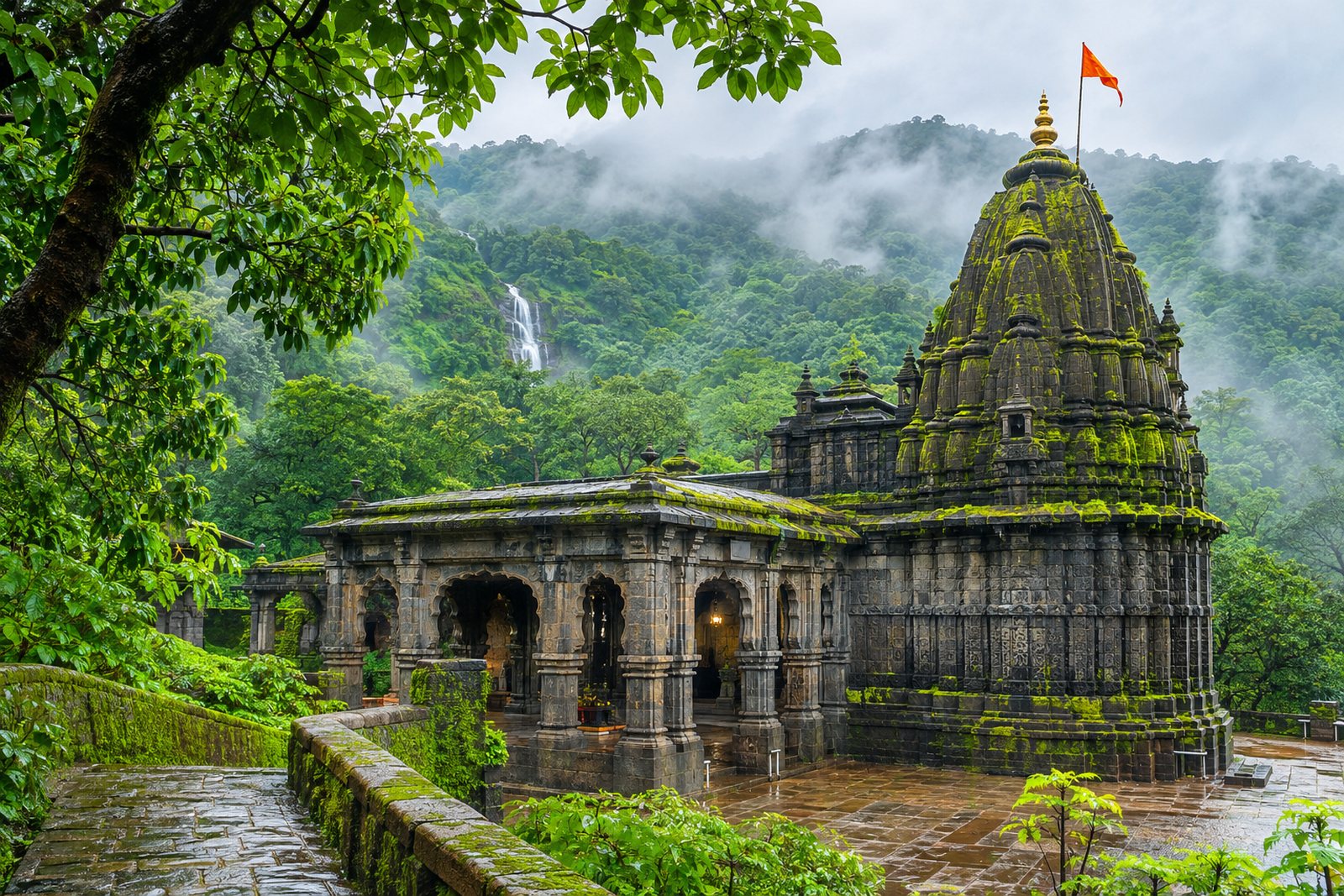
| Bhimashankar | Sahyadri hills, Maharashtra | Pune | Ashtavinayak |
| Kashi Vishwanath | Varanasi, Uttar Pradesh | Varanasi | Sarnath, Prayagraj |
| Trimbakeshwar | Near Nashik, Maharashtra | Nashik | Shirdi |
| Baidyanath | Deoghar, Jharkhand | Deoghar | Basukinath |
| Nageshwar | Near Dwarka, Gujarat | Dwarka | Somnath, Bet Dwarka |
| Rameshwaram | Rameswaram island, Tamil Nadu | Madurai | Madurai, Kanyakumari |
| Grishneshwar | Verul near Ellora, Maharashtra | Aurangabad | Ellora, Ajanta |
Each name opens its own story: the legend, the history, and how to plan that darshan.
A few stories that stay with you
Somnath was raided and rebuilt again and again, and after independence Sardar Patel promised to raise it once more. Mahakaleshwar in Ujjain faces south, and its Bhasma Aarti before dawn is the one pilgrims book in advance. Omkareshwar sits on an island in the Narmada that, people say, is shaped like Om.
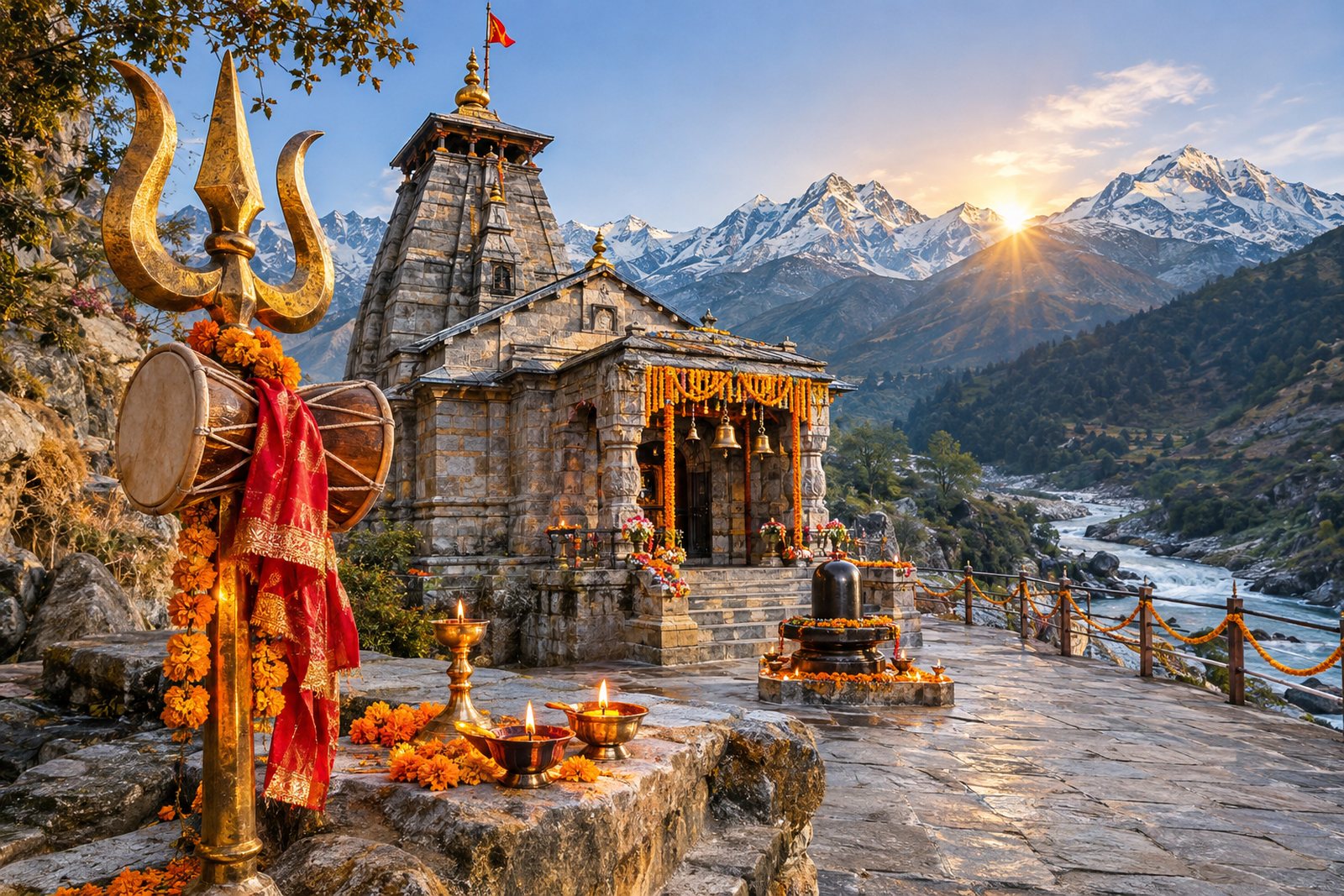
Kedarnath sits at the head of a valley under snow, and after the 2013 floods a huge rock behind the temple, now worshipped as Bhim Shila, is believed to have saved it. Kashi Vishwanath, rebuilt by Ahilyabai Holkar in 1780, now opens onto a wide corridor down to the Ganga. At Rameshwaram, the legend says Sita made the linga out of beach sand. At Grishneshwar, the last of the twelve, a mother's faith brought her son back from a lake.
Every one of the twelve has a story like this. That is half the reason to go.
How to plan a 12 Jyotirlinga yatra
First, the honest truth: almost nobody does all twelve in one trip. They are spread from the Arabian Sea to the Himalaya and the tip of Tamil Nadu. Even with flights, doing them together means weeks of travel, and nani will not thank you. Most families break it into regional yatras over a few years.
- Gujarat (2): Somnath and Nageshwar, with Dwarkadhish in between. Four to five nights. Best October to March.
- Madhya Pradesh (2): Mahakaleshwar in Ujjain and Omkareshwar, both a short drive from Indore. Two to three nights. Book the Bhasma Aarti early.
- Maharashtra (3): Trimbakeshwar, Grishneshwar and Bhimashankar, usually with Shirdi. Four to five nights. Monsoon is green but slippery at Bhimashankar.
- Kedarnath (Uttarakhand): Opens only from roughly May to October or November, needs Uttarakhand yatra registration, and is best paired with Badrinath as a Do Dham.
- Kashi Vishwanath (UP): Two to three nights in Varanasi with the Ganga aarti and Sarnath.
- Baidyanath (Jharkhand): Deoghar, often with Basukinath. Shravan brings the huge kanwar mela.
- Mallikarjuna (AP): Srisailam via Hyderabad, through forest ghats.
- Rameshwaram (TN): With Madurai's Meenakshi temple and Kanyakumari.
The smart order is by season, not by shloka. Do Kedarnath when it is open, Gujarat and Rameshwaram in winter, and keep Shravan and Mahashivratri for places where you are ready for crowds.
For a first multi-jyotirlinga trip, the Maharashtra Jyotirlinga Yatra covers three in one go. Other easy starting points are the Dwarka Somnath Yatra, Mahakal & Omkareshwar Darshan, Kashi Vishwanath Darshan and the Do Dham Yatra for Kedarnath.
Practical tips for every jyotirlinga
- Check before you go: Darshan timings, special aartis, dress rules and phone rules differ at each temple and change often. Always check with the temple trust.
- Crowds: Mondays, Shravan, Mahashivratri and long weekends mean long queues. Weekdays outside festivals are calmest.
- Elders: Most temples have some arrangement for senior citizens and wheelchairs. Ask at the counter, and keep an extra day so nobody is rushed.
- Packing: Comfortable clothes, a shawl, a small bag for prasad, and socks for hot or cold stone floors.
Our tip: Keep a small notebook for the yatra. Write the date and one line after each darshan. Years later, when you finally reach the twelfth, that notebook becomes the best prasad you bring home.
Why the twelve stay with you
The idea is simple: light without beginning or end. But every jyotirlinga gives that idea a different face, a coastline, a river island, a snowy valley, a sand linga on a beach. Complete the twelve or not, each darshan stays.
Planning the yatra? Read our Shirdi Nashik Trimbakeshwar guide or browse all Aurangabad holiday packages.
Frequently asked questions
What are the 12 jyotirlingas of India?
Somnath, Mallikarjuna, Mahakaleshwar, Omkareshwar, Kedarnath, Bhimashankar, Kashi Vishwanath, Trimbakeshwar, Baidyanath, Nageshwar, Rameshwaram and Grishneshwar. They are spread across Gujarat, Andhra Pradesh, Madhya Pradesh, Uttarakhand, Maharashtra, Uttar Pradesh, Jharkhand and Tamil Nadu.
Which is the first jyotirlinga?
Somnath in Gujarat is called the first jyotirlinga because the Dwadasha Jyotirlinga Stotram names it first. Grishneshwar near Ellora is named last.
Which state has the most jyotirlingas?
Maharashtra, with Bhimashankar, Trimbakeshwar and Grishneshwar. Some traditions also place Baidyanath at Parli and Nageshwar at Aundha in Maharashtra.
Can all 12 jyotirlingas be visited in one trip?
It is possible on a very long, tiring trip, but most families do them in four to six separate yatras by region, such as Gujarat, Madhya Pradesh, Maharashtra, and Kedarnath in season.
What is the difference between a jyotirlinga and a shivling?
A shivling is any linga form of Shiva worshipped in a temple or home. A jyotirlinga is one of the twelve shrines where, by tradition, Shiva appeared as a pillar of light and is believed to be present himself.