Kedarnath Jyotirlinga History: The Temple the Flood Could Not Take
A bull that dived into the earth, a temple at the head of the Mandakini and a boulder in 2013. Kedarnath's story and how to plan your yatra.
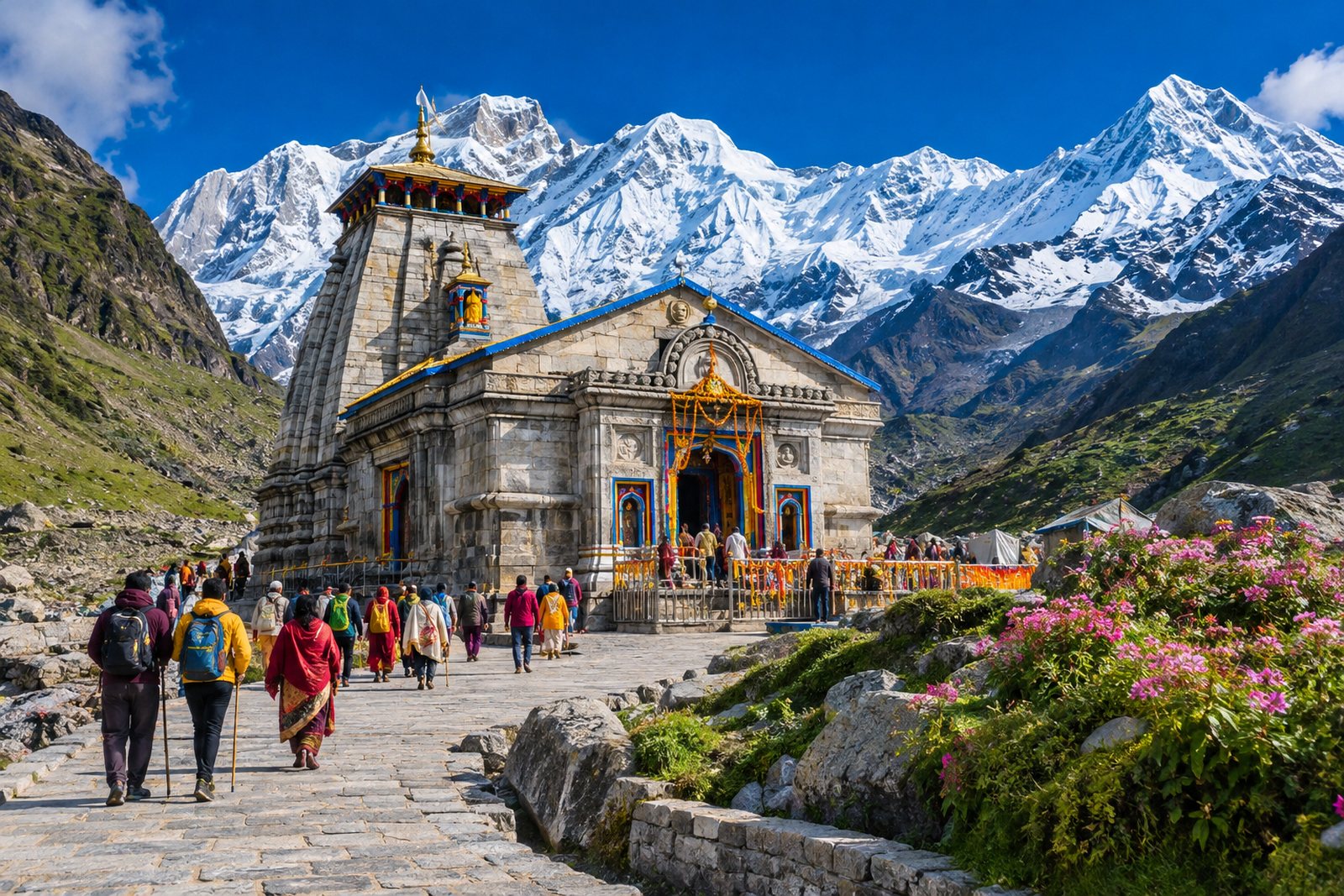
The last kilometre is the hardest. Your legs are done, the air is thin, and the pony behind you will not stop jingling its bell. Then the path turns and there it is: a squat grey temple of heavy stone, flags whipping in the cold wind, and behind it a wall of snow peaks so close they look painted on. People around you stop walking. Someone starts shouting "Har Har Mahadev" and suddenly everyone is shouting it.
This is the Kedarnath Jyotirlinga, at the head of the Mandakini valley in Uttarakhand, and the highest of the twelve. Here is its story, what happened in 2013, and how to plan your yatra.
The legend: Bhole Baba hides from the Pandavas
According to the Mahabharata tradition, after the war at Kurukshetra the Pandavas were carrying the weight of killing their own kin. They went looking for Shiva to seek forgiveness. Shiva did not want to be found so easily.
He took the form of a bull and mingled with a herd in the Himalayas. Bhima, being Bhima, stood with his legs spread across a valley so the cattle had to pass between them. Every animal went through except one. The bull began to sink into the earth, and Bhima caught it from behind. Only the hump stayed above ground.
That hump is what is worshipped at Kedarnath, a rough triangular rock linga, not the smooth cylinder you see at most temples. Local legend says the other parts of the bull appeared at four other places, together called the Panch Kedar: Tungnath, Rudranath, Madhyamaheshwar and Kalpeshwar.
History of Kedarnath temple
Tradition credits the Pandavas with the first temple here, and Adi Shankaracharya with reviving the shrine. The present stone temple is many centuries old, built of large grey slabs that have held up against snow, wind and worse. Just behind it is the samadhi of Adi Shankaracharya, rebuilt after 2013, with a large statue of the sage.
Every winter the temple closes and snow buries the valley. The deity's doli is carried down to the Omkareshwar temple at Ukhimath, where worship continues until the doors open again in spring. The whole valley turns out to watch the doli travel.
Did you know? The Rawal, the chief priest of Kedarnath, traditionally comes from the Veerashaiva tradition of Karnataka. A temple high in the Garhwal Himalaya, led for generations by priests from the far south. That is India.
June 2013: the night of the flood
In June 2013, extreme rain and a glacial lake bursting above Kedarnath sent a wall of water, mud and boulders down the valley. The loss of life was enormous, and towns along the Mandakini were badly hit. It remains one of the worst disasters in the region's memory.
And yet the temple stood. A huge boulder came to rest just behind it, and many believe it split the flow and pushed the water around the walls. Today that rock is called Bhim Shila, and pilgrims touch it and pray beside it. Whatever you believe, standing there is a quiet moment.
The town has since been rebuilt, with new ghats, walls and paths.
Bhairavnath, Vasuki Tal and the valley
Just above the temple is Bhairavnath, the guardian of Kedarnath, who is said to protect the shrine when it is closed in winter. It is a short, steep climb with a superb view of the temple. For strong trekkers, Vasuki Tal is a high-altitude lake further up, best done with a local guide.
Down in the valley, Guptkashi and Sonprayag are the usual bases, with Guptkashi's own old Vishwanath temple worth a stop.
Kedarnath is almost always paired with Badrinath. The Do Dham Yatra package covers both, with stays in the valley and a car on the mountain roads, so you can save your energy for the trek.
How to plan your Kedarnath yatra
- Registration: Uttarakhand yatra registration is mandatory for Kedarnath and Badrinath. Do it before you travel.
- Season: Open roughly May to October or November; exact dates are announced each year. Monsoon (July-August) brings landslide risk, so May-June and September-October are the most popular windows.
- Trek: Roughly 16 to 18 km one way from Gaurikund. Ponies, palkis and helicopters from the valley are options, subject to weather and booking.
- Health: At this altitude, walk slowly, drink water and rest. Elders or anyone with heart or lung issues should consult a doctor first.
- Pack: Warm layers even in summer, rain gear, good shoes and basic medicines.
- Darshan: Queues can be long in peak weeks; timings change, so check with the temple committee.
Our tip: Spend a night at Kedarnath rather than doing it in one day. Evening aarti with the peaks turning pink, and an early morning darshan before the crowds come up the trail, is the real reward.
Why Kedarnath stays with you
You earn this darshan. Every step of the trail, every gasp of thin air, the cold that gets into your fingers. And then a stone temple that has outlasted snow, centuries and a flood. Of all 12 Jyotirlingas, Kedarnath is the one that tests you, and the one people talk about for the rest of their lives.
Planning the yatra? Read our Badrinath Kedarnath Do Dham guide or browse all Guptkashi holiday packages.
Frequently asked questions
Why is the Kedarnath linga shaped like a hump?
According to the Pandava legend, Shiva took the form of a bull to avoid the Pandavas and sank into the earth here. Only his hump remained above ground, and that is worshipped at Kedarnath as a triangular rock linga.
When does Kedarnath temple open and close?
Kedarnath is usually open from around late April or May to October or November. Exact opening and closing dates are announced each year, and in winter the deity is worshipped at Ukhimath.
Is registration needed for Kedarnath yatra?
Yes. The Uttarakhand government requires yatra registration for Kedarnath and Badrinath. Register before you travel and carry the confirmation with you.
How long is the Kedarnath trek?
The trek from Gaurikund is roughly 16 to 18 km one way. Ponies, palkis and helicopter services from the valley are alternatives, subject to availability and weather.
What happened to Kedarnath temple in the 2013 flood?
In June 2013 a devastating flood swept through Kedarnath and the valley, causing huge loss of life. The temple itself survived, and many believe a large boulder, now called Bhim Shila, diverted the water around it.