Bhimashankar Jyotirlinga History: Shiva of the Sahyadri Forest
A demon named Bhima, a river born from Shiva's sweat and a Portuguese bell in a Maratha temple. The story of Bhimashankar and how to plan your darshan.
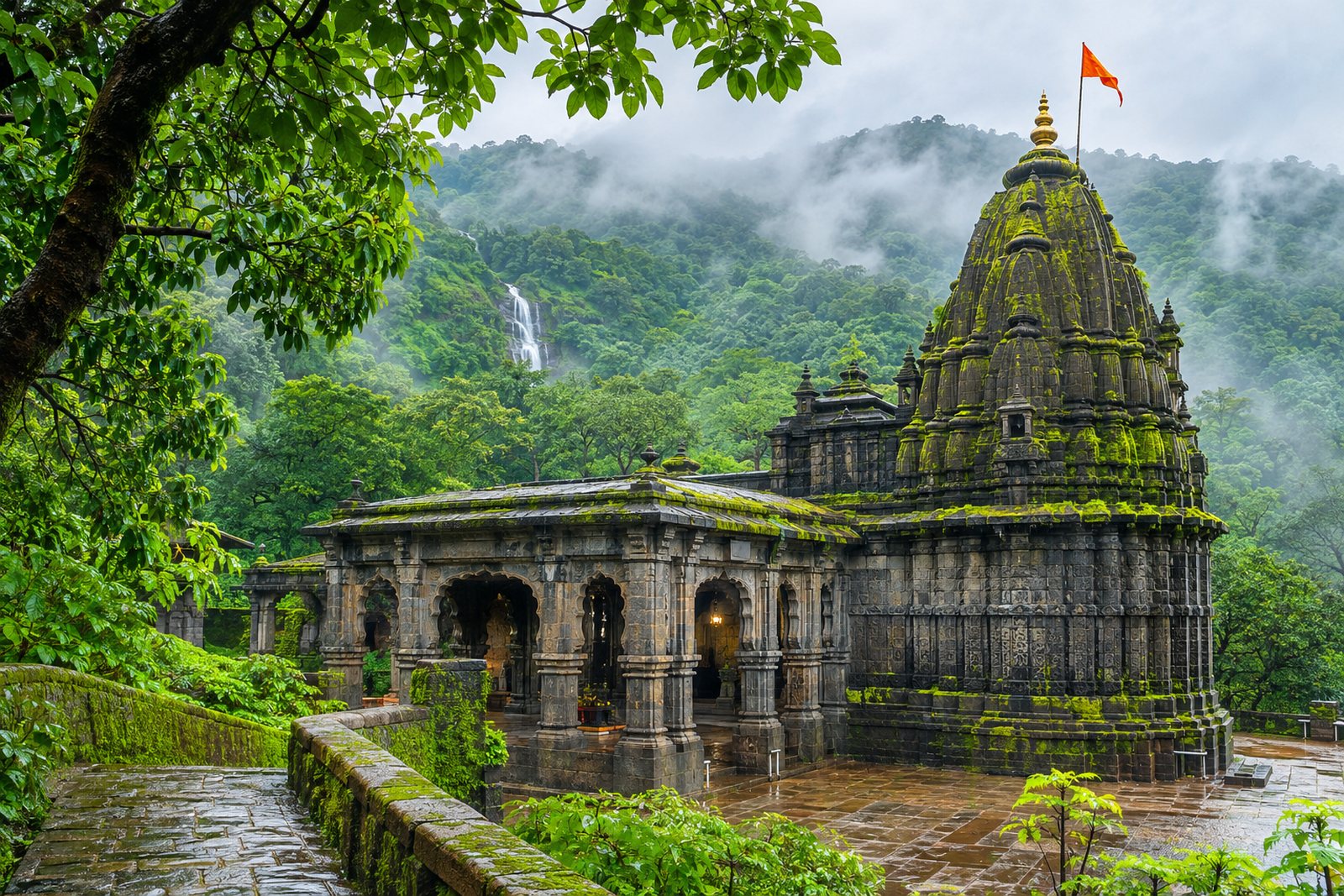
The fog comes first. On a Shravan morning on the ghat road up from Pune, it rolls over the Sahyadri ridge so thick that the car ahead is just two red tail lights. The wipers squeak. Somewhere below the parking lot a temple bell rings through the wet air, and a family from Mumbai, nani wrapped in a shawl, starts down the stone steps with a plate of bel leaves and flowers. At the bottom of the steps, tucked into a fold of the hills, sits a small temple of black stone.
This is Bhimashankar Jyotirlinga, Shiva's home in the Sahyadri forest, where the Bhima river begins. Here is its story: the demon legend, the Maratha connection, a bell with a surprising past, and how to plan your darshan.
The legend of Bhima, the demon who gave the temple its name
According to the Shiva Purana, Bhima was the son of Kumbhakarna, Ravana's giant brother. He grew up never knowing his father, and when he finally learned that Lord Rama had killed Kumbhakarna, he wanted revenge on the gods themselves. He did fierce tapasya, won great strength as a boon from Brahma, and went on a rampage.
One of the people he troubled was a king who was a devoted Shiva bhakt. Bhima threw him in prison and ordered him to stop worshipping. The king simply made a linga in his cell and kept praying. When Bhima raised his sword to smash it, Shiva appeared from the linga, and the demon was burnt to ash. The gods begged Shiva to stay. He did, as Bhimashankar.
Locals will tell you a second story with equal confidence. After a long battle with the demon Tripurasura, Shiva rested on these hills, and the sweat from his body ran down as the Bhima river. Stand by the small kund near the temple and someone will point and say, this is where it starts. From here the Bhima flows a long way east across the Deccan before it joins the Krishna.
Which version is right? Devotees here hold both and see no problem. Bhole Baba has never been short of stories.
Is this the only Bhimashankar?
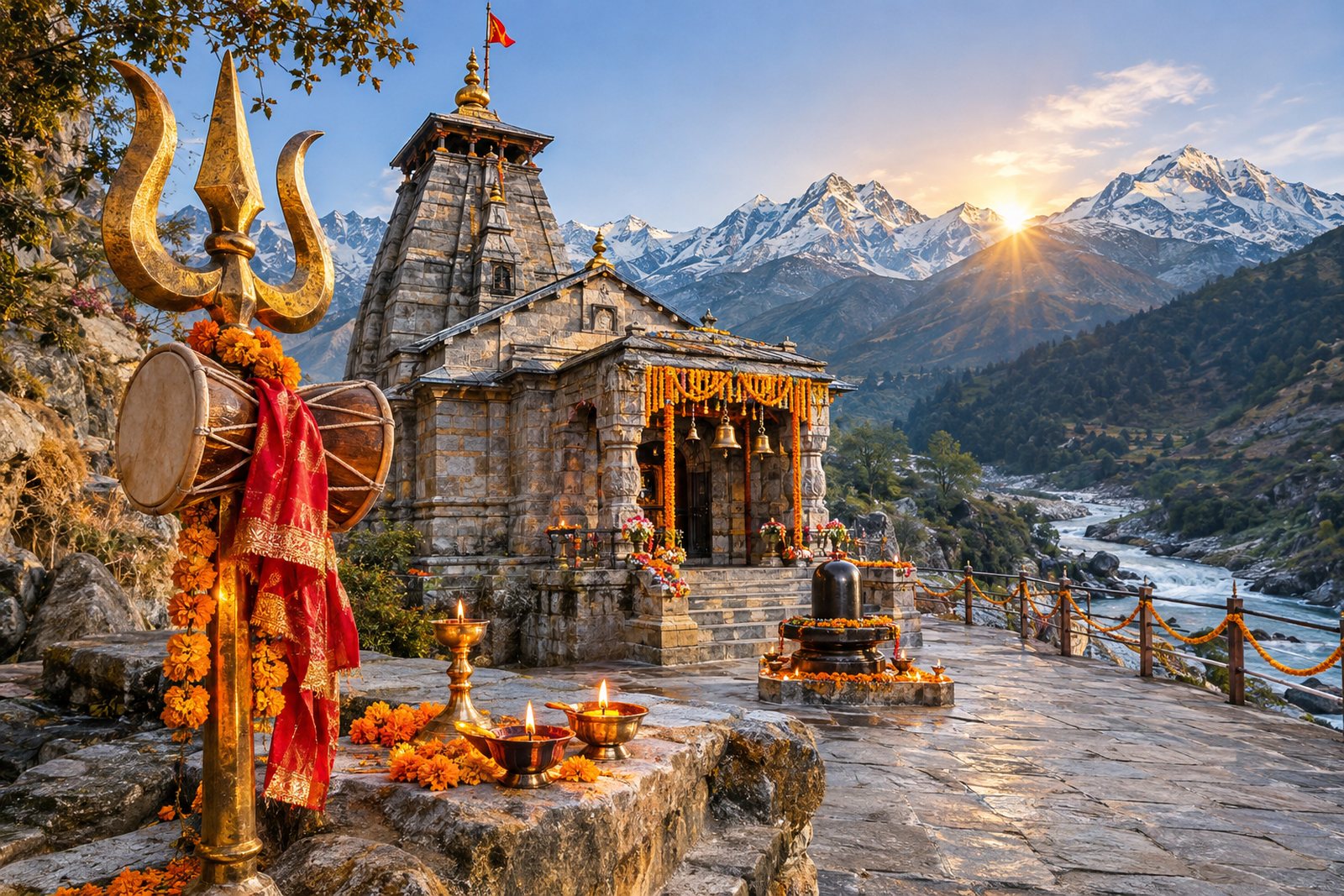
A quick, honest note. The Dwadasha Jyotirlinga Stotram places Bhimashankar in "Dakini", and some devotees read that as a region in Assam, where a Bhimashankar temple near Guwahati is worshipped. A temple in Uttarakhand is also revered by some as Bhimashankar. All of these are holy to their bhakts. The Sahyadri temple near Pune is the one most pilgrims in western India know as the jyotirlinga, and it is the one this story is about.
History of Bhimashankar temple
The shrine itself is very old, but the building you see is largely from the Maratha period. The style is Nagara, the stone is dark basalt from these same hills, and the walls are carved with gods, dancers and small animals that you only notice when you slow down. The sanctum is low and dim. The linga sits below floor level, so you step down to it, and in the rush of the queue you get only a few seconds. Make them count.
In the 18th century, the Peshwa minister Nana Phadnavis is credited with building the shikhar and the hall in front of the sanctum. Tradition also says Chhatrapati Shivaji Maharaj made grants for the temple's upkeep and for the people who served it. The Marathas looked after this forest temple the way you look after a family deity.
Did you know? The big bell at Bhimashankar is said to have come from the Maratha victory at Vasai, when Chimaji Appa took the fort from the Portuguese in 1739. It is European in shape, and devotees point out Christian markings on it. A church bell from the coast now rings for Mahadev in the Sahyadri forest.
The forest around the temple
Bhimashankar sits inside a wildlife sanctuary, and the forest is half the experience. This is home to the shekru, the Indian giant squirrel and Maharashtra's state animal, maroon and cream, with a tail longer than its body. Look up into the canopy near the temple paths in the early morning. They are shy, but they are there.
In the monsoon the whole ridge turns green and the waterfalls switch on. So do the leeches. Carry salt and do not wear chappals on the forest trails, unless you enjoy surprises.
A short walk from the temple takes you to Gupt Bhimashankar, where a stream flows over a linga in the forest. Further on are viewpoints like Nagphani, where the hills drop away towards the Konkan. Serious trekkers come up from the Konkan side through Khandas village, on steep routes that include iron ladders. That one is for fit legs, not for nani.
Most families do Bhimashankar from Pune. BellaSafar's Pune with Bhimashankar gives you Pune stays and a car for the hill drive, and the Maharashtra Jyotirlinga Yatra is built around the state's jyotirlingas in one trip. If you are slowly ticking off all 12 Jyotirlingas, Maharashtra is a good place to start, with three of them in one state.
How to plan your Bhimashankar darshan
- Where: Ambegaon taluka of Pune district, around 110 km from Pune, roughly 3 to 4 hours by road with ghat sections near the top. Pune has the nearest airport and railway station. Mumbai is a longer drive.
- Best time: October to February for clear, cool days. The monsoon is beautiful but foggy and slow. Shravan Mondays and Mahashivratri bring very large crowds.
- Darshan: You walk down a long flight of steps from the parking area and climb back up afterwards. Weekends get long queues. Timings and rules change, so check with the temple trust before you go.
- Dress: Modest, comfortable clothes and shoes with grip. Carry a light jacket even in winter, and rain gear from June to September.
- How long: A full day from Pune, or one night nearby if you want the forest walks.
- Combine with: Pune city, the Ashtavinayak temples, and Shivneri fort near Junnar, where Shivaji Maharaj was born.
Our tip: Leave Pune by 5 am. You beat the tour buses, get a calmer darshan, and by the time the queue builds you are already sipping cutting chai at a roadside stall on the way down.
Why Bhimashankar stays with you
Big-city temples are all marble and crowd control. Bhimashankar is different. You walk down into the forest to meet Shiva, with mist in your hair and a river beginning somewhere under your feet. It feels less like visiting a temple and more like being invited into his home in the hills.
Planning the yatra? Read our Pune, Ashtavinayak and Bhimashankar guide or browse all Pune holiday packages.
Frequently asked questions
What is the story of Bhimashankar Jyotirlinga?
According to the Shiva Purana, Shiva destroyed the demon Bhima, son of Kumbhakarna, to protect a devotee king, and then stayed on as Bhimashankar at the request of the gods.
How far is Bhimashankar from Pune?
Bhimashankar is around 110 km from Pune, roughly 3 to 4 hours by road through ghat sections, so most families do it as a day trip or with one night nearby.
Is the Bhimashankar near Pune the real jyotirlinga?
Most pilgrims in western India worship the Sahyadri temple near Pune as the jyotirlinga. Sites in Assam and Uttarakhand are also revered by some devotees as Bhimashankar.
Is it safe to visit Bhimashankar in the monsoon?
Yes, the road stays open and the forest is at its greenest, but fog, rain and slippery steps make it slower. Drive in daylight and wear shoes with good grip.
How many steps are there at Bhimashankar temple?
The temple sits below the parking area and you walk down a long flight of steps to reach it and climb back up after darshan. Elderly visitors should take it slowly and rest on the way.