Trimbakeshwar Jyotirlinga History: Where the Godavari Begins
A sage, a dying cow and a river pulled down from heaven. The story of Trimbakeshwar near Nashik, its three-faced linga, and how to plan your darshan.
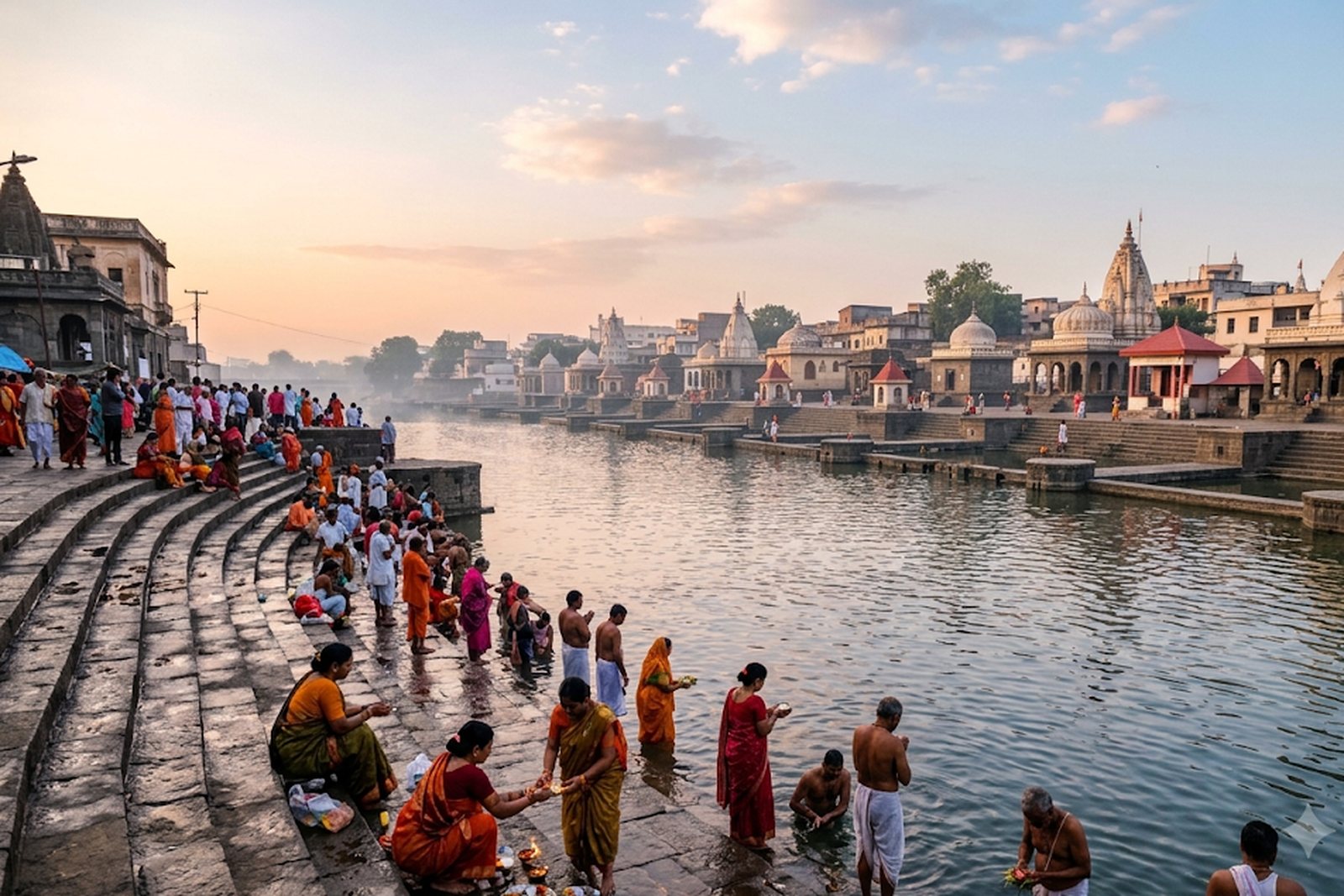
Six in the morning at Kushavarta kund, and the water is cold enough to make you gasp. A boy in a wet dhoti fills a brass lota and runs up the steps. A purohit with a sandalwood tilak calls out to a family from Indore, asking if they have come for a puja. Behind the town, Brahmagiri hill is wrapped in cloud, and somewhere up there, they say, a river is being born.
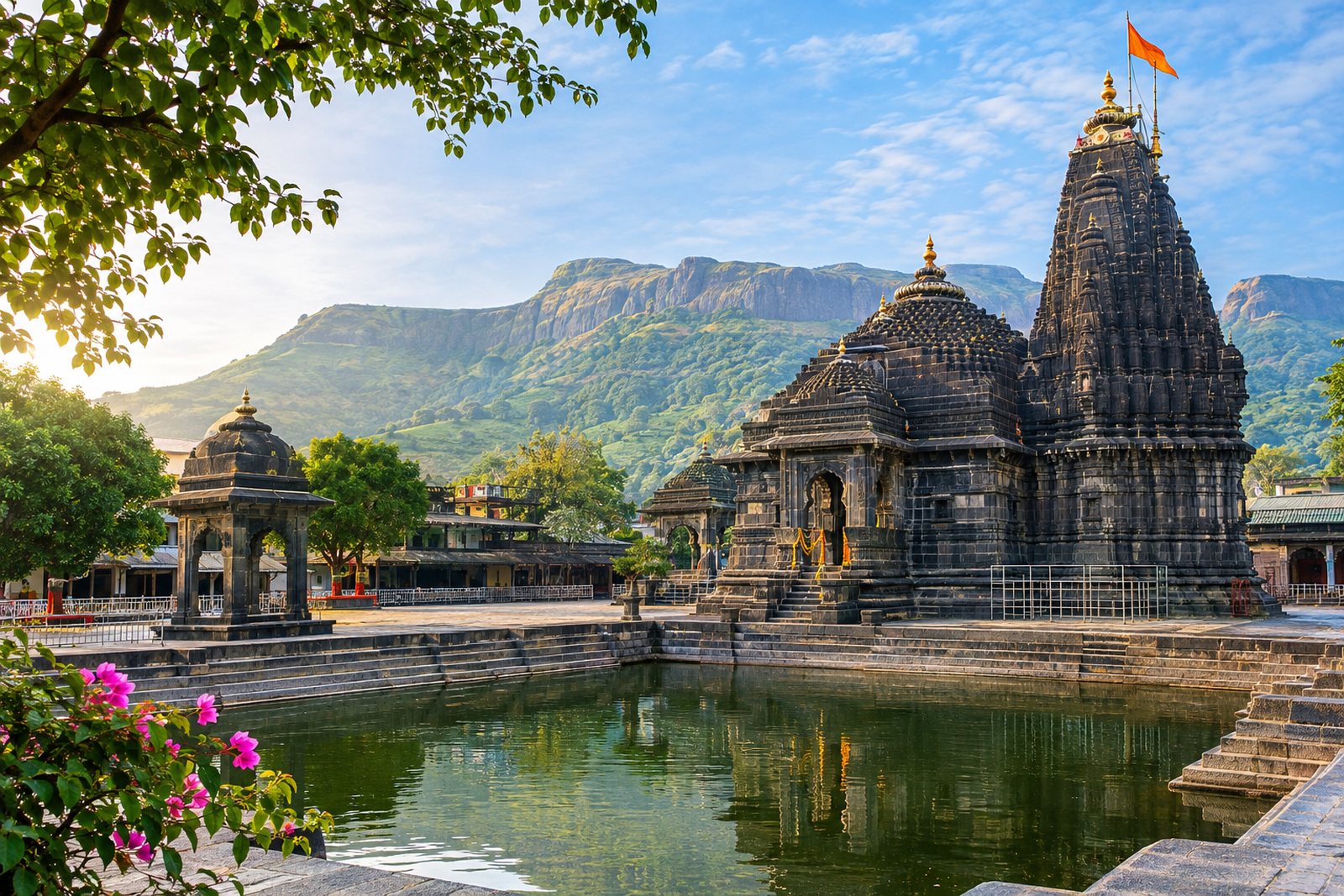
This is Trimbakeshwar Jyotirlinga, near Nashik in Maharashtra, where Shiva is worshipped in a linga with three faces and the Godavari begins. Here is its story: the sage who brought a river down, the Peshwa temple, the Kumbh, and how to plan your darshan.
The legend of Gautama rishi and the Godavari
Local legend, drawn from the Puranas, begins with a terrible drought. For years no rain fell. Only one place stayed green, the ashram of Gautama rishi and his wife Ahalya on Brahmagiri, where Varuna had blessed them with a pit that never ran dry. Gautama shared his grain with everyone.
Not everyone was grateful. Some jealous sages, the story goes, sent a weak cow into his fields. When Gautama tried to shoo it away with a blade of darbha grass, the cow fell dead. Killing a cow was a grave sin, and the sages made sure the whole region knew.
Gautama did not argue. He went up the hill and prayed to Shiva to send Ganga down to wash away the sin. Shiva agreed. Ganga came, but she was in no mood to stay, and kept vanishing into the hill. Gautama finally trapped her with a ring of kusha grass at a spot that became Kushavarta. Ganga agreed to stay only if Shiva stayed too. So Shiva settled here as Tryambakeshwar, the three-eyed lord, and Ganga flowed east as the Godavari, also called Gautami after the sage.
The three-faced linga
Here is where Trimbakeshwar surprises people. You expect a tall linga. Instead, you look down into a small hollow in the floor of the sanctum, where three tiny lingas or faces are said to represent Brahma, Vishnu and Mahesh. Water seeps in constantly. In the crush of the queue, you may need a moment to understand what you are looking at. Ask the person next to you. Someone always knows.
On certain days, the temple's old jewelled crown is placed over the linga, and devotees queue especially to see it. Ask locally which days.
History of Trimbakeshwar temple
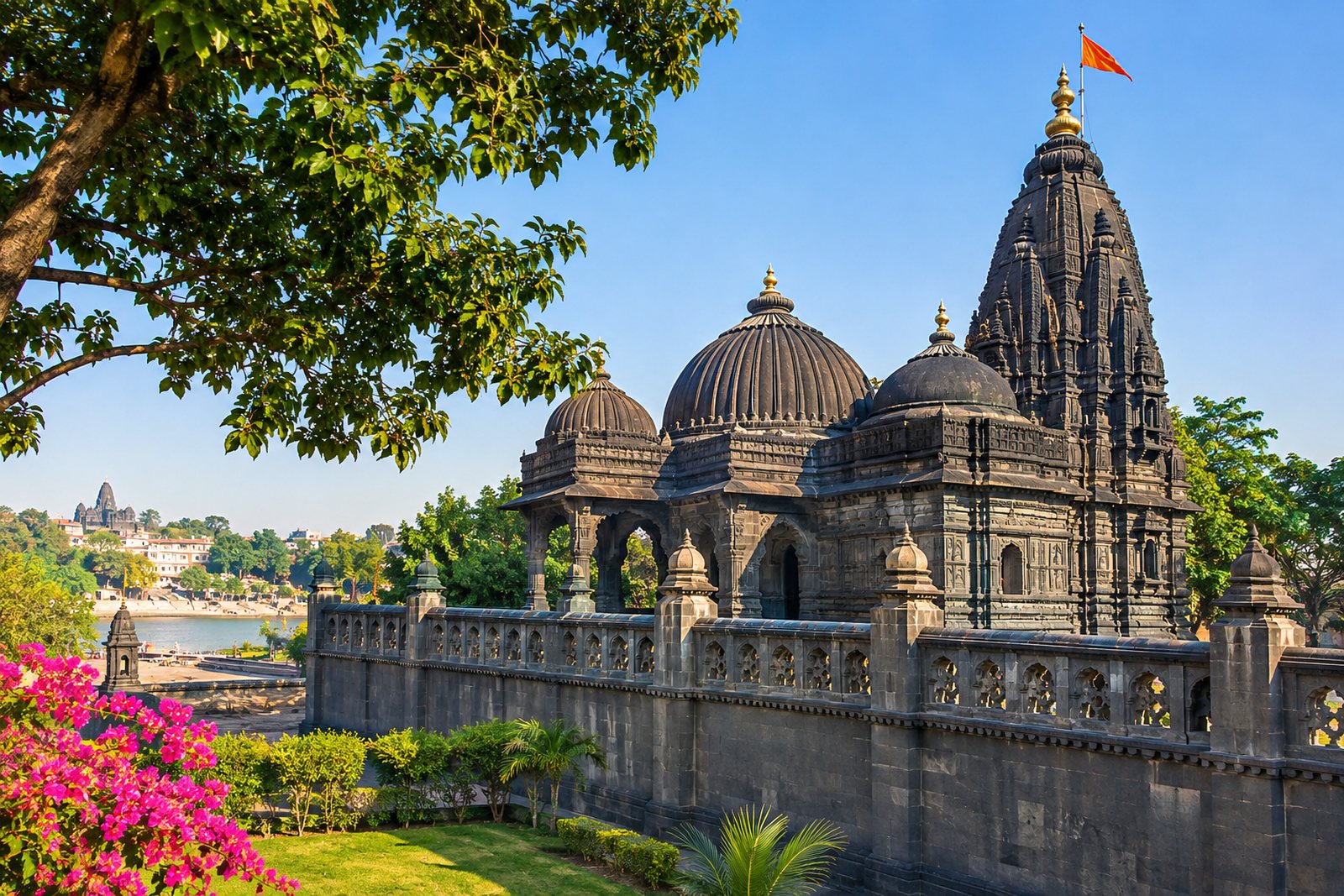
The shrine is ancient, but the temple you see was built in the 18th century under the Peshwas, and tradition credits Peshwa Balaji Bajirao, better known as Nanasaheb, with the rebuilding. It is built of black basalt, with a tall shikhar, carved walls and a wide stone courtyard enclosed by a high wall. Against the green of the monsoon hills, the dark stone almost glows.
Did you know? The Godavari, which begins as a trickle on Brahmagiri, is India's second longest river after the Ganga. It crosses the whole Deccan from west to east and meets the Bay of Bengal in Andhra Pradesh, which is why it is sometimes called the Dakshin Ganga.
Kushavarta, the Kumbh and the pujas
Kushavarta kund is where the river is believed to come back to the surface after disappearing into the hill. Every twelve years, during the Simhastha Kumbh of Nashik and Trimbak, it becomes the centre of the world for Shaiva sadhus, whose akharas take their holy dip here while Vaishnava akharas bathe at Ramkund in Nashik. If you have seen photos of ash-covered sadhus running into a tank, there is a good chance it was here.
Trimbakeshwar is also known across India for special rituals: Kaal Sarp shanti, Narayan Nagbali and Tripindi shraddha, performed by hereditary purohits whose families have done this work for generations. Some rituals run for more than a day. Fix the details with a registered purohit in advance so there are no surprises later.
Brahmagiri and Anjaneri
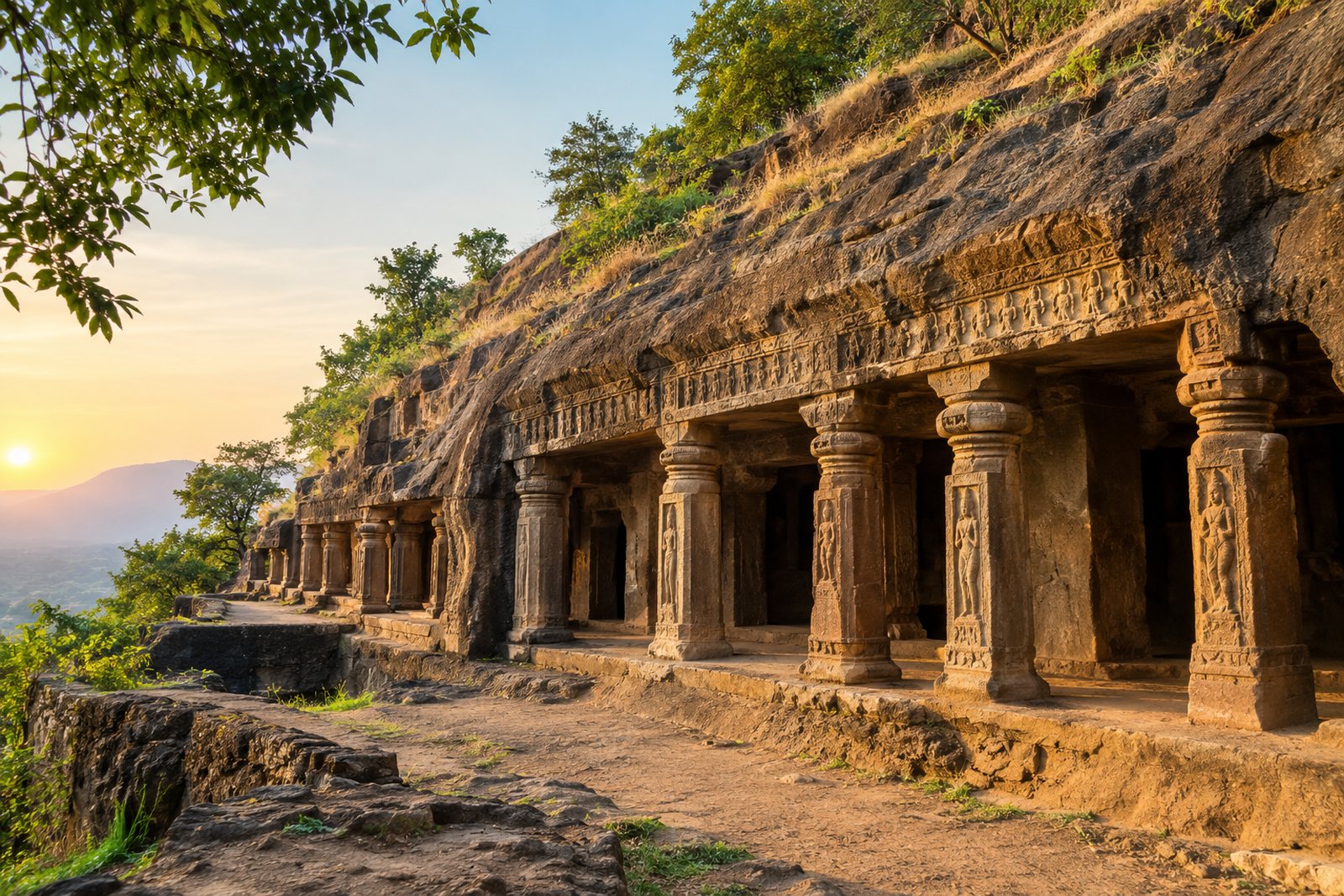
If your knees allow it, climb Brahmagiri. Steps cut into the rock take you up to Gangadwar, where the Godavari is believed to emerge, with monkeys watching your prasad bag the whole way. Nearby Anjaneri hill is believed by many to be the birthplace of Hanuman. In the monsoon both hills turn emerald and every slope has a waterfall.
Most pilgrims base themselves in Nashik. BellaSafar's Nashik Darshan covers Trimbakeshwar and the Nashik temples with stays and a car, and Nashik & Shirdi adds a day for Sai Baba's darshan. Working through all 12 Jyotirlingas? Trimbakeshwar pairs well with the other Maharashtra jyotirlingas.
How to plan your Trimbakeshwar darshan
- Where: Trimbak town, around 28 km from Nashik. Nashik Road is the main railway station. Nashik has a small airport with limited flights, and Mumbai is around 180 km away.
- Best time: October to March. The monsoon is green but slippery. Shravan Mondays, Mahashivratri and Kumbh years bring very large crowds.
- Darshan: Weekend queues can be long. Check with the temple trust for timings and any paid darshan option, as rules change.
- Dress: Modest clothes. For some rituals men are asked to wear a dhoti; your purohit will tell you.
- Pujas: Book with a registered purohit, agree on what is included, and keep the full day free.
- How long: One day for darshan, Kushavarta and the town, two if you climb Brahmagiri.
- Combine with: Panchavati and Ramkund in Nashik, Shirdi, and Grishneshwar near Ellora.
Our tip: Do darshan early, then walk to Kushavarta while the town is still quiet. Buy a packet of hot sabudana vada outside on the way back. Nobody leaves Trimbak without one.
Why Trimbakeshwar stays with you
Most temples are about a god. Trimbakeshwar is about a god and a river, and a sage who refused to give up until both came down from the hill. When you see the Godavari later, wide and slow in some other state, it is hard not to think of that small trickle on Brahmagiri.
Planning the yatra? Read our Shirdi, Nashik and Trimbakeshwar guide or browse all Nashik holiday packages.
Frequently asked questions
Why is Trimbakeshwar jyotirlinga special?
Its linga sits in a small hollow with three faces said to represent Brahma, Vishnu and Mahesh, unlike most jyotirlingas, and the Godavari river is believed to begin on the hill above.
Who built Trimbakeshwar temple?
The present black stone temple was built in the 18th century under the Peshwas, traditionally credited to Peshwa Balaji Bajirao, also called Nanasaheb.
How far is Trimbakeshwar from Nashik?
Trimbakeshwar is around 28 km from Nashik, under an hour by road, so most pilgrims stay in Nashik and combine it with Panchavati and Shirdi.
Why do people do Kaal Sarp puja at Trimbakeshwar?
Trimbakeshwar is traditionally known for rituals like Kaal Sarp shanti, Narayan Nagbali and Tripindi shraddha, performed by local purohits. Book with a registered purohit in advance.
Can we climb Brahmagiri from Trimbakeshwar?
Yes, a stepped path leads up Brahmagiri to the spot where the Godavari is believed to emerge. It is a steep climb of a few hours, best done in the cool morning.