Grishneshwar Jyotirlinga History: Ghushma's Faith Near Ellora
The last of the twelve jyotirlingas sits in a red stone temple a short walk from Ellora. Ghushma's story, Ahilyabai's rebuilding and darshan tips.
Every morning, the story goes, a woman named Ghushma made one hundred and one small lingas out of clay, worshipped them, and lowered them one by one into the lake behind her house. Every morning. Without missing a day. Then one morning, with her hands still muddy, they came to tell her that her son was dead. She did not stop. She finished the puja, walked to the water, and kept going.
This is the Grishneshwar Jyotirlinga, in the village of Verul, a short walk from the Ellora caves in Maharashtra. Here is Ghushma's story, how the temple was rebuilt, and how to plan your darshan today.
The legend of Ghushma
According to the Shiva Purana, a Brahmin named Sudharma and his wife Sudeha lived in this region. They had no children. Sudeha persuaded her husband to marry her younger sister, Ghushma, a quiet, devout girl. Ghushma had a son, and the household doted on him.
Sudeha's jealousy grew quietly, the way it does in family dramas. One night she killed the young man and threw his body into the same lake where Ghushma immersed her lingas.
Ghushma's grief did not shake her faith. She completed her daily puja, and as she lowered the last linga into the water, her son walked out of the lake, alive. Shiva appeared before her. He was ready to punish Sudeha. Ghushma asked him to forgive her sister instead, and to stay here forever. Shiva agreed, and became Ghushmeshwar, the lord of Ghushma. Over time the name became Grishneshwar.
That is how the legend goes. Ask any panda at the temple and he will tell it with more feeling than any TV serial.
Why it is the twelfth jyotirlinga
The old Dwadasha Jyotirlinga Stotram ends with "Ghushmesham cha shivalaye", Ghushmesh at Shivalaya. Because it is named last, devotees call Grishneshwar the twelfth jyotirlinga, and many families like to end their yatra here. Somnath first, Grishneshwar last. A full circle, even if it takes some people twenty years to complete. You can read about the first one in our story on Somnath jyotirlinga history.
A temple that was rebuilt, twice
The Ellora region saw a lot of conflict over the centuries, and the temple did not escape it. An earlier restoration is credited to Maloji Bhosale, the grandfather of Chhatrapati Shivaji Maharaj, who belonged to Verul.
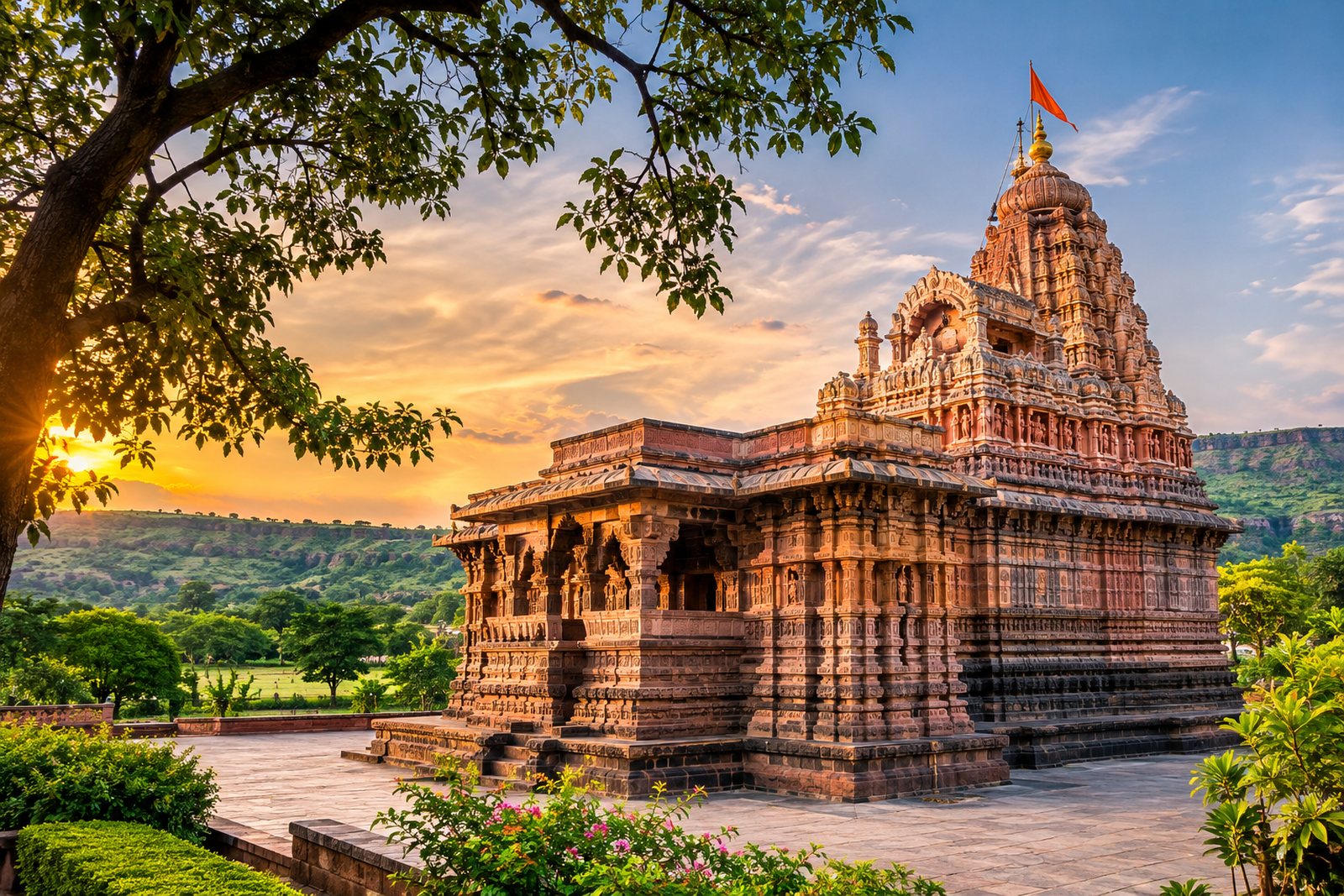
The temple you see today was rebuilt in the 18th century by Ahilyabai Holkar, the Maratha queen of Indore, the same queen who rebuilt Kashi Vishwanath and many other temples across India. It is built of red-brown stone with a carved shikhar, walls covered in figures of gods and dancers, and a calm courtyard. Compared to the big temple complexes of the south, it is small. Many people say it is the smallest jyotirlinga temple. It does not feel small inside.
Did you know? At Grishneshwar, by tradition, men take off their shirt and vest before entering the sanctum. Devotees are also often allowed close enough to touch the linga, which is rare at the busier jyotirlingas.
Ellora, right next door
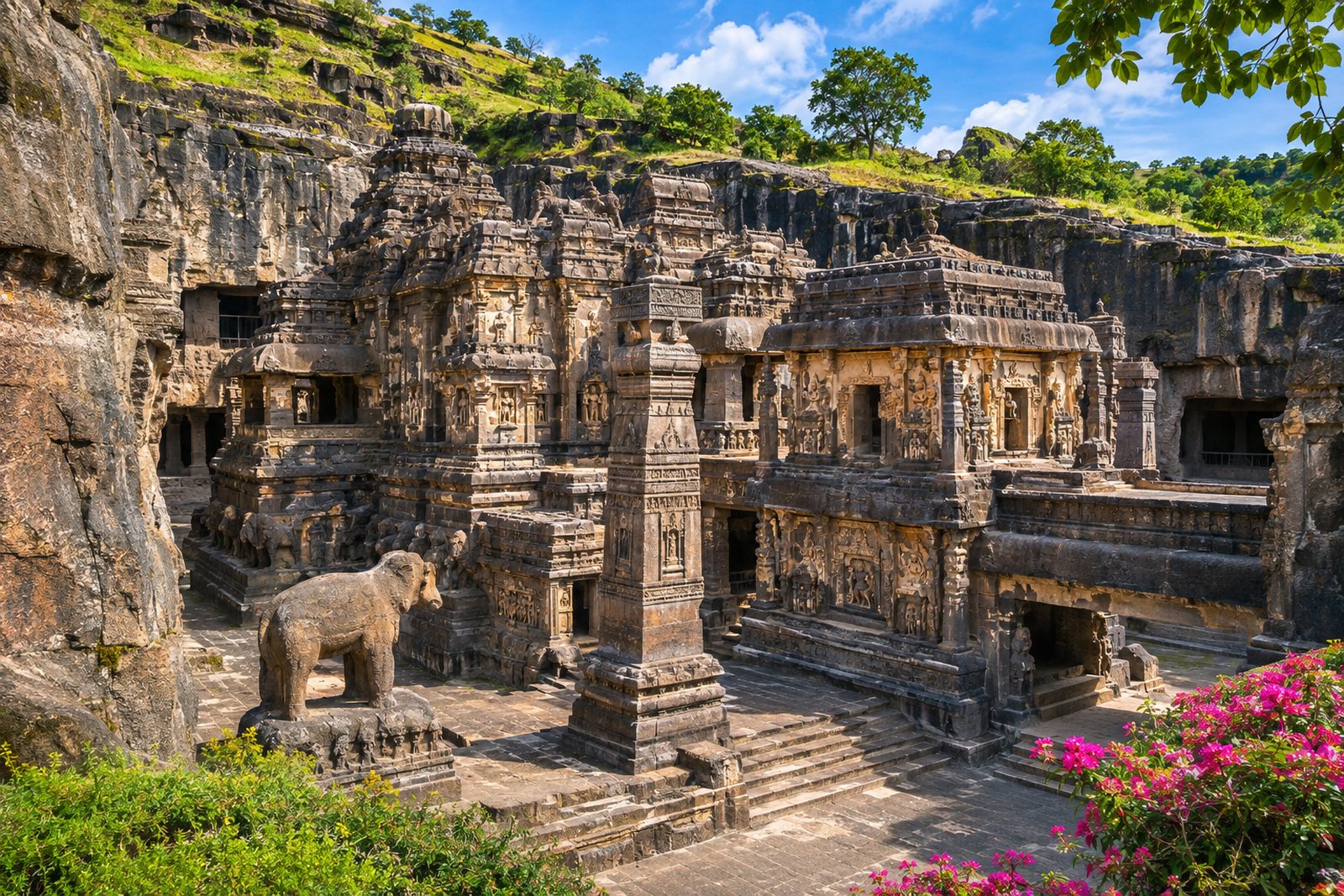
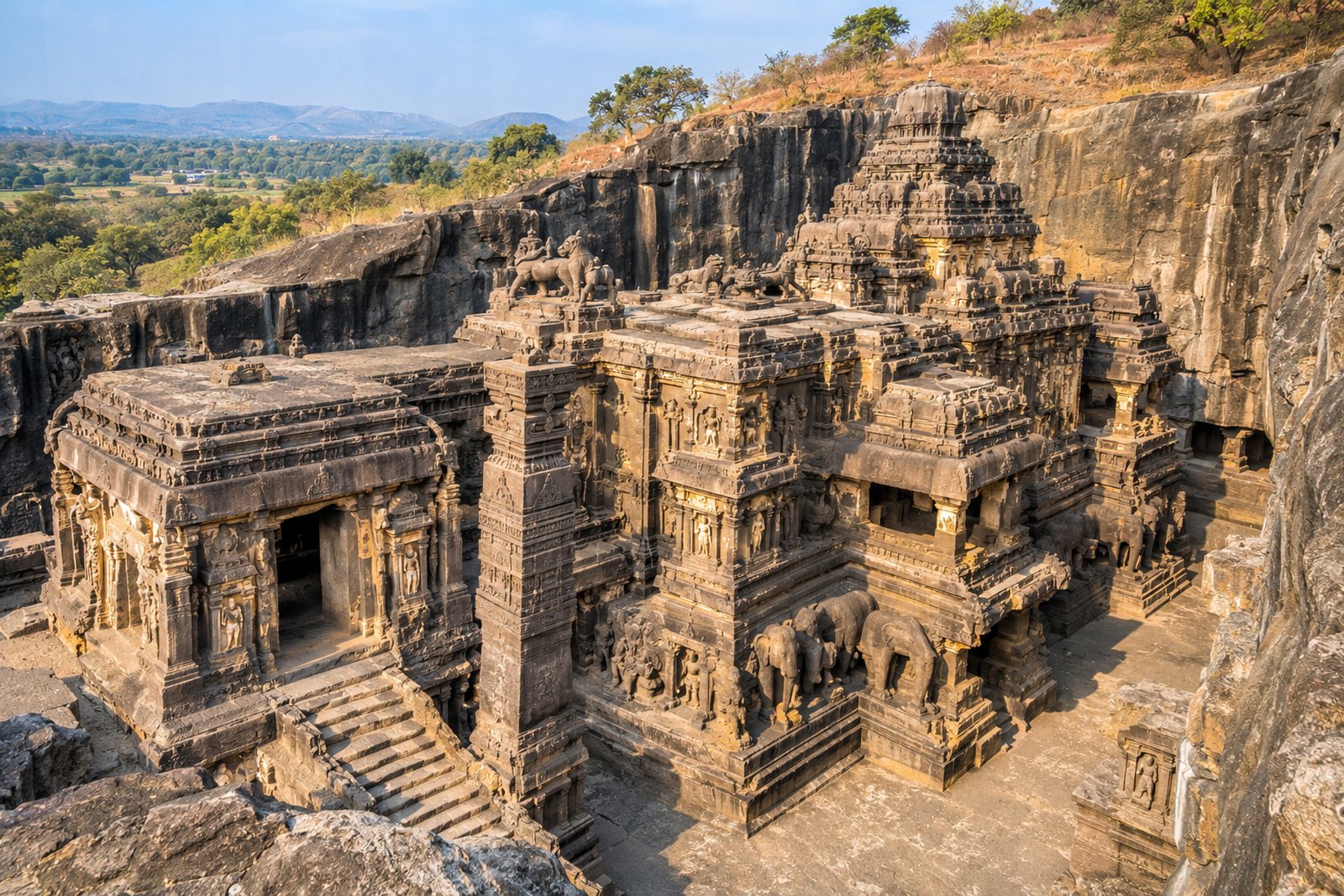
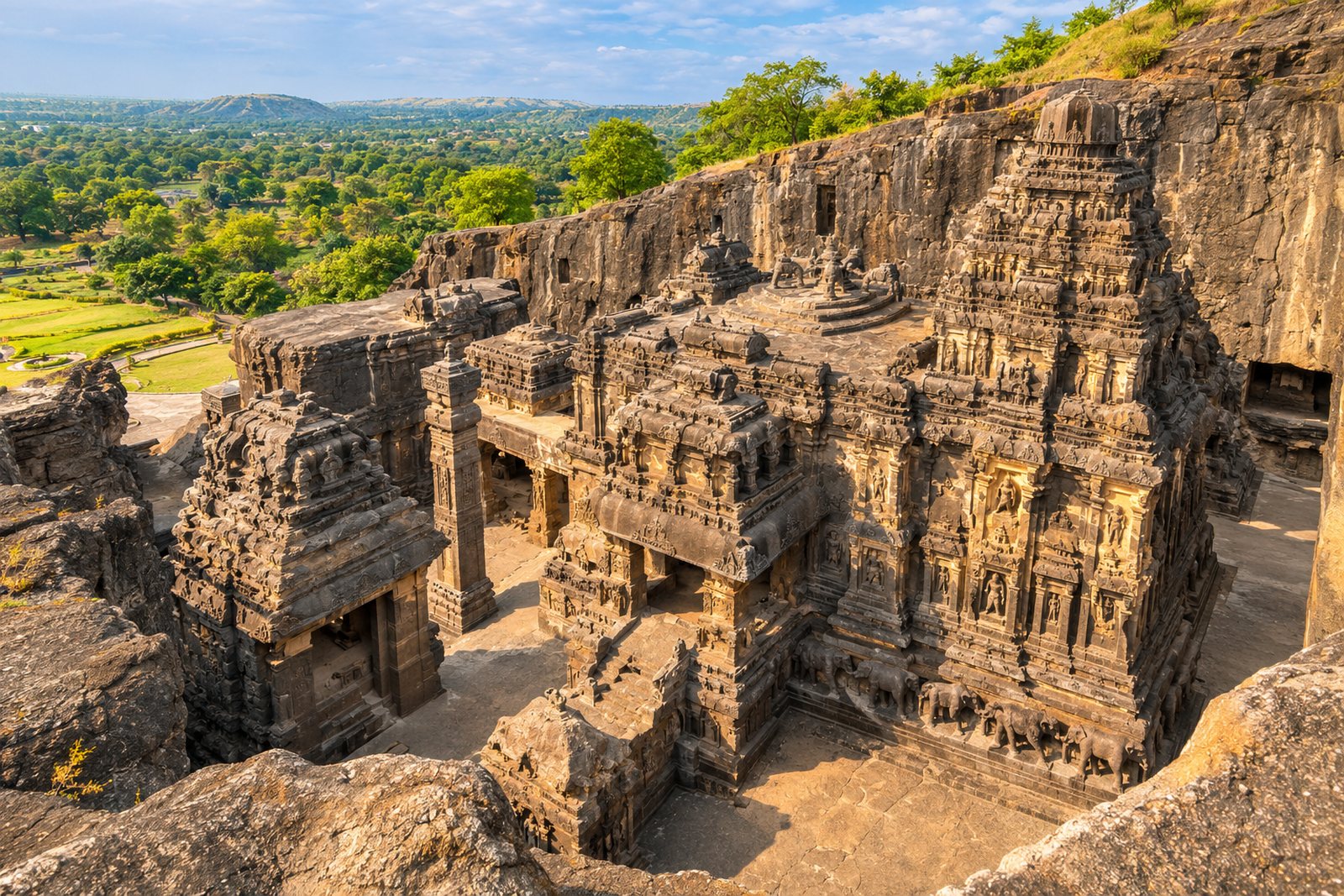
Here is the lucky part for travellers. Grishneshwar is roughly a kilometre from the Ellora caves, a group of rock-cut Buddhist, Hindu and Jain caves carved over several centuries. The star is the Kailasa temple (Cave 16), a whole temple to Shiva cut downward from a single hill of rock. Standing in its courtyard, you keep looking up and wondering how anyone planned this without a single mistake.
So you get darshan of Shiva in the morning, and then you see what human beings carved for the same Shiva more than a thousand years ago. Not a bad day.
On the road back to Aurangabad, now Chhatrapati Sambhajinagar, there is Daulatabad fort on its cone-shaped hill and, in the city, Bibi Ka Maqbara. If you have an extra day, the painted caves of Ajanta are a few hours away.
BellaSafar's Aurangabad Explorer covers Grishneshwar, Ellora, Ajanta and the city with stays and a car. If you want to cover Maharashtra's jyotirlingas together, the Maharashtra Jyotirlinga Yatra is built for that. Our guide to all 12 Jyotirlingas shows how the rest fit together.
How to plan your Grishneshwar darshan
- Where: Verul village, near Ellora, around 30 km from Aurangabad (Chhatrapati Sambhajinagar) in Maharashtra.
- Getting there: Aurangabad has an airport and a railway station with good connections to Mumbai, Pune and beyond. From there it is about an hour by road.
- Best time: October to March. The monsoon months are green and pretty but wet. Summers get very hot. Mahashivratri and Shravan Mondays bring long queues.
- Darshan: Usually manageable on weekdays. Darshan timings and abhishek rules change, so check with the temple trust before you go.
- Dress: Modest clothes. Men should be ready to remove their shirt for the sanctum, so wear something easy, or carry a dhoti or shawl.
- How long: One or two hours for the temple, then the rest of the day for Ellora. Note that the Ellora caves are usually closed one day a week, so check before you plan.
- Combine with: Ellora, Ajanta, Daulatabad, Shirdi, and Trimbakeshwar and Bhimashankar for the full Maharashtra circuit.
Our tip: Do the temple first thing in the morning, then walk or drive to Ellora before the tour buses arrive. Keep the Kailasa temple for last so you are not rushing through it.
Why Grishneshwar stays with you
It is not the grandest temple of the twelve. It does not have a sea or a snow peak behind it. What it has is Ghushma: a woman who lost her son, did not curse anyone, and then asked God to forgive the person who did it. Stand in that small sanctum and you realise the last jyotirlinga has the gentlest story of all.
Planning the yatra? Read our Ajanta Ellora trip guide or browse all Aurangabad holiday packages.
Frequently asked questions
Why is Grishneshwar called the last jyotirlinga?
The Dwadasha Jyotirlinga Stotram, the traditional hymn of the twelve jyotirlingas, names Ghushmeshwar last, so devotees treat Grishneshwar as the twelfth jyotirlinga and often end their yatra here.
Do men have to remove their shirt at Grishneshwar temple?
By tradition, men remove their shirt and vest before entering the sanctum. Rules can change, so follow the instructions at the temple or check with the temple trust.
Who built Grishneshwar temple?
The present temple was rebuilt by Ahilyabai Holkar, the Maratha queen of Indore, in the 18th century. An earlier restoration is credited to Maloji Bhosale, the grandfather of Chhatrapati Shivaji Maharaj.
How far is Grishneshwar from Ellora caves?
Grishneshwar is very close to Ellora caves, roughly a kilometre or so, and around 30 km from Aurangabad (Chhatrapati Sambhajinagar), so most people visit both on the same day.
Can Grishneshwar be combined with other jyotirlingas?
Yes. Grishneshwar is usually combined with Trimbakeshwar near Nashik and Bhimashankar near Pune in a Maharashtra Jyotirlinga Yatra, often with Shirdi on the way.