Nashik Name Legend: Where Lakshman Cut Surpanakha's Nose
The name Nashik is linked to nasika, nose, from the Ramayan episode at Panchavati. The Nashik name legend, what history says, and how to visit Panchavati and Ramkund.
In Hindi there is no worse insult than "naak kat gayi". Your nose has been cut; your honour is gone.
Most of us have heard it from an angry parent at least once. Very few of us know there is a city in Maharashtra that, according to tradition, takes its very name from a nose that was cut.
This is the Nashik name legend, the Ramayan episode at Panchavati, what history says about the name, and how to walk the riverside area where the story is set.
The legend: Surpanakha at Panchavati
The story comes from the Aranya Kand of the Ramayan. During their exile, Ram, Sita and Lakshman built a small hut at Panchavati, a forest on the banks of the Godavari named for its five banyan trees. Life was simple and, for a while, peaceful.
Then a visitor came. Surpanakha, the sister of Ravan, the king of Lanka, saw Ram and wanted him. She came to the hut in a beautiful form and asked him to marry her. Ram politely said he was already married, and pointed her, half in jest, towards Lakshman. Lakshman sent her back.
Insulted twice, Surpanakha lost her temper and her disguise. She rushed at Sita. Lakshman stepped in and cut off her nose and, in many tellings, her ears.
It is a small scene in a long epic, but it changes everything. Surpanakha fled to her brothers. First the rakshasas of the forest attacked Panchavati. Then she went to Ravan himself, and the plan to carry Sita away was born. The war in Lanka, in a way, begins with this moment on the Godavari.
The nose in Sanskrit is nasika. And so, tradition says, the place came to be called Nashik.
What history says about the name
Like many old place names, Nashik has more than one explanation. The nasika story is the most loved and the one every guide will tell you. Some local writers and historians offer other explanations, and in some periods of history the city was known by other names altogether. Linguists are cautious about any single answer.
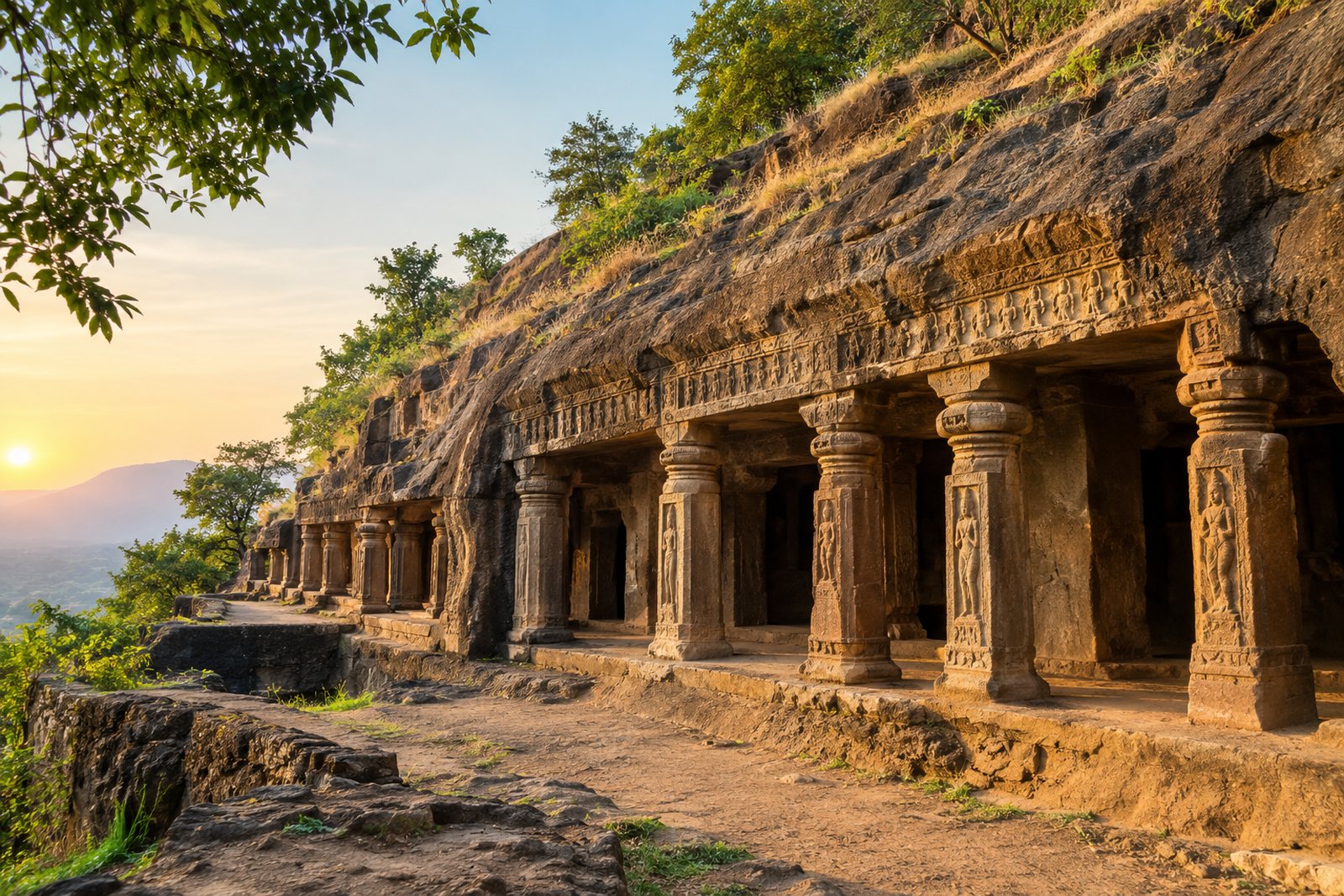
What history does confirm is that Nashik is very old. The Pandavleni caves on a hill outside the city are Buddhist rock-cut caves with inscriptions from roughly two thousand years ago, and they show that this was already an important place on old trade routes. We tell their story in our piece on Pandavleni caves Nashik.
Did you know? Nashik and Trimbakeshwar together host the Simhastha Kumbh, one of the four Kumbh melas, roughly every twelve years when Jupiter enters Leo. The bathing ghats at Ramkund turn into one of the most crowded riverbanks in India.
Walking Panchavati today
Panchavati is still the heart of old Nashik, and most of the Ramayan places are within walking distance or a short auto ride.
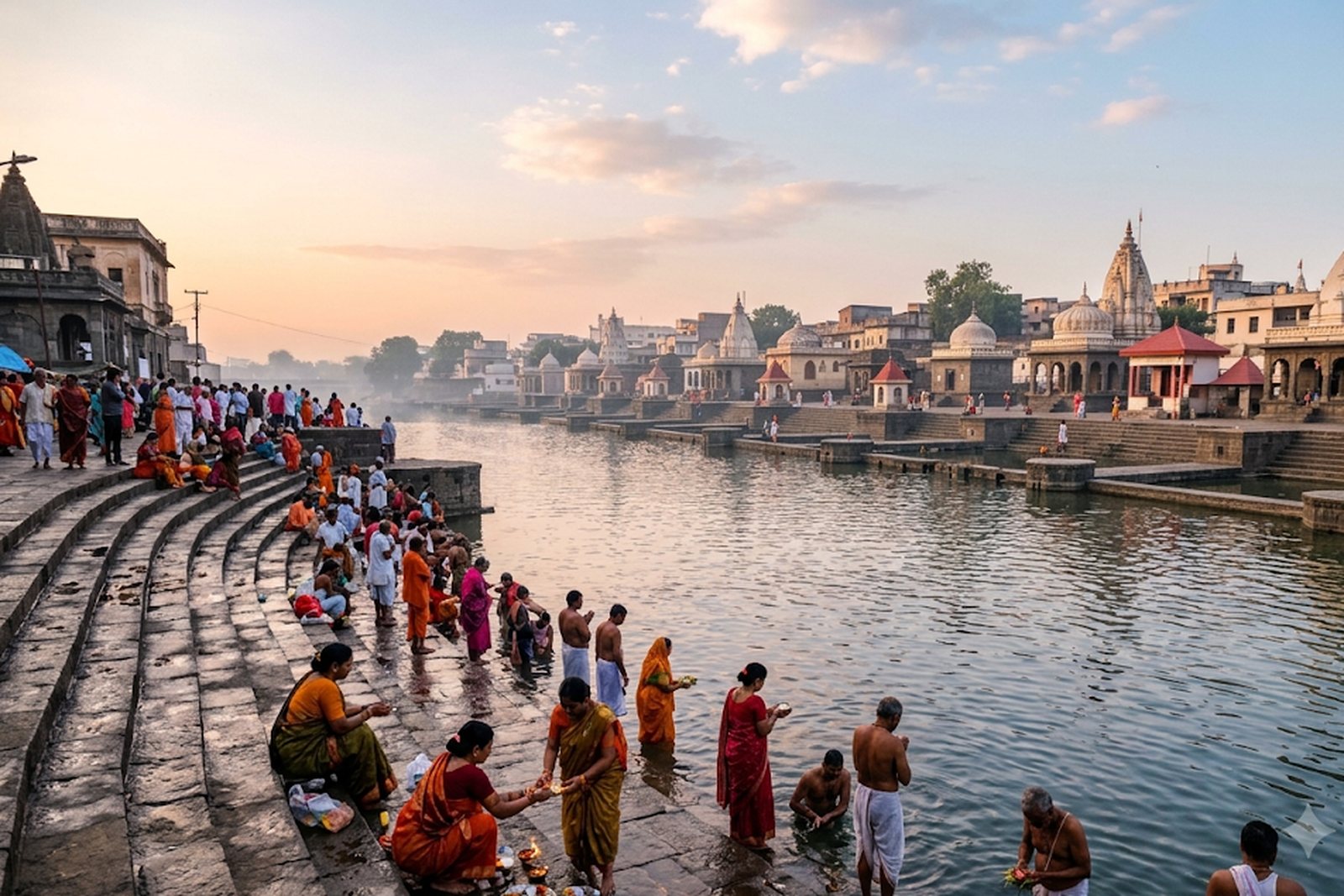
Ramkund is the main bathing ghat on the Godavari, where Ram is believed to have bathed. Pilgrims also come here to immerse the ashes of loved ones.
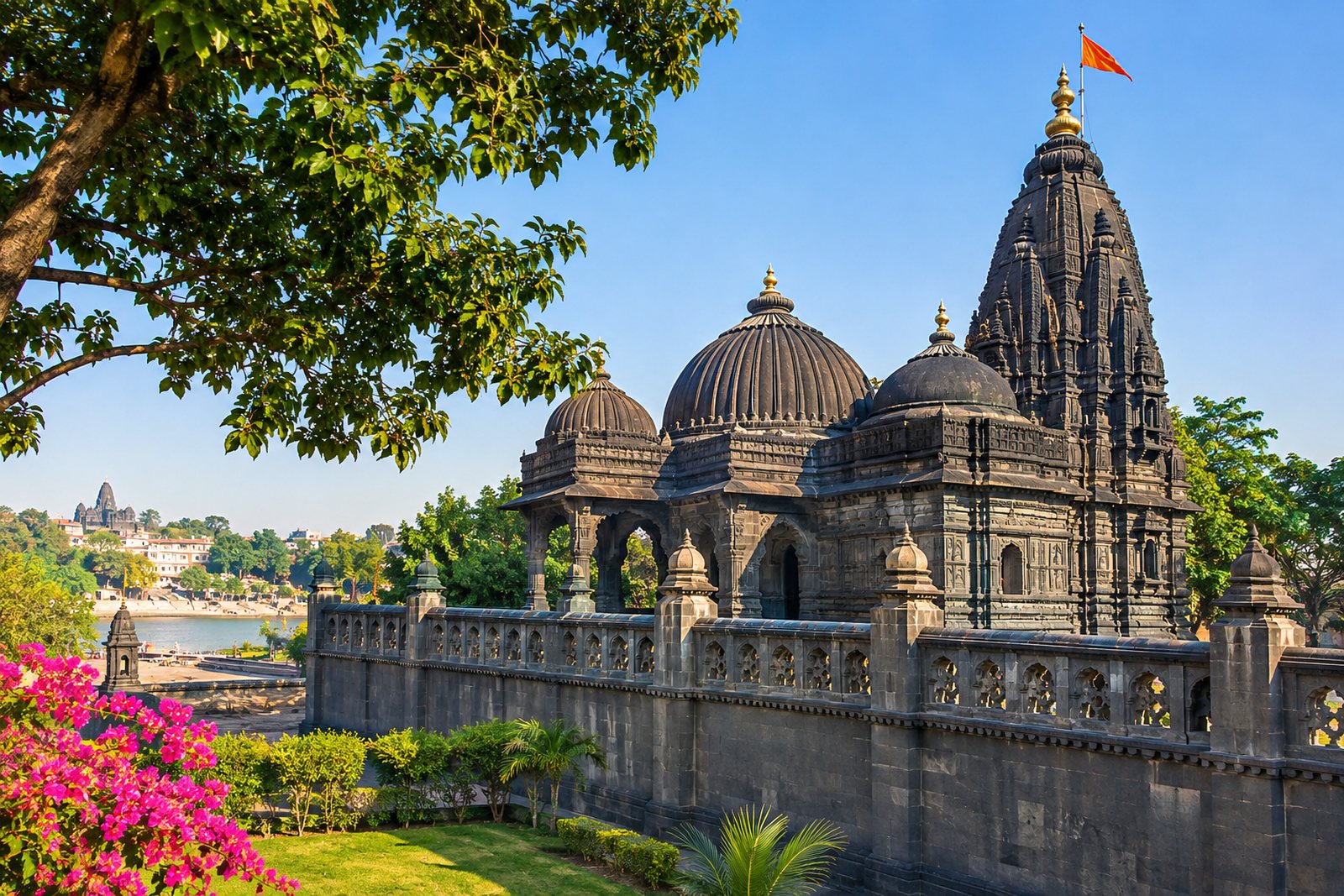
Kalaram temple holds a black stone image of Ram and was built in the late 18th century under Peshwa-era patronage. It is also remembered in modern history: in 1930 Dr. B. R. Ambedkar led a satyagraha here for the right of all communities to enter the temple, an important chapter in India's social reform movement.
Sita Gufa is a narrow cave near the banyan trees where Sita is believed to have worshipped. The entrance is tight and you have to crouch, so it is not easy for everyone.
Tapovan, a little downstream, is associated by tradition with Lakshman and with the Surpanakha episode itself.
Visiting Panchavati today: safety, timings, respect
- Ghats: steps at Ramkund are slippery. Hold children's hands and be careful in the monsoon, when the river rises.
- Sita Gufa: the passage is narrow and low. Seniors, people with knee trouble or claustrophobia may prefer to skip the inside.
- Priests and rituals: if you want a puja at Ramkund, agree on everything beforehand.
- Timings: temples open early and close in the afternoon for a while. Check timings locally, especially on festival days like Ram Navami.
- Dress: modest clothing, footwear off at temple entrances.
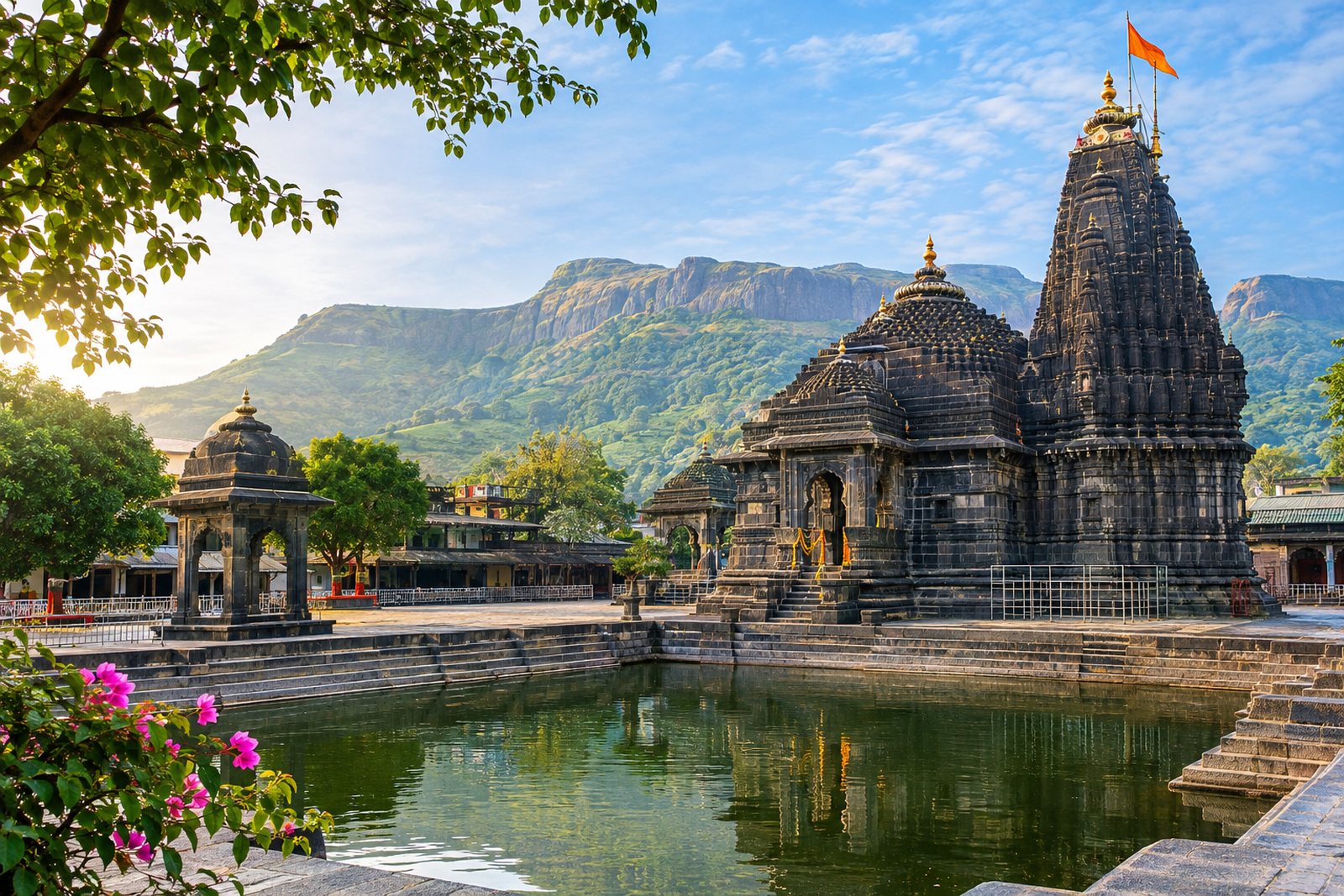
- Combine with: Trimbakeshwar Jyotirlinga, Pandavleni caves, and if you like, a vineyard visit on the edge of town.
Our tip: Walk Panchavati early in the morning, starting at Ramkund and ending at Kalaram temple. The lanes are quiet, the ghats are washed, and you get the whole Ramayan neighbourhood before the tour buses roll in.
BellaSafar's Nashik Darshan gives you two nights in Nashik with Panchavati and Trimbakeshwar, as per the package itinerary. Nashik & Shirdi adds a third night and Sai Baba's town, and Nashik Wine & Temples mixes temple days with the vineyards the city is now known for. Read our Trimbakeshwar Jyotirlinga history before you go.
A city named for a turning point
It is a strange honour, a city named after an insult. But stand at Ramkund at dawn, watching the Godavari carry marigolds downstream, and it feels right. This is where the story turned. Everything after it, the golden deer, the bridge, the war, began here on this riverbank.
Planning the trip? Browse all Nashik holiday packages.
Frequently asked questions
What is the legend behind the name Nashik?
Tradition links the name to nasika, Sanskrit for nose. In the Ramayan, Lakshman cut off the nose of Surpanakha, Ravan's sister, in the Panchavati forest, and Nashik is believed to stand on that spot.
Are there other explanations for the name Nashik?
Yes. Some local historians and writers offer other explanations, and the city also had other names in different periods. The nasika link remains the most popular traditional one.
What is Panchavati in Nashik?
Panchavati is the old riverside area of Nashik named after five banyan trees. Tradition says Ram, Sita and Lakshman lived here during their exile. It holds Ramkund, Kalaram temple and Sita Gufa.
Which Kumbh is held in Nashik?
Nashik and nearby Trimbakeshwar host the Simhastha Kumbh roughly every twelve years, when Jupiter is in Leo. Exact dates are announced by the authorities.
How far is Trimbakeshwar from Nashik?
Trimbakeshwar is around 30 km from Nashik, roughly an hour by road, and most pilgrims visit both on the same trip.