Char Dham Yatra Guide: Yamunotri, Gangotri, Kedarnath, Badrinath
The clockwise Char Dham order, how many days it really takes, what the mountain roads are like, registration and season, and a gentler Do Dham option for families.
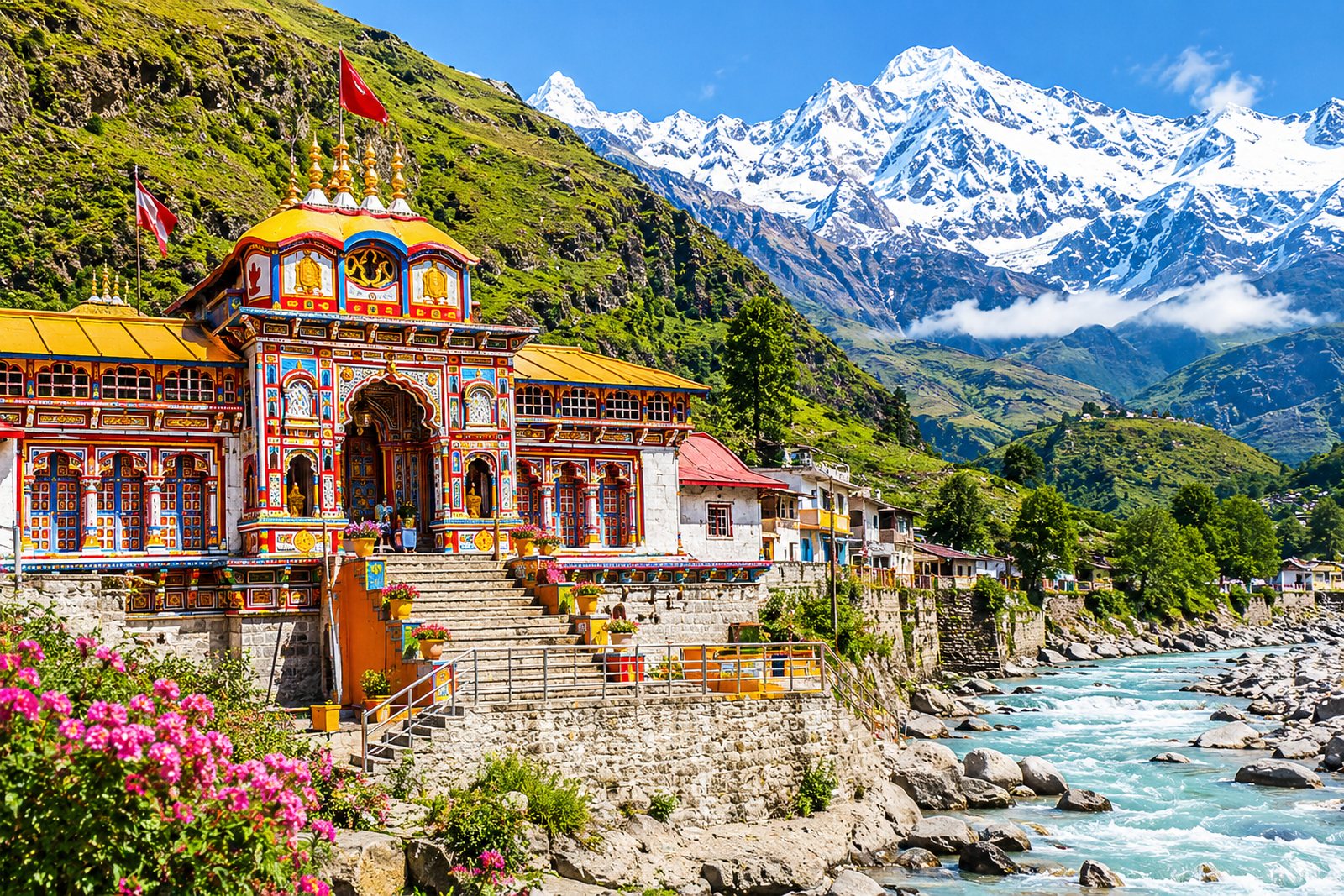
There is a moment, somewhere past Barkot, when the bus goes quiet. The aunties who were singing bhajans since Dehradun stop. The kids stop asking for chips. Outside the window, the road has become a ledge, the Yamuna is a white thread far below, and the mountain on the other side is close enough to touch. Somebody says "Jai Yamuna Maiya" softly, and everybody repeats it.
That is day two or three of a Char Dham yatra guide that most families never get told: the yatra is as much about the road as about the four temples. Here is the classic order, how many days it really takes, what the roads and treks are like, and how to plan it so that nani comes home smiling.
Which dhams are the Char Dham of Uttarakhand?
Four temples in the Garhwal Himalaya, each linked to a river or a god:
- Yamunotri, the source shrine of the Yamuna
- Gangotri, where the Ganga is worshipped near her source
- Kedarnath, Lord Shiva as one of the twelve jyotirlingas
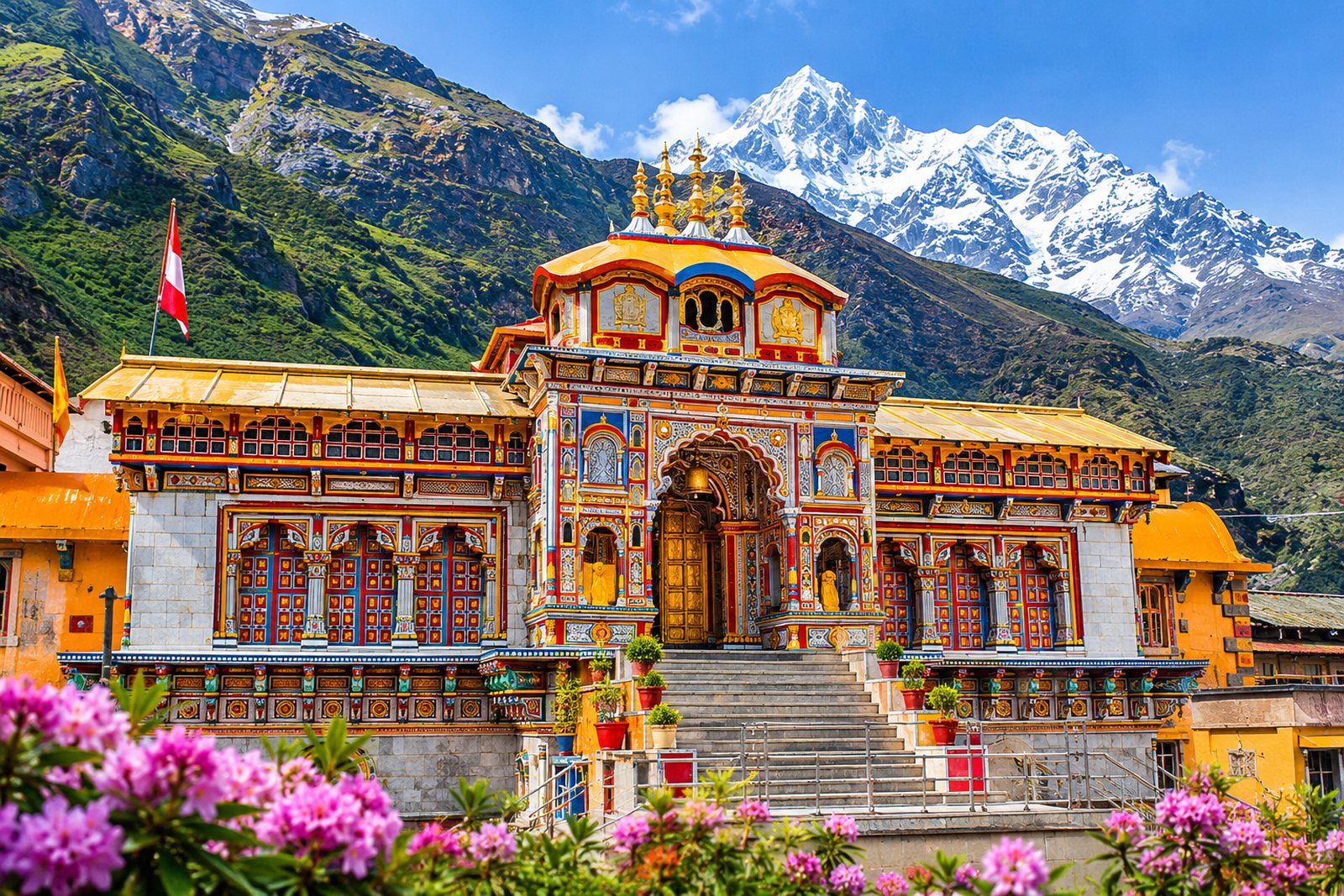
- Badrinath, Lord Vishnu as Badri Narayan, on the Alaknanda
This is the "Chota Char Dham". The older idea of four dhams at the four corners of India, Badrinath, Dwarka, Puri and Rameshwaram, is a different yatra, and we have written about it in our Bada Char Dham guide.
The classic clockwise order, and why it works
Tradition says go from west to east: Yamunotri first, then Gangotri, then Kedarnath, then Badrinath. Devotees describe it as a parikrama, moving in the auspicious direction.
The happy accident is that geography agrees. Coming up from Haridwar or Rishikesh, the Yamuna valley is the westernmost, Gangotri sits in the next valley over, and then the road swings east through Tehri and Rudraprayag towards Kedarnath and finally up the Alaknanda to Badrinath. Doing it in any other order usually means driving the same stretch twice.
How many days does Char Dham actually take?
Plan around ten to twelve days from Haridwar for all four by road. People do squeeze it into eight. We do not recommend it.
Roughly, the shape of a sensible trip looks like this:
- Haridwar or Rishikesh to the Barkot side: a long first drive
- Yamunotri: a trek day, back to base by evening
- Drive across to the Uttarkashi side, then Gangotri darshan
- A very long drive towards Guptkashi or Sonprayag
- Kedarnath: the trek up, ideally a night near the temple, and the trek down
- Drive towards Badrinath, darshan, Mana village
- The long road back down to Rishikesh or Haridwar
Every one of those lines hides five to ten hours of mountain road. Add a buffer day. You will thank us when a landslide closes the highway for half a day, which happens, especially in the rains.
Road and trek reality
The roads have improved a lot, and there are still stretches where traffic stops for a slip, a truck has broken down, or the army is clearing debris. Motion sickness is common. Carry tablets, keep the windows a little open, and do not feed children heavy parathas before a ghat section.
Yamunotri needs a trek of a few kilometres from the roadhead. Kedarnath is the big one, a long uphill trek from Gaurikund that takes most people the better part of a day. Ponies, palkis and pithoo porters are available at both, and Kedarnath has helicopter services, which must be booked only through the official channel linked from the government yatra site. Gangotri and Badrinath are reachable by road, which is why many families with elders choose those two, or Kedarnath and Badrinath only.
Did you know? The Kedarnath temple survived the 2013 floods largely intact, and devotees still point to a large boulder that came to rest behind it and is believed to have shielded it. Locals call it Bhim Shila.
Registration, season and health
- Registration with the Uttarakhand government is mandatory for every pilgrim. Use only the official portal or app, and keep the confirmation on your phone and printed.
- The temples open around late April or May and close around October or November. Dates are announced each year, so check before booking.
- May-June is crowded. July-August is monsoon, with more landslides. September-October is often the calmest window, with clear skies and cold nights.
- Kedarnath sits at high altitude. Elders with heart, lung or blood pressure issues should see a doctor before booking, and everyone should walk slowly and drink water.
Not ready for all four? Start with Do Dham
Many families do Kedarnath and Badrinath first, then come back another year for Yamunotri and Gangotri. That is a perfectly respected way to do it. We compare the two plans honestly in Do Dham vs Char Dham.
Our Do Dham Yatra runs six nights: two in Haridwar, two near Guptkashi for the Kedarnath trek and darshan, and two at Badrinath with Mana village, as per the package itinerary. If you want Badrinath without the Kedarnath trek, Badrinath Dham Yatra keeps it to four nights, two in Rishikesh and two at Badrinath. And for a longer, slower trip that mixes darshan with hill time, Uttarakhand Grand covers Rishikesh, Auli, a night at Badrinath and Mussoorie over eight nights. For a full four-dham trip, talk to our team and we will build it around your dates.
Our tip: Book the trip so that the night before Kedarnath is spent as close to the trek start as possible. An early start is the single biggest thing that makes the climb easier.
What to pack
- Warm layers even in June, a rain jacket and a cap
- Good walking shoes with grip, not new ones
- Personal medicines, ORS, motion sickness tablets
- Photo ID and the registration printout
- Some cash, as network and card machines can fail up high
At the end of it, people rarely talk about the hotels. They talk about the first sight of the Kedarnath shikhar through the clouds, the cold water at Tapt Kund in Badrinath, and the bus going quiet past Barkot. Plan for the road, and the road will give you the yatra.
Read our Badrinath Kedarnath Do Dham plan, or browse all Badrinath holiday packages.
Frequently asked questions
What is the correct order of the Char Dham yatra?
The traditional order is clockwise, west to east: Yamunotri, then Gangotri, then Kedarnath, and finally Badrinath. It also happens to be the most practical route by road from Haridwar or Rishikesh.
How many days are needed for Char Dham yatra by road?
Most road itineraries from Haridwar take around 10 to 12 days. Fewer days means very long drives and no buffer for landslides or weather, which is risky with elders.
Is registration compulsory for Char Dham yatra?
Yes. Every pilgrim has to register with the Uttarakhand government before the yatra. Use only the official portal or app and check the current rules before you travel.
When do the Char Dham temples open and close?
They open around late April or May and close around October or November, before winter. Exact dates are announced every year by the temple committees, so check before booking.
Which dhams involve trekking?
Yamunotri and Kedarnath need a trek, with ponies, palkis and, for Kedarnath, helicopters as options. Gangotri and Badrinath are reachable by road.