Bada Char Dham: Badrinath, Dwarka, Puri and Rameshwaram
Four dhams at four corners of India: snow at Badrinath, sea at Dwarka, Mahaprasad at Puri and the corridors of Rameshwaram. The story of the bada char dham yatra.
Ask any nani in a Gujarati or Bihari household what "char dham" means and you may get two very different answers. One points north, to four shrines in the Garhwal Himalaya. The other draws a much bigger map. One dham in the snow. One where a river meets the Arabian Sea. One on the Bay of Bengal. One on an island near the very tip of India.
That second map is the bada char dham, and for centuries it was the yatra of a lifetime. Tradition says Adi Shankaracharya tied these four corners together. Here is the story of the circuit, what each dham feels like, and why so many families begin it in Puri.
What is the bada char dham?
Four temples, four directions.
Badrinath in the north, on the Alaknanda, where Vishnu is worshipped as Badri Narayan. Dwarka in the west, Krishna's city, where he is Dwarkadhish, the king. Puri in the east, home of Lord Jagannath with his brother Balabhadra and sister Subhadra. And Rameshwaram in the south, where the Ramayana says Shri Ram worshipped Shiva, and where the Ramanathaswamy temple is counted among the twelve jyotirlingas.
Notice something? Three are Vaishnav, one is Shaiva. The map does not care which sampradaya you were born into. That is part of its charm.
Char dham vs chota char dham: why everyone gets confused
The Uttarakhand circuit of Yamunotri, Gangotri, Kedarnath and Badrinath is properly called the chota char dham. Over time, people started calling it simply "char dham", and travel ads did the rest. Badrinath sits in both lists, which is exactly why the confusion never ends at family dinners.
If someone says "we did char dham in ten days by helicopter", they mean the Himalayan one. Nobody does the bada char dham in ten days without a very sore back.
How Adi Shankaracharya drew the map
Shankara is usually placed in the 8th century CE, though scholars argue about the dates. Born in Kaladi in Kerala, he is said to have walked across the subcontinent debating, teaching and reviving temples. Tradition credits him with founding four mathas in the four directions: Jyotirmath near Badrinath, one at Dwarka, the Govardhan Matha at Puri, and the Sringeri Sharada Peetham in Karnataka.
Sringeri, not Rameshwaram, holds the southern matha. Yet in the popular imagination Rameshwaram became the southern dham, and that is the version most pilgrims follow.
Think about what this meant before trains. A family from Kashi setting out for all four dhams might be gone for many months. Neighbours came to say goodbye. Some never came back. The ones who did returned with stories, a little Gangajal, a little sea sand, and the quiet pride of having walked the whole country.
Four dhams, four moods
Badrinath is cold air and a hot spring. Pilgrims take a dip in Tapt Kund before darshan, steam rising off the water while the Alaknanda roars just below. The temple opens only for part of the year, roughly May to October or November, and closes for winter.
Dwarka is sea wind and flags. The tall dhwaja on the Dwarkadhish shikhar is changed several times a day, and families book the honour of sponsoring it well in advance. Down at the Gomti ghat, kids chase pigeons while elders do their snan. Bet Dwarka, the island shrine, is a short trip away.
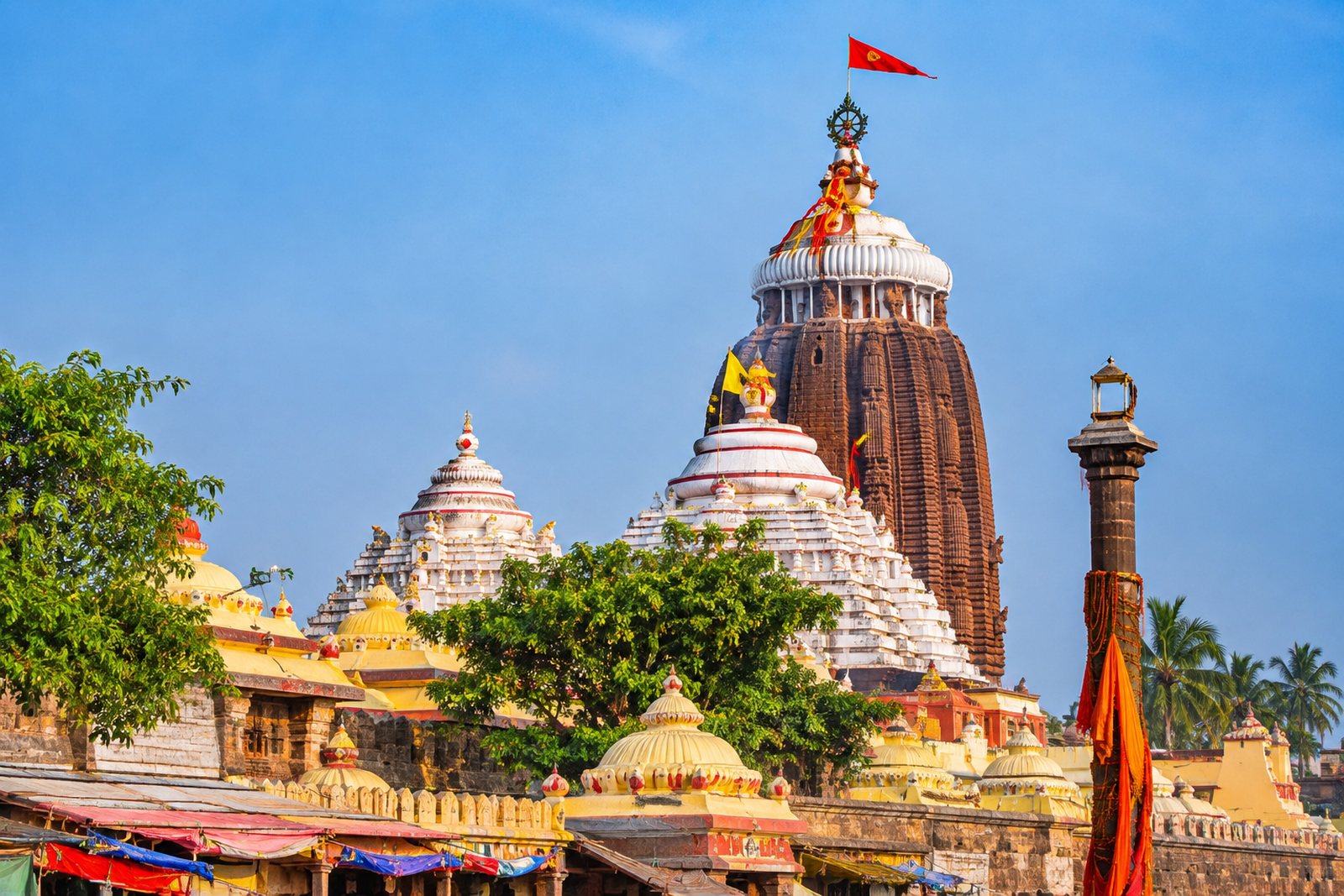
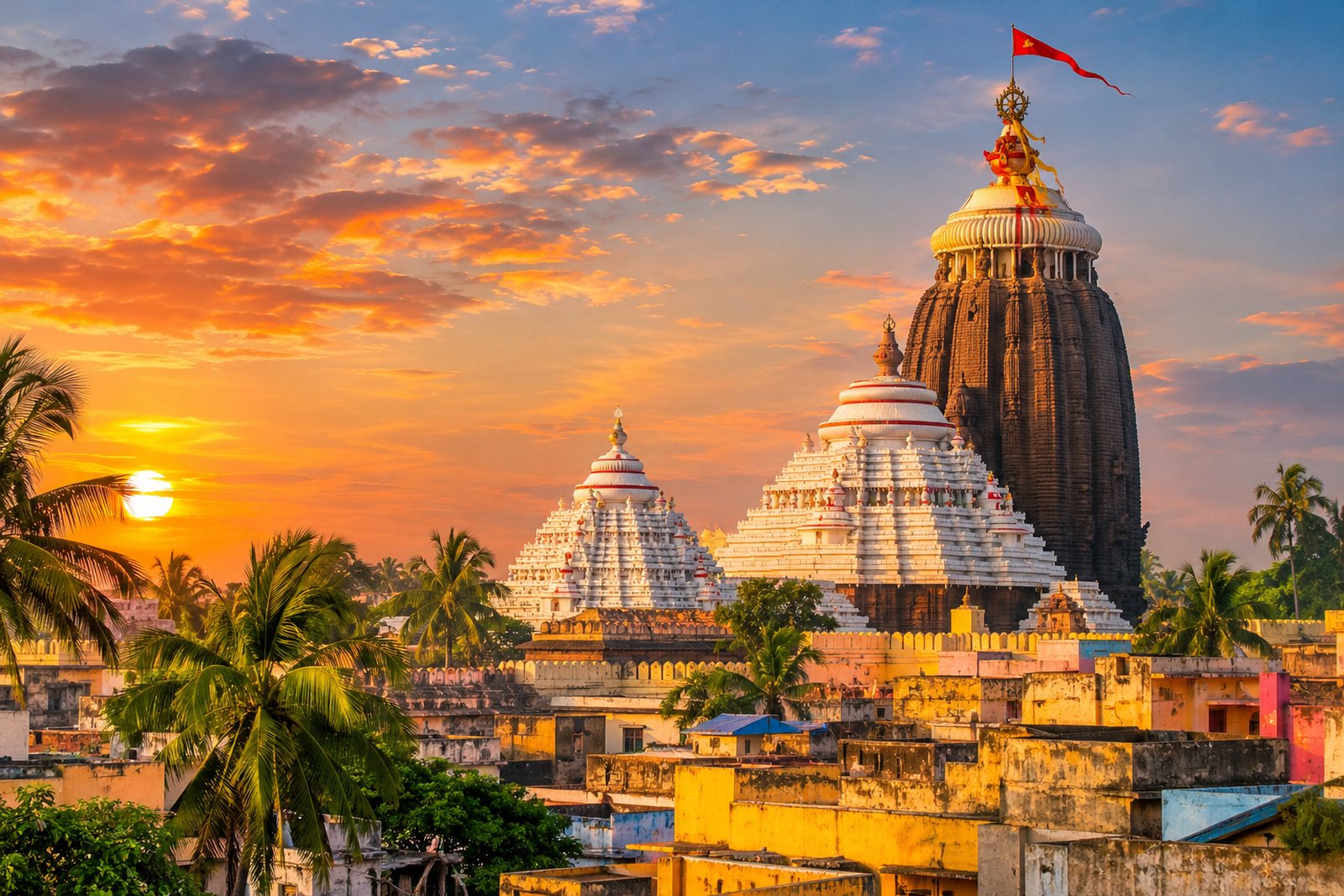
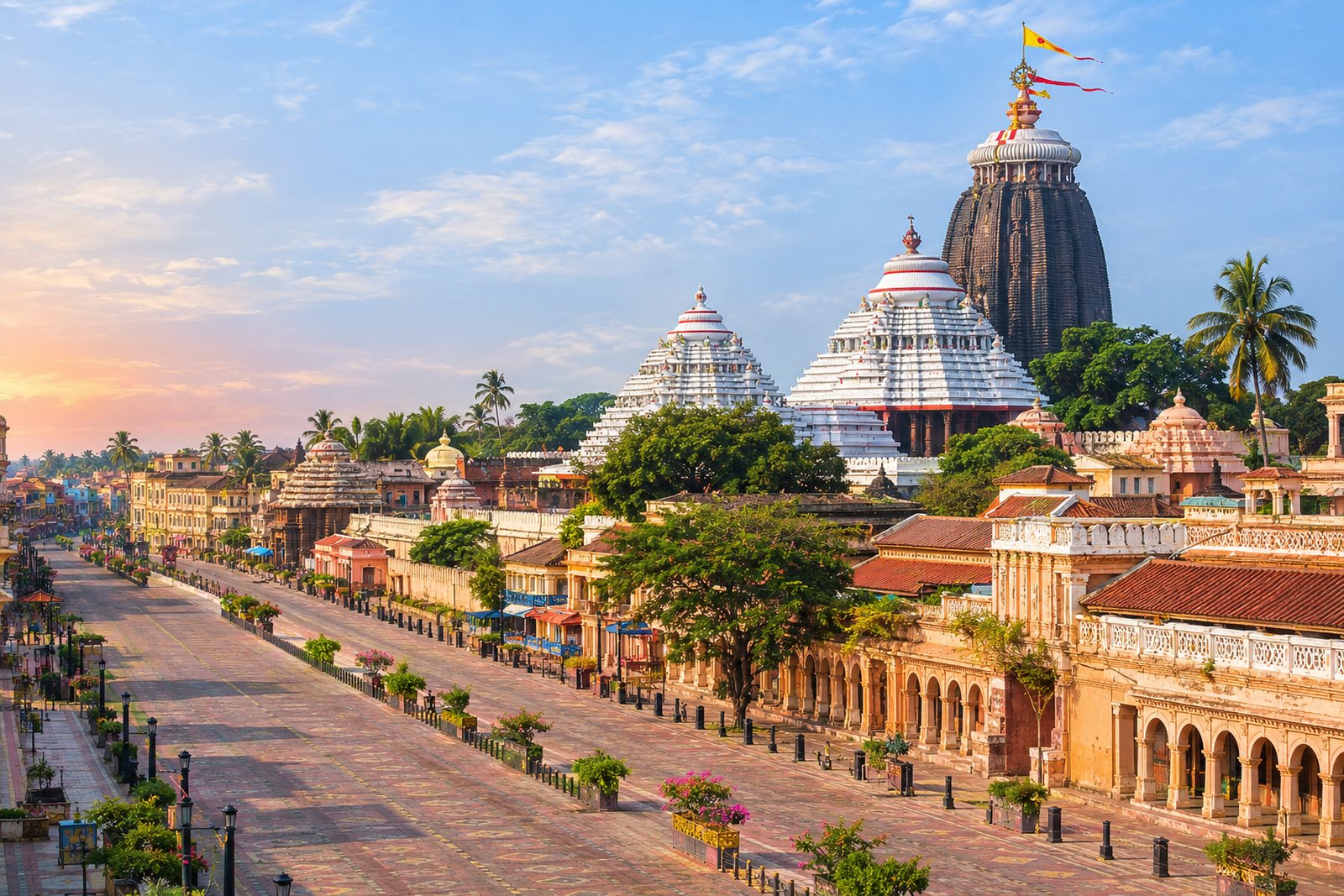
Puri is food and crowds and a very big, very warm welcome. Lord Jagannath's Mahaprasad is cooked in earthen pots in one of the largest temple kitchens in the country, and eating it is part of the darshan. Only Hindus are allowed inside the main temple, so others usually see the shikhar from outside.
Rameshwaram is water. Before darshan, pilgrims are taken from one theertham to the next inside the temple, buckets poured over their heads, until everyone is drenched and laughing. Then come the famous long corridors, quiet and cool.
Did you know? Every evening at Puri, a sevak climbs the outside of the Jagannath temple's shikhar by hand to change the flag at the top. Traffic on the road below slows down as people stop to watch.
Why start the bada char dham from Puri?
Puri is the easiest dham to reach for most of eastern and northern India, with good train links and Bhubaneswar's airport close by. It is also not just one temple. Konark's Sun Temple is a short drive along the coast, Bhubaneswar has the Lingaraj and dozens of older temples, and the beach is right there for the kids who have had enough of queues.
A short Puri Jagannath Darshan trip gives you two nights in Puri with darshan, the beach and a Konark day trip. Puri Konark Bhubaneswar adds a third night and a Bhubaneswar temples day.
If you want the full eastern experience, the Odisha Golden Triangle does one night in Bhubaneswar and three in Puri with a private car, as per the package itinerary. That is one dham done properly, with time to breathe.
How to plan the four dhams realistically
- Do it in parts. The dhams are thousands of kilometres apart. Most families finish the circuit over a few years, one region per trip.
- Badrinath: Open only in season and needs Uttarakhand yatra registration. Check the official portal before you fix dates.
- Dwarka: Pair it with Somnath in a Saurashtra trip. October to March is comfortable.
- Puri: October to March is pleasant. Rath Yatra, usually in June or July, is spectacular but very crowded, so book stays early.
- Rameshwaram: Pair with Madurai and Kanyakumari. Carry a spare set of clothes for the theertham bath.
- Darshan rules: Dress codes, phone rules and timings vary by temple and change often. Check with the temple trust.
Our tip: Keep a small notebook for the yatra. Write the date, who came along and one small memory at each dham. Years later, it becomes the family's favourite thing to read.
A map you carry home
There is something lovely about a pilgrimage that makes you see the whole country. Snow, two seas and a southern island, all held together by one old idea. You do not have to finish it in one go. You just have to start.
Planning the Dwarka side next? Read our Dwarka Somnath yatra guide or browse all Puri holiday packages.
Frequently asked questions
What are the 4 dhams of bada char dham?
Badrinath in Uttarakhand (north), Dwarka in Gujarat (west), Puri in Odisha (east) and Rameshwaram in Tamil Nadu (south).
What is the difference between char dham and chota char dham?
The bada char dham covers four shrines at India's four corners. The chota char dham is a Himalayan circuit in Uttarakhand: Yamunotri, Gangotri, Kedarnath and Badrinath. Badrinath appears in both.
Who established the char dham of India?
Tradition credits Adi Shankaracharya with linking the four dhams and setting up mathas in the four directions. Historians debate the exact details and his dates.
Can I do all four dhams in one trip?
It is possible but tiring, as the dhams are thousands of kilometres apart. Most families complete the bada char dham over several trips, one region at a time.
When is the best time to visit Puri for the char dham yatra?
October to March is comfortable. Rath Yatra, usually in June or July, is the biggest festival but brings huge crowds, so book early if you want to see it.