Jagannath Unfinished Idol Legend: Why the Idols Have No Hands
A carpenter asked not to be disturbed, the king opened the door early, and Jagannath stayed unfinished. The legend, Puri's history and darshan tips.
Look at the eyes first. Everyone does. Two huge round eyes, wide open, never blinking, set in a dark face on a body that has no proper hands and no feet at all. Children see a picture of Jagannath for the first time and ask the obvious question, and grandmothers in Odisha have been answering it for centuries with the same story.
A carpenter asked to be left alone. A king could not wait.
This is the Jagannath unfinished idol legend, the history behind the temple at Puri, the strange ritual that renews the idols, and how to plan your darshan today.
The legend: Nila Madhava in the forest
Long ago, the story goes, a king called Indradyumna, a great devotee of Vishnu, heard of a deity named Nila Madhava, worshipped in secret deep in the forests of Odisha by a Sabara chief named Viswavasu.
The king sent a Brahmin, Vidyapati, to find it. Vidyapati reached the forest, fell in love with the chief's daughter Lalita and married her. He begged to see the deity, and at last Viswavasu agreed, on one condition: Vidyapati would be taken there blindfolded. Clever Vidyapati carried mustard seeds in his cloth and dropped them along the way. After the rains, a line of yellow flowers showed the path.
But when the king arrived with his army, Nila Madhava had vanished. Heartbroken, Indradyumna prayed, and a divine voice told him the Lord would come to him in a new form, as a great log of sacred wood floating in the sea.
The carpenter and the closed door
The log came, as promised, washing ashore near Puri. But no carpenter in the kingdom could cut it. Tools broke. Craftsmen gave up.
Then an old carpenter appeared at the palace. Many tellings say he was Vishwakarma, the divine architect, and some say he was Vishnu himself. He would carve the deities, he said, but only behind a closed door, alone, for twenty-one days. Nobody was to open it. Nobody was to look.
The king agreed. For days, the sound of chisel on wood came from the room. Then one day the sound stopped.
Queen Gundicha grew worried. Was the old man ill? Had he died in there, without food or water? She pleaded with the king, and the king, against his word, opened the door early.
The room was empty. The carpenter had vanished. On the floor stood three figures, Jagannath, his brother Balabhadra and their sister Subhadra, with great round eyes, no feet, and only stumps where hands should be.
The king was devastated. He had ruined it. But that night, the legend says, the Lord came to him in a dream and told him not to grieve. This is the form I chose. Worship me like this.
And so they did.
What history says about the temple
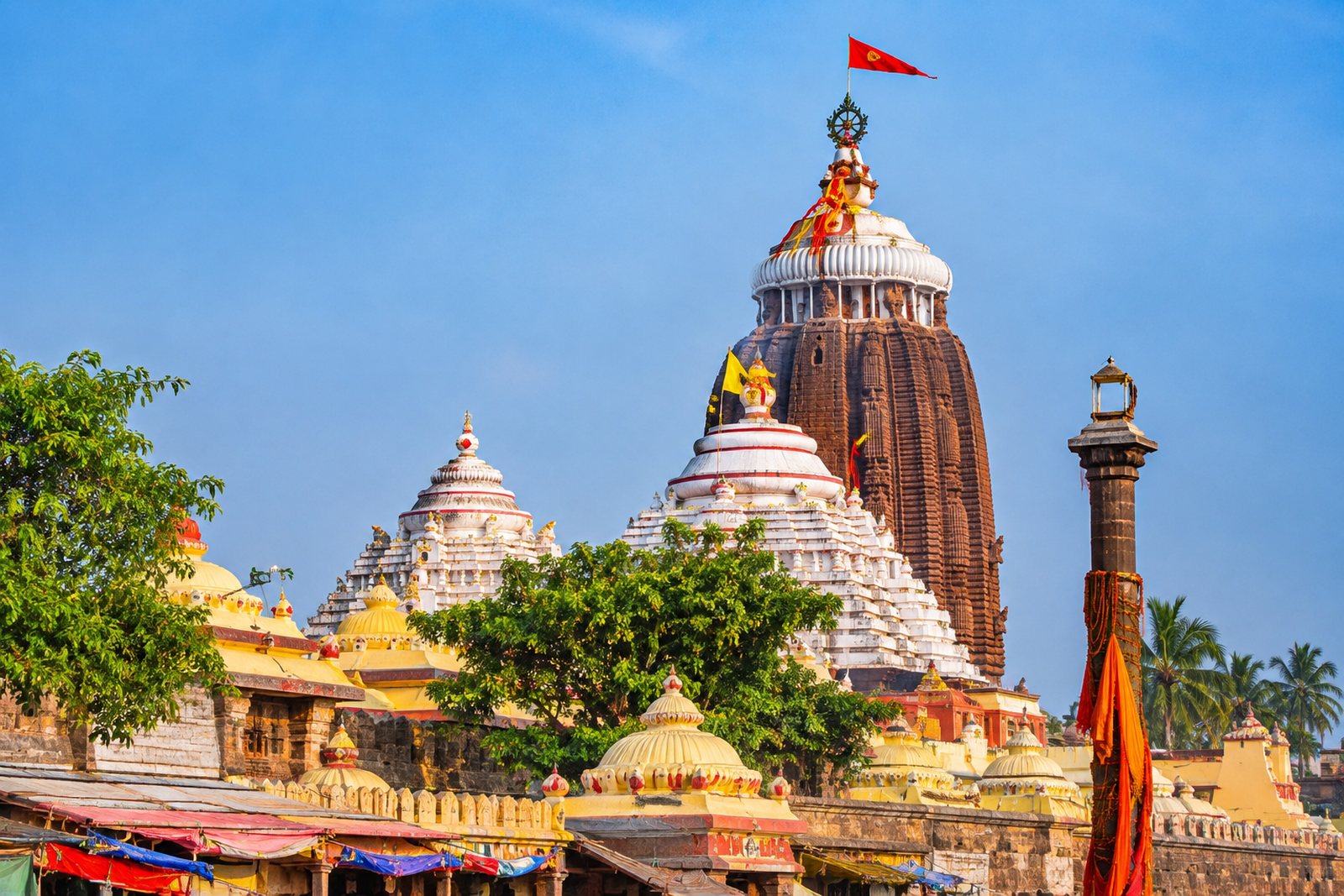
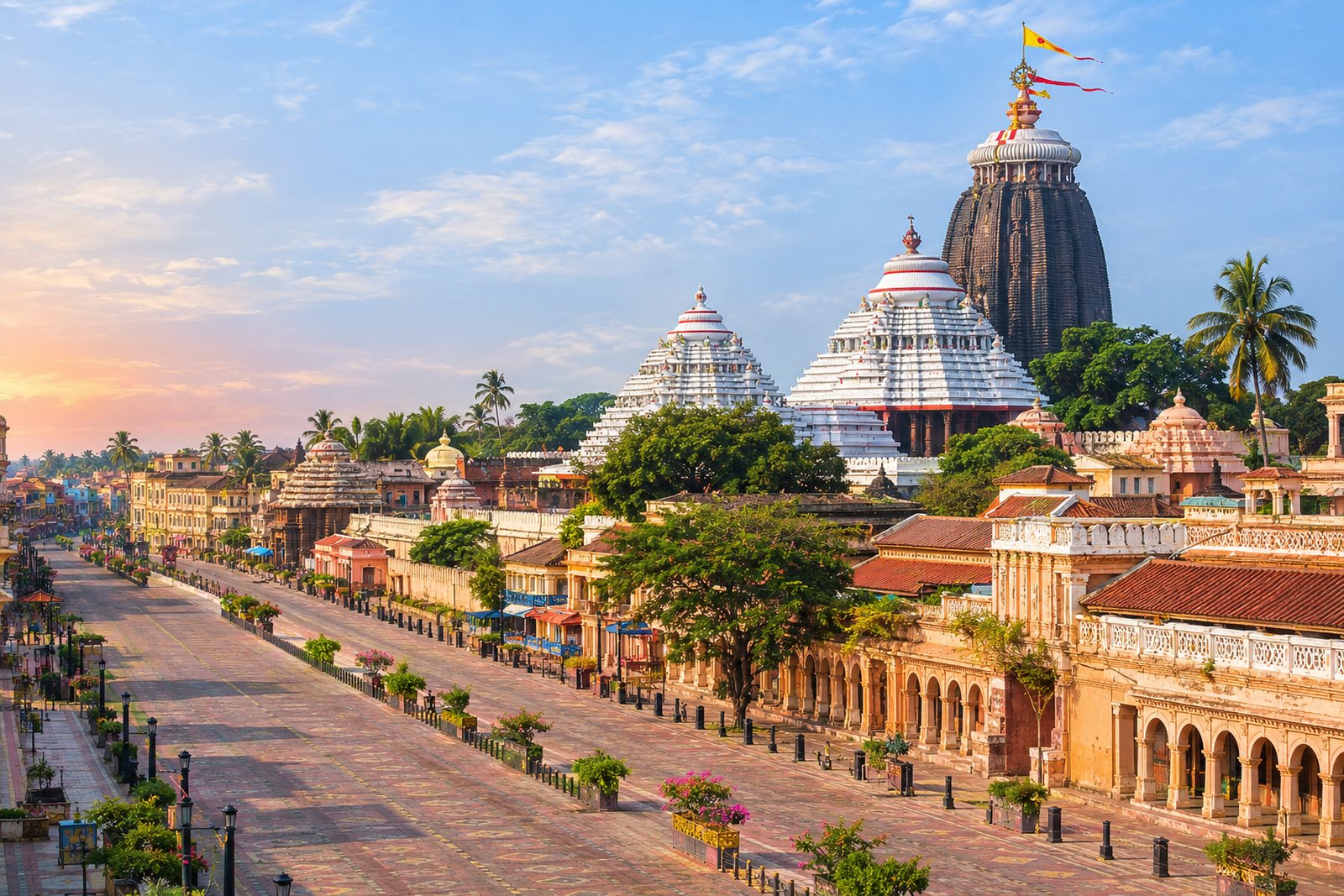
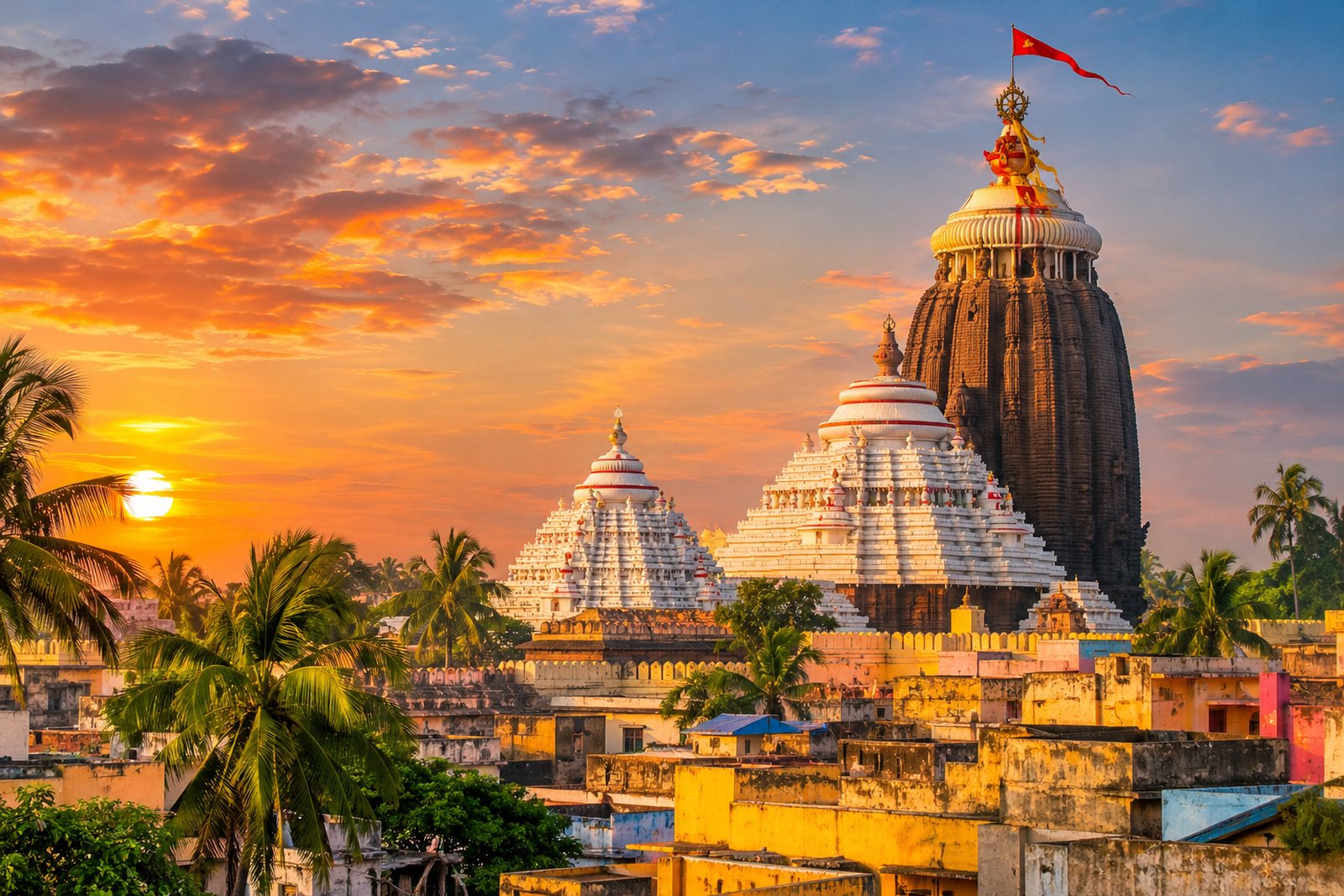
The temple at Puri today was begun in the 12th century under the Eastern Ganga king Anantavarman Chodaganga Deva, and its great curved tower is one of the tallest in Odisha. Worship of Jagannath here is older than the present building, and historians have long pointed to the deep roots of the tradition in the region's tribal communities, which the Sabara chief in the legend echoes.
That link is still alive. The Daitapati sevaks, who play a special role in the most private rituals of the deities, trace their descent to Viswavasu's line.
The most extraordinary of those rituals is Nabakalebara, "new body". In certain years with an extra month of Ashadha, roughly every twelve to nineteen years, new idols are carved from specially chosen neem trees, and the old ones are buried. The last one took place in 2015. In a sense, the carpenter's work is never finished. It is simply begun again.
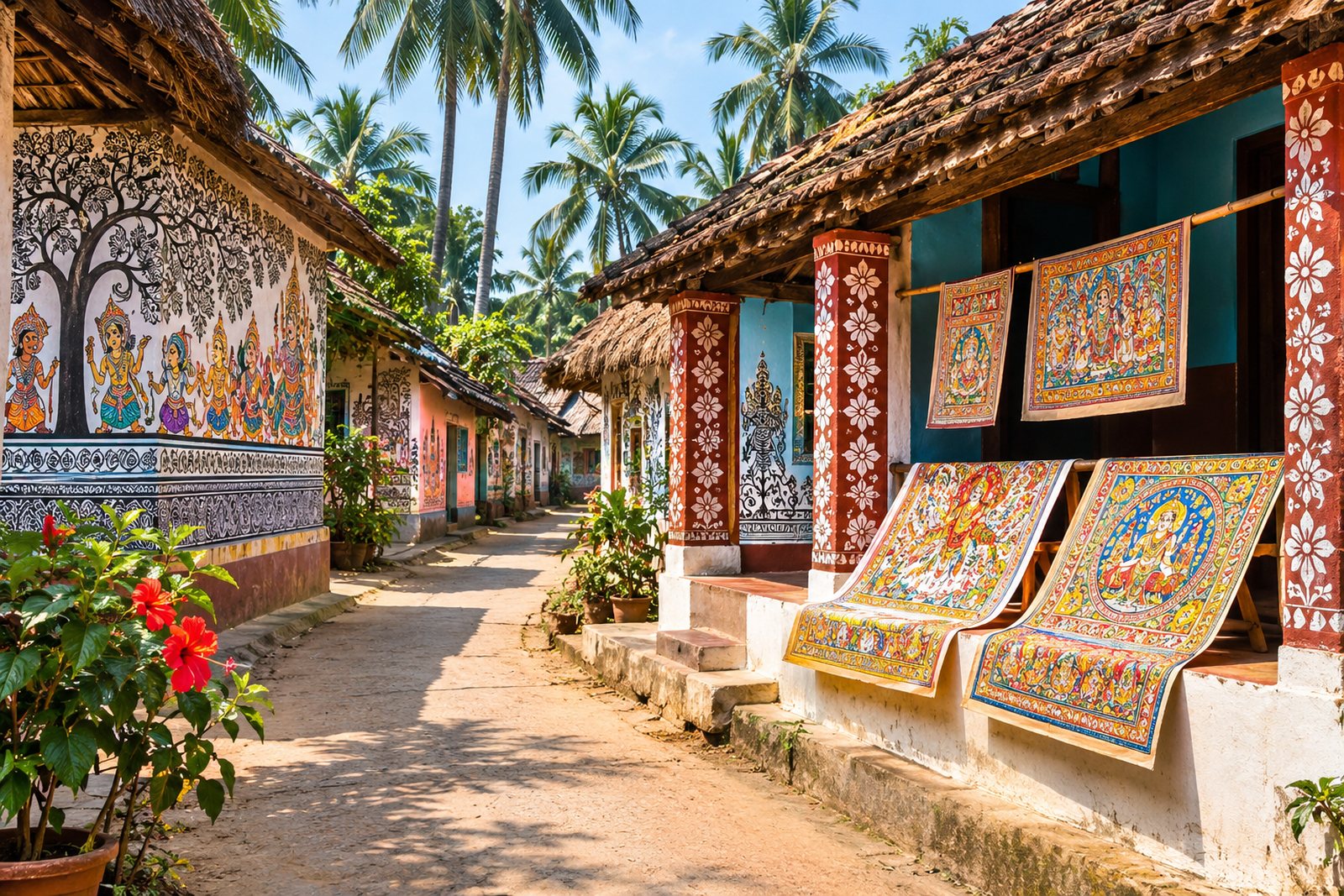
Did you know? After the bathing festival of Snana Purnima, the deities are believed to fall ill and rest away from public view for about two weeks. During this time, called Anasara, devotees worship painted pattachitra images instead, made by artists from villages like Raghurajpur near Puri.
How to plan your Jagannath darshan today
- Entry rules: the main temple admits only Hindus. Check the temple administration's official guidance on current rules.
- What to leave behind: phones, cameras, bags and leather items are generally not allowed inside. Use the deposit counters outside.
- Dress: modest, traditional clothes are best.
- Mahaprasad: the temple's cooked prasad is famous, cooked in earthen pots in the temple kitchen. You can have it inside the complex.
- Pandas: you may be approached for guided darshan. Agree terms clearly before accepting any help.
- Rath Yatra: usually in June or July, when the deities ride to the Gundicha temple, named after the queen in the legend. Book months ahead; crowds are huge.
- Best season: October to March for pleasant beach weather.
Our tip: Do darshan early in the morning, then walk down to the sea before the sun gets strong. Puri is a temple town and a beach town, and it is best taken in that order.
BellaSafar's Puri Jagannath Darshan gives you two nights with Jagannath darshan, Puri beach and the old maths on one day and Konark on the next, as per the package itinerary. Puri Konark Bhubaneswar adds a day for Lingaraj and the Bhubaneswar temples. Puri Explorer goes further, with Raghurajpur's pattachitra painters, Pipili's appliqué work and Sakshigopal.
A god who chose to stay unfinished
We spend so much of our lives trying to finish things, to make them perfect before we show them to anyone. And here is a god who, the story says, chose the half-done version. Big eyes to see everyone, no hands to push anyone away. Stand in that crowd at Puri and it feels less like a flaw and more like an invitation.
Read our Puri Konark Bhubaneswar guide or the Bada Char Dham story, or browse all Puri holiday packages.
Frequently asked questions
Why are the Jagannath idols unfinished?
Legend says a divine carpenter carved them behind a closed door on condition no one opened it. The king opened it early, the carpenter vanished, and the idols stayed without full hands or feet.
Who carved the Jagannath idols according to legend?
Many tellings say it was Vishwakarma, the divine architect, disguised as an old carpenter. Some versions say it was Vishnu himself.
What is Nabakalebara?
Nabakalebara means new body. In certain years with an extra Ashadha month, roughly every 12 to 19 years, new idols are carved from sacred neem wood. The last was in 2015.
Can non-Hindus enter the Jagannath temple in Puri?
The main temple admits only Hindus. Check the temple administration's official guidance for current rules.
When is the Puri Rath Yatra?
It is usually held in June or July, on a date set by the Hindu calendar. Book well ahead, as crowds are very large.