Goan Food History: Vindaloo, Poi and the Baker on a Cycle
How a Portuguese garlic-and-wine stew became vindaloo, why a baker on a cycle still brings bread every morning, and what Goans really eat at home.
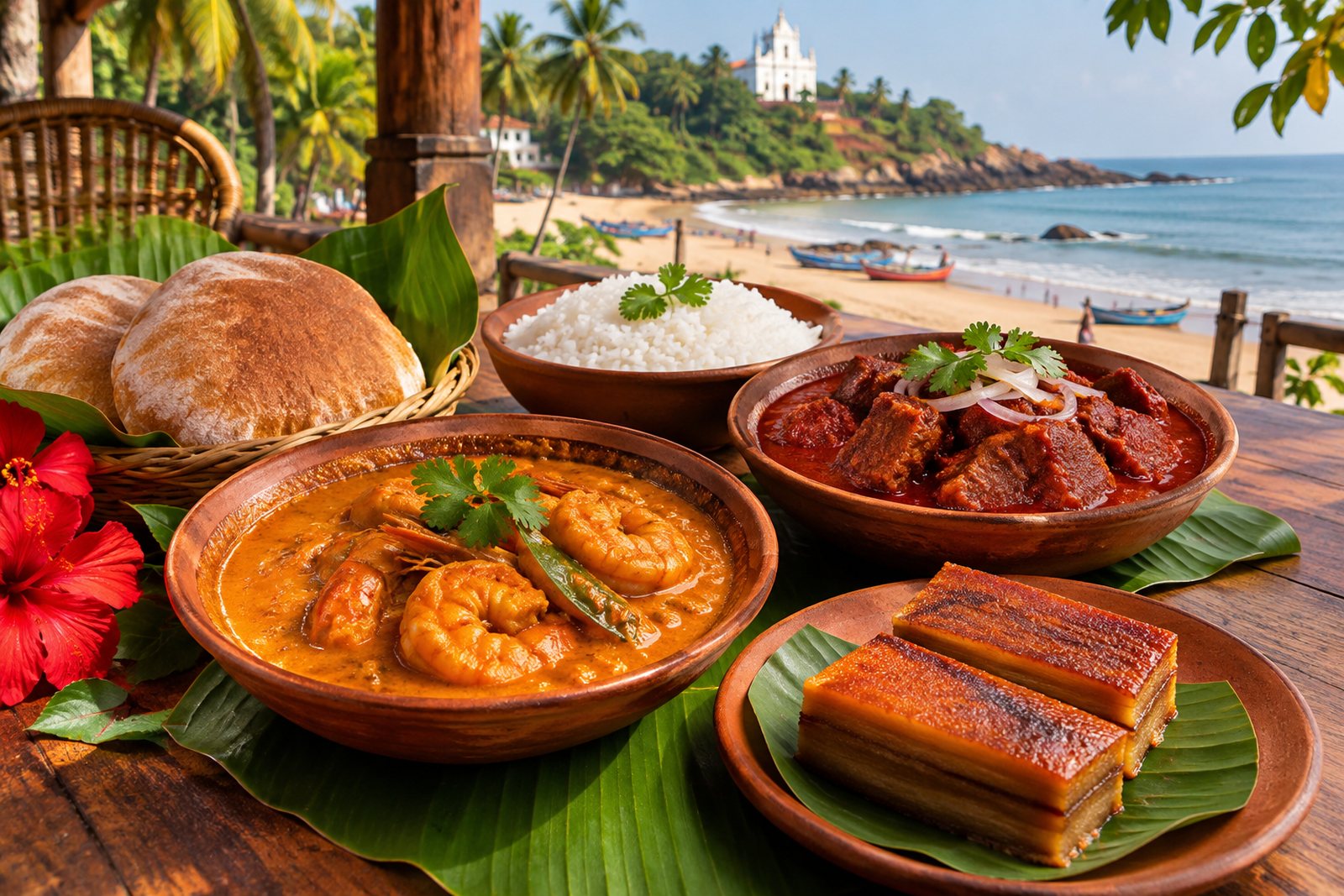
Six in the morning, somewhere in a Salcete village. The dogs are still asleep on the road when a bicycle horn goes paam-paam outside the gate. A man swings a cane basket off his carrier, lifts a faded cloth, and the smell of warm bread spills into the lane. He is the poder, the village baker, and his round is older than anyone's grandmother.
That loaf is a good place to start. This is Goan food history told through the dishes people actually eat, with tips on tasting it properly on your trip.
Before the Portuguese: rice, coconut and the sea
Long before any European sail appeared off Goa, the Konkan coast already knew exactly what it liked to eat. Rice from the paddy fields. Coconut from every backyard. Fish from the rivers, the creeks and the open sea. And sourness, always sourness, from kokum and tamarind.
That base never went away. It is still the heart of the Hindu Goan kitchen, where many families cook with coconut, kokum and fish but keep certain days vegetarian, and where onion and garlic are left out of some festival and temple food altogether.
Then, in 1510, the Portuguese took Goa. They stayed for four and a half centuries. And they changed the menu.
How vindaloo got its name
Here is the twist most people miss. Vindaloo has nothing to do with aloo.
Portuguese sailors carried a simple dish called carne de vinha d'alhos: meat soaked in wine (vinho) and garlic (alhos). It kept well on long voyages and tasted of home. When it landed in Goa, local cooks looked at it and quietly rewrote it. Wine was expensive and scarce, so in went vinegar, often made from coconut toddy. Then came dried red chillies, pepper and cumin. The meat became pork. The sour garlic stew turned into something sharp, hot and deep red.
So the "aloo" you hear is really alhos, garlic. The potato-heavy, eye-watering curry served in many restaurants abroad is a later cousin. A Goan vindaloo is sour first, hot second, and usually tastes better on the second day.
Did you know? The chillies that give vindaloo its fire are not Indian at all. They came from the Americas, and the Portuguese were among the traders who brought them to India's west coast in the 16th century. Before that, Indian heat came mostly from black pepper.
The poder, his horn and the Goan breads
Bread arrived with the Portuguese too. Goans made it their own. Many bakers traditionally used palm toddy to make the dough rise, which gave the bread a faint, pleasant tang. Every shape got a name, and older Goans will correct you if you mix them up.
Pao is the soft, square, pull-apart loaf. Poi is round and a little hollow, made with some wheat bran, and is the one you tear and dip into curry. Undo is round with a hard, crackly crust. Katre pao is small and pinched into a shape that looks like a pair of scissors, which is exactly what katre means.
The poder still does his round in many villages, often twice a day. Morning bread for tea, evening bread for dinner. Take your parents on a village walk and watch: the bicycle horn often gets more attention than the church next door.
Xacuti and fish curry rice
If vindaloo is Goa's famous export, xacuti is the curry Goans argue about. Grated coconut and a long list of whole spices are roasted in a dry pan until they turn dark brown and the kitchen smells smoky. Then it is all ground into a thick paste. Chicken xacuti is the most common, though you will also find mutton. The roasting is the secret. Skip it and you just have a yellow coconut curry.
But ask a Goan what they eat every day and the answer is not xacuti. It is fish curry rice.
Coconut ground with red chillies, soured with kokum or tamarind, cooked with whatever the boats brought in that morning. A heap of boiled rice, a fried fish on the side, maybe a little vegetable. That is lunch for a huge part of Goa, Hindu and Catholic alike. After it, many homes pour a glass of sol kadhi, pink and cooling, made from kokum and coconut milk.
And in the monsoon, when the boats stay on the sand? Dried fish and pickles made in summer take over. The cooking follows the sea.
Bebinca and the Christmas table
December in a Catholic Goan home smells of coconut, butter and burnt sugar. That is bebinca being made. Coconut milk, egg yolks, sugar and flour are poured one thin layer at a time, each one cooked under heat before the next goes on. Seven layers, sometimes many more. Nobody makes a small one.
Local legend says it was invented by a nun called Bebiana in an Old Goa convent, who kept adding layers for a priest. Nobody has ever proved it. It is still a lovely story to tell while cutting a slice.
Bebinca shares the Christmas plate, the kuswar, with kulkul, neureos and sticky dodol. Hindu homes make their own rice, jaggery and coconut sweets for Ganesh Chaturthi. Different festivals, same coconut tree.
Food is one of the easiest ways to understand Goa. BellaSafar's Goa Classic Plus package gives you the stay, transfers and sightseeing days, so you can plan your own food trail between beaches and old towns.
How to taste Goan food today
- Where to base yourself: Panjim, Margao and Mapusa all work well. Panjim is around 45 minutes from Dabolim airport and around 1 hour from Mopa airport, depending on traffic.
- Best time: November to February. December adds Christmas sweets and feast-day food, but also the biggest crowds.
- Markets: Go to the Mapusa or Margao market in the morning to see fish, spices, chouriço sausages and local bread.
- Order the thali: Small local eateries serve a fish thali at lunch with rice, curry, fried fish and sol kadhi. This is the real everyday food.
- Vegetarians: Ask for a vegetarian Goan thali or khatkhate, a mixed vegetable stew often made for festivals.
- Check locally: Menus, seasonal dishes and timings change, so ask your hotel or driver what is good that week.
- Combine it with: A morning in Old Goa (read our Basilica of Bom Jesus history) and an evening walk through Fontainhas.
A plate that remembers
Rice and coconut from the old Konkan villages. Chillies and cashew from ships that crossed oceans. Vinegar and bread from the Portuguese years. Goa's politics changed overnight in 1961 (our Goa Liberation Day history tells that story), but its kitchens took their time, and kept their character. Tear a warm poi into a bowl of fish curry, and you are eating five hundred years in one bite.
Planning your trip? Read our Goa trip plan or browse all Goa holiday packages.
Frequently asked questions
What is the history of Goan food?
Goan food grew from Konkan coastal cooking based on rice, coconut, fish and kokum. After the Portuguese arrived in 1510 it absorbed vinegar, pork, bread, chillies and new sweets, creating Hindu and Catholic Goan styles that still share many ingredients.
Where does the word vindaloo come from?
Vindaloo comes from the Portuguese dish carne de vinha d'alhos, meat marinated in wine and garlic. In Goa the wine was replaced by local vinegar and the dish gained red chillies and spices. The 'aloo' means garlic, not potato.
What is a poder in Goa?
A poder is the traditional Goan village baker. Many still deliver fresh pao and poi door to door on a bicycle, sounding a horn to tell families the bread has arrived.
What do Goans eat every day?
Fish curry rice is the everyday staple for many Goans: a coconut curry soured with kokum or tamarind, boiled rice and often a piece of fried fish, sometimes followed by sol kadhi.
What is bebinca made of?
Bebinca is a layered Goan dessert made from coconut milk, egg yolks, sugar and flour. Each layer is cooked before the next is added, and it is especially popular at Christmas.