White Rann Permit: Do You Need One for the Rann of Kutch?
Yes, you need a permit to walk onto the White Rann. How it works, where the Bhirandiyara checkpost fits in, what ID to carry, and how tent and package guests handle it.
Somewhere past Bhirandiyara, the car slows at a barrier. A uniformed official leans in, glances at the paper on your dashboard, then at your Aadhaar card, then at the kids in the back seat who have gone suddenly silent. A nod. The barrier goes up. A few kilometres later, the land turns white, and everyone in the car forgets the checkpost ever happened.
That small stop is the White Rann permit, and it is the one piece of paperwork most first-time Kutch visitors do not know about until they are on the road. Here is what it is, why it exists, and how to sort it out without fuss.
Why do you need a permit for the White Rann?
The Great Rann of Kutch is not just a tourist spot. It is a vast salt marsh that runs right up to the international border with Pakistan, and the area is watched by security forces. Visitors are welcome, and Rann Utsav has made it one of Gujarat's best-known winter experiences, but entry onto the salt near Dhordo is regulated. The permit lets the administration know who is going in, how many, and in which vehicle.
Think of it like a gate pass at a big campus. Not a big deal, but you do need it.
How does the White Rann permit work?
The details can change, so treat this as a general guide and check the official Gujarat government portal before you go:
- Online: The permit can usually be applied for online in advance. You fill in names, ID details and vehicle information, pay the fee, and download or print the permit.
- At the checkpost: Visitors can also get the permit at the Bhirandiyara checkpost, on the road from Bhuj towards Dhordo and the White Rann. In peak season, queues here can be long.
- ID for everyone: Carry an original government photo ID for every adult. Keep children's documents handy too.
- Vehicle details: If you are in a private car or taxi, the vehicle number is part of the permit.
- Validity: Permits are usually for a specific date. If your plan changes, check whether you need a new one.
Fees and timings are set by the authorities and are revised from time to time, so we will not quote them here.
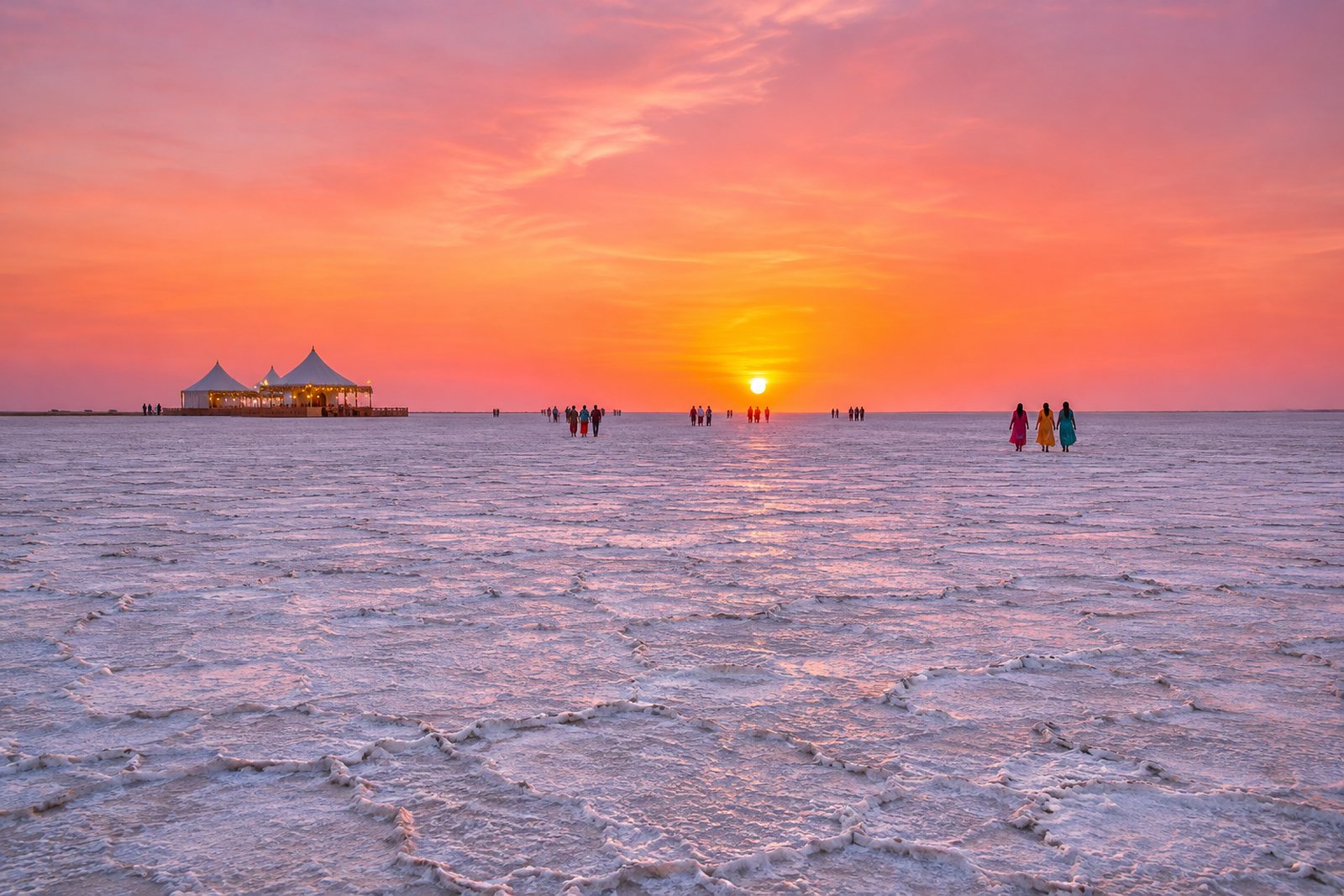
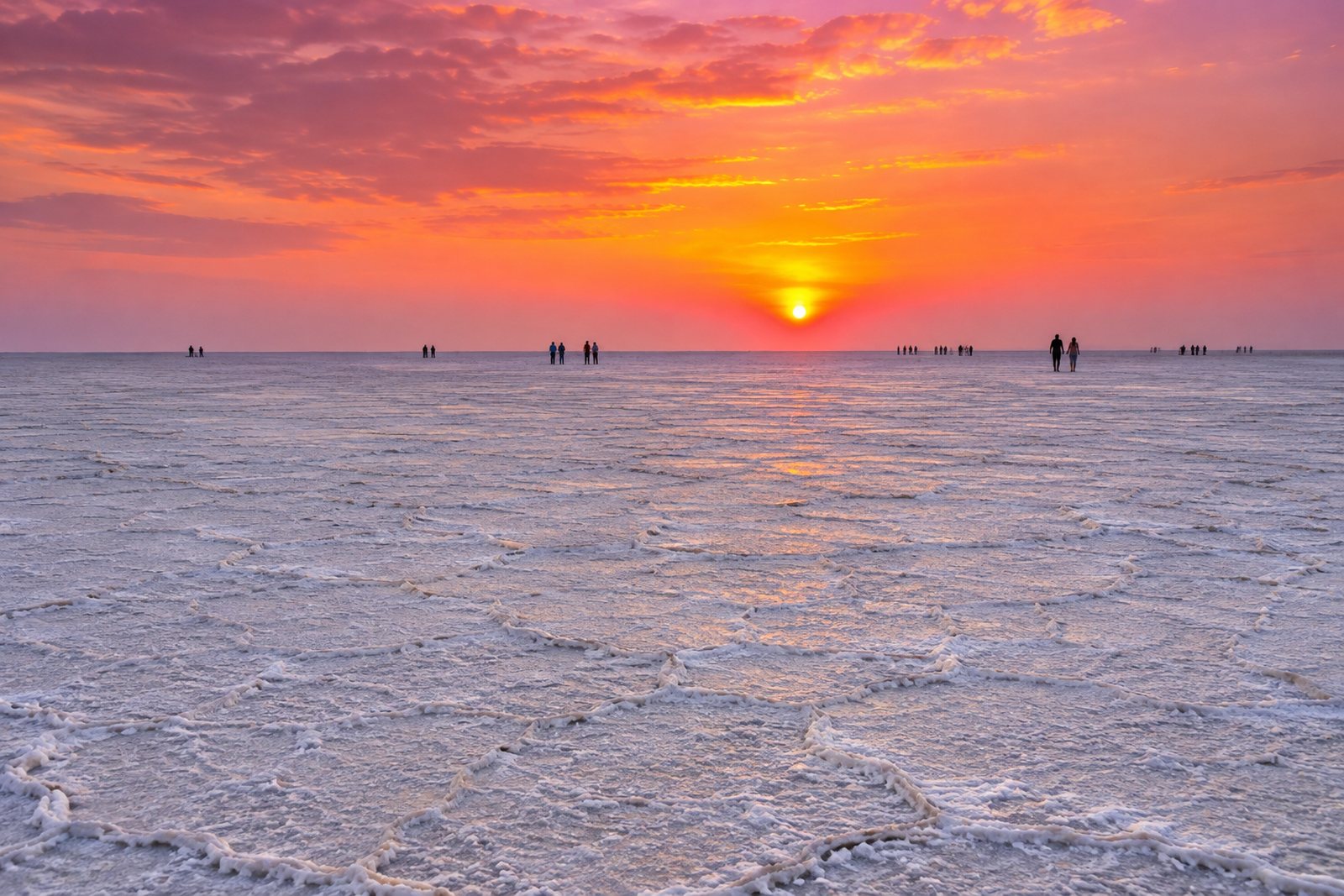
Did you know? The White Rann is a seasonal sea of salt. During the monsoon, much of it is under shallow water. As it dries out after the rains, a crust of salt is left behind, and that is the white surface you walk on in winter.
What about Rann Utsav tent guests?
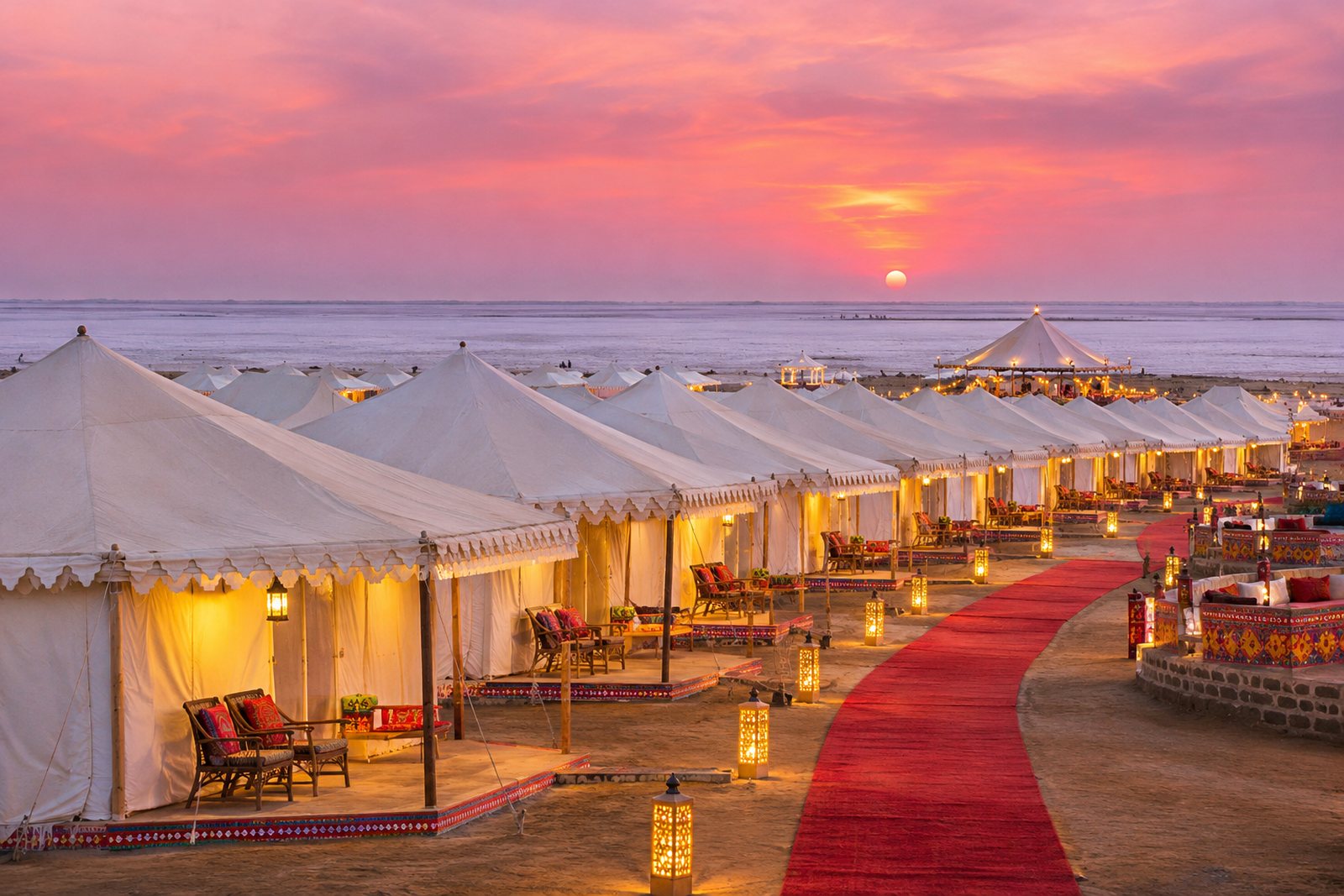
If you are staying at the tent city near Dhordo during Rann Utsav, the operator often helps guests with entry formalities. But "often" is not "always". Ask your tent or package provider directly: is the permit arranged, or do we apply ourselves? Get the answer in writing on WhatsApp so there is no confusion at the checkpost.
If you are deciding between the tents and a Bhuj hotel, our comparison of Rann Utsav tent vs Bhuj hotel lays out the trade-offs.
What else is near the border?
Kutch has several places that sit close to sensitive areas:
- Kalo Dungar, the highest point in Kutch, is a regular tourist stop with wide views over the Rann.
- The Road to Heaven, the long straight road across the Rann towards Dholavira, is open to visitors and is one of the most photographed drives in Gujarat.
- Points beyond Khavda, such as India Bridge, may need separate permission or may be closed to tourists, depending on current security rules.
The simple rule: follow signboards and instructions from security personnel, do not fly drones without permission, and do not wander off marked areas.
When is the best time to see the White Rann?
From around November to February, the salt is usually dry and white, and the weather is pleasant by day and cold at night. Rann Utsav generally runs through this season, and its exact dates change every year. Full moon nights are especially popular, which means more visitors and longer checkpost queues. If you want a quieter visit, avoid full moon weekends and the Christmas-New Year week.
Our tip: Reach the salt about an hour before sunset. You get time to walk out past the crowds near the entry point, and the light turns the white surface soft pink and gold.
How our Kutch packages handle it
All three of our Kutch trips include time on the White Rann, with a private car for the whole trip, as per the package itinerary. Check your inclusions for permit arrangements, and our team will guide you on what to carry.
The two-night Rann Utsav Getaway keeps you in Dhordo for both nights, with a White Rann sunset, a sunrise the next morning, and craft villages like Hodka, Ludiya and Nirona.
The three-night Rann of Kutch Explorer adds a night each in Bhuj and Dholavira, with the Road to Heaven and Kalo Dungar. The five-night Kutch Grand with Mandvi adds Bhuj's Aina Mahal and a day at Mandvi beach and the shipyard. Before you go, read the story of Aina Mahal in Bhuj.
One paper, one sky
The permit takes a few minutes. The White Rann stays with you for years. Sort the paperwork early, carry your IDs, and leave the rest of the evening for the salt, the silence, and the moon coming up over a land that looks like nothing else in India.
Read our Rann of Kutch trip guide or browse all Dhordo holiday packages.
Frequently asked questions
Do I need a permit to visit the White Rann?
Yes. Visitors need a permit to enter the White Rann area near Dhordo because it lies in a sensitive border region. The permit is usually checked on the way in, so carry it along with your ID.
How do I get a White Rann permit?
The permit can usually be applied for online through the official Gujarat government portal or obtained at the Bhirandiyara checkpost on the road from Bhuj. Rules and fees can change, so check the official portal before you travel.
What documents do I need for the White Rann permit?
Carry an original government photo ID for every adult, such as Aadhaar, passport or driving licence, and vehicle details if you are driving. Foreign nationals may face different rules and should check in advance.
Do Rann Utsav tent guests need a separate permit?
Tent city operators often help their guests with entry formalities, but arrangements vary. Ask your tent or package provider whether the permit is included or whether you need to apply yourself.
Are other places in Kutch like India Bridge or Kalo Dungar also restricted?
Areas closer to the border have their own rules, and some points beyond Khavda need separate permission or are closed to tourists. Kalo Dungar is a common tourist stop, but always follow local and security instructions.