Vrindavan Temple Walk: ISKCON, Prem Mandir and Radha Raman
A day of aartis and kirtan in Vrindavan: ISKCON in the morning, Banke Bihari and Radha Raman by noon, Keshi Ghat and Prem Mandir's lights at night.
Hare Krishna, Hare Krishna. The chant starts before sunrise and, if you let it, it follows you all day in Vrindavan. From a mridang in a temple courtyard, from a speaker on an e-rickshaw, from an old widow in white humming it under her breath on a ghat. By evening you will be humming it too, without noticing when you started.
A Vrindavan temple walk is less about ticking off temples and more about catching each one at its best moment: one for the morning aarti, one for the quiet midday darshan, one for the evening lights. Here is a day plan that does exactly that.
Before you start: how Vrindavan temples work
Most Vrindavan temples open early, close for a few hours in the afternoon while the deity rests, and open again in the evening. Exact timings change with season and festival, so check with each temple locally on the day. Plan your walk around these gaps, not against them.
A few house rules that save trouble:
- Shoes are left outside; carry a cloth bag or use the shoe stands
- Dress modestly, shoulders and knees covered
- Keep spectacles, phones and food tightly held; Vrindavan monkeys are famous for snatching them
- Photography is restricted in many temples, especially of the deity
- Crowds peak on weekends, Janmashtami, Holi and Ekadashi
Early morning: ISKCON and the Krishna Balaram Mandir
Start at the ISKCON temple, the Krishna Balaram Mandir, built by the ISKCON movement in the 1970s. The morning here has a rhythm: kirtan, the blowing of the conch, devotees from India and around the world dancing in the courtyard, and the smell of flowers and ghee lamps. Even if you are not a regular temple-goer, it is hard to stand still once the kirtan picks up speed.
The marble courtyard, the deities of Krishna and Balaram, and the samadhi of the movement's founder, Srila Prabhupada, are all in the complex. Stay for one full kirtan. Then have breakfast nearby; Vrindavan mornings mean kachori with aloo sabzi and a glass of hot milk or lassi.
Mid-morning: Banke Bihari, the heart of Vrindavan
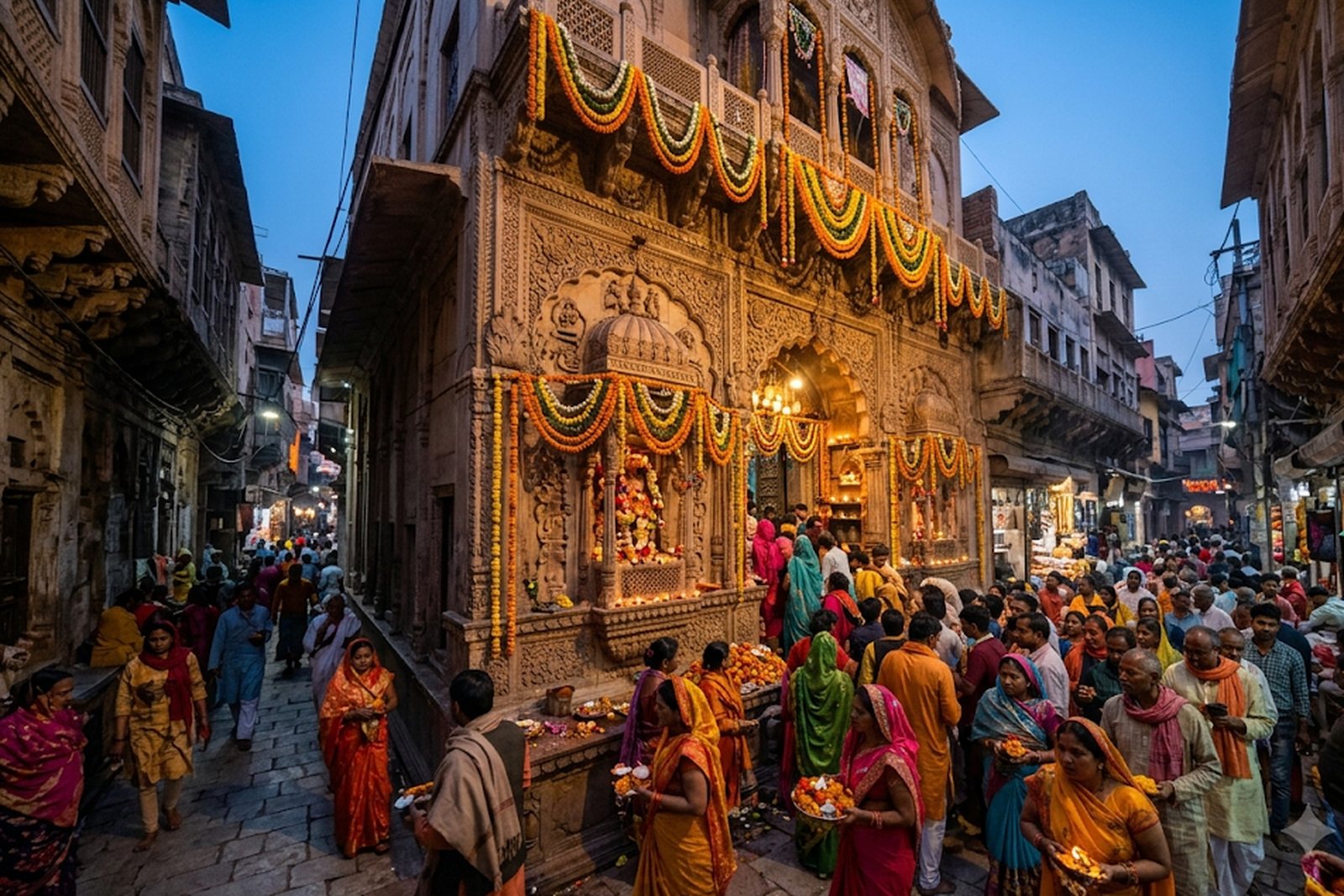
Next, head into the old town lanes to Banke Bihari temple, the most loved temple in Vrindavan. The darshan here is unusual. The curtain in front of the deity is drawn and opened again and again, so the darshan comes in short glimpses. Devotees believe Banke Bihari's gaze is so powerful that a long, unbroken look could overwhelm a bhakt.
The lanes are narrow and the crowd can be intense, especially on festival days. Hold children's hands, keep elders in the middle of your group, and avoid peak days if anyone has trouble with crowds.
Did you know? At Banke Bihari, the mangla aarti in the early morning is held only once a year, on Janmashtami, unlike most Krishna temples where it happens daily. Local tradition says Bihari ji, like a child, is not woken early.
Late morning: Radha Raman temple
A short walk away is the Radha Raman temple, one of the most respected old temples of Vrindavan. Its deity of Radha Raman is believed by devotees to have manifested from a shaligram stone worshipped by Gopal Bhatta Goswami in the 16th century. The temple is calmer than Banke Bihari, the singing is soft, and the old-world feel of the courtyard is lovely.
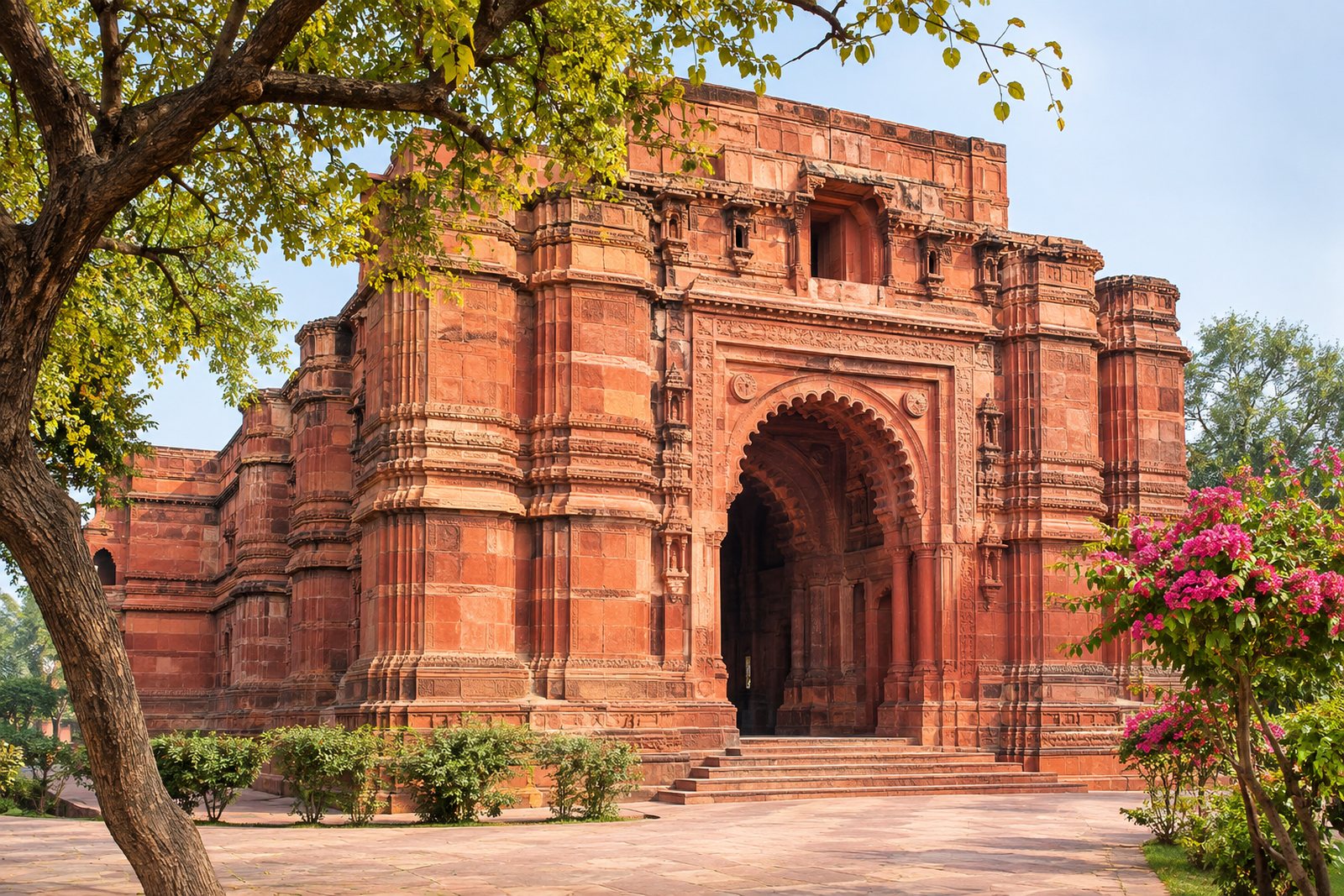
If you have time, nearby lanes also lead to the Radha Vallabh temple, the carved red stone of the old Govind Dev temple, and Nidhivan, the grove where, according to local belief, Krishna still performs the raas lila every night. Nidhivan is closed after evening and nobody stays inside at night; respect that.
Afternoon: rest, ghats and the Yamuna
Temples close, the sun is up, and this is when you rest. After lunch, go towards Keshi Ghat on the Yamuna if the weather allows. The ghat, with its old red sandstone pavilions, is especially beautiful in the late afternoon light. Boat rides on the river are often available; agree on the rate before you sit. The evening Yamuna aarti at Keshi Ghat is simple and moving.
Evening: Prem Mandir and its lights
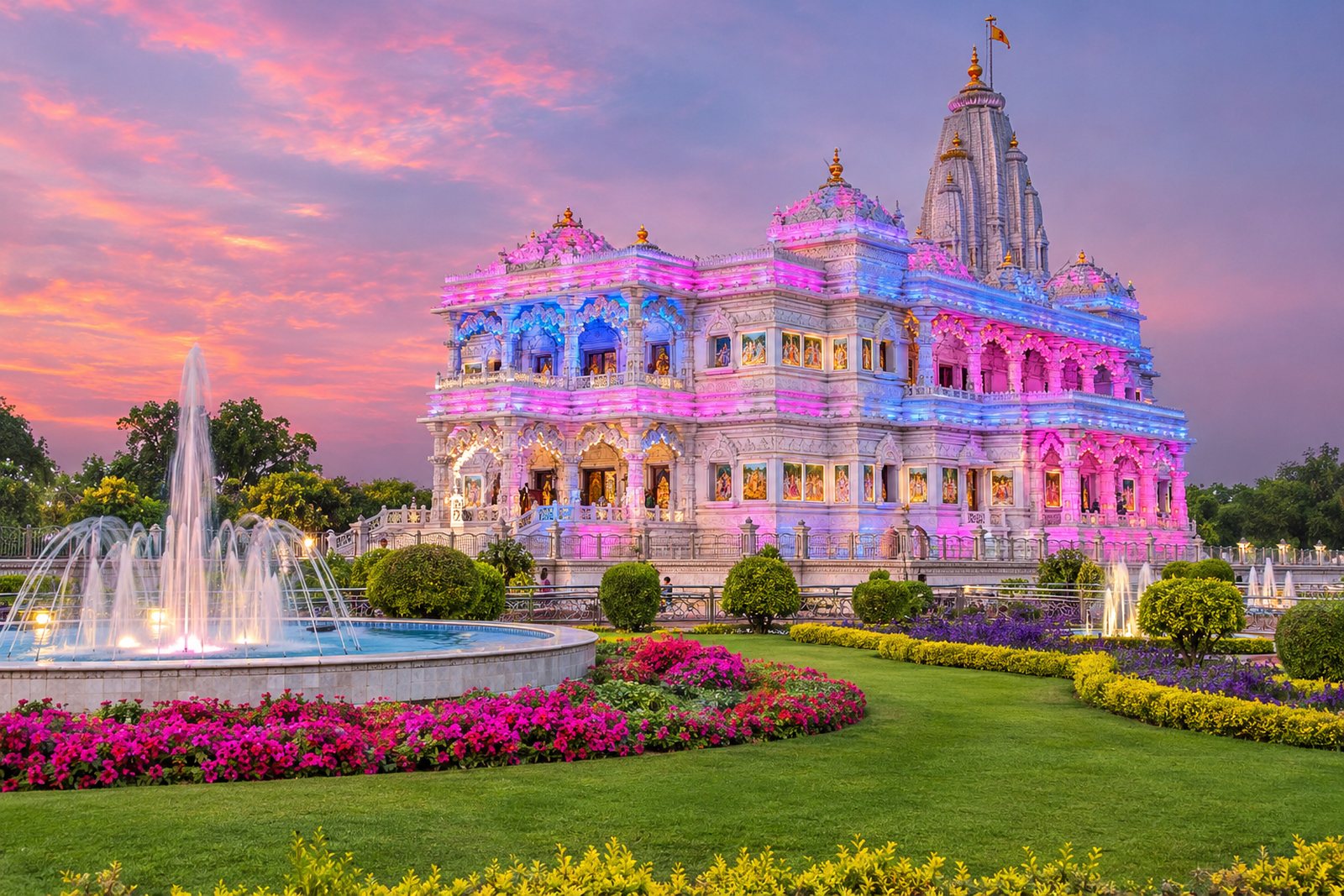
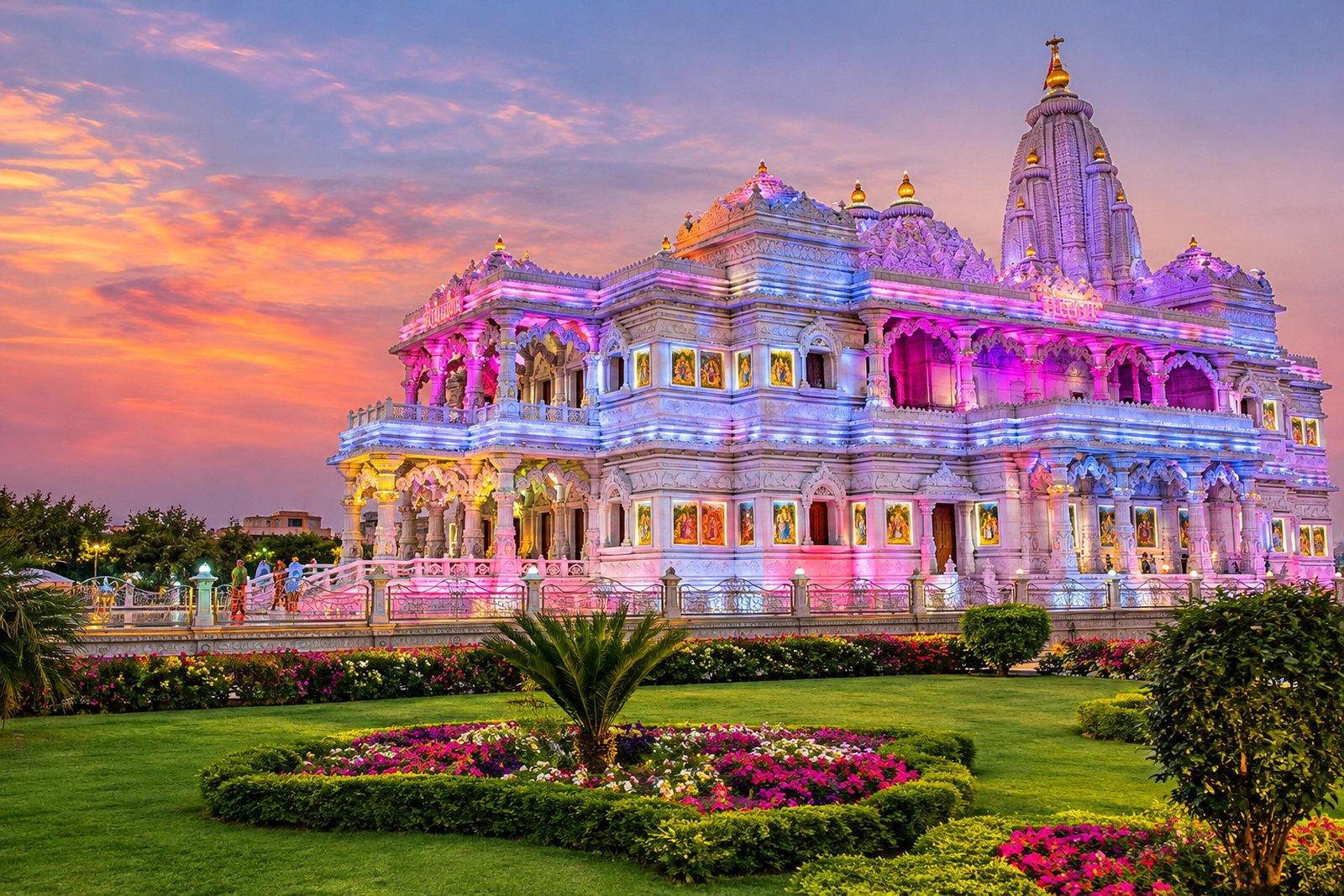
End the day at Prem Mandir, the white marble temple built by Jagadguru Kripalu Parishat and opened in 2012. In daylight it is impressive. After dark, when the lights come on and the marble changes colours slowly, it becomes something else entirely. Kids are thrilled; grandparents sit on the lawns and watch quietly.
The gardens around the temple have tableaux of Krishna's leelas, such as Govardhan being lifted and the Kaliya serpent scene. Evenings are crowded, so keep your group together and fix a meeting point.
Our tip: Do Prem Mandir last. After a full day of narrow lanes and crowds, its wide lawns and slow lights feel like a deep breath.
Getting around Vrindavan
- E-rickshaws are everywhere and cheap; settle the fare first
- The old town is best on foot; cars cannot enter many lanes
- The Parikrama Marg circles the town if you want to walk the traditional route, usually early morning
- Mathura is close, and most trips combine both
The Braj and Taj Express gives you two nights in Vrindavan with Mathura and Vrindavan sightseeing, then a night in Agra for the Taj Mahal, with pickup and drop from Delhi airport. Braj and Taj Classic adds a night for a slower pace, and Braj Darshan and Taj takes five nights and includes places like Barsana and Govardhan.
Vrindavan does not try to impress you. It just keeps singing, from dawn to night, until somewhere along the walk you realise you are singing along.
For a full Braj plan, read our Mathura Vrindavan Braj darshan guide, or browse all Vrindavan holiday packages.
Frequently asked questions
Which temples should I visit in Vrindavan in one day?
A good one-day walk covers ISKCON, Banke Bihari, Radha Raman, Nidhivan, Keshi Ghat and Prem Mandir in the evening.
Are Vrindavan temples open in the afternoon?
Most temples close for a few hours in the afternoon and reopen in the evening. Timings vary by season, so check locally.
What is the best time to see Prem Mandir?
After sunset, when the white marble temple is lit with slowly changing coloured lights.
Why is the curtain drawn repeatedly at Banke Bihari?
Devotees believe Banke Bihari's gaze is so powerful that a long look could overwhelm a bhakt, so darshan is given in short glimpses.
Are monkeys a problem in Vrindavan?
Yes, monkeys often snatch spectacles, phones and food. Keep them secure, especially in the old town lanes.