Govind Dev Temple Vrindavan: The Seven-Storey Temple That Lost Its Top
A Rajput general built Krishna a red sandstone giant in Vrindavan in 1590. Its top storeys are gone and its deity now lives in Jaipur. Here is why.
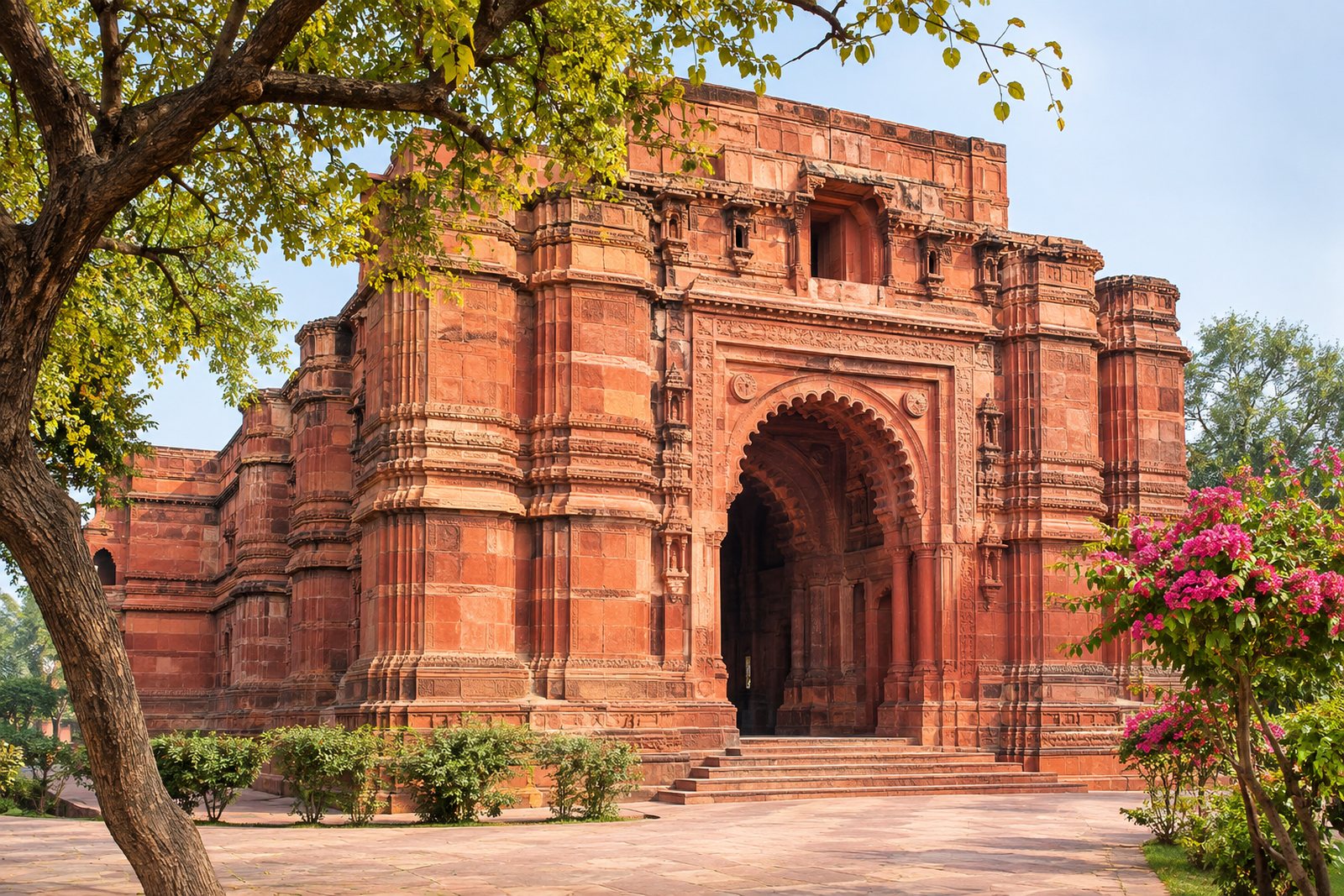
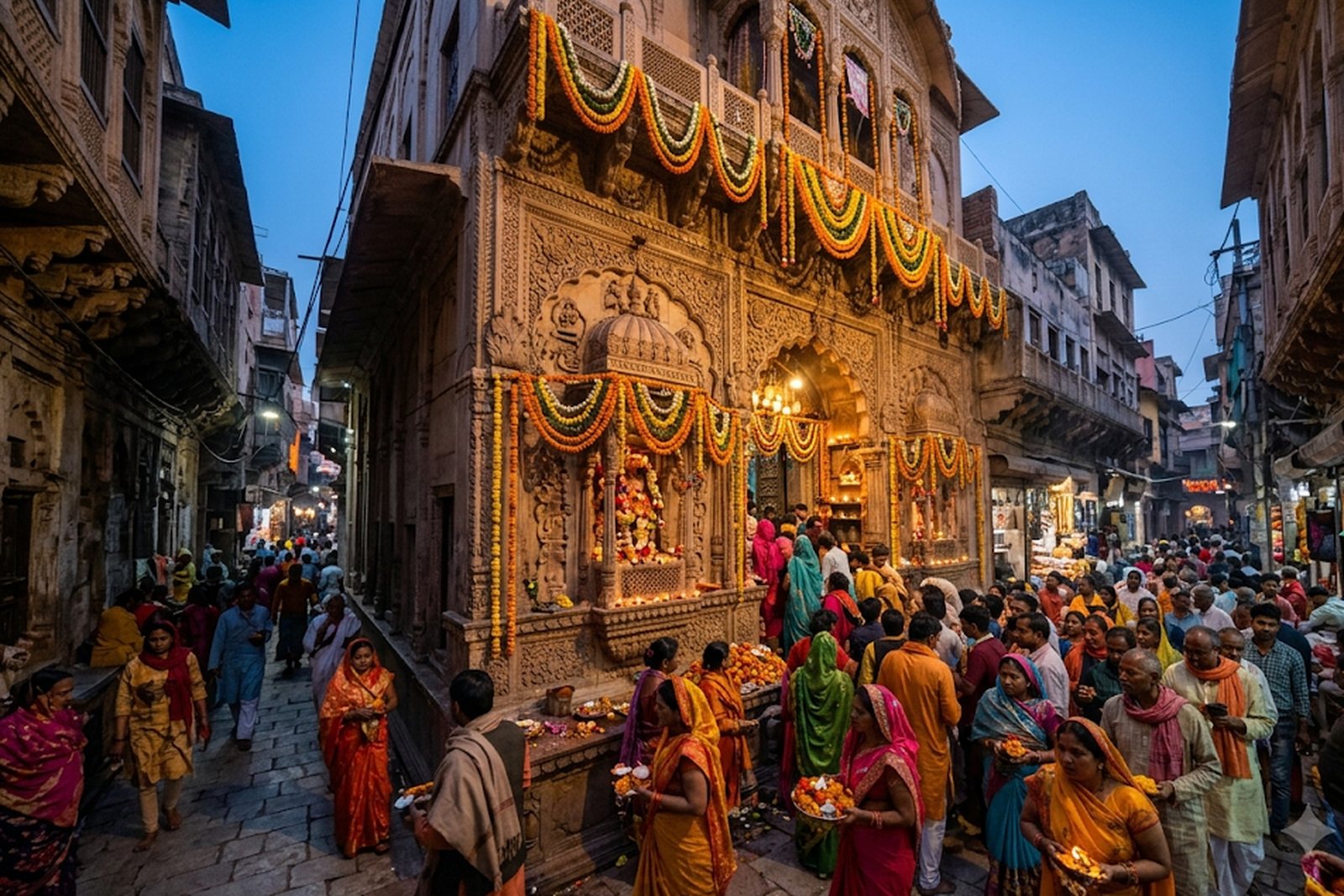
Every Vrindavan e-rickshaw ride has a soundtrack. "Radhe Radhe" from the shopkeepers, bells from a hundred little temples, monkeys arguing on a wall, a bhajan crackling out of a phone speaker. Then you turn a corner and the noise seems to drop away, because in front of you is a wall of red stone so massive it does not look like it belongs in this town of small, crowded shrines.
This is the Govind Dev temple, built in 1590 and once said to rise seven storeys high. Today you see only part of it. Its original deity is not even here. Here is the story of what happened, and how to visit this quiet giant on your Braj yatra.
Rupa Goswami and the cow on the hill
The story starts with devotion, not stone.
In the early 16th century, followers of Chaitanya Mahaprabhu came to Vrindavan to find the places linked to Krishna's childhood, many of them lost under forest and time. One of them was Rupa Goswami.
According to tradition, Rupa Goswami was searching for a lost deity of Krishna when he saw a cow standing on a mound, Goma Tila, letting her milk flow onto the earth. He had the spot dug up, and there was the deity of Govind Dev. Devotees still tell this story with shining eyes. It is a legend, but it is the reason the temple exists.
Raja Man Singh's red giant
A few decades later, the deity found a powerful patron. Raja Man Singh I of Amber, one of Akbar's most senior generals, was a devoted Vaishnav. He built Govind Dev a temple unlike anything Vrindavan had seen.
It was finished in 1590. Red sandstone. A cross-shaped plan. A great vaulted hall inside, rising high above the floor, with carved brackets and arches that mix Rajput, Mughal and older Indian ideas in one building. Historians often describe it as among the finest temples built in north India in that age. Tradition says it rose seven storeys.
Did you know? A popular Braj story says that when the lamp on the very top of Govind Dev temple was lit at night, it could be seen from far away, some even say from Agra. It is a legend, but standing under that tall hall, you understand how such a story started.
How the temple lost its top
The temple's height did not last.
In the late 17th century, during Aurangzeb's reign, the upper storeys were destroyed. Most historical accounts link this to the wider damage to temples in Braj in that period. The lower part survived.
Before that, devotees had already taken the deity away for safety. Its journey was long. It moved through Braj and Rajasthan, and finally, in the early 18th century, it was installed in Jaipur by the Kachhwaha rulers, the same family as Raja Man Singh. Today, the Govind Dev Ji temple in the City Palace complex of Jaipur is one of that city's most loved temples, with huge crowds at every jhanki.
So when you stand in the old Vrindavan temple, you are standing in the home the deity left. Jaipur is where it lives now.
The temple today
What remains is still huge. Thick red walls, a high central hall, carved pillars and brackets, and a calm, slightly echoing silence that is rare in Vrindavan. A smaller shrine at the back keeps daily worship going, and devotees come for darshan. The Archaeological Survey of India protects the monument.
Most visitors walk quickly from Banke Bihari to ISKCON and miss it. That is a pity, because it tells you more about Vrindavan's history than any other building in town.
Around Govind Dev in Vrindavan
- Banke Bihari temple, the most crowded and joyful darshan in Vrindavan, a short ride away.
- Radha Raman temple, linked to Gopal Bhatta Goswami, another of the Goswamis.
- Madan Mohan temple, on a hill by the old Yamuna bank, from the same early period.
- Keshi Ghat on the Yamuna, for the evening aarti.
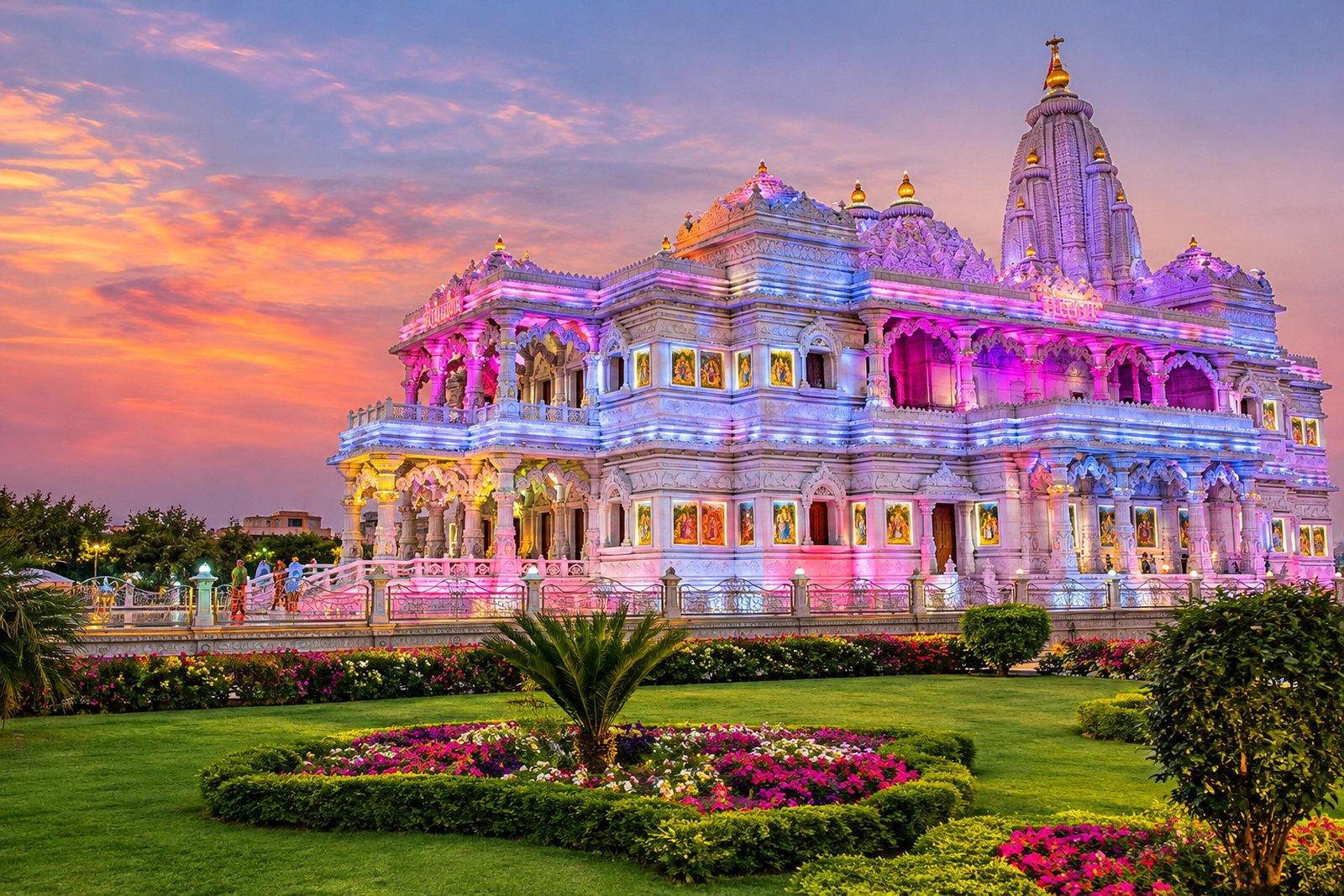
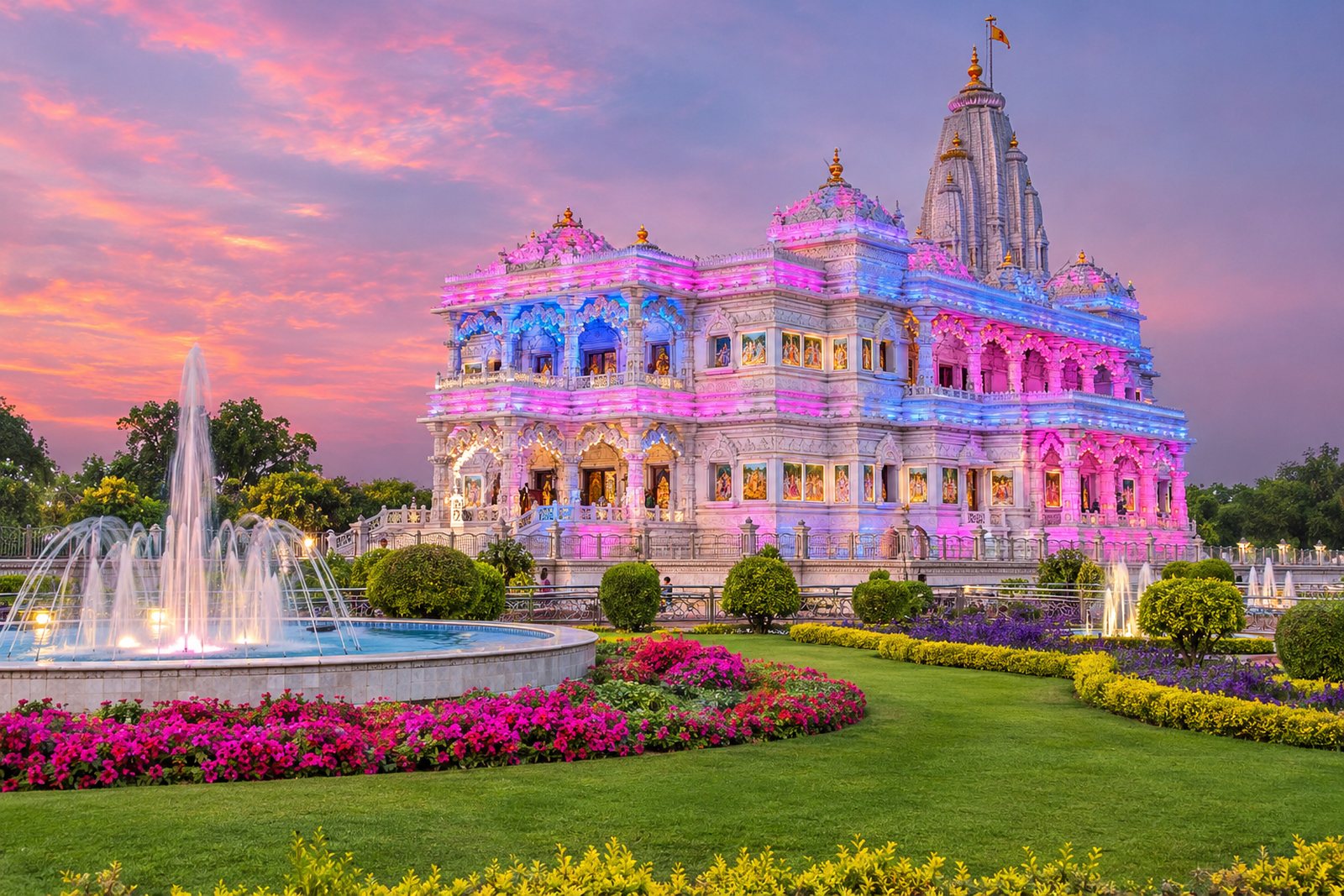
- Prem Mandir and ISKCON, for the newer side of Vrindavan.
Most people pair Vrindavan with Agra. Braj and Taj Express does Delhi, Vrindavan and Agra in three nights, Braj and Taj Classic stretches it to four, and Braj Darshan and Taj gives five nights for a slower darshan, as per the package itinerary.
How to visit Govind Dev temple, Vrindavan
- Where: In Vrindavan town, around 12 km from Mathura railway station and roughly 3 to 4 hours by road from Delhi.
- Best time: October to March. Holi and Janmashtami are magical but extremely crowded; book well ahead.
- Getting around: E-rickshaws and autos are easiest in the narrow lanes. Big cars get stuck.
- Darshan: Timings for the shrine change. Check locally or with the temple.
- Respect: Remove footwear, dress modestly and keep voices low inside the hall.
- Monkeys: Vrindavan's monkeys love spectacles, phones and prasad bags. Keep them tucked away.
- Combine with: Banke Bihari, Radha Raman and Madan Mohan in the morning, Keshi Ghat aarti in the evening.
Our tip: If your trip also includes Jaipur, visit the old Govind Dev temple in Vrindavan first and the Govind Dev Ji temple in Jaipur later. Seeing the empty home first and then the living darshan makes the story come full circle.
A temple that kept its devotion
The upper storeys are gone, the deity has moved, and yet bhakts still climb these steps every day. That is the quiet lesson of Govind Dev. Stone can be broken and gods can travel, but a place where people have prayed for four centuries does not stop being holy.
Planning Braj? Read our Mathura Vrindavan tour guide or browse all Vrindavan holiday packages.
Frequently asked questions
Who built the Govind Dev temple in Vrindavan?
Raja Man Singh I of Amber, a senior general in Akbar's court, built the Govind Dev temple in Vrindavan. It was completed in 1590 and is among the largest temples built in north India in that era.
How many storeys did Govind Dev temple originally have?
Tradition says the temple originally rose to seven storeys. Only the lower part survives today, as the upper storeys were destroyed in the late 17th century, according to most historical accounts.
Where is the original Govind Dev ji idol now?
Devotees moved the original deity away from Vrindavan for safety in the late 17th century. After stops in Braj and Rajasthan, it was installed in Jaipur, where the Govind Dev Ji temple in the City Palace complex is one of the city's most loved temples.
Is worship still done at the old Govind Dev temple in Vrindavan?
Yes. A deity is worshipped in a shrine at the old temple and devotees visit regularly. The monument is also protected by the Archaeological Survey of India.
How far is Govind Dev temple from Banke Bihari temple?
Both are in Vrindavan town and only a short auto or e-rickshaw ride apart, so they fit easily into one day of darshan.