Uttarayan in Ahmedabad: The Kite Festival of 14 January
Rooftops full of kites, undhiyu on every plate and the cry of kai po che across the old city. How to experience Uttarayan in Ahmedabad like a local.
"Kai po che!"
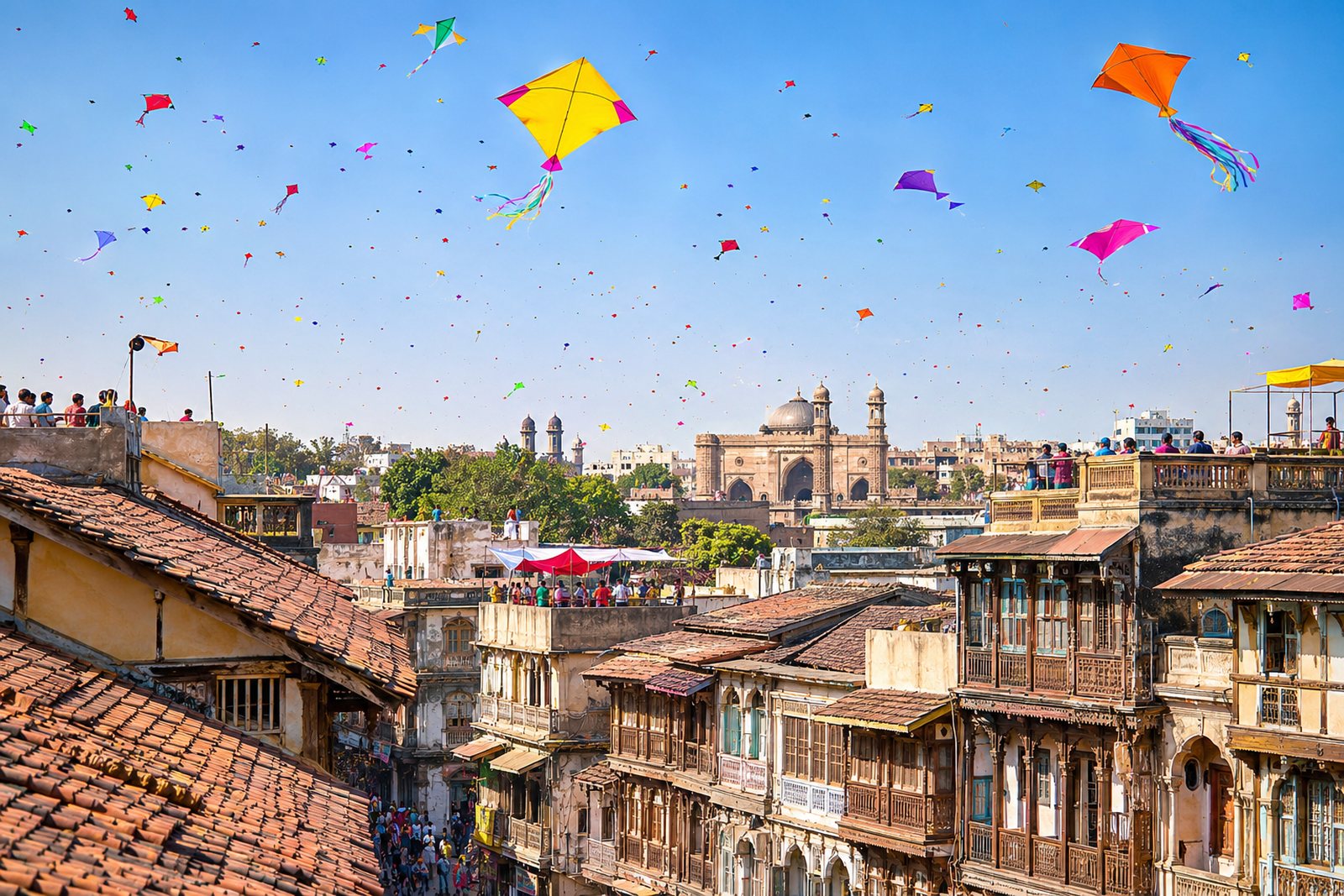
The shout comes from three rooftops away, followed by whistles, a steel thali being banged like a drum, and somebody's uncle loudly blaming the wind. Your kite, the lovely orange one you bought last night, is drifting off over the pols towards Manek Chowk, string cut clean. Down in the lane, two boys with long bamboo sticks are already running after it.
Welcome to Uttarayan in Ahmedabad. For one day, sometimes two, Gujarat's biggest city climbs onto its roof and stays there. Here is what happens, what to eat and how to plan a visit.
Why does Ahmedabad fly kites on 14 January?
Uttarayan marks Makar Sankranti, when the sun begins its journey north in the traditional calendar and winter starts to loosen its grip. Across India, people celebrate the day in different ways: Pongal in Tamil Nadu, Lohri the night before in Punjab, Magh Bihu in Assam. In Gujarat, the celebration goes up into the sky.
It usually falls on 14 January, occasionally 15. The day after, Vasi Uttarayan, is a second round for those who have not had enough. Offices close, schools close, and the city basically votes to have fun.
The night before
Uttarayan starts the evening before, in the kite markets. In the old city, especially around the famous kite bazaar near Raipur and Kalupur, shops stay open late, lit by bulbs and full of paper kites in every colour. Families argue over sizes. Kids want the patang with a cartoon on it. Elders want the plain one that actually flies.
Then comes the manja, the string. Traditionally cotton thread is coated with a paste to make it sharp enough to cut rivals, and the men who prepare it sit by the roadside stretching long lengths between poles. Many places now ban synthetic and glass-coated "Chinese" manja because it injures people and birds. Buy cotton string and follow the local rules.
Morning on the rooftop
By 7 the first kites are up. By 10, you cannot see sky without seeing paper. The pols, the old walled-city neighbourhoods with carved wooden houses packed tightly together, are the best place for this, because every terrace touches another and the "fights" are close and loud.
One person flies. One person holds the firki, the spool, and lets out string. One person shouts advice nobody asked for. Music blares from speakers. Some neighbours will invite you over, especially if you look lost, and hand you a kite.
Did you know? Ahmedabad's walled city was named India's first UNESCO World Heritage City in 2017, partly for its pol houses and community life. On Uttarayan you see that community life at full volume, from roof to roof.
What to eat on Uttarayan
Food on the terrace is non-stop:
- Undhiyu, a slow-cooked mix of winter vegetables, beans and muthiya, eaten with puri and hot jalebi at lunch
- Chikki and til ladoo, made with jaggery, peanuts and sesame, which keep you warm
- Sugarcane pieces, ber and guava, passed around in steel plates
- Roasted peanuts and endless cups of masala chai
If you are vegetarian, Gujarat will spoil you. If you are not, be patient until you leave the pols.
After dark
As evening falls, the kite battles slow down. In past years the sky filled with tukkal, paper lanterns tied to kite strings. Rules on sky lanterns vary because of fire and safety risks, so follow local announcements. Many families simply move to fireworks, more food and terrace music.
Bird safety, and why it matters
Uttarayan is hard on birds. Sharp manja hurts pigeons, kites and other birds every year. Volunteers and authorities usually run bird rescue camps during the festival, and many people avoid flying in the early morning and evening when birds move most. Use cotton string, and if you see an injured bird, alert the nearest rescue helpline listed locally.
Packages for an Uttarayan trip
The Ahmedabad Heritage package gives you two nights in Ahmedabad, enough to see the old city, the stepwells and the riverfront around the festival day, as per the package itinerary.
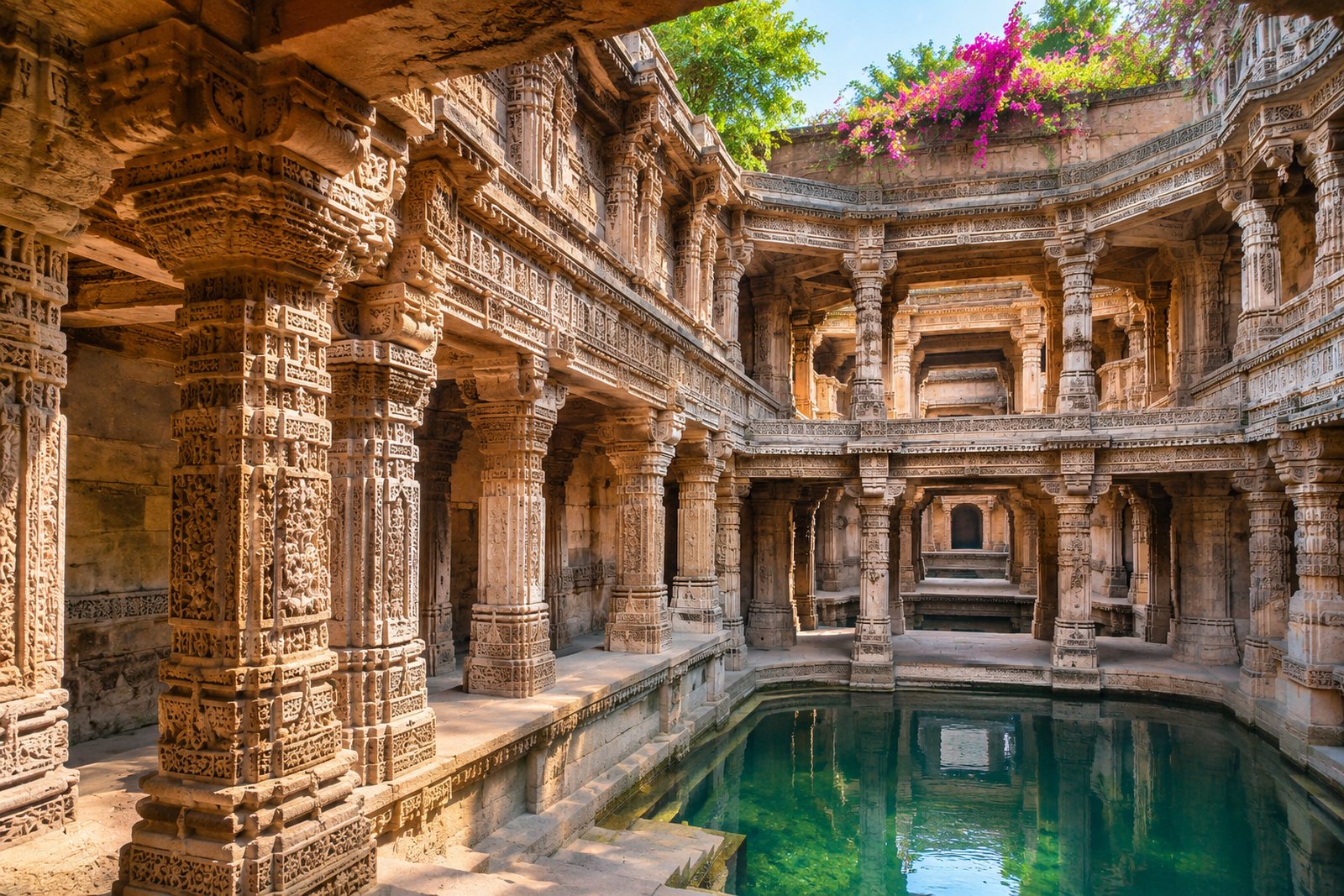
With a little more time, Ahmedabad with Modhera stretches to three nights and adds the Sun Temple at Modhera, and the Rani ki Vav stepwell at Patan is often paired with it. And if you want to roll on after the festival, Udaipur from Ahmedabad takes you into Rajasthan's lake city over three nights.
Crowd and booking reality
- Hotels in the old city and near the riverfront fill early for 13-15 January
- Traffic around the walled city is slow on the festival days
- Many shops close on Uttarayan itself; plan your shopping before
- Rooftop access depends on your stay or host; ask before you book
- Winter mornings are cool, afternoons warm and very sunny
Our tip: Carry a cap, sunglasses and a strip of finger tape. After a few hours of pulling string, even experienced flyers end up with cut fingers, and the January sun on a rooftop is stronger than it looks.
For families with kids and elders
Rooftops in the pols can have low walls and uneven levels. Keep children away from edges, and never let them chase falling kites across terraces or into lanes. Grandparents enjoy a chair in the shade with chikki and a view of the sky. Honestly, they get the best seat.
The day the city looks up
Most festivals pull you into a crowd. Uttarayan pulls you onto a roof, next to strangers who become neighbours by lunch. When the last kite comes down and your fingers hurt and your voice has gone from shouting, you will understand why Amdavadis plan their whole January around this one day.
Read our Ahmedabad trip plan or browse all Ahmedabad holiday packages.
Frequently asked questions
When is Uttarayan celebrated in Ahmedabad?
Uttarayan falls on Makar Sankranti, usually 14 January and occasionally 15 January. The next day, Vasi Uttarayan, is also celebrated with kite flying in Ahmedabad.
Where is the best place to experience Uttarayan in Ahmedabad?
The old city pols are the heart of it, with families flying kites from packed rooftops. Many visitors book a heritage stay or join a host family on a rooftop in the walled city. The riverfront usually hosts official kite festival events.
What does kai po che mean?
Kai po che is the Gujarati cry shouted when you cut someone else's kite string in a kite fight. You will hear it from rooftops all day during Uttarayan.
What food is eaten on Uttarayan in Gujarat?
Undhiyu, a mixed winter vegetable dish, with puri and jalebi is the classic Uttarayan meal. Chikki, til ladoo, sugarcane, ber and roasted peanuts are eaten on rooftops through the day.
Is there an International Kite Festival in Ahmedabad?
Gujarat Tourism usually organises an international kite festival around Uttarayan, often at the Sabarmati Riverfront, with kite flyers from India and abroad. Dates and venue are announced each year, so check the official site.