Ahmedabad & Rann of Kutch in 5 Nights: The Trip Day by Day
From Gandhi's cottage on the Sabarmati to sunrise on the White Rann: the 5-night Ahmedabad and Kutch trip told day by day, with weavers, bhungas and long drives.
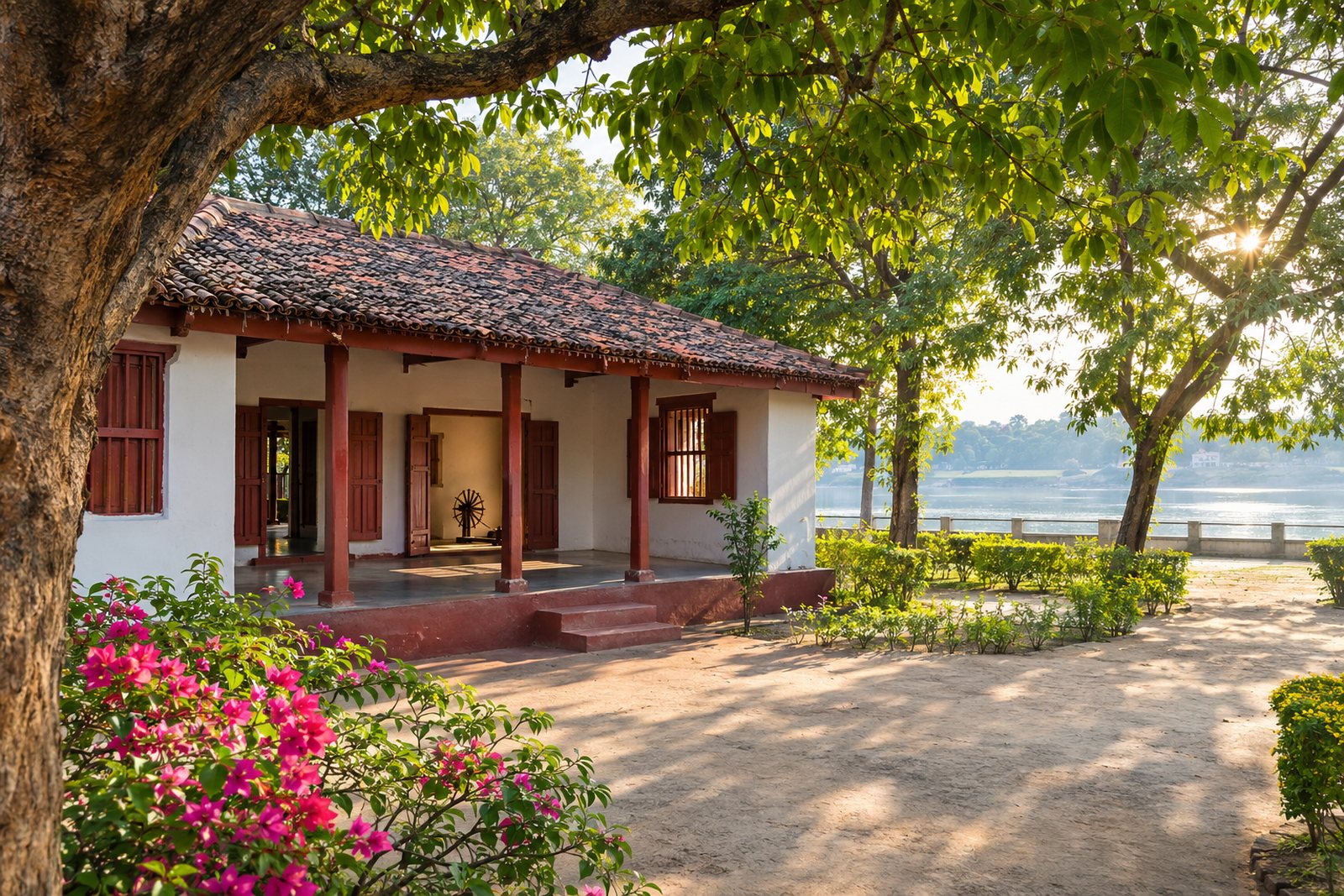
Gandhi's cottage at Sabarmati Ashram is almost bare. A few rooms, a verandah facing the river, a low desk, the sense that a man lived here with very little and wanted it that way. Three days later you are standing on a white plain so wide and so empty that the horizon looks drawn with a ruler.
That jump, from the quiet of Hriday Kunj to the salt of the Great Rann, is what the Ahmedabad & Rann of Kutch 5 nights itinerary is really about. Here is the trip, day by day, with the long drives told honestly.
Who this Gujarat trip suits
Families on their first proper Gujarat holiday. Couples who want something different from beaches and hills. Parents who will happily sit in a car if the destination is worth it. People who like handicrafts and do not mind carrying an extra bag home.
It suits less well if anyone in the group hates long road days. Two of the six days are mostly driving. They are not boring drives, but they are long.
Day 1: the pols of old Ahmedabad and the Sabarmati Ashram
You start in the old walled city, the part that made Ahmedabad India's first UNESCO World Heritage City in 2017. The pols are the reason. These are tight residential lanes with carved wooden houses, shared courtyards and a gate at the entrance, built for joint families and trading communities. Look up for the chabutro, a tall bird feeder on a pillar found in many pols; feeding birds here is an old daily habit, not a tourist show.
Afternoon is Sabarmati Ashram, Gandhi's home from 1917 to 1930 and the place he set out from on the Dandi March in March 1930. The museum is simple and moving. Sit by the river wall for a few minutes before you leave.
Evening is free. Ahmedabad eats late and well, and the driver will know where the night food lanes are.
Day 2: the road into Kutch, Bhujodi and the Vande Mataram Memorial
Breakfast, then the long drive west. Somewhere along the way the land flattens and dries, and the trucks get bigger. Chai stops at highway dhabas, a plate of thepla if you are lucky.
Near Bhuj the car turns towards Bhujodi, a village of weavers. Walk into a workshop and watch a shawl grow on a pit loom, thread by thread, the shuttle flying back and forth. Ask questions. Most weavers are proud to explain their patterns. Close by is the Vande Mataram Memorial, a large memorial that walks you through India's freedom struggle with sculptures and displays. Kids who yawned at the museum yesterday may well enjoy this one.
Night in Bhuj. If you are curious about how the town rebuilt after 2001, our story on the Bhuj earthquake and Smritivan is a good read before bed.
Day 3: Banni craft villages and the White Rann at sunset
A shorter drive north today, into the grasslands of Banni. The villages here are known for embroidery, mirror work, leather craft and the round mud houses called bhungas. You will see women stitching outside their homes, walls with white mud relief, and sometimes a camel or two wandering past as if they own the place. They probably do.
Check in at Dhordo, the village at the edge of the Rann. A permit is required for the White Rann; it is usually taken online or at the check post, so check the official portal for current rules before you travel.
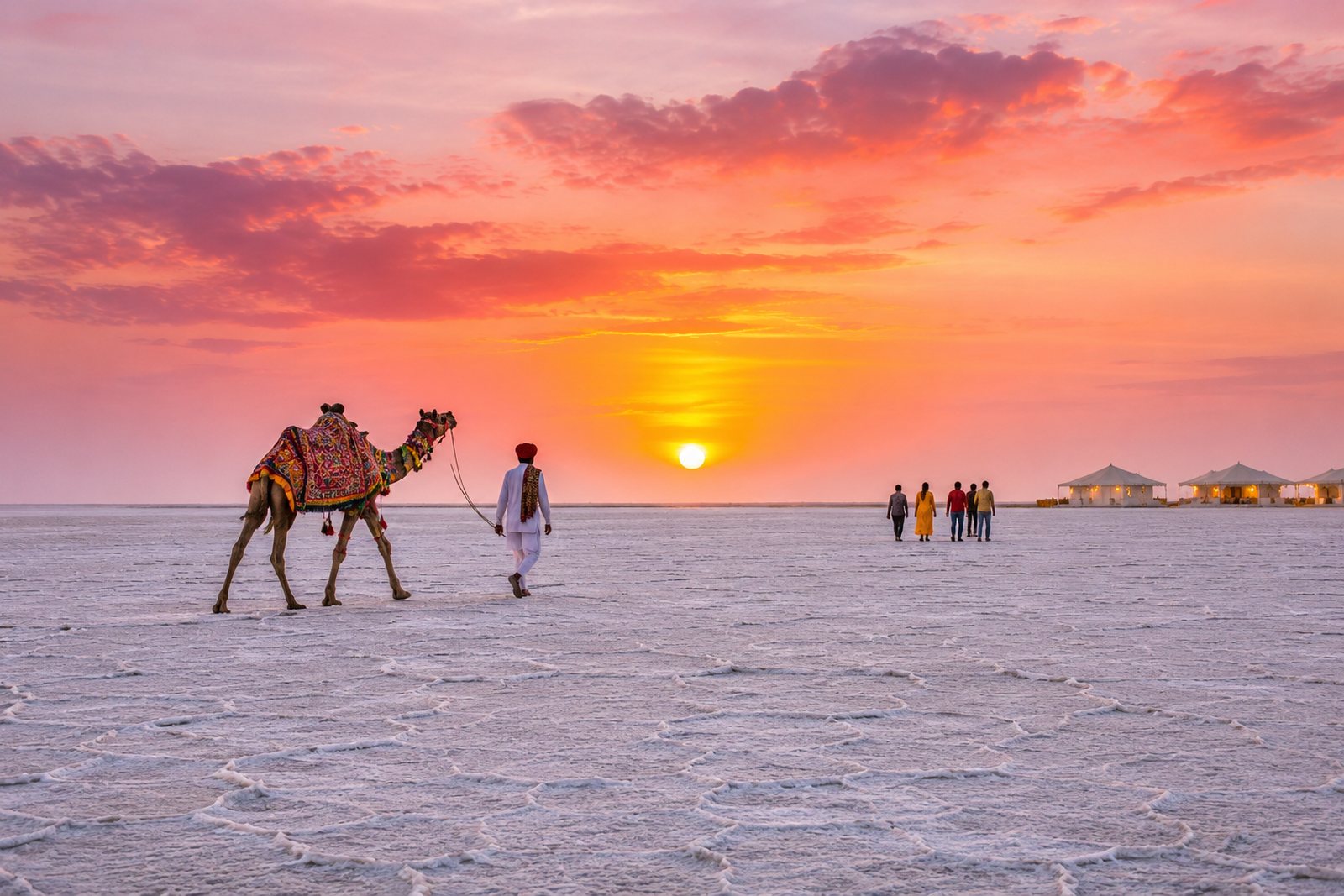
Then the main event. You walk out onto the White Rann in the late afternoon. The salt crunches underfoot. The light goes gold, then pink, then a strange silver blue, and suddenly the whole family has gone quiet without anyone asking.
Did you know? The Great Rann is a seasonal salt marsh. In the monsoon much of it goes under shallow water, and the white crust you walk on in winter forms as that water dries out.
Day 4: sunrise on the salt, then Hodka, Ludiya and Gandhi Nu Gam
Wake early. Sunrise on the Rann is colder, emptier and in some ways better than sunset. Wear a jacket in December and January; desert mornings bite.
After breakfast the plan visits Hodka, Ludiya and Gandhi Nu Gam, villages known for their bhungas, painted walls and handicrafts. This is the day to shop. Embroidered cushion covers, mirror-work bags, small leather pieces. Pay the artisan directly where you can.
Second night at Dhordo. If there is a full moon around your dates, the Rann at night is something else.
This whole route follows the Ahmedabad & Rann of Kutch package: one night in Ahmedabad, one in Bhuj, two at Dhordo and one back in Ahmedabad, with a private car and driver throughout and breakfast and dinner daily as per the package itinerary.
Day 5 and 6: the long drive back, and home
Day 5 is the return road to Ahmedabad, with one more stop at the Bhujodi weavers on the way out of Kutch for anyone who could not decide yesterday. Expect most of the day in the car. Day 6 is departure from Ahmedabad.
What to pack for Ahmedabad and Kutch
- Sunglasses and a cap; the salt reflects strong light.
- A warm jacket for Rann mornings and nights in winter.
- Lip balm and moisturiser for the dry air.
- Comfortable walking shoes for the pols and the salt.
- Some cash for small village purchases.
- An extra foldable bag for the shopping you said you would not do.
Best season for this trip
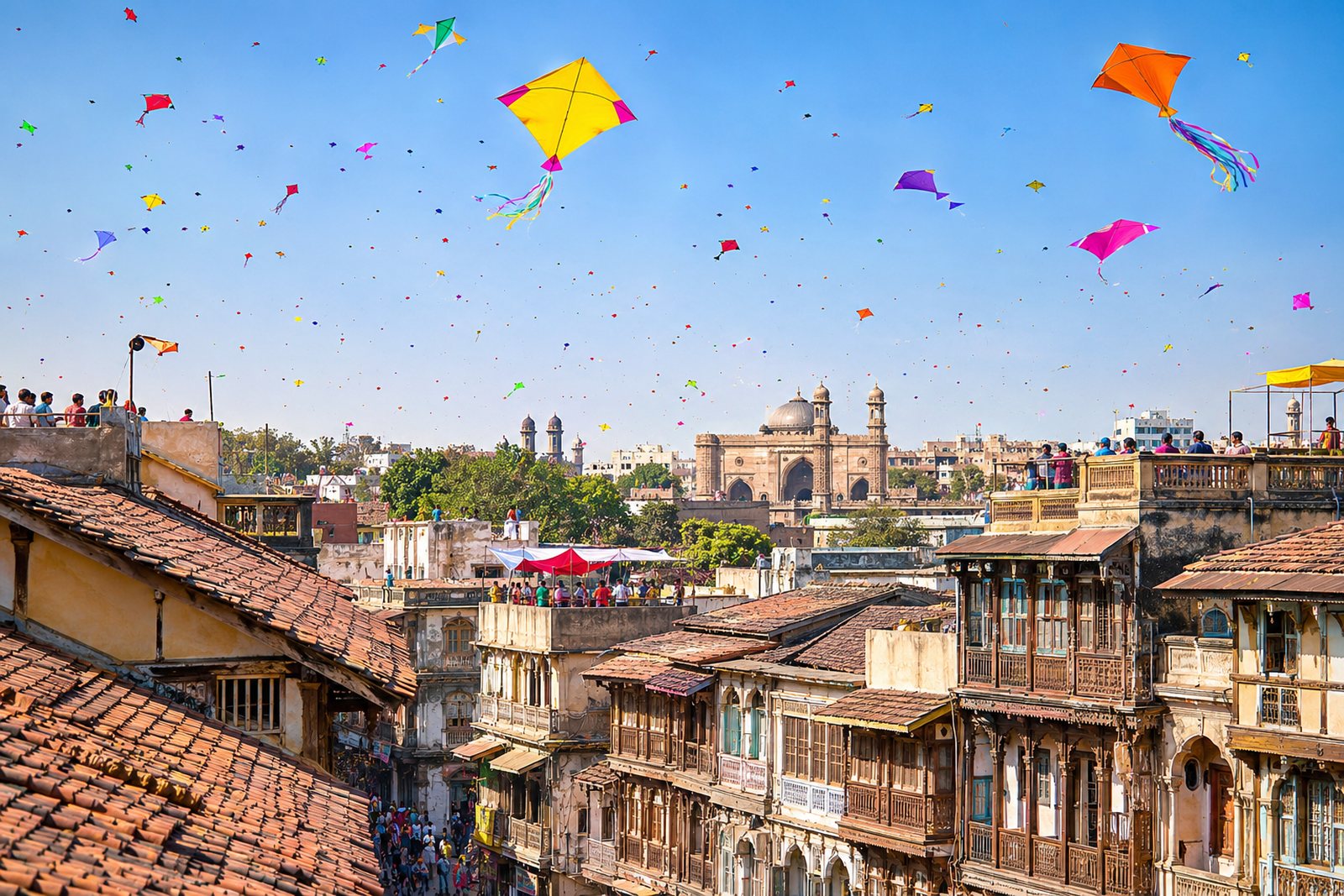
Plan for roughly November to February, when the Rann is dry and white and the days are pleasant. The Rann Utsav tent city usually runs in these months, though dates change each year, so check before booking. If you want the festival experience on a shorter plan, read our Rann Utsav from Ahmedabad in 3 nights guide. January also brings Uttarayan to Ahmedabad, when the whole city goes up to the rooftops with kites.
Our tip: Keep the Bhuj night. It feels tempting to drive straight to Dhordo, but breaking the journey keeps everyone fresh for the sunset that matters most.
Some trips are about doing a lot. This one is about two very different kinds of quiet, a cottage by a river and a desert of salt, and how both stay with you.
For more ideas, read our Rann of Kutch trip guide, or browse all Ahmedabad holiday packages.
Frequently asked questions
Is 5 nights enough for Ahmedabad and the Rann of Kutch?
Yes, for a first visit. Five nights gives you the Ahmedabad old city and Sabarmati Ashram, a night in Bhuj, two nights near the White Rann at Dhordo for both sunset and sunrise, and a final night back in Ahmedabad.
How long is the drive from Ahmedabad to Bhuj?
It is usually a long day on the road, roughly six to seven hours depending on traffic and stops. The package breaks it with sightseeing near Bhuj.
Do you need a permit for the White Rann?
Yes, a permit is required to enter the White Rann area near Dhordo. It can usually be taken online or at the check post on the way; check the official portal for current rules.
When is the White Rann actually white?
The salt flat is usually at its best from around November to February, after the monsoon water dries. During and just after the monsoon the area can be wet or flooded.
What is a bhunga?
A bhunga is the traditional round mud house of Kutch with a conical thatched roof. Villages in the Banni area, such as Hodka and Ludiya, are known for them, often decorated with mud and mirror work.