Thirumalai Nayak Palace: Giant Pillars of a 1636 Palace
Built in 1636 by King Thirumalai Nayak, this Madurai palace is known for its giant pillars and its evening sound and light show. Here is its story.
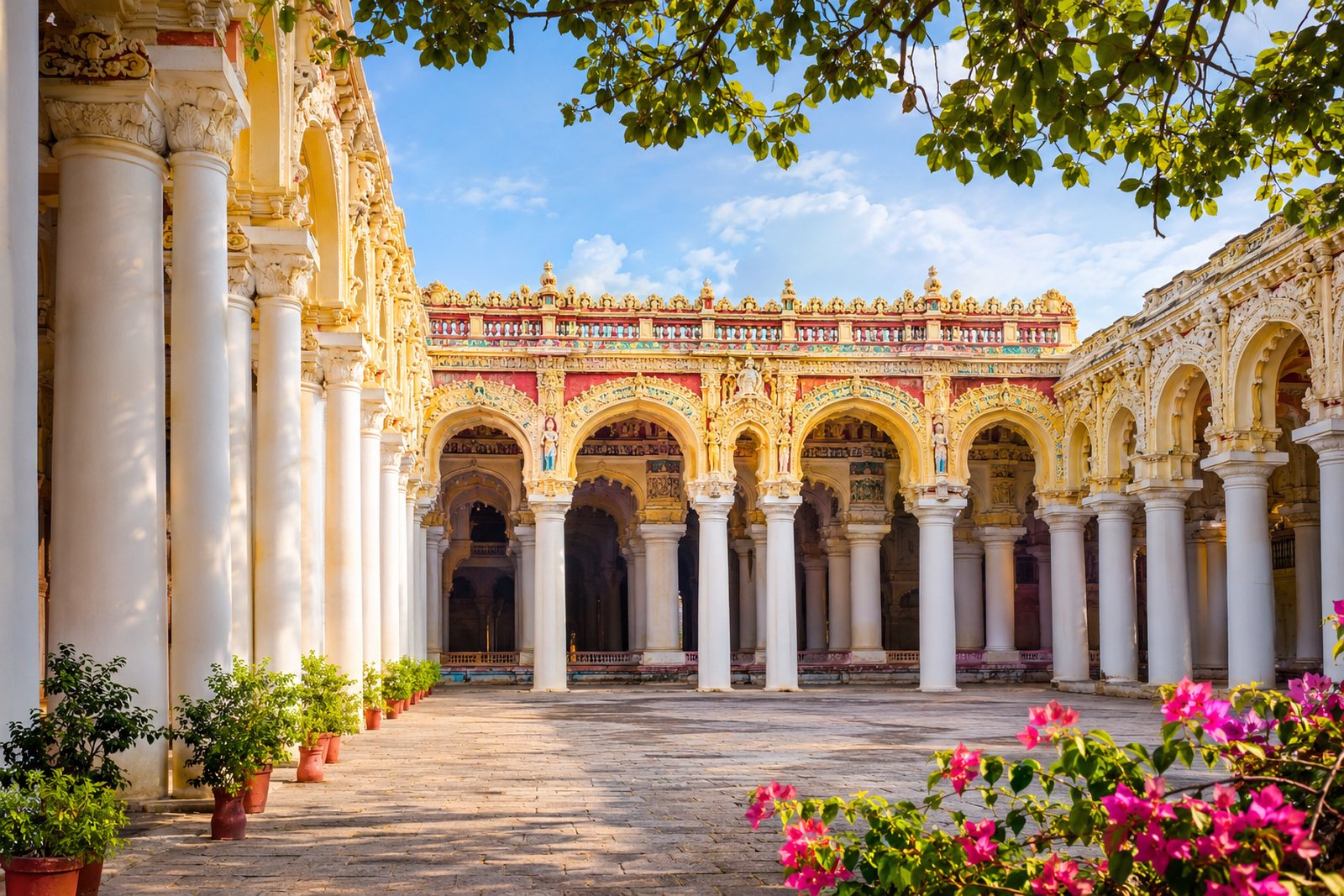
Try hugging one of the pillars. Go on, nobody minds; half of Madurai's schoolchildren have done it. Your arms will reach about a quarter of the way around before you run out of you. Look up and the pillar keeps going, white and fat and cool to touch, into arches high above the courtyard, where pigeons sit like they own the place.
This is Thirumalai Nayak Palace, built in 1636 by a king who wanted Madurai to look as grand as its temple. Here is his story and how to visit.
Who was Thirumalai Nayak?
The Nayaks began as governors for the Vijayanagara empire in the south. When that empire weakened, the Nayaks of Madurai ruled on their own.
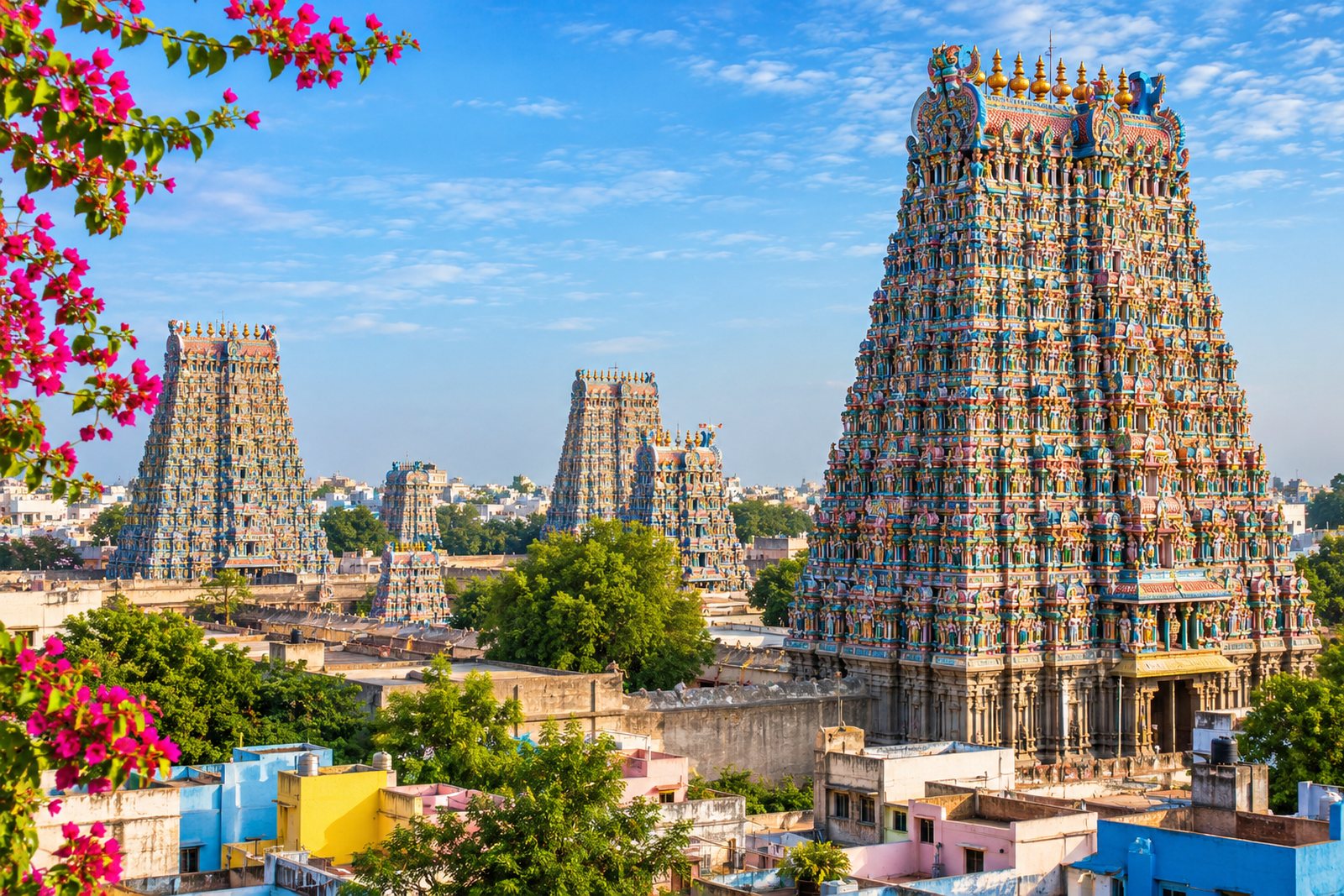
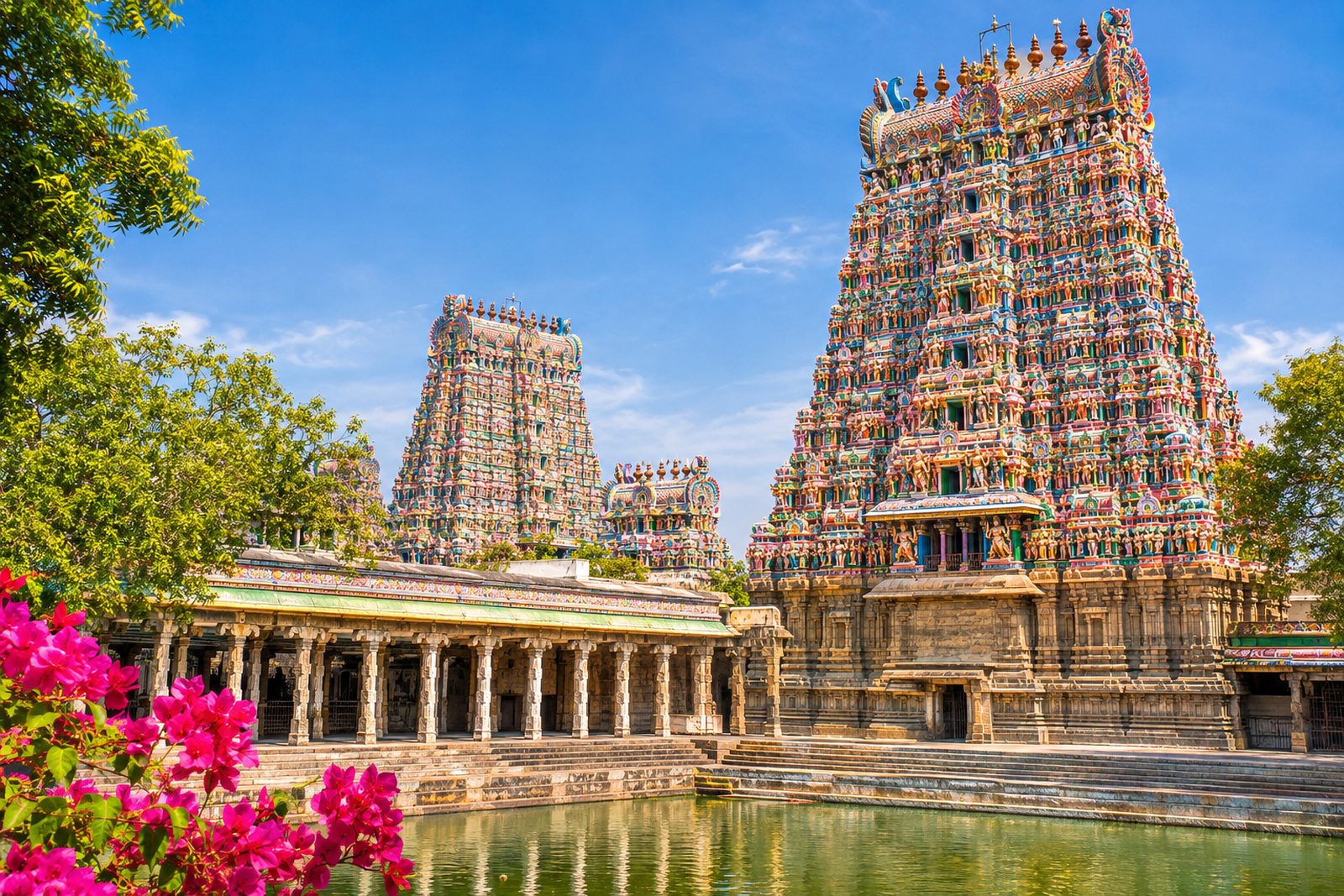
Thirumalai Nayak, who ruled for over three decades in the first half of the 17th century, is the one Madurai remembers most. He was a builder. Much of what you see around the Meenakshi temple, the halls, the mandapams, the festival traditions, carries his stamp. He is linked with the Teppakulam tank, where the float festival is held, and with the grand style of celebrations that made Madurai a festival city.
A king who spent so much on temples also wanted a palace worthy of them. In 1636, he got one.
A palace of two styles
The palace mixes two worlds. The base plan and many details are Dravidian, like the temples of Tamil Nadu. The arches, domes and some of the decoration show Islamic influence, the kind seen in Deccan palaces of the time. The result is something that looks a bit like a temple, a bit like a durbar hall, and entirely like itself.
The main courtyard is called Swarga Vilasam, the celestial pavilion. Around it run those giant pillars, joined by high arches. Above the throne area rises a big dome, built without any visible beams or girders holding it up. Stand under it and say something. The echo will answer before you finish.
The walls and ceilings carry stucco work, floral patterns and paintings, some faded, some restored with bright colour.
Did you know? The palace you see today is only a part of the original complex. Later rulers shifted the capital, and parts of the palace were dismantled and carried away. The surviving portion alone is big enough to make you wonder what the whole thing looked like.
Decline and a long restoration
After Thirumalai Nayak's time, the palace slowly lost its importance. Capitals moved, walls were taken apart, and what remained began to crumble.
In the 1860s and 1870s, Lord Napier, then Governor of Madras, ordered a major restoration. Over the years, parts of the building were also used as offices. Today it is a protected monument, and restoration work continues from time to time.
The sound and light show
When evening comes, the palace changes. The lights go down, the pillars are lit in colour, and a sound and light show tells the story of Thirumalai Nayak, his court, his battles and his love of Madurai. There are shows in Tamil and English, though the schedule shifts.
Children who were bored by noon suddenly sit still. Grandparents mouth along to the Tamil lines they half remember from school.
It is a simple show, no fancy projections, just light, voice and music bouncing off stone. That is exactly why it works. The building does most of the talking.
Our Madurai Meenakshi Darshan trip is a two-night stay focused on the temple and the old city. Madurai & Rameshwaram adds the island jyotirlinga, and the longer Kerala & Tamil Nadu Temples links Madurai with Munnar, Thekkady, Rameshwaram and the Kerala coast, as per each package itinerary.
How to visit Thirumalai Nayak Palace today
- Where: in the old city of Madurai, roughly two kilometres from the Meenakshi temple.
- Best time: October to March. Afternoons in summer are hot, though the thick walls keep the inside cooler.
- Timings and show: palace hours and the sound and light show schedule change. Check locally on the day.
- Photography: usually allowed in the courtyard; there may be a camera fee or restrictions in some areas.
- Time needed: about an hour for the palace, plus the show if you stay for the evening.
- Combine with: Meenakshi temple, Teppakulam, the Gandhi Memorial Museum and an evening walk through the old market streets.
Our tip: See Meenakshi temple in the morning, rest through the afternoon, and come to the palace late in the day. Walk the courtyard in daylight, then stay for the show.
A king who built for his city
Most palaces were built to keep people out. This one, with its open courtyard and its giant arches, seems built to impress the whole town. Four centuries later, Madurai still walks in, looks up and is impressed.
Planning the trip? Read our Meenakshi Temple history and the Madurai Rameshwaram Kanyakumari tour plan, or browse all Madurai holiday packages.
Frequently asked questions
Who built Thirumalai Nayak Palace?
It was built in 1636 by Thirumalai Nayak, the best known ruler of the Madurai Nayak dynasty, who ruled in the first half of the 17th century.
Why is only part of the palace left?
Later rulers moved the capital and took away parts of the structure, and the rest decayed over time. What stands today is the main surviving portion.
Who restored Thirumalai Nayak Palace?
Major restoration took place in the 1860s and 1870s under Lord Napier, then Governor of Madras. It is now a protected monument.
Is there a sound and light show at Thirumalai Nayak Palace?
Yes, an evening sound and light show tells the story of the king and his palace. Show timings and languages change, so check locally.
How far is Thirumalai Nayak Palace from Meenakshi Temple?
It is close, roughly two kilometres away, so most visitors see both on the same day.