Meenakshi Temple History: Madurai's City of Gopurams
A princess who conquered the world, a wedding the whole city still celebrates, and Nayak kings who rebuilt it all. The story of Madurai's Meenakshi Temple.
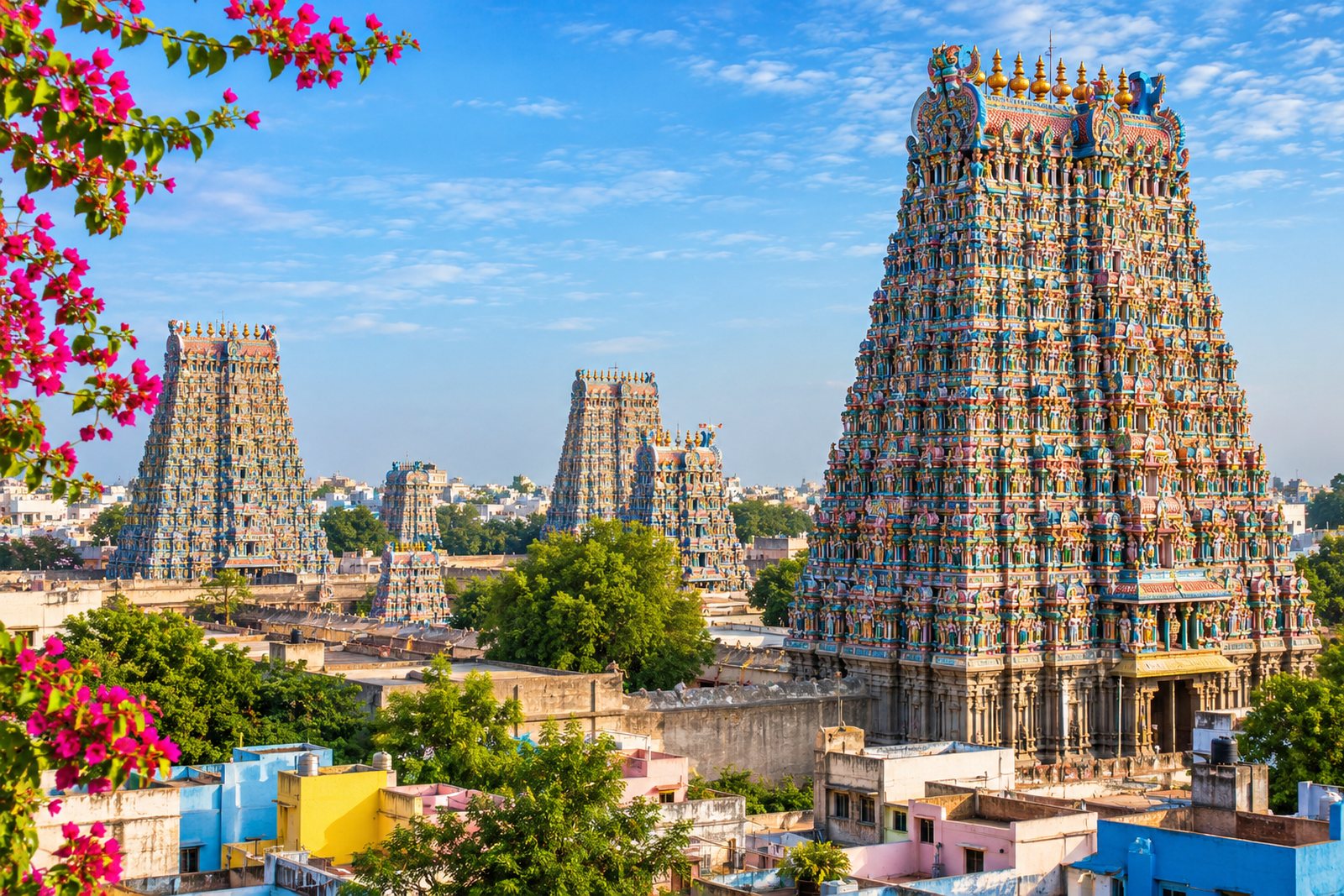
Madurai wakes up to jasmine. Before the sun is properly up, women are already sitting on the pavement near the temple's east side, threading malli into long strings, and the smell follows you all the way into the corridors. A bell rings somewhere deep inside. A shopkeeper splashes water on his doorstep. Above everything, the gopurams catch the first light, every inch of them crowded with painted gods, demons, lions and dancers.
This is the Meenakshi Temple, and Madurai is a city that literally grew around it. Here is the story of the warrior princess, the wedding the city still celebrates, the kings who rebuilt it, and how to plan your darshan.
The princess who conquered the world
The legend begins with a childless Pandya king, Malayadhwaja, and his queen. After a great yagna, a three-year-old girl stepped out of the fire. She had, the story goes, three breasts, and a voice from the sky said the third would vanish when she met the man she would marry.
The girl, Meenakshi, the fish-eyed one, grew up as a warrior. She was crowned queen and set out to conquer the world. She won everywhere, all the way to Kailash. There she faced Shiva, and the third breast vanished. She knew.
Shiva came to Madurai as Sundareswarar, the beautiful lord, and married her. According to the legend, Vishnu, her brother, came to give her away. In Madurai, the goddess comes first. Devotees traditionally take darshan of Meenakshi before Sundareswarar.
A city laid out around a temple
Madurai is very old. It was a Pandya capital and is closely linked with the Tamil Sangam poets. Over the centuries the temple was enlarged, damaged and rebuilt.
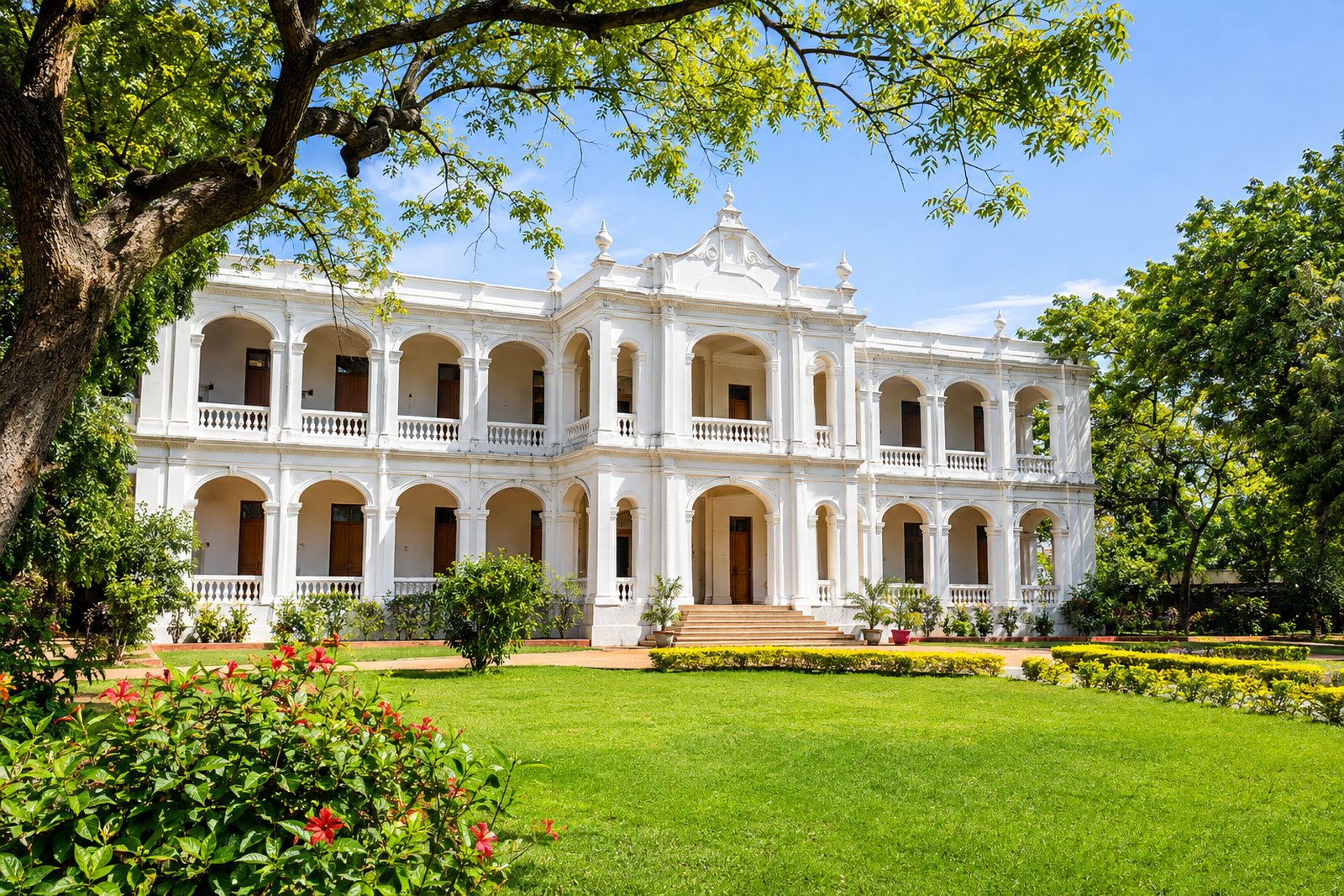
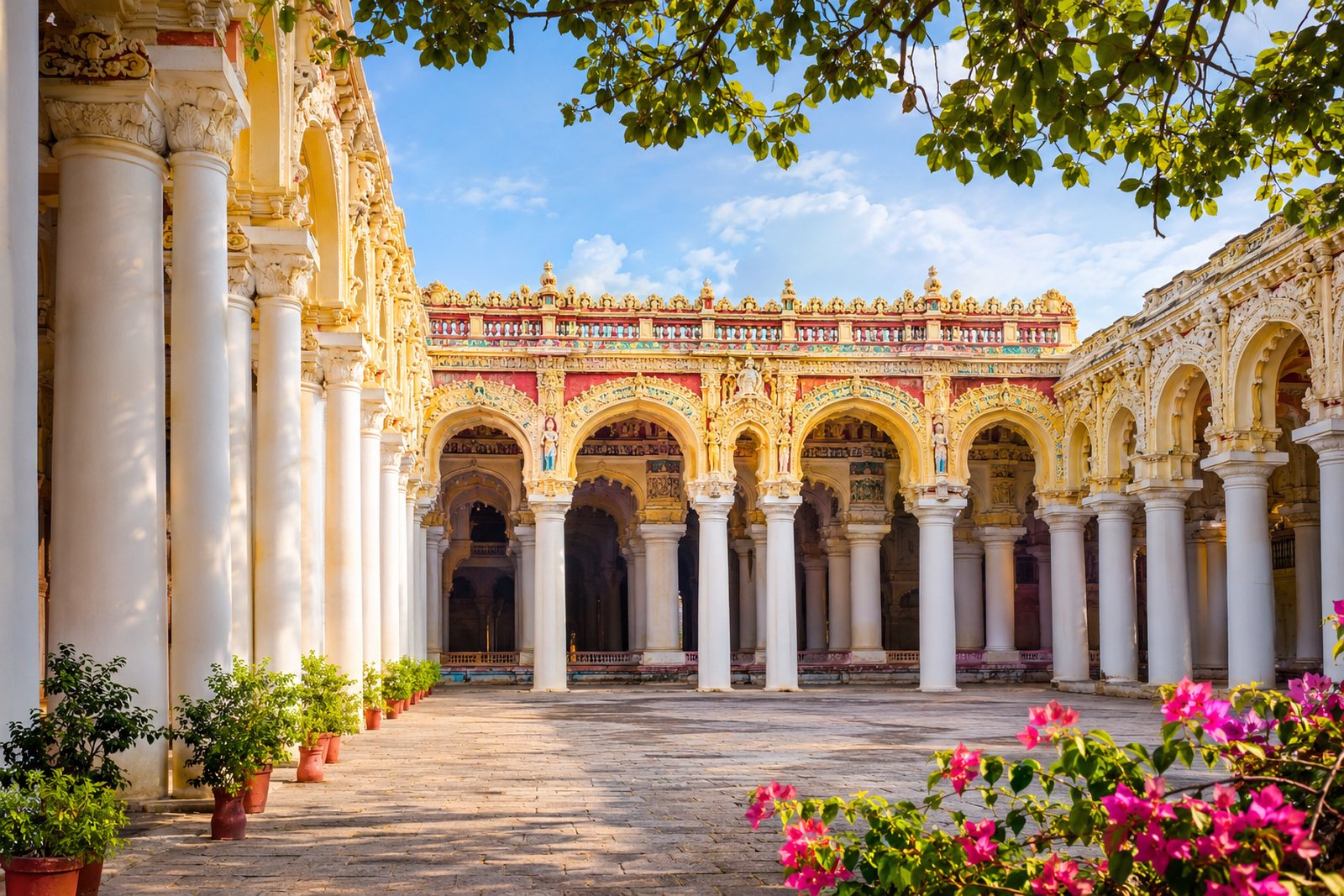
Historians note that the temple suffered during invasions from the north in the early 14th century. The great rebuilding came under the Nayak rulers of Madurai in the 16th and 17th centuries. They gave the complex most of its present shape, including its tall gopurams and pillared halls. Thirumalai Nayak, the best-known of them, also built the palace that still stands a short walk away.
Look at a map of old Madurai and you will see it immediately. The streets run in squares around the temple, and several are named after Tamil months, the months when festival processions go round them. The city is built like a mandala, with the goddess in the centre.
Gopurams, halls and a golden lotus
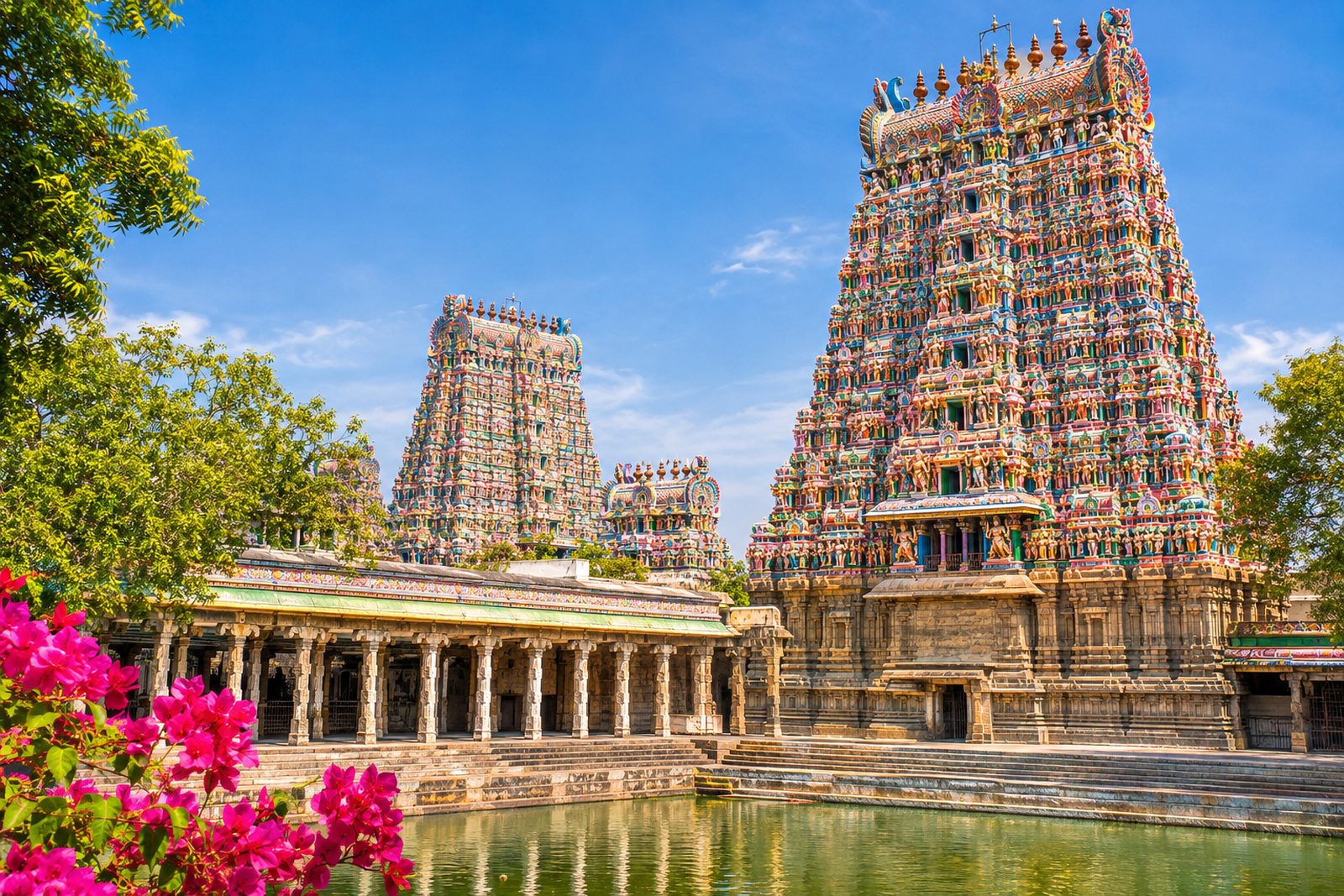
The complex has 14 gopurams. The tallest, on the outer walls, are covered with thousands of painted stucco figures that are repainted from time to time. Stand below one and try counting the figures on just one level. You will give up.
Inside, the halls go on and on: corridors lined with carved pillars, the famous Thousand Pillar Mandapam with its sculptures and small museum, and pillars that ring with different notes when tapped.
At the heart is the Porthamarai Kulam, the Golden Lotus tank. Local legend says poets of the Tamil Sangam placed their works on its water. Good poetry floated. Bad poetry sank. Harsh, but effective.
Did you know? The Chithirai festival re-enacts Meenakshi's coronation and her wedding to Sundareswarar. At the same time Lord Kallazhagar travels from his temple at Alagar Koil towards Madurai and enters the Vaigai river, and lakhs gather to watch.
Nayakkar Mahal and Madurai's other temples
- Thirumalai Nayakkar Mahal: the Nayak palace, with huge pillars and a light and sound show in the evening.
- Gandhi Memorial Museum: a calm museum on Gandhi's life and the freedom struggle.
- Alagar Koil: the Vishnu temple in the hills, linked with the Chithirai legend.
- Thiruparankundram and Pazhamudircholai: two of Lord Murugan's six abodes, near the city.
BellaSafar's Madurai Meenakshi Darshan gives two nights for the temple, Nayakkar Mahal, the Gandhi Museum and the hill temples as per the package itinerary. Madurai & Rameshwaram adds a day for the Ramanathaswamy Temple, and Madurai Rameshwaram Kanyakumari carries on all the way to the southern tip.
How to plan your Meenakshi darshan
- Where: Central Madurai. Madurai has an airport and a major railway station, both a short drive away.
- Best time: October to March. Summer afternoons are very hot. Chithirai (around April-May) is spectacular but extremely crowded.
- Darshan: Queues can be long on weekends and festival days. Darshan timings and special queues change, so check with the temple administration.
- Phones and bags: Generally not allowed inside. Use the deposit counters.
- Dress: Traditional, modest clothes. Shoulders and knees covered is the safe choice.
- Night ceremony: The temple's night ritual, when Sundareswarar is taken to Meenakshi's shrine, is worth staying for. Check locally for the time.
Our tip: Buy a string of jasmine outside and keep it in your hair or your bag. By evening the whole hotel room will smell of Madurai.
The goddess at the centre
Most temples sit inside a city. In Madurai it feels the other way around, as if the city is sitting inside the temple. The streets, the festivals, even the flower sellers' timetable all turn around one woman: a fish-eyed warrior queen who married a god and never stopped ruling.
Read our Madurai Rameshwaram Kanyakumari guide or browse all Madurai holiday packages.
Frequently asked questions
Who built the Meenakshi temple in Madurai?
The shrine is ancient and linked with the Pandya kings. Most of the present complex, including its great gopurams and halls, was rebuilt and expanded by the Nayak rulers of Madurai in the 16th and 17th centuries.
How many gopurams does Meenakshi temple have?
The temple complex has 14 gopurams, with the tallest ones on the outer walls covered in painted figures of gods, goddesses and animals.
What is the story of Goddess Meenakshi?
According to legend, Meenakshi was born to a Pandya king, ruled Madurai as a warrior queen, and married Shiva, who came as Sundareswarar. The wedding is celebrated every year in the Chithirai festival.
Are mobile phones allowed in Meenakshi temple?
Phones and cameras are generally not allowed inside, and deposit counters are provided. Rules can change, so check with the temple administration before your visit.
When is the Chithirai festival in Madurai?
It is held in the Tamil month of Chithirai, usually around April or May. Exact dates change every year, so check the temple calendar.