Srinagar to Pahalgam: Road Trip, Saffron Fields and Stops
Saffron at Pampore, a 9th-century ruin at Awantipora, willow cricket bats and the Lidder river: the Srinagar to Pahalgam drive stop by stop, with timing tips.
Cricket bats before breakfast. Hundreds of them, or rather the raw blocks of willow that will become them, stacked in neat open towers by the highway to dry in the Kashmiri air. A man in a pheran planes one smooth by hand. Your son, who has not looked up from his phone since Srinagar, suddenly wants to stop.
This is the charm of the Srinagar to Pahalgam road. It is short, it is easy, and every few kilometres it hands you something to stop for: saffron fields, a 9th-century temple ruin, willow workshops, and finally the Lidder river running loud and green beside the car. Here is the drive, stop by stop.
How far is Pahalgam from Srinagar?
Around 90 to 95 km. On a normal day the drive takes around 2.5 to 3 hours, but nobody does it in that time, because nobody does it without stopping. Give it half a day, leave Srinagar after breakfast, and reach Pahalgam for a late lunch by the river.
The road runs south-east on the national highway towards Anantnag, then turns off and follows the Lidder valley up to Pahalgam. It is a well-used tourist road, mostly in good condition, with a few narrow stretches near the end.
Stop 1: Pampore and the saffron fields
Barely half an hour out of Srinagar you reach Pampore, the saffron town of Kashmir. On either side of the road are flat, brown, carefully tended fields. For most of the year they look like nothing much.
Then, for a few weeks in autumn, usually around late October and early November, they turn purple. The crocus flowers open, families come out at dawn to pick them, and the red stigmas are separated by hand and dried. That is Kashmiri kesar. If you are lucky with timing, ask your driver to stop and just look. Read our Kashmir in autumn story for more on that season.
The shops along the road sell saffron, dry fruits, walnuts and kahwa. Many will offer you a cup of kahwa, the green tea with saffron, cardamom and almonds. Drink it. Buy only from shops that let you see what you are getting, and do not be shy about asking questions.
Our tip: Real saffron threads are expensive for a reason, and fake or mixed saffron exists everywhere. Buy small, from a shop you trust, and avoid deals that sound too good to be true.
Stop 2: Awantipora's temple ruins
A little further on, right beside the highway at Awantipora, lie the ruins of a large stone temple complex built under King Avantivarman, who ruled Kashmir in the 9th century. The town is named after him.
Most cars rush past. Stop for twenty minutes. The grey stone walls, broken pillars and carved panels are much older than any Mughal garden in Srinagar, and you will often have the place nearly to yourself. The ASI looks after the site; check locally for entry rules.
Stop 3: the cricket bat belt
Between Awantipora and Bijbehara, the road becomes a long, open-air cricket factory. Kashmir willow is grown in the valley and cut into clefts, which you will see stacked everywhere. Small workshops shape, press and finish them into bats.
Kids love this stop. Many workshops let you watch the work and pick up a bat with your child's name painted on it. Ask before taking photos inside a workshop, and check the weight in your hand before you buy. A bat that feels heavy here will feel heavier in the hotel room.
Did you know? Kashmir willow is one of only two well-known sources of cricket bat willow in the world. The other is English willow, which most professional bats are made from. Kashmir bats are the ones most of us played gully cricket with.
Stop 4: the Lidder valley
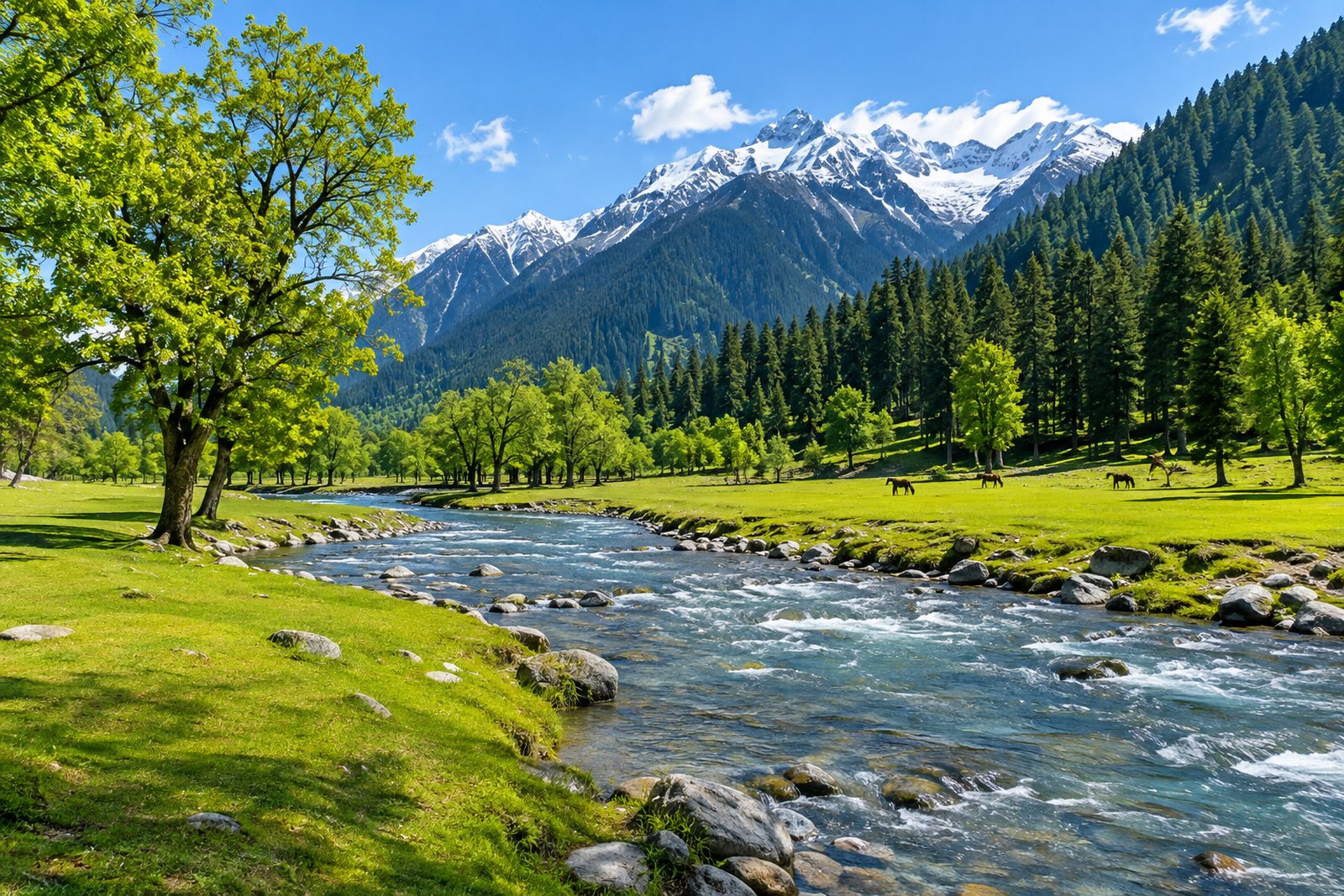
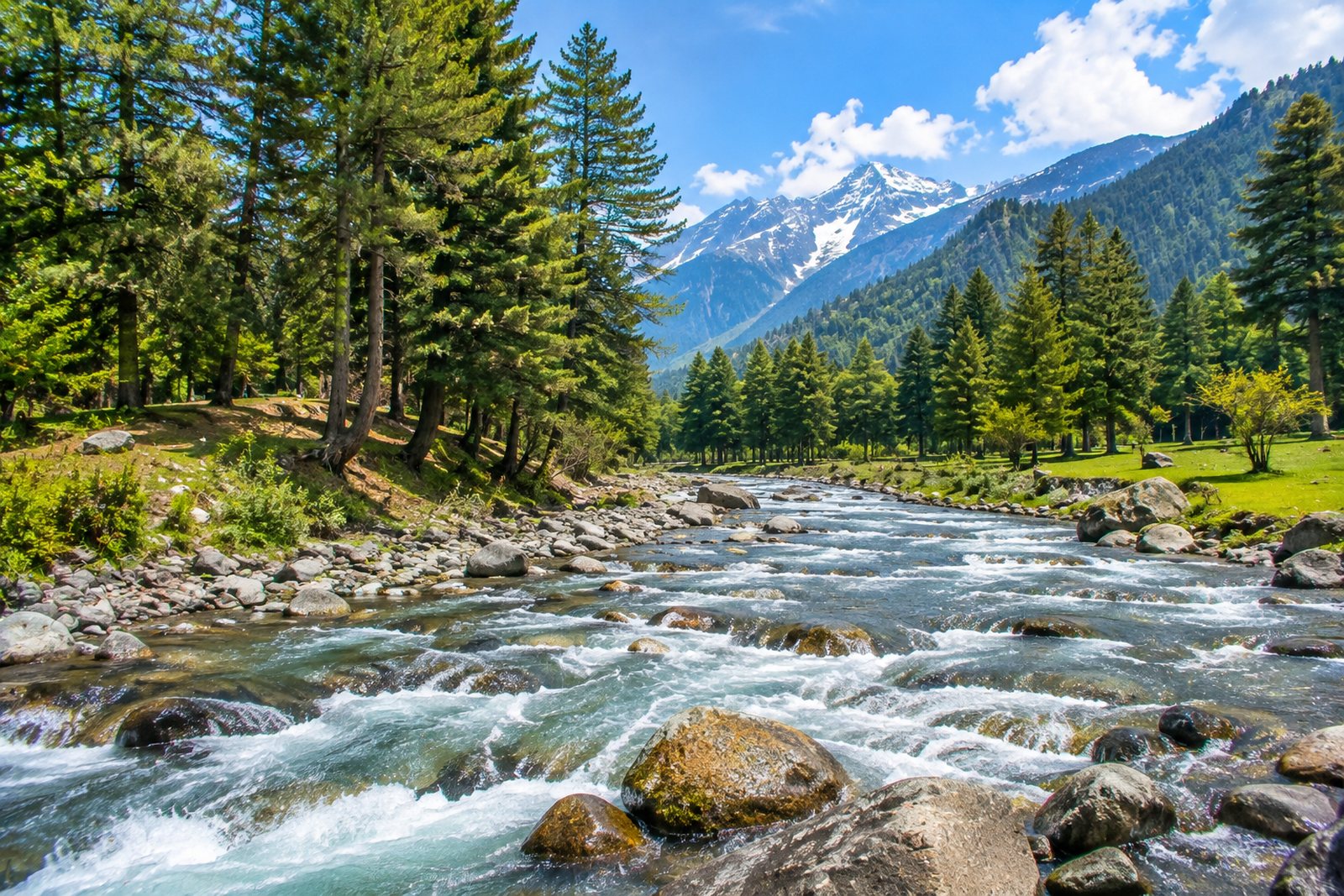
Past Anantnag, the road leaves the highway and heads up the Lidder valley. This is where the drive gets beautiful. The river appears beside the road, fast and full of white water over the stones. Pine and fir climb the hills. The villages get smaller, the fields are full of apple and walnut trees, and the air turns colder.
Roll the window down for the last half hour. You will hear the river before you see Pahalgam.
Arriving in Pahalgam
Pahalgam is a small town at the meeting point of valleys. It is also where many pilgrims start the Amarnath Yatra, so in summer you will see a lot of activity around the yatra season.
For sightseeing around Pahalgam, local rules usually require you to use the town's own union taxis for places like Aru, Betaab Valley and Chandanwari, rather than the car you came in. Pony rides go up to the meadows. Which spots are open, and how you can reach them, is decided by the local administration and can change. Check current advisories before you plan. Our Pahalgam sightseeing guide goes through each valley.
Make it part of a bigger Kashmir trip
Most people do this road as the middle of a Kashmir circuit, not on its own.
The Kashmir with Pahalgam Stay package does exactly that: two nights in Srinagar with a Gulmarg day, two nights in Pahalgam for its valleys and meadows, and a last night back in Srinagar, as per the package itinerary. Kashmir Grand Tour adds Sonamarg and a night in Gulmarg to the same circuit. And if you want to begin with Mata's darshan, Vaishno Devi & Kashmir Grand starts in Katra with Vaishno Devi before the Kashmir valley.
Best time to drive Srinagar to Pahalgam
- April to June: Spring and early summer, green and pleasant. Peak season.
- July and August: Amarnath Yatra period; expect security and extra traffic. Check advisories.
- September to November: Golden autumn, chinar colours, saffron harvest at Pampore. Our favourite.
- December to February: Snow, cold, and sometimes slippery roads. Beautiful, but go with a local driver.
Quick checks for the drive
- Carry ID; there may be checks on the way.
- Postpaid connections usually work in Kashmir; many prepaid ones from other states do not. Check with your network before you go.
- Keep small change for kahwa stops, and a warm layer even in summer.
The road is short. But between the purple fields, the old stones and the sound of the Lidder, it is one of those drives where arriving feels a little like a loss.
Planning the full trip? Read our Kashmir tour plan, or browse all Pahalgam holiday packages.
Frequently asked questions
How long is the drive from Srinagar to Pahalgam?
The drive is around 90 to 95 km and usually takes around 2.5 to 3 hours without long stops. With stops at Pampore, Awantipora and the bat workshops, plan half a day.
What are the best stops between Srinagar and Pahalgam?
Pampore for saffron and kahwa, the Awantipora temple ruins, the cricket bat workshops near Bijbehara and the Lidder valley road for river views.
When can I see saffron flowers in Pampore?
Saffron crocus usually flowers for a few weeks around late October and early November. Exact timing depends on the weather that year.
Can I use my own taxi for sightseeing in Pahalgam?
Usually not for points like Aru, Betaab Valley and Chandanwari. Local rules require the town's union taxis for these spots. Rules can change, so check locally.
Is it safe to drive from Srinagar to Pahalgam?
It is a busy tourist road travelled by many visitors every season. Follow local advisories, carry ID for checks and go with a local driver, especially in winter.