Rishikesh River Rafting Guide: Stretches, Grades and Season
Brahmpuri, Shivpuri, Marine Drive or Kaudiyala? A guide to Rishikesh river rafting stretches, rapid grades, the season, safety and what to wear.
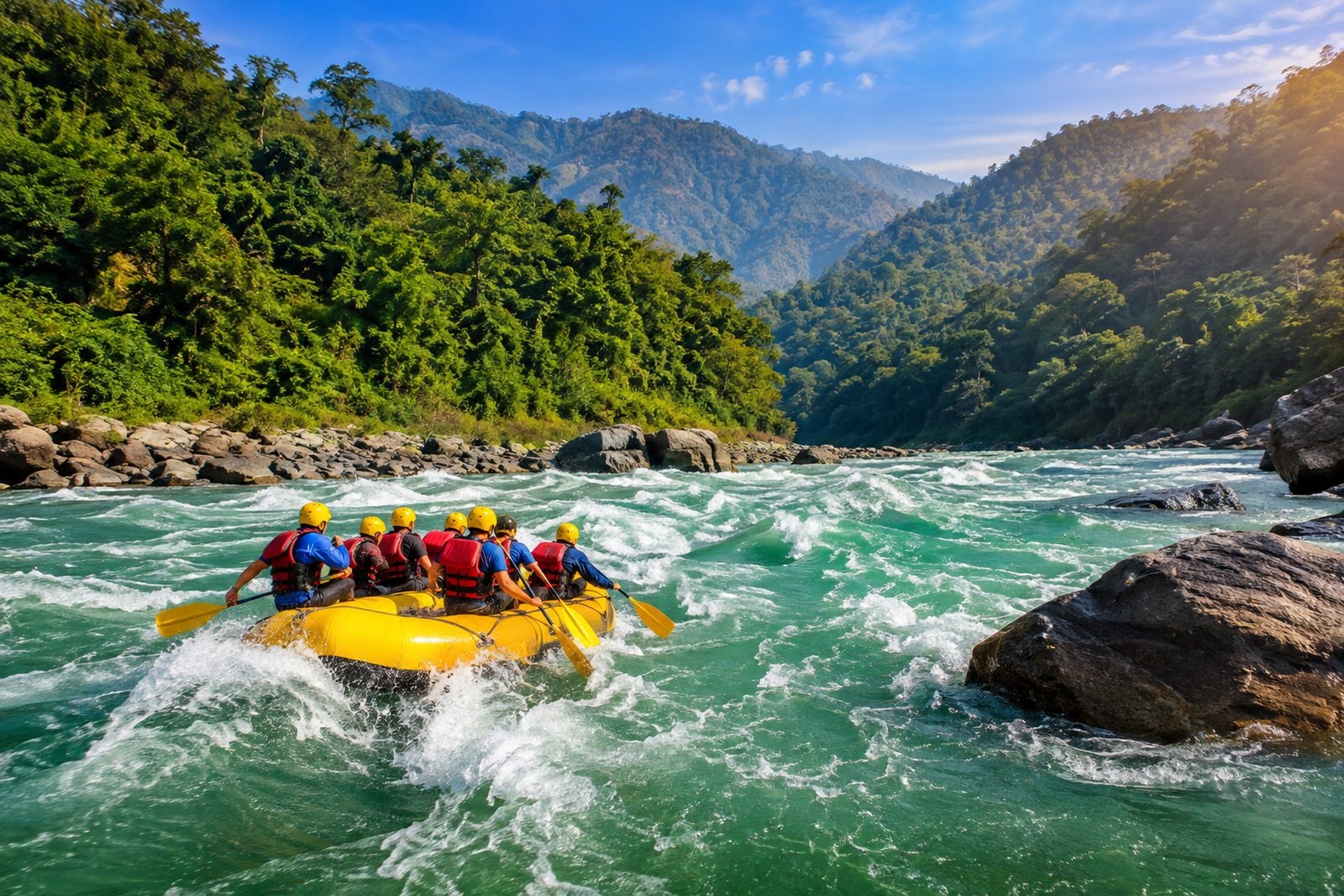
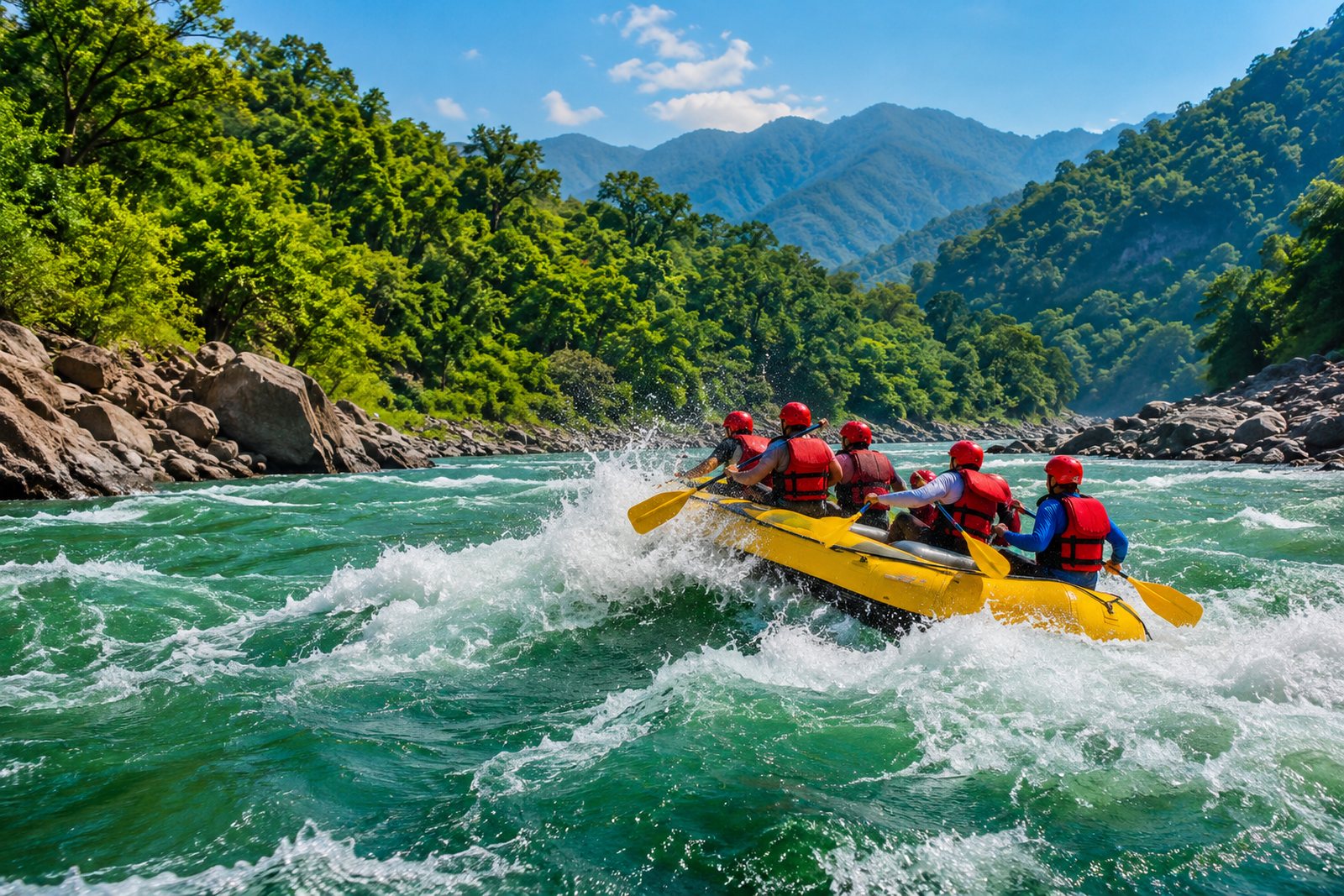
"Forward! Forward! Hard forward!" The guide's voice cuts over the roar of the water, the raft tilts nose-down into a wall of white, and for one second nobody is sure which way is up. Then you are through, soaked to the bone, paddles in the air, everyone screaming and laughing at the same time. That is the Ganga at Rishikesh, and that is why people come back.
This Rishikesh river rafting guide explains the main stretches, what the rapid grades mean, the right season, and how to pick a safe operator. Read it once before you book and once more the night before.
How does rafting in Rishikesh work?
Rafting runs start upstream and end near Rishikesh. You are driven up the highway towards Badrinath to the starting point, given a life jacket, helmet and paddle, briefed on safety, and then you raft back down. Each raft has a trained guide, and usually six to eight people paddle.
You do not need to know swimming for most runs, because you will wear a life jacket throughout. But you must listen to the guide, follow commands and be reasonably fit.
What do the rapid grades mean?
Rapids are graded on an international scale. The ones you meet at Rishikesh are usually in the gentle to moderate range:
- Grade I and II: small waves, easy, good for first-timers and families
- Grade III: bigger waves and drops, real excitement, still safe with a good guide
- Grade IV: powerful, technical rapids that need strong paddling and full attention
Most of the famous rapids in the classic stretches fall in the Grade II to III range, with some sections and seasons pushing higher.
The main rafting stretches
Distances below are approximate and operators may describe them slightly differently.
Brahmpuri to Rishikesh (short, around 9 km)
The easiest run. Gentle rapids, plenty of calm water, and a good taste of rafting without much fear. Ideal for families with younger teenagers, elders who are fit, and anyone nervous about water.
Shivpuri to Rishikesh (classic, around 16 km)
This is the run most people mean when they say "Rishikesh rafting". It has a fine mix of exciting rapids, with names like Roller Coaster and Golf Course, and calm stretches where guides often let you jump out and body-surf with your life jacket on. Around two to three hours on the water, depending on the river's flow.
Marine Drive to Rishikesh (longer, around 24-25 km)
A longer, fuller day with more rapids and more paddling. Good for groups of friends who did Shivpuri before and want more.
Kaudiyala to Rishikesh (longest, around 35 km)
The longest and toughest common run, often taking most of a day, with bigger rapids upstream. Suited to fit, confident adults. Some operators combine it with a riverside camp.
Did you know? The Ganga at Rishikesh feels cold even in May, because much of its water comes from Himalayan glaciers and snowmelt upstream. The first splash in a rapid is always a shock.
When is the rafting season in Rishikesh?
Rafting is generally open from around September or October to June, and pauses in the monsoon, roughly July and August, when the river is high and fast. Exact opening and closing dates are set by the local authorities each year, so check before planning around them.
- October to November: pleasant weather, cool water, good flow
- December to February: cold mornings and very cold water; wetsuits help
- March to June: the most popular season, warm days and the water feels refreshing
- Monsoon: rafting pauses; plan temples and ghats instead
Is Rishikesh rafting safe?
With a licensed operator and proper gear, it is generally safe, and thousands of people raft every season. Safety depends on you choosing well:
- Book only with licensed, registered operators; check with your hotel or the official tourism portal
- Make sure every person gets a properly fitted life jacket and helmet
- Ask whether a safety kayaker or rescue support accompanies the rafts
- Follow the guide's instructions at all times, especially in rapids
- Do not raft under the influence of alcohol
- Children and elders: minimum age and health rules are set by operators and authorities, so confirm before booking
- People with heart conditions, recent surgery or pregnancy should not raft
Our tip: Wear quick-dry clothes and strap-on sandals or old sports shoes, not flip-flops. Leave phones and wallets in the car or hotel unless the operator gives you a dry bag.
What else can you do on a rafting day?
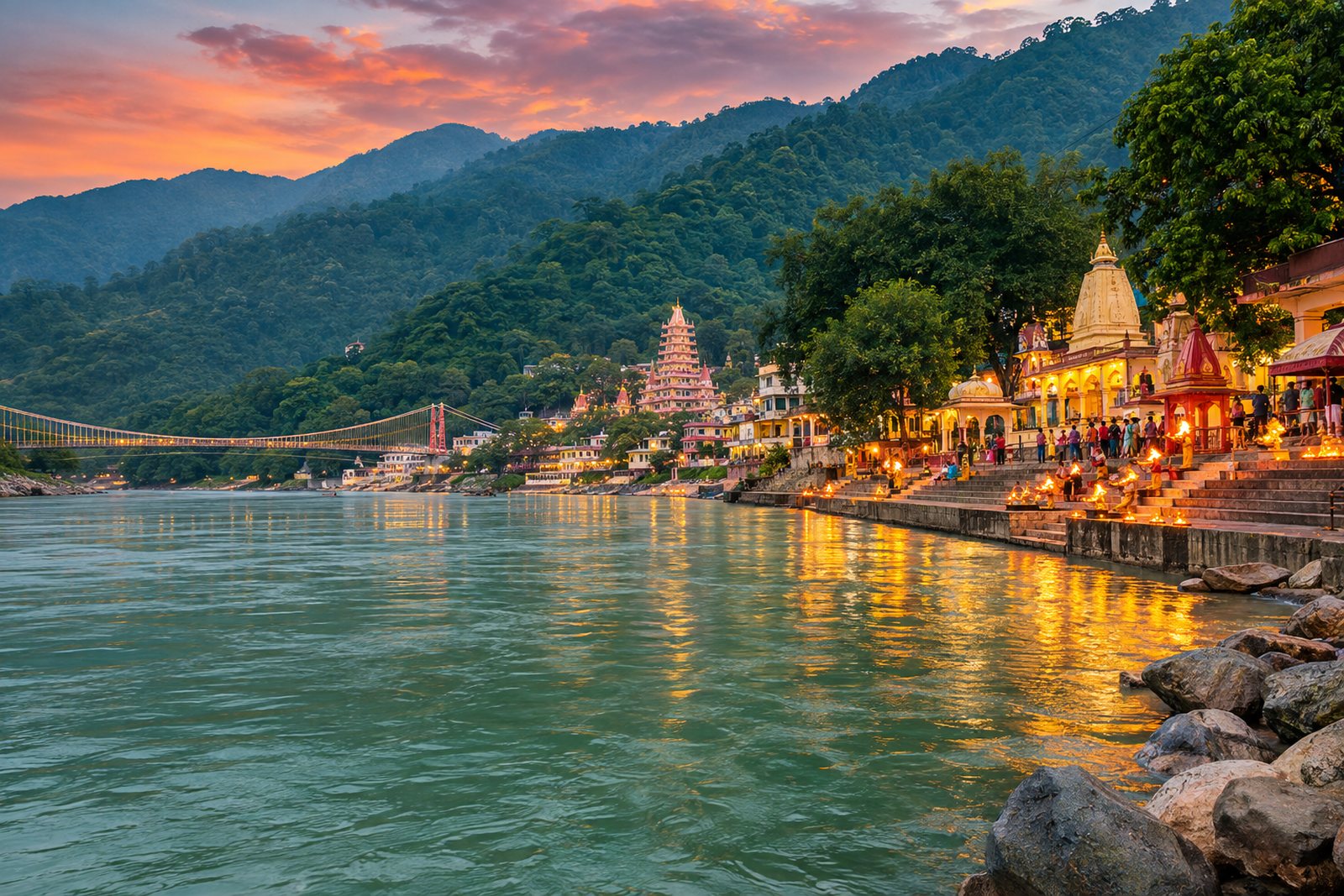
Rafting fills a morning or an afternoon, not a whole day, unless you pick a long run. Pair it with the Ganga aarti at Triveni Ghat or Parmarth Niketan, a walk across the Ram Jhula and Lakshman Jhula areas, the Beatles Ashram, and cafes with river views. Haridwar's Har Ki Pauri aarti is an easy evening trip too.
The Rishikesh & Haridwar package gives you two nights in Rishikesh with the ghats, bridges and Beatles Ashram plus a Haridwar day with the Ganga aarti, and a free slot for rafting is easy to plan. Rishikesh Haridwar Darshan adds Neelkanth and Kunjapuri over three nights. If you are heading to the high Himalaya, Auli & Badrinath starts and ends in Rishikesh, so a rafting run fits on the way. Rafting itself is booked separately with a licensed operator unless listed in your package inclusions.
The river at Rishikesh is holy to millions, a playground to thousands, and both at once for most people who spend a day on it. You get wet. You get scared. You come back to the bank feeling ten years younger.
Plan the rest of your trip with our Haridwar Rishikesh trip guide, or browse all Rishikesh holiday packages.
Frequently asked questions
Which is the best rafting stretch in Rishikesh?
Shivpuri to Rishikesh, around 16 km, is the classic run for most first-timers. Brahmpuri is easier and Kaudiyala is the longest and toughest.
Is rafting open in Rishikesh during monsoon?
No. Rafting generally pauses in the monsoon, roughly July and August, when the river runs high. Exact dates are set by authorities each year.
Do I need to know swimming for Rishikesh rafting?
No, a life jacket is worn throughout. You must follow the guide's commands and be reasonably fit.
What is the minimum age for rafting in Rishikesh?
Age and health rules are set by operators and authorities and can differ by stretch. Confirm with a licensed operator before booking.
What should I wear for river rafting?
Wear quick-dry clothes and strap-on sandals or old sports shoes. Avoid flip-flops, jeans and carrying phones without a dry bag.