Rishikesh Rafting Safety: Age, Weight, Gear and Operators
Age and weight limits, life jackets, helmets, licensed operators and what to do if you fall in. A practical Rishikesh rafting safety guide for families.
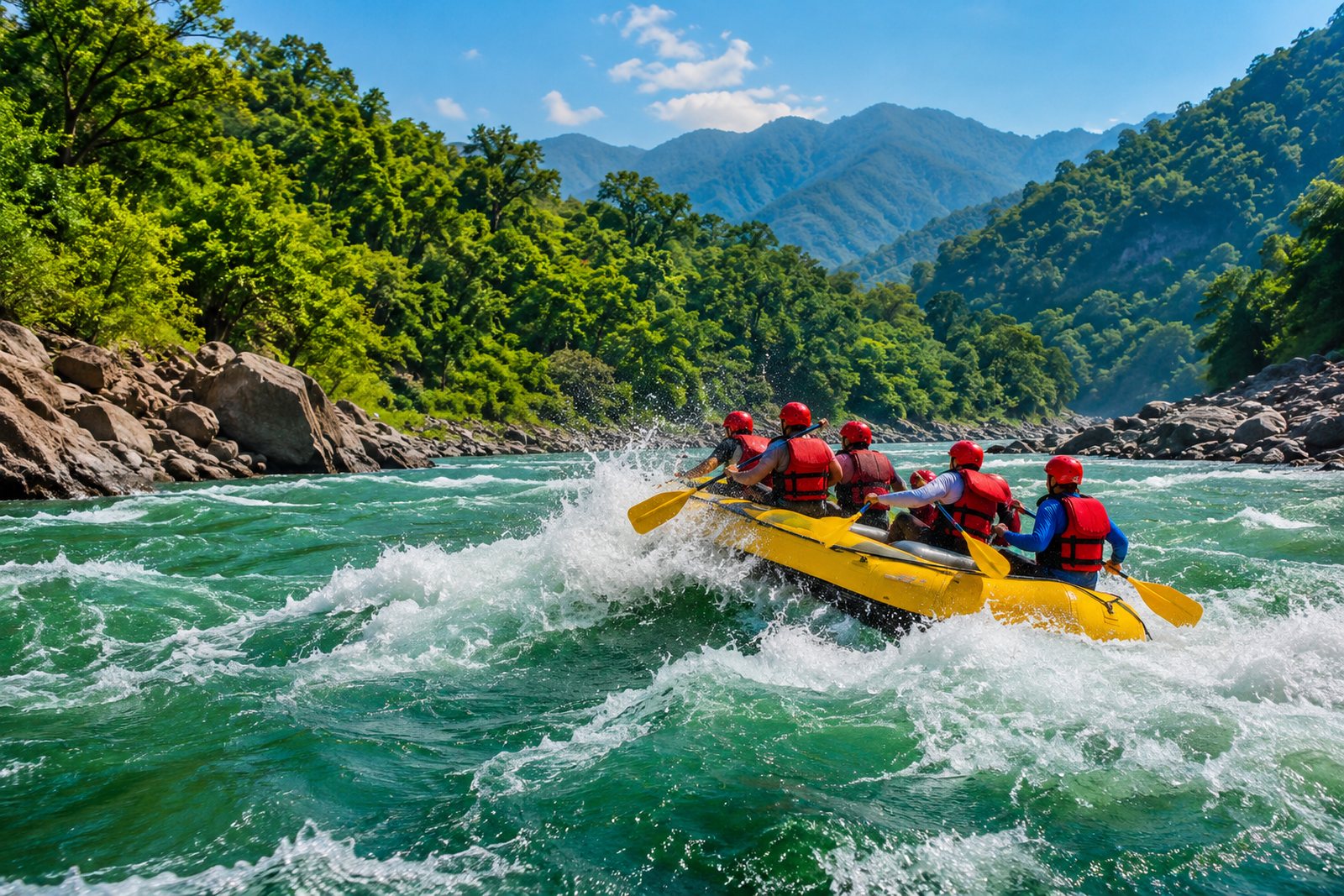
"Forward paddle! Forward! Harder!" The guide's voice cuts through the roar, the raft tips its nose into a wall of white water, and for two seconds nobody can see anything except green-grey Ganga and spray. Then the raft pops out the other side, everyone is screaming and laughing at once, and someone's cousin realises his cap is now on its way to Haridwar.
That moment is why lakhs of people raft in Rishikesh. What makes it fun instead of frightening is everything that happens before the raft touches the water. This guide on Rishikesh rafting safety covers age and weight rules, the gear you should see, how to judge an operator and the small habits that keep a great day safe.
How rafting in Rishikesh works
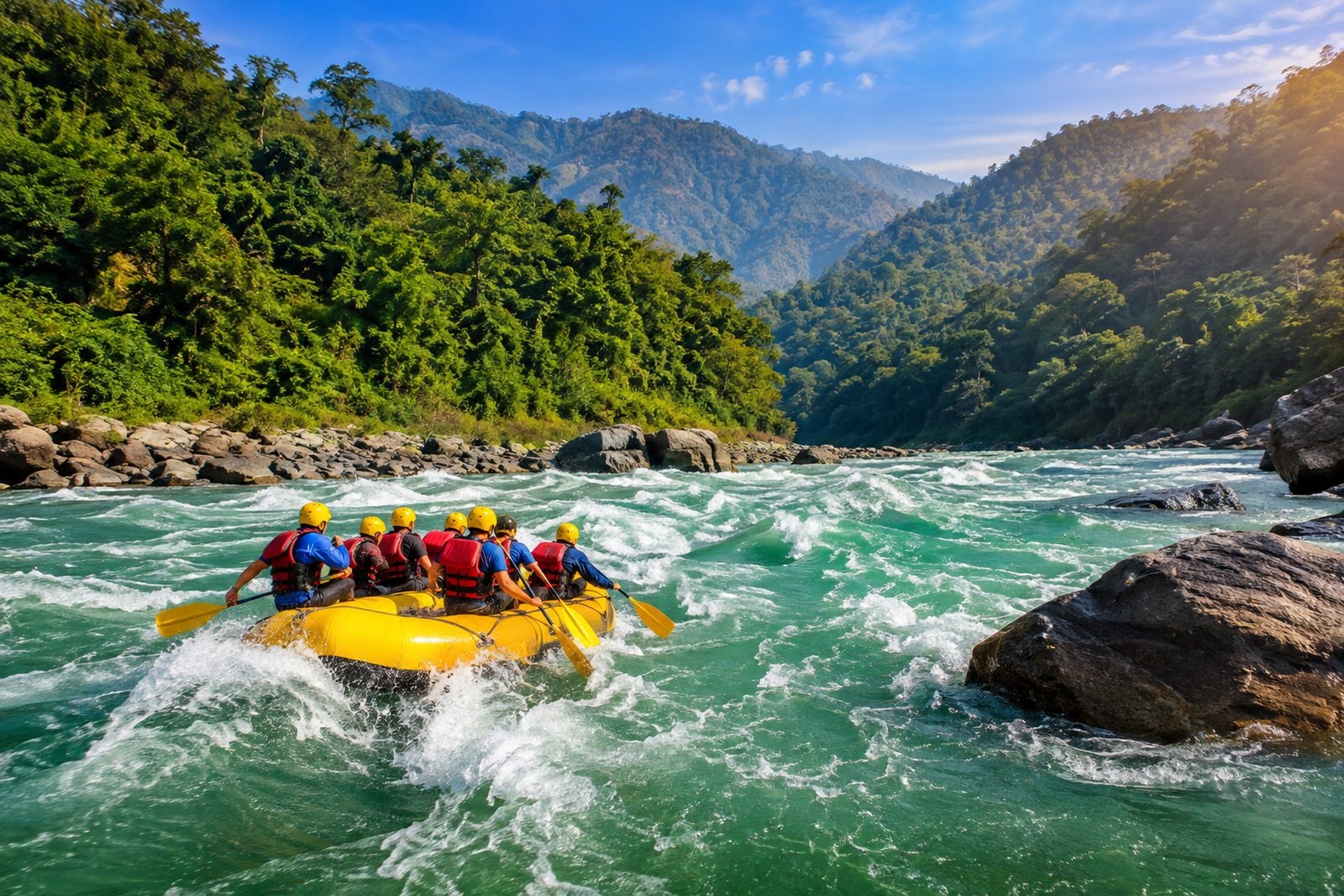
Most rafting trips start upstream and end near Rishikesh town, with the raft drifting down between forested hills. Operators usually offer a few standard stretches:
- Brahmpuri to Rishikesh: short and gentle, roughly 9 km, good for first-timers and families
- Shivpuri to Rishikesh: the most popular, roughly 16 km, with several well-known rapids
- Marine Drive to Rishikesh: longer, roughly two dozen km, more rapids
- Kaudiyala to Rishikesh: the longest day stretch, for fit and confident rafters
Rapids are graded roughly from easy (Grade I-II) to difficult (Grade IV). The bigger stretches include the famous named rapids. Exact distances and grades can vary with water levels.
Did you know? The Ganga's rapids around Rishikesh have names given by rafters over the years, like Roller Coaster, Golf Course, Club House and Return to Sender. Guides will happily tell you how each one earned its name, usually after you have survived it.
Age and weight: what to expect
There is no single fixed rule that every operator follows, and limits can be set or revised by the authorities, so always confirm with your operator. In general:
- Children are usually allowed only on the shorter, gentler stretches, and many operators set a minimum age in the early teens for the longer ones with bigger rapids
- There is no strict upper age, but older rafters should be fit and free of heart, spine or breathing problems
- Life jackets must fit snugly, so very light children and very heavy adults may be turned away from certain stretches if a proper fit is not possible
- Pregnant women and people with epilepsy, recent surgery, heart conditions or serious back problems should not raft
Honesty matters here. Tell the operator your real age, weight and health conditions. They are deciding which seat, which stretch and whether it is safe.
The gear you must see before you get in
A licensed, well-run operator will give every rafter:
- A proper life jacket (PFD) in good condition, fitted and buckled tight; the guide should tug it upward at the shoulders to check it does not slide over your chin
- A helmet, with the strap fastened
- A paddle with a T-grip at the top
- A safety briefing on land, covering how to sit, how to hold the paddle, commands and what to do if you fall in
On the water, a good trip usually has a trained guide on every raft, a safety kayaker on the bigger stretches, a throw rope and a first-aid kit. If any of this is missing, it is a red flag.
Why licensed operators matter
Rafting on the Ganga in Rishikesh is regulated. Operators need permission from the state authorities, and guides are expected to be trained in rescue and first aid. Cheap roadside deals sometimes cut corners on gear, guide training or raft condition.
- Book through a known operator or your travel planner rather than a stranger at the bus stand
- Ask whether the operator is registered and whether guides are certified
- Look at the rafts and jackets: patched, faded or torn gear tells you a lot
- Be wary of anyone who says "no briefing needed, sab easy hai"
What to do if you fall in
Falling out of a raft is common on bigger rapids and is usually harmless if you know the drill.
- Do not panic; your life jacket will bring you up
- Float on your back with your feet pointing downstream and toes up, so your feet take any rock contact
- Keep hold of your paddle if you can
- Look for the raft, the kayaker or the throw rope and follow the guide's instructions
- Never try to stand up in fast water; feet can get trapped between rocks
Our tip: Before you leave the shore, ask your guide one simple question: "Agar main gir gaya toh kya karun?" A good guide will show you the floating position and the rescue drill on dry land. If they laugh it off, find another raft.
Clothes, phones and small things
- Wear quick-dry shorts or track pants and a T-shirt; avoid jeans
- Use sandals or shoes with straps that will not come off in water
- Remove jewellery and secure spectacles with a strap
- Apply waterproof sunscreen; the river reflects a lot of sun
- Leave phones and wallets in the vehicle or locker unless the operator provides a dry bag
- No alcohol before rafting, ever
When is rafting season in Rishikesh?
Rafting generally runs from around late September or October through June, and is usually suspended during the peak monsoon, when the river is high and dangerous. The exact opening and closing dates are set by the authorities each year. March to June is the busiest, when the water is pleasant; winter water is very cold but the rapids are still enjoyable for confident rafters.
Our Rishikesh & Haridwar package gives two nights for the ghats, bridges and Haridwar's Ganga Aarti, while the three-night Rishikesh Haridwar Darshan adds Kunjapuri and Neelkanth, as per the package itinerary. For a hills add-on, Haridwar Rishikesh Mussoorie runs four nights. Rafting is usually booked as an extra on the spot with an operator; tell us your dates and group size, and we will help you plan around a free half-day.
The last paddle
The best rafting stories from Rishikesh end the same way: everyone soaked, sunburnt, laughing on the sand, eating Maggi at a riverside stall while the guide pretends he was not worried at Roller Coaster. Choose the right operator and the right stretch, and that is exactly how your story will end too.
Read our Haridwar Rishikesh trip guide or browse all Rishikesh holiday packages.
Frequently asked questions
What is the minimum age for river rafting in Rishikesh?
There is no single rule for all operators. Children are usually allowed only on short, gentle stretches, and many operators set a minimum age in the early teens for longer stretches. Confirm with your operator.
Is river rafting in Rishikesh safe for non-swimmers?
Many non-swimmers raft safely with a properly fitted life jacket, a trained guide and a good briefing. Choose a gentler stretch and follow the guide's instructions.
Is there a weight limit for rafting in Rishikesh?
Some operators have weight limits because life jackets must fit snugly. Share your actual weight while booking so the operator can confirm a safe fit.
When is rafting closed in Rishikesh?
Rafting is usually suspended during the peak monsoon when the Ganga runs high. Exact opening and closing dates are set by the authorities each year.
What should I wear for rafting in Rishikesh?
Wear quick-dry shorts or track pants, a T-shirt and strapped sandals. Avoid jeans and jewellery, secure spectacles with a strap and use waterproof sunscreen.