Rameshwaram Jyotirlinga History: Where Lord Rama Worshipped Shiva
A linga of sand, a late Hanuman and 22 wells you bathe in one after another. The story of Rameshwaram jyotirlinga and how to plan your darshan.
Water, mostly. That is what you remember first about Rameshwaram. Sea water at dawn, warm and shallow at Agni Theertham, families holding hands and dipping together. Then cold well water poured over your head, bucket after bucket, by a man who has done this ten thousand times and still shouts the name of each well as he pours. By the twenty-second bucket you are shivering, laughing, and somehow ready for darshan.
This is the Rameshwaram Jyotirlinga, the Ramanathaswamy temple on Rameswaram island in Tamil Nadu. Here is the legend of Rama and the two lingas, the temple's famous corridors, and how to plan your darshan today.
The legend: Rama, Hanuman and a linga made of sand
According to the Ramayana tradition, Lord Rama came to this shore with Sita, Lakshmana and Hanuman after the war in Lanka. Ravana had been a great scholar and a Brahmin, and Rama wanted to atone for killing him. The rishis advised him to worship Shiva.
So Rama sent Hanuman to Kailash to bring a linga. Kailash is not exactly next door. The auspicious time was slipping away and Hanuman was nowhere to be seen. Sita did what Indian women have done in every crisis since: she made do. She shaped a linga out of the sand on the beach, and Rama worshipped it. That is the Ramalinga, the main jyotirlinga.
Then Hanuman landed, linga in hand, and was hurt to find the puja already done. Local legend says he even tried to pull the sand linga out with his tail, and could not move it. To console him, Rama installed Hanuman's linga too, the Vishwalinga, and ordered that it be worshipped first. That custom continues.
Some versions place the worship before the war rather than after. The temple tradition follows the story above. The old Dwadasha Jyotirlinga Stotram remembers this place as "Setubandhe tu Ramesham", Rama's lord at the bridge.
A temple built by kings, corridor by corridor
The temple you see today grew over many centuries. Rulers of the region, especially the Sethupathis of Ramnad, kept adding to it, and much of the present structure dates from roughly the 12th century onward, with big additions in the 17th and 18th centuries.
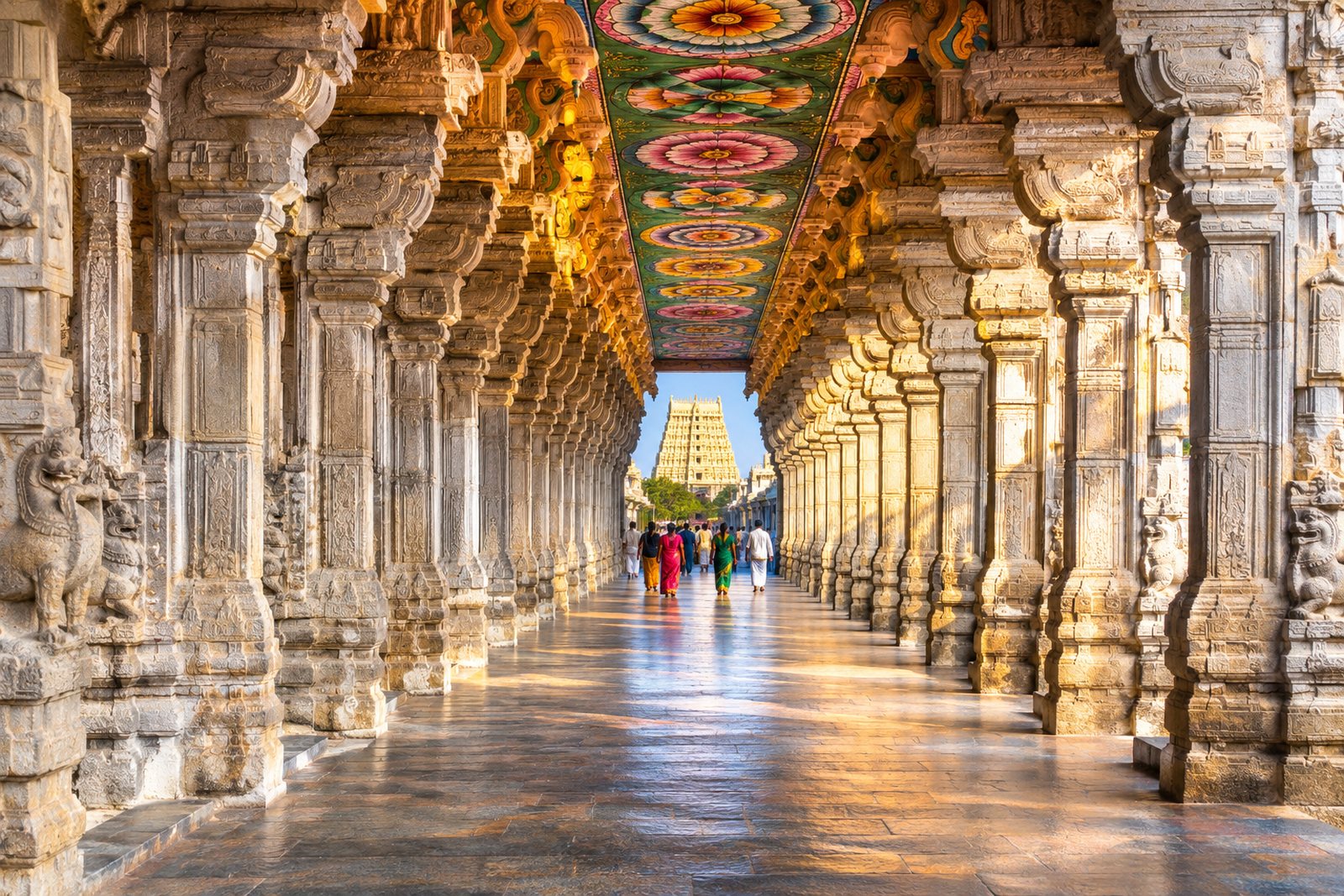
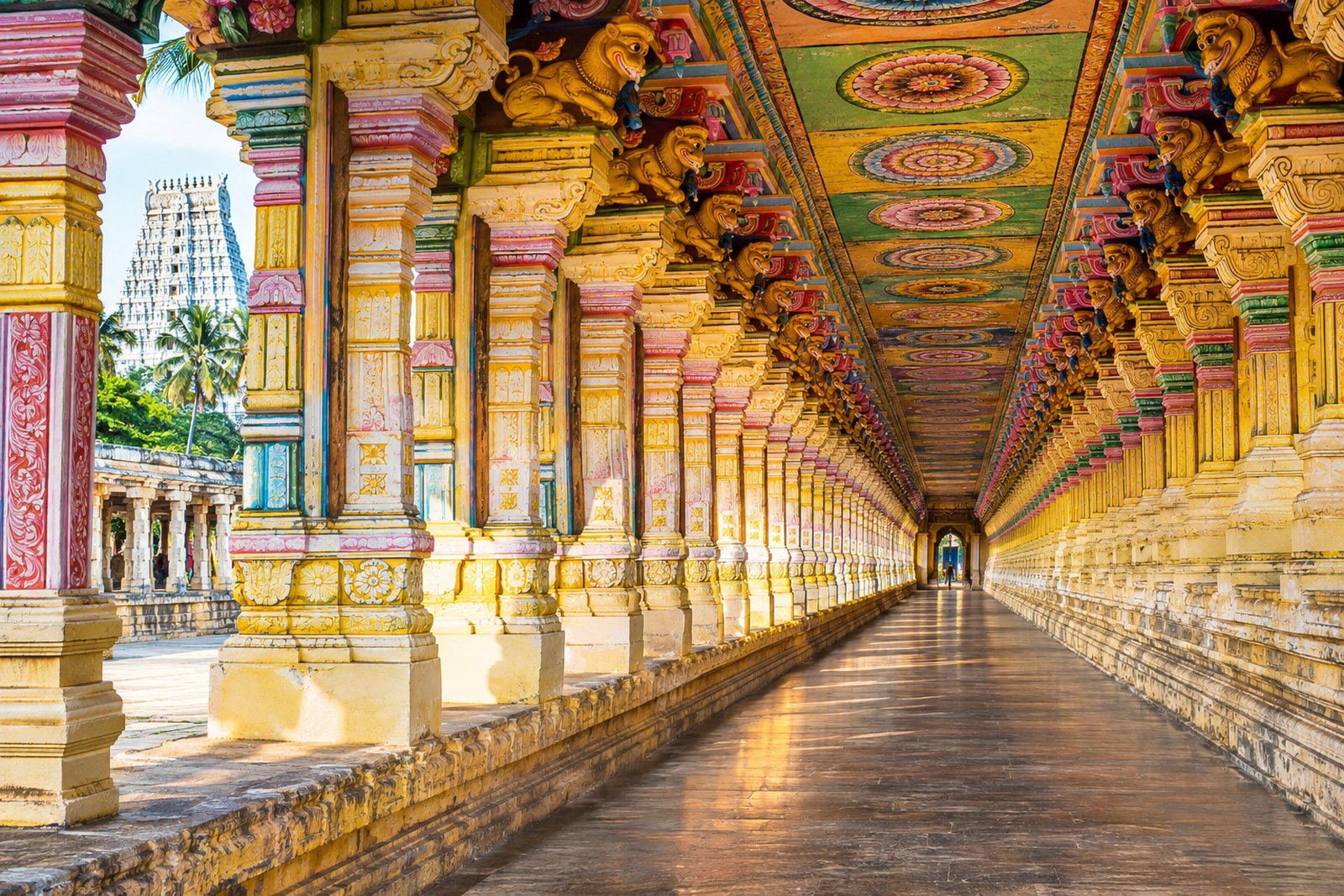
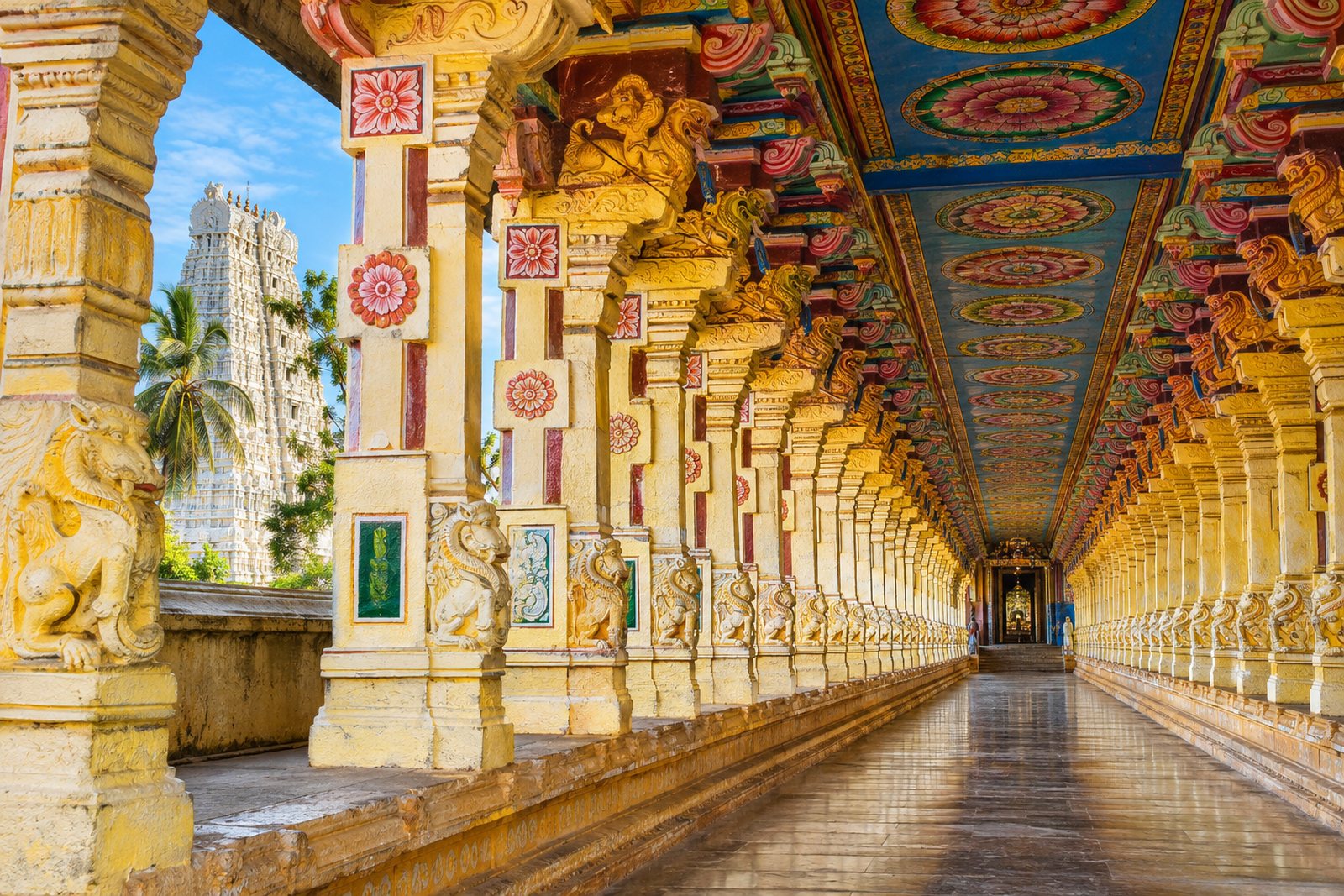
The result is famous for one thing above all: its corridors. Long, pillared halls with carved columns repeating into the distance, among the longest temple corridors in India. Walk the outer one early in the morning and the rows of pillars seem to go on forever, painted ceilings above, the sound of bare feet on stone below.
Did you know? There is an old Kashi-Rameshwaram tradition: pilgrims take sand from Rameshwaram to immerse in the Ganga at Kashi, then bring Ganga jal back to pour on the Ramanathaswamy linga. For many families, one yatra is not complete without the other.
The 22 theerthams
Inside the temple are 22 holy wells and tanks, the theerthams, each with its own name and its own story. The custom is to bathe in the sea at Agni Theertham first, then go well to well inside the temple, getting water poured on you at each one. Temple staff and local helpers do the pouring. You do the shivering.
Wear clothes you can get wet in, carry a dry set in a plastic bag, and keep your phone at the hotel. Your phone will thank you.
Dhanushkodi and the rest of the island
Drive to the eastern tip of the island and the land runs out. Dhanushkodi was a busy town with a railway station until a cyclone in December 1964 destroyed it. The broken church and station walls still stand in the sand. Further on is Arichal Munai, where the Bay of Bengal meets the Palk Strait, and on a clear day the water looks two different colours.
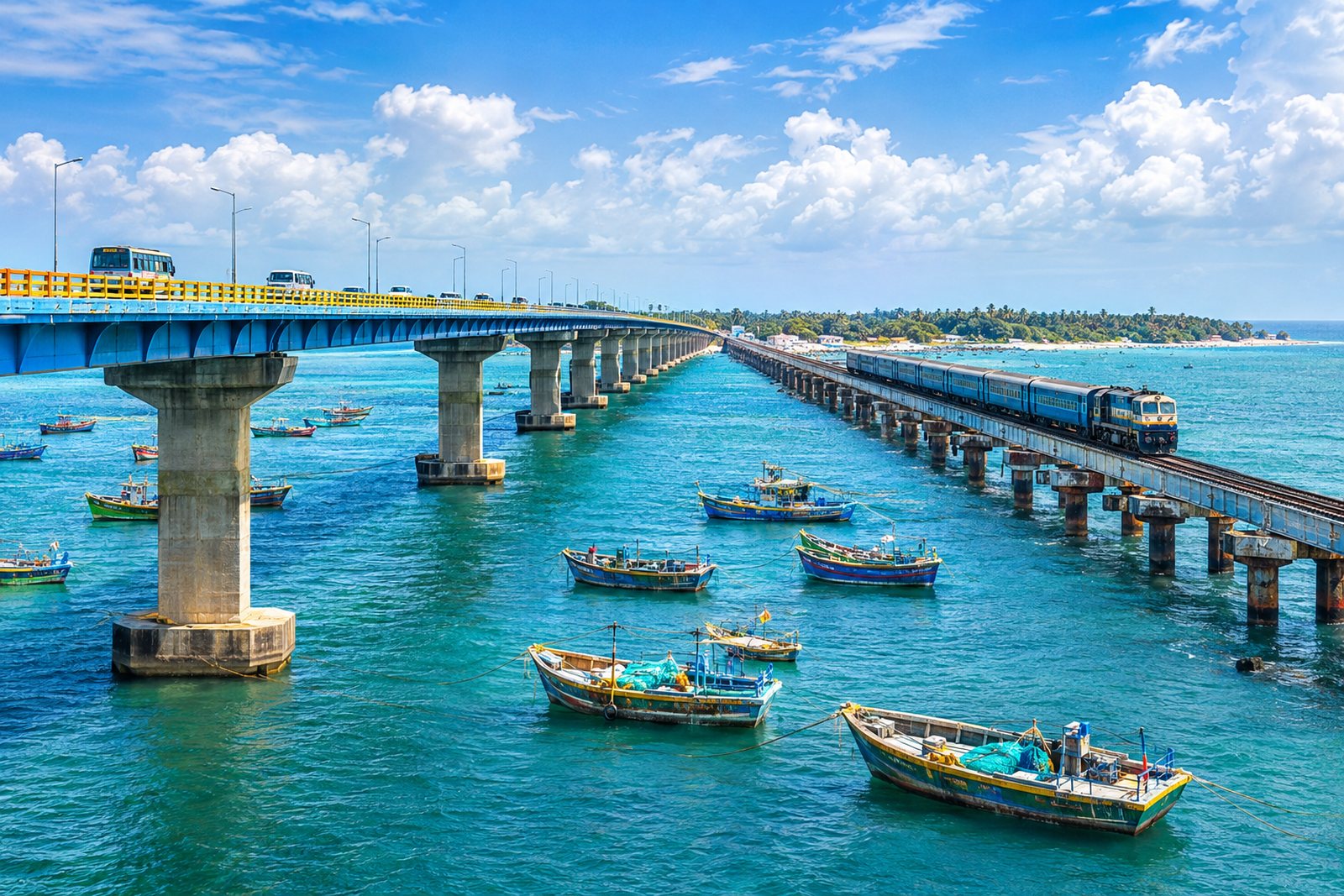
Closer to town, the Kothandaramaswamy temple, the APJ Abdul Kalam memorial for the former President who grew up here, and the view of the Pamban bridge across the sea are all easy stops. Coming in over the bridge by train is a thrill every child remembers.
BellaSafar's Rameshwaram Jyotirlinga Darshan keeps it simple with stays, car and the island sights, and if you want the Meenakshi temple too, Madurai & Rameshwaram adds Madurai to the trip. Rameshwaram is the Tamil Nadu stop on the list of all 12 Jyotirlingas.
How to plan your Rameshwaram darshan
- Where: Rameswaram island, Ramanathapuram district, Tamil Nadu, connected to the mainland by the Pamban road and rail bridges.
- Getting there: Madurai is the nearest airport, around 170 km away, about 3 to 4 hours by road. Rameswaram railway station has trains from Madurai and Chennai.
- Best time: October to April. Summers are hot and humid. The northeast monsoon can bring heavy rain around November and December, so keep a buffer day.
- Darshan: Theertham bathing and darshan take a few hours on busy days. Darshan timings and special sevas change, so check with the temple administration.
- Dress: Traditional, modest clothes are expected. Men usually wear a dhoti or pants with a shirt, women a saree, salwar or churidar.
- How long: One full day for the temple and theerthams, half a day for Dhanushkodi. Two nights is comfortable.
- Combine with: Madurai's Meenakshi temple, and Kanyakumari if you have more days.
Our tip: Do the theertham bath early in the morning, change, have a hot filter coffee, and only then join the darshan queue. You will be calmer, drier and far more present inside.
Why Rameshwaram stays with you
Most temples ask you to look. Rameshwaram asks you to get wet, walk, wait and walk again. By the time you stand before a linga that, according to legend, Sita shaped from beach sand, you have been through something. A small, salty, shivering kind of tapasya. That is the darshan.
Planning the yatra? Read our Madurai Rameshwaram Kanyakumari guide or browse all Rameshwaram holiday packages.
Frequently asked questions
Who installed the Rameshwaram jyotirlinga?
According to the Ramayana tradition, Lord Rama worshipped Shiva here. Sita made a linga of sand, known as the Ramalinga, and Hanuman brought another from Kailash, the Vishwalinga, which is worshipped first.
What are the 22 theerthams of Rameshwaram?
They are 22 holy wells and tanks inside the Ramanathaswamy temple. Pilgrims bathe with water from each, usually after a dip in the sea at Agni Theertham, before going for darshan.
What is the dress code at Rameshwaram temple?
Traditional, modest clothing is expected, such as dhoti or pants with a shirt for men and saree, salwar or churidar for women. Rules can change, so check with the temple administration before your visit.
How do you reach Rameshwaram?
Madurai is the nearest airport, around 170 km away, about 3 to 4 hours by road. Rameswaram also has a railway station, and the island is connected to the mainland by the Pamban road and rail bridges.
Is Dhanushkodi worth visiting from Rameshwaram?
Yes. Dhanushkodi, at the tip of the island, was destroyed by a cyclone in 1964 and its ruins, empty beaches and the meeting of two seas at Arichal Munai make it a popular half-day trip.