Rameshwaram Jyotirlinga Darshan: A 2-Night Trip Told Day by Day
Agnitheertham, the 22 theerthams, the long temple corridors, then Dhanushkodi, Pamban and the Kalam memorial. The 2-night Rameshwaram darshan, day by day.
The first bucket is a shock. The second makes you gasp. By the fifth, you are laughing, and by the tenth, the elderly uncle in front of you is chanting louder with each splash. Twenty-two wells, twenty-two buckets of holy water, and a family dripping its way through stone corridors towards darshan.
That bath at the Ramanathaswamy temple is the heart of the rameshwaram jyotirlinga darshan 2 nights itinerary. Add a dip in the sea, an island at land's end, a famous bridge and a memorial to one of India's most loved presidents, and you have three short days that people talk about for years. Here is how they flow.
Who this Rameshwaram trip suits
Pilgrim families, especially those travelling with parents. Devotees on the 12 Jyotirlinga path. People coming down from Madurai by train who want darshan done properly, with a car and a plan. Families with children who want the temple and also Dhanushkodi's empty roads.
Day 1: Agnitheertham, the 22 theerthams and darshan
Your car picks you up at Rameswaram Railway Station. Drop your bags at the hotel and walk to Agnitheertham, the sea ghat in front of the temple. Devotees take a dip in the calm water here before anything else. Expect to get wet. Expect everyone to get wet.
Then the Twenty-Two Theerthams inside the temple. Attendants draw water from each well and pour it over you. Each well has a name and its own story, and the water tastes different from one to the next, or so people swear.
After changing into dry clothes, darshan at the Ramanathaswamy Jyotirlinga. According to the Ramayana tradition, Lord Rama worshipped Shiva here after returning from Lanka, and the linga is believed to have been made by Sita from sand. Our story on Rameshwaram Jyotirlinga history tells the full legend.
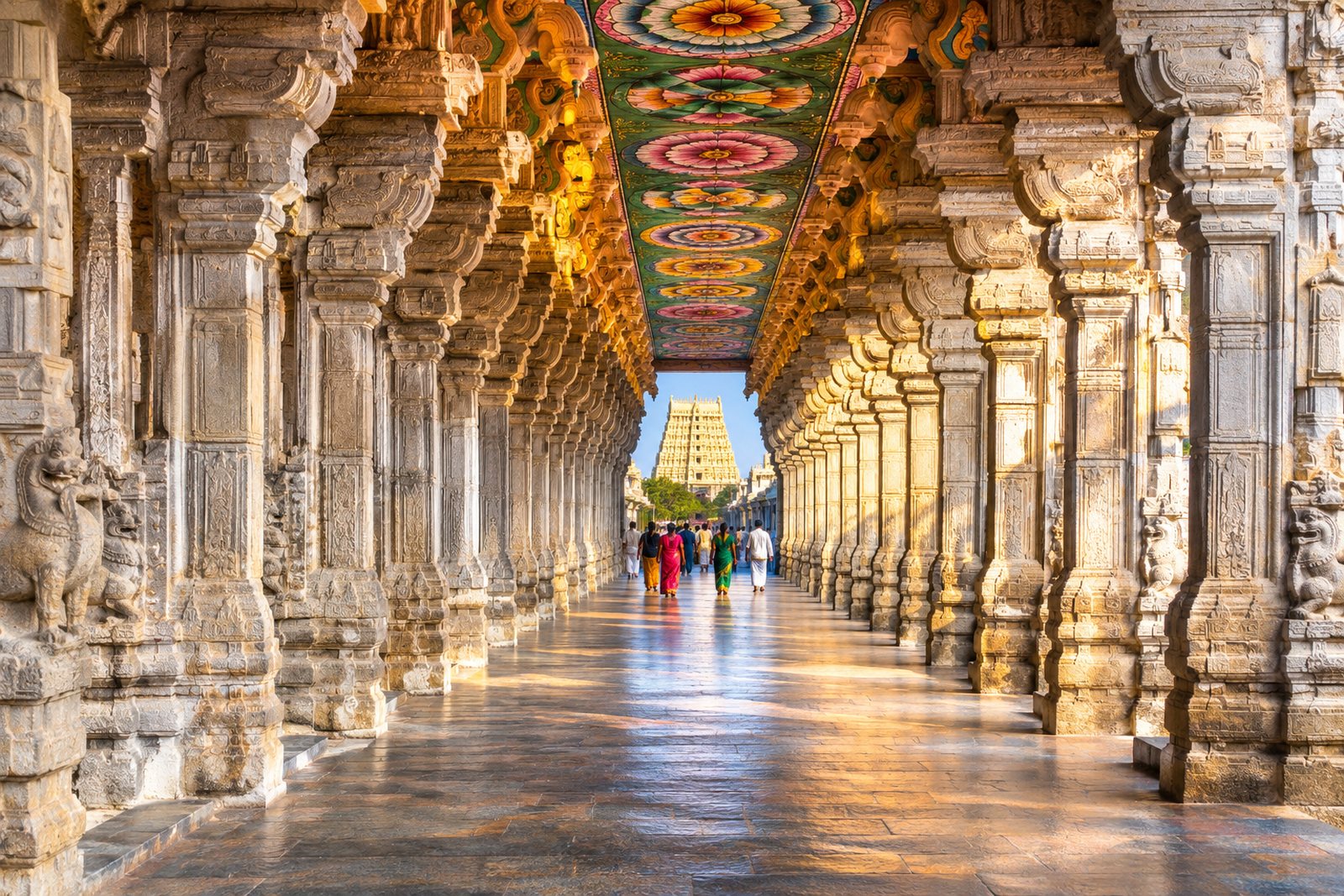
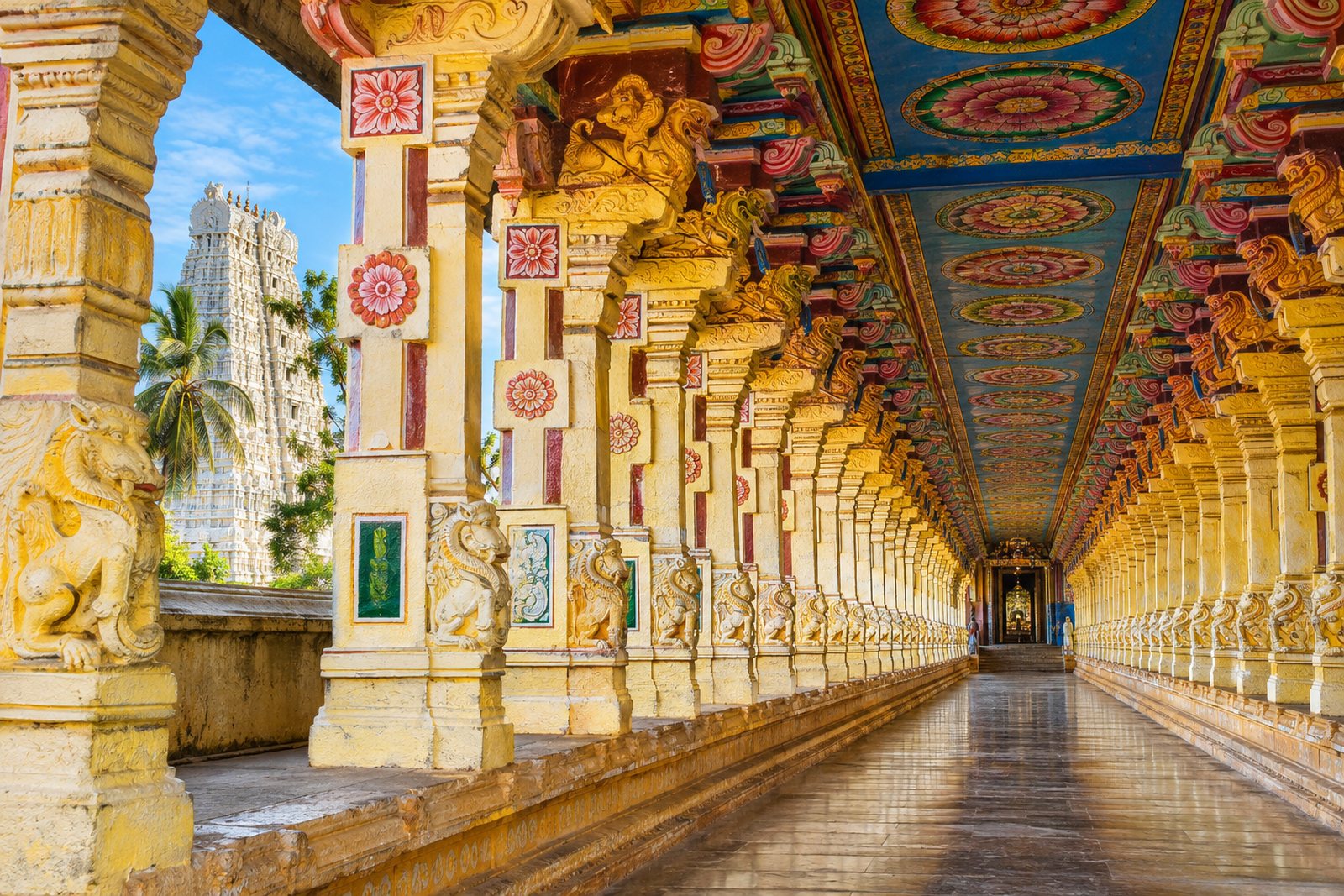
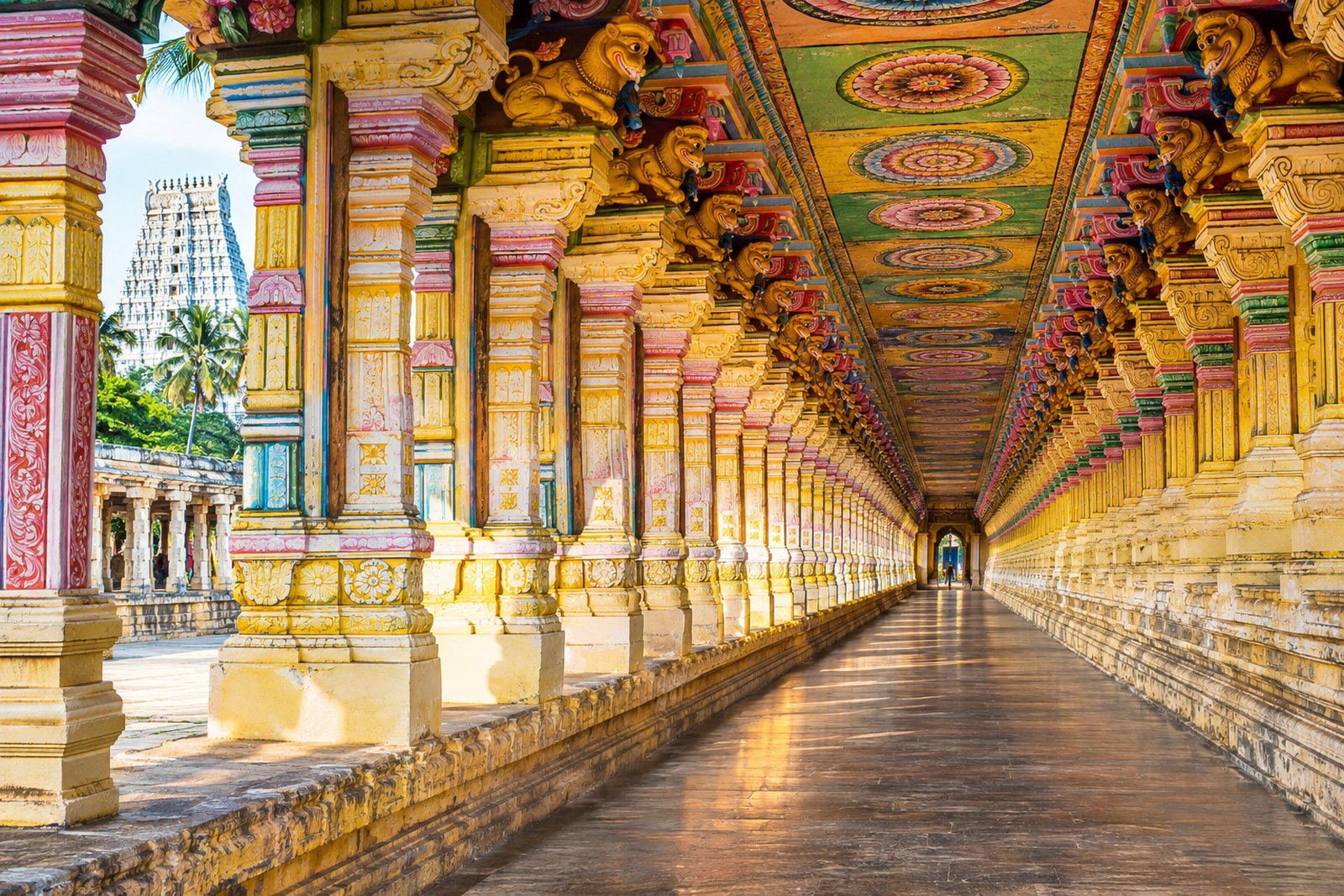
Before leaving, walk the Third Corridor. It is one of the longest temple corridors in India, with rows of carved, painted pillars stretching away in perfect lines.
The day also includes Sphatika Lingam darshan, of a crystal linga, held early in the morning at times set by the temple (check the day before), and Gandhamadhana Parvatham, a small hill with what are revered as Rama's footprints and a view across the island.
Day 2: Dhanushkodi, Arichal Munai and Pamban Bridge
Day 2 goes to Dhanushkodi, the ghost town at the tip of the island. In December 1964 a cyclone destroyed it, along with the railway line that once ran here. Today you see the shell of an old church, broken walls of the station and fishermen's huts on the sand.
From there the road runs to Arichal Munai, land's end, where the Bay of Bengal meets the Gulf of Mannar. Kids love standing at the point with water on both sides. Road access here can change with weather, so check locally.
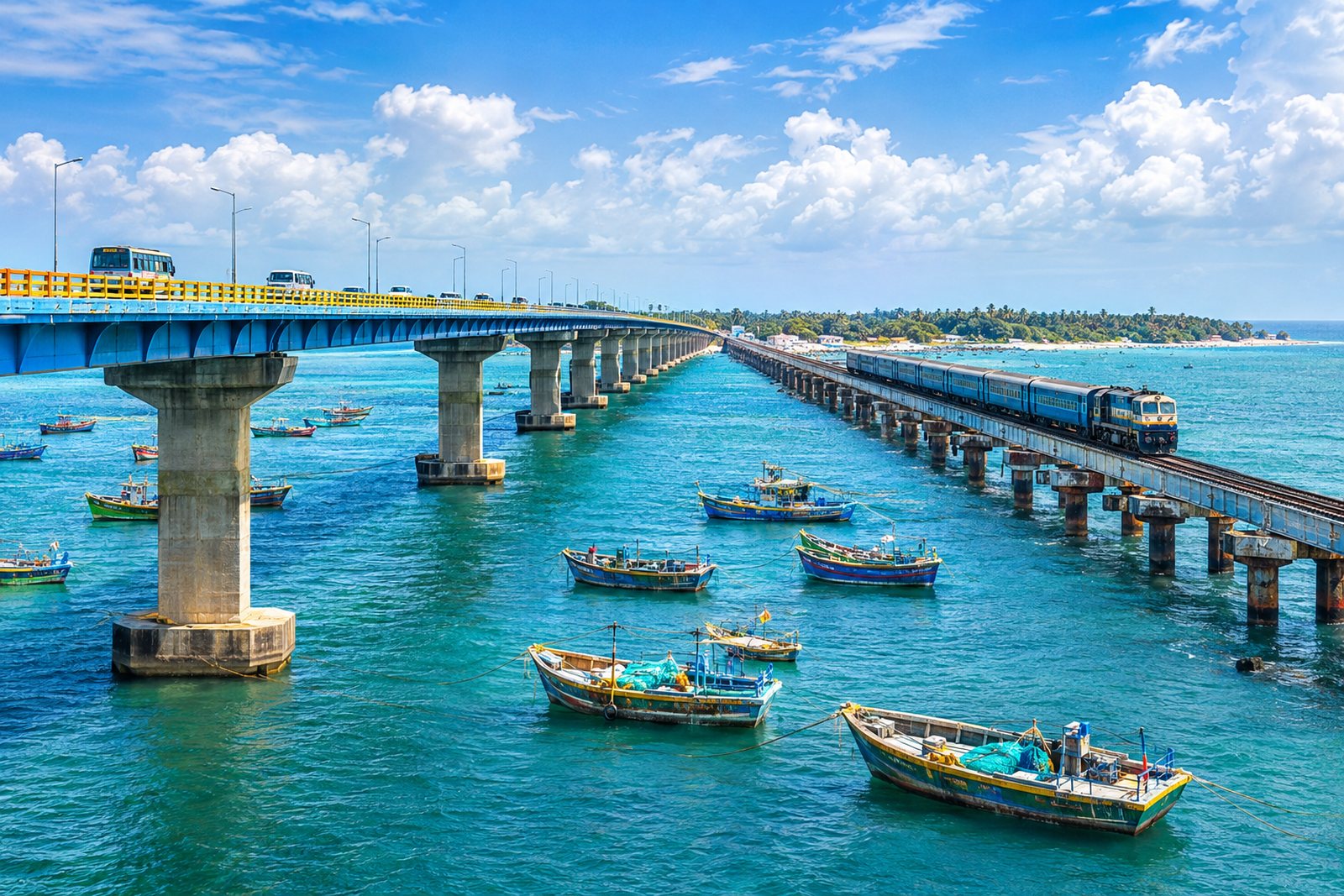
On the way back you see the Pamban Bridge that connects Rameswaram island to the mainland. The old rail bridge was opened in 1914, and a new one with a lift span has come up beside it. Then the Abdul Kalam Memorial, built in honour of the former President. Even teenagers go quiet here.
Did you know? Dr. A. P. J. Abdul Kalam was born in Rameswaram in 1931, the son of a boat owner, and he was laid to rest on the island in 2015, at the spot where the memorial now stands.
The day ends at Kothandaramar Temple, linked by tradition to the place where Vibhishana surrendered to Rama.
Day 3: back to the station
Breakfast, a last walk to Agnitheertham if you like, and the drop at Rameswaram Railway Station.
This is exactly the plan in our Rameshwaram Jyotirlinga Darshan package: 2 nights in Rameshwaram, a private car with driver, station pickup and drop, and daily breakfast and dinner.
What to pack for Rameshwaram
- Two sets of clothes that you do not mind getting soaked, plus one dry set.
- A small towel and a plastic bag for wet clothes.
- Traditional clothes for darshan; temple dress codes apply.
- Slip-on footwear; you will take it off many times.
- Sunscreen, a cap and water for Dhanushkodi, where shade is rare.
Mobile phones and cameras are usually not allowed inside the temple. Check current rules locally and keep a small bag for deposits.
Our tip: Keep your wet clothes and towel in a separate cloth bag and hand it to the driver after the theertham bath. Nobody wants to carry a dripping bag through the temple corridors.
Best season for Rameshwaram
October to March is the most comfortable. The northeast monsoon, roughly October to December, can bring rain and occasional sea and road disruptions; check weather before Dhanushkodi. Summer is hot and humid. Mahashivratri and certain new-moon days bring big crowds.
Darshan with elderly parents
- Do the theertham bath early, before crowds and heat build.
- Ask the temple administration about facilities for seniors.
- Keep Day 2 afternoon light; Dhanushkodi is sunny and windy.
The train onto the island, the buckets of holy water, the empty sands of Dhanushkodi. Few short trips cover this much.
If you are coming by road, read our Madurai to Rameshwaram drive guide, or browse all Rameshwaram holiday packages.
Frequently asked questions
Is 2 nights enough for Rameshwaram darshan?
Yes. One day covers Agnitheertham, the 22 theerthams and Ramanathaswamy darshan, and the second day covers Dhanushkodi, the Pamban Bridge and the Abdul Kalam Memorial.
What is the 22 theertham bath at Rameshwaram?
Inside the Ramanathaswamy temple there are 22 sacred wells. Devotees go from one to the next while attendants pour a bucket of water from each over them, before darshan.
Do we need to carry extra clothes for Rameshwaram?
Yes. The sea dip at Agnitheertham and the theertham bath leave you fully wet, so carry a change of clothes and a towel. Changing rooms are available near the temple.
Can we visit Dhanushkodi on this trip?
Yes. Day 2 goes to Dhanushkodi, the old town ruined by the 1964 cyclone, and on to Arichal Munai. Road access can change with weather, so check locally.
Which meals are included in the Rameshwaram package?
Daily breakfast and dinner are included. Simple South Indian vegetarian meals are easy to find near the temple for lunch.