Ramayan Trail in India: From Ayodhya to Rameshwaram
Ayodhya, Prayagraj, Chitrakoot, Nashik, Hampi and Rameshwaram: the Ramayan trail in India stop by stop, with what each place remembers and how to plan it.
Pull out a map of India and put your finger on the Sarayu at Ayodhya. Now trace a line south-west to the Ganga at Prayagraj, down into the forests of Chitrakoot, across to the Godavari at Nashik, over the boulder hills of Hampi and all the way to the sea at Rameshwaram. That line, give or take a few hundred kilometres, is the route the Ramayana gives to fourteen years of exile. Millions of Indians have walked bits of it without ever seeing it as one road.
This is the Ramayan trail in India, told stop by stop: what each place remembers, what you actually see there today, and how to plan it without trying to do everything in one exhausting go.
Where does the Ramayan trail begin? Ayodhya, of course
Every version of the story starts on the banks of the Sarayu. A prince is about to be crowned. By evening, because of a promise made years earlier, he is leaving for the forest with Sita and Lakshman, and the city is in tears.
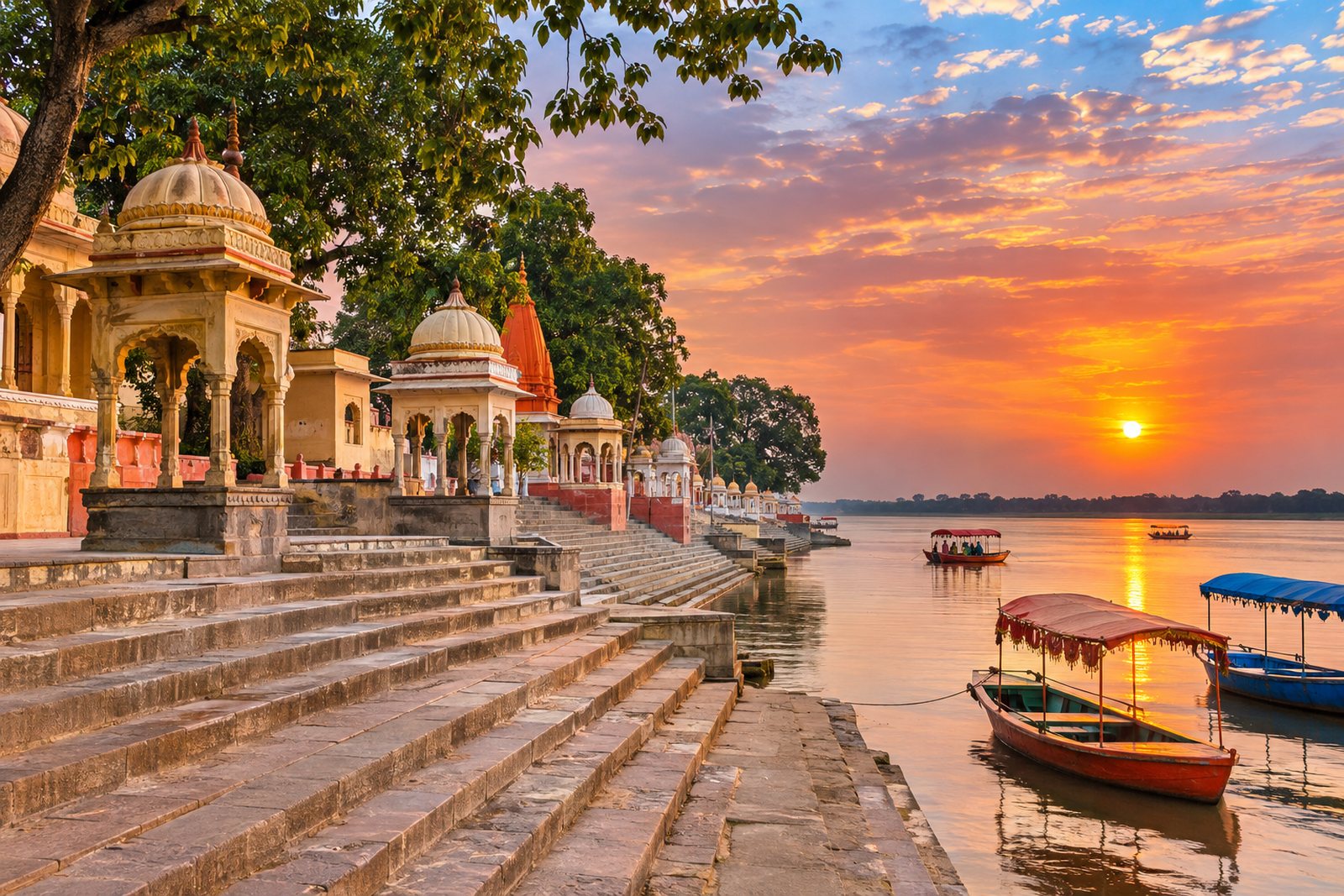
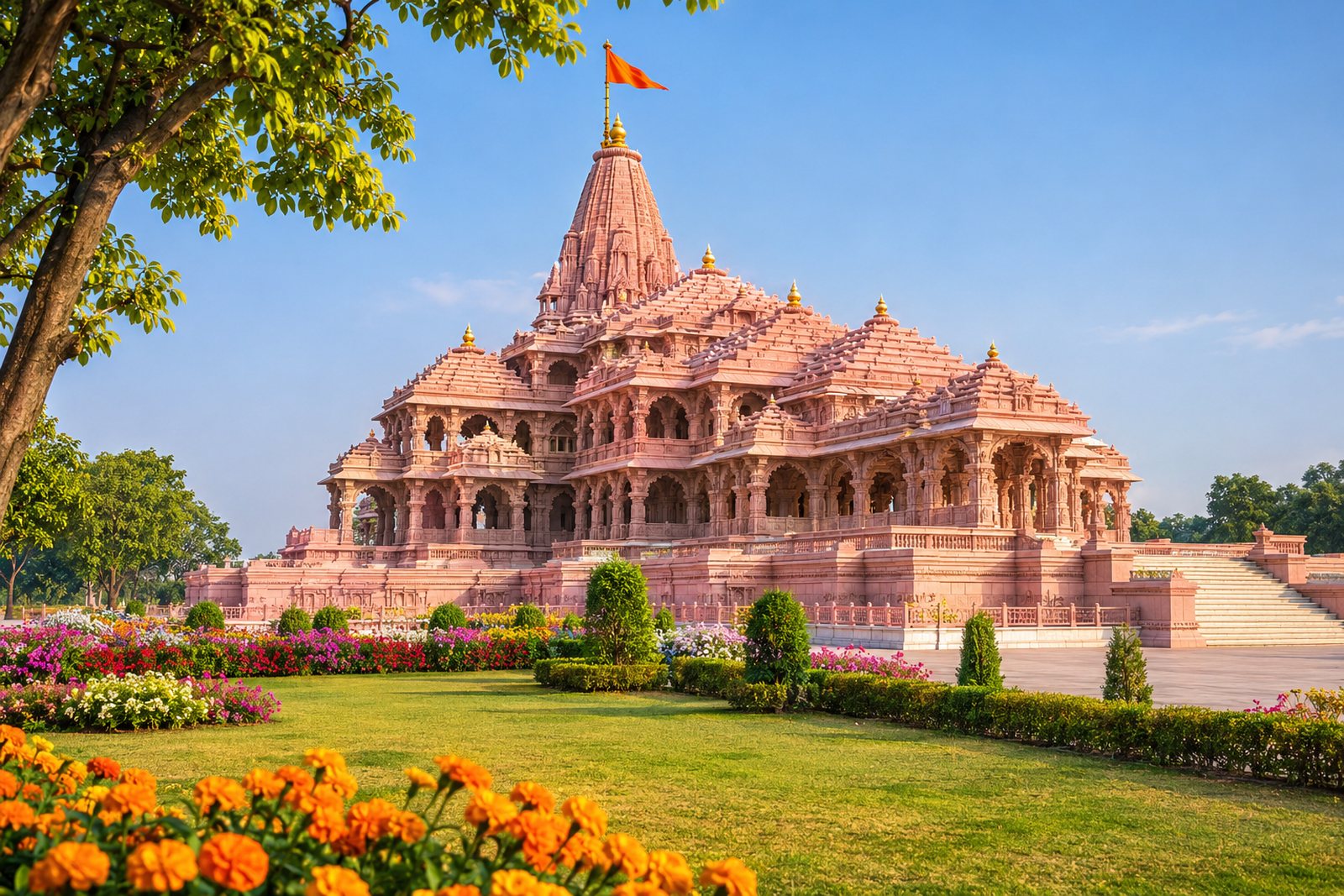
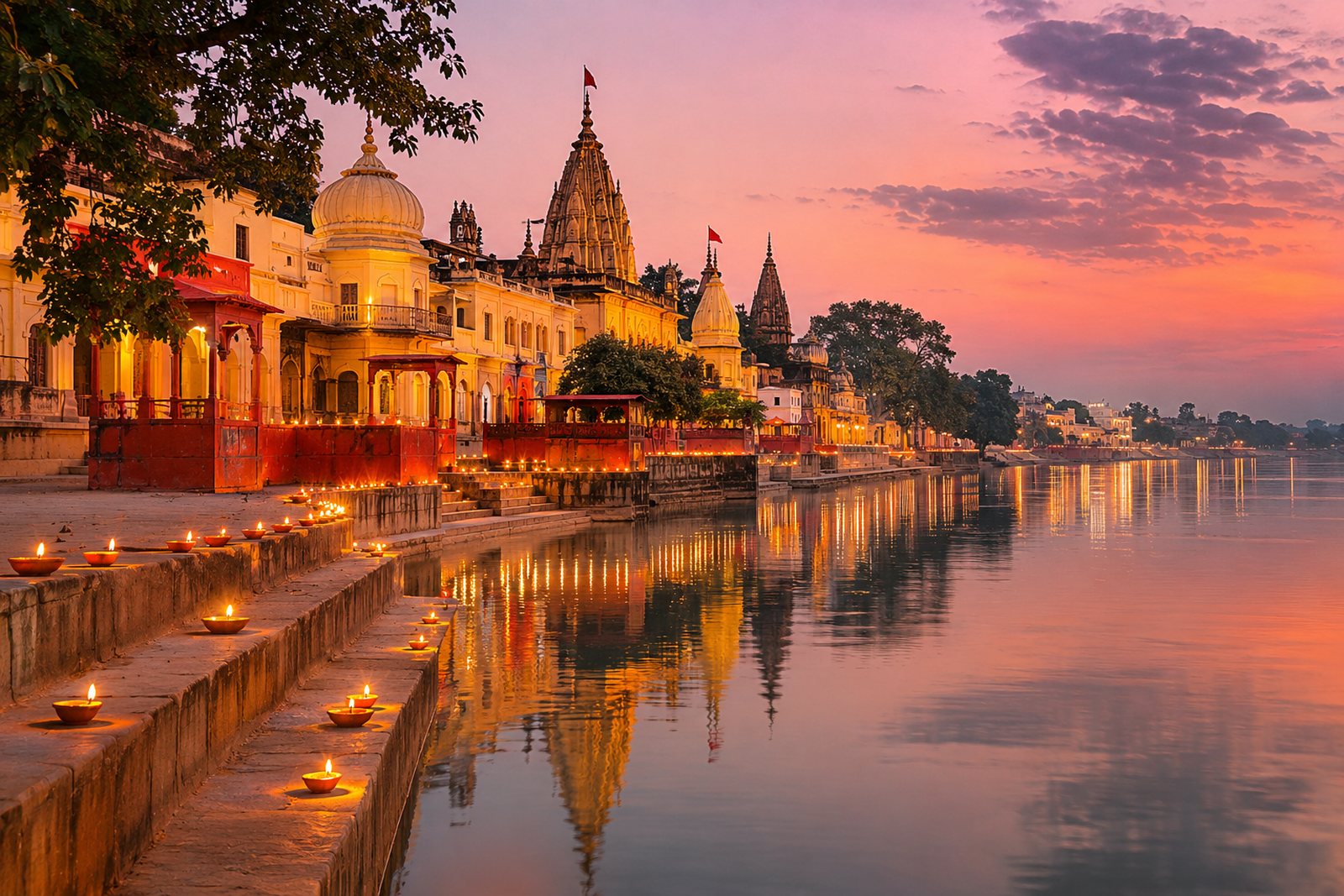
Ayodhya today feels like a town that has been given a second life. The Ram Mandir, where the pran pratishtha of Ram Lalla took place in January 2024, now pulls lakhs of bhakts, and the lanes around Hanuman Garhi and Kanak Bhawan are full of the sound of bells and "Jai Shri Ram". Go down to the ghats in the evening for the Sarayu aarti, and do not skip the quieter places: Guptar Ghat, where tradition says Ram left the world, and Bharat Kund near Nandigram, where Bharat is said to have ruled for fourteen years with Ram's padukas on the throne. We have written about one of these in detail in our Guptar Ghat story.
Prayagraj and Shringverpur: the river crossing
The exiles reach the Ganga next. Near Prayagraj, at Shringverpur, tradition places the boatman scene: Nishadraj Guh, chief of the boat people, ferries them across. In Prayagraj itself, the Bharadwaj Ashram is linked to the sage who sheltered them and pointed them towards Chitrakoot.
For today's traveller, Prayagraj is mostly about the Triveni Sangam, the meeting point of the Ganga, the Yamuna and the unseen Saraswati. A boat ride to the Sangam early in the morning, with gulls following the boat in winter, is a quiet way to sit with the story.
Chitrakoot: the forest years
If Ayodhya is the grand chapter, Chitrakoot is the tender one. Tradition says the exiles spent a long part of their exile here, on the Mandakini, among low forested hills. This is also where Bharat comes running to bring his brother back and is gently refused, the Bharat Milap that still makes grandmothers cry in every Ramleela.
Pilgrims walk the parikrama of Kamadgiri hill and bathe at Ramghat. It is not a polished tourist town. That is its charm.
Panchavati in Nashik: where the story turns
Further south, at Panchavati on the Godavari in Nashik, the forest idyll ends. This is where tradition places Surpanakha's visit, the golden deer and Sita's abduction by Ravan. Sita Gufa, a narrow cave you squeeze into, and the black-stone Kalaram temple are the main stops. Kalaram also has its own modern history, which we covered in our Kalaram temple satyagraha story.
Did you know? One popular folk explanation for the name Nashik links it to "nasika", the nose, because this is where Lakshman is said to have cut off Surpanakha's nose. Historians treat it as a story, but you will hear it from almost every auto driver in town.
Hampi and Kishkindha: the monkey kingdom
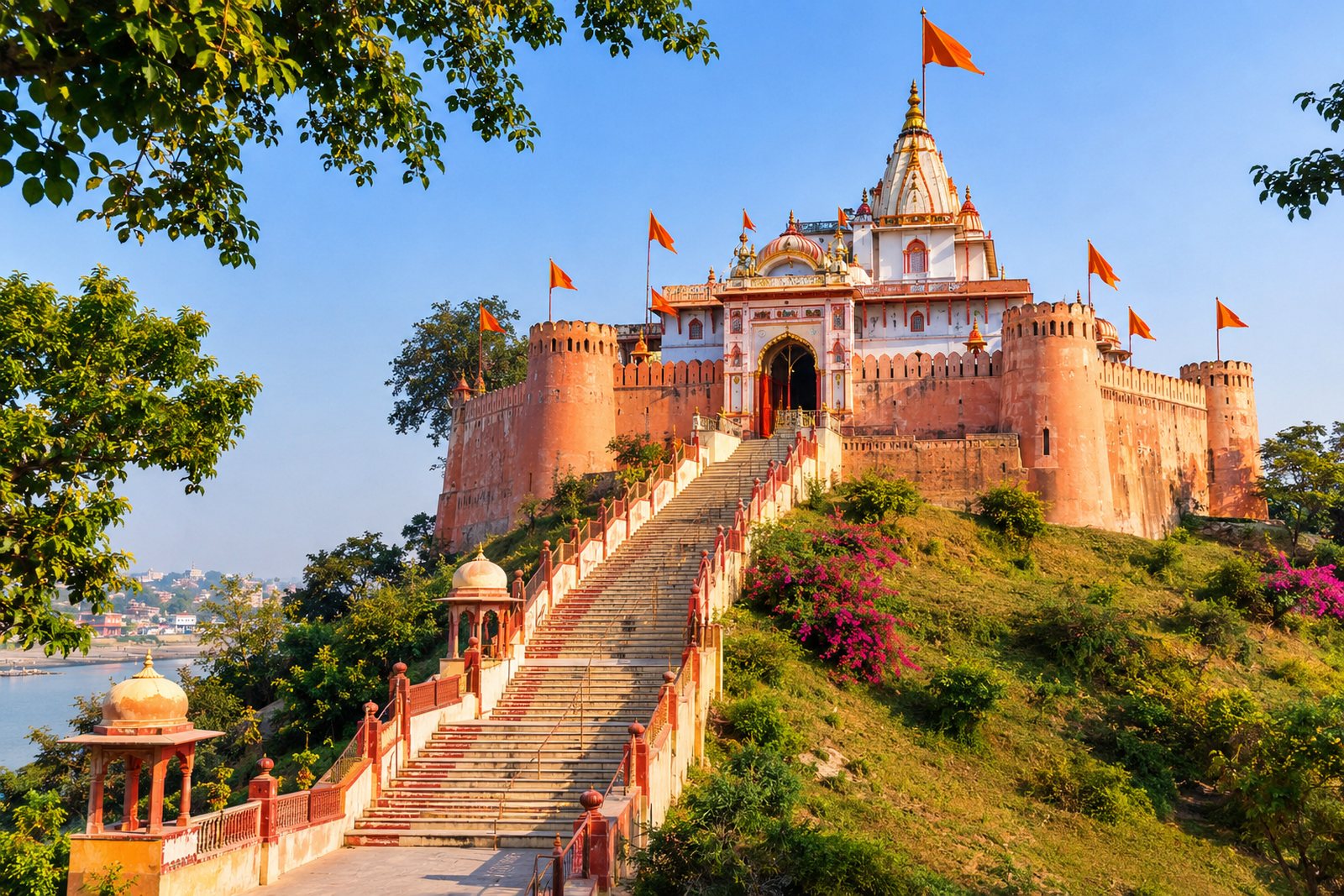
Cross into Karnataka and the landscape turns surreal: giant boulders balanced on each other along the Tungabhadra. Local tradition identifies this area with Kishkindha, the kingdom of Sugriv and Vali. Anjanadri hill across the river is believed by many to be Hanuman's birthplace (other places in India also claim the honour), and Rishyamukh and Pampa Sarovar are tied to the meeting of Ram and Hanuman. The climb up Anjanadri is a few hundred steps, and the sunset from the top, over the boulders and paddy, is worth every one.
Rameshwaram: the end of the land
The trail ends where India ends. At Rameshwaram, the story says, Ram worshipped Shiva before building the bridge to Lanka, and the Ramanathaswamy temple, one of the twelve Jyotirlingas, grew around that act of worship. Bathe in the 22 theerthams inside the temple, walk its very long pillared corridors, then drive out to Dhanushkodi, where a thin strip of sand runs into the sea towards Sri Lanka. Our Rameshwaram Jyotirlinga story goes deeper.
How to plan the Ramayan trail without burning out
Nobody sensible does all six stops in one trip. The distances are huge and the seasons differ. Break it into chunks:
- North chunk (easiest start): Varanasi, Prayagraj and Ayodhya together, 5 to 6 nights. Add Chitrakoot by road from Prayagraj if you have an extra day or two.
- West chunk: Nashik's Panchavati, often combined with Trimbakeshwar and Shirdi.
- South chunk: Hampi as its own trip, and Rameshwaram with Madurai and Kanyakumari.
- Best season: October to March for almost every stop. North Indian summers are brutal for temple queues, and Hampi's rocks get very hot by noon.
- Darshan rules: Queues, dress codes and timings at the Ram Mandir and Ramanathaswamy change often. Check with the temple trust or official site before you go.
Our tip: Start in Ayodhya and end in Rameshwaram, even if it takes two or three separate holidays. The story makes more sense in order, and the kids will remember it that way.
The fullest way to do the north chunk is the Kashi Ayodhya Prayag Yatra: two nights in Varanasi, one in Prayagraj and two in Ayodhya, as per the package itinerary. If Ayodhya alone is the goal, Ayodhya Darshan gives two nights, with the Ram Mandir on one day and Guptar Ghat, Bharat Kund and Nandigram on the next, while Ayodhya Ram Darshan is a quick one-night darshan trip for a long weekend.
What stays with you
Walk even half this trail and something shifts. The Ramayana stops being the TV serial from childhood and becomes a geography: this river, that cave, the wind off the sea at the very end. You realise how far the story travelled, and how many people, in how many languages, have kept it alive along the way.
Start with the first chapter. Browse all Ayodhya holiday packages, or read our Ayodhya Ram Mandir darshan guide.
Frequently asked questions
What are the main places on the Ramayan trail in India?
The main stops are Ayodhya, Shringverpur and Prayagraj, Chitrakoot, Panchavati in Nashik, Hampi (Kishkindha) and Rameshwaram. Many smaller sites across India are also linked to the Ramayana by local tradition.
Can I do the whole Ramayan trail in one trip?
It is possible but very tiring because the places are spread across five states. Most families split it into a north trip (Ayodhya, Prayagraj, Varanasi), a Nashik trip and a south trip (Hampi or Rameshwaram).
How many days do I need for Ayodhya?
One night is enough for the Ram Mandir and Hanuman Garhi. Two nights let you add Guptar Ghat, Bharat Kund and the Sarayu aarti without rushing.
What is the best time to do the Ramayan trail?
October to March suits almost every stop. Summers are very hot in Ayodhya, Prayagraj and Hampi, and long temple queues are hard on seniors in the heat.
Is Chitrakoot included in Ayodhya packages?
Usually not by default. It can be added by road from Prayagraj with an extra day or two; ask while booking and check the package itinerary.