Guptar Ghat Ayodhya: Where Lord Ram Entered the Saryu
The Ramayan does not end with a coronation. It ends at a river. Guptar Ghat in Ayodhya, where tradition says Lord Ram took jal samadhi in the Saryu.
Most of us grew up with the Ramayan ending on a happy note. Ravan defeated, Sita rescued, the lamps of Diwali lit as Ram returns home, and then the coronation. Ram rajya. Credits roll.
But the old tellings carry on further. Years pass. Ram rules. And one day, his work on earth complete, he walks to the banks of the Saryu, steps into the water, and does not come back as a man. Tradition places that moment at one ghat in Ayodhya.
That ghat is Guptar Ghat. Away from the main temple rush, it is one of the calmest and most moving places in the city. Here is its story, and how to add it to your Ayodhya darshan.
The last chapter of the Ramayan
In the Uttar Kand, the final book of the Valmiki Ramayan, the story turns quiet and bittersweet. Sita has gone back into the earth. Lakshman has left. Ram knows his time as a king on earth is ending.
According to tradition, Ram walked to the Saryu with the people of Ayodhya following him, and entered the river. Here he gave up his human form and returned to his divine one, as Vishnu. Devotees call this jal samadhi. The name of the ghat comes from that moment: gupt, hidden. Ram went out of sight of the world here.
It is not a sad story the way devotees tell it. It is a homecoming. Ram goes back to where he came from.
What you see at the ghat
Guptar Ghat lies on the Faizabad side of Ayodhya, towards the old cantonment, a short drive from the busy temple lanes.
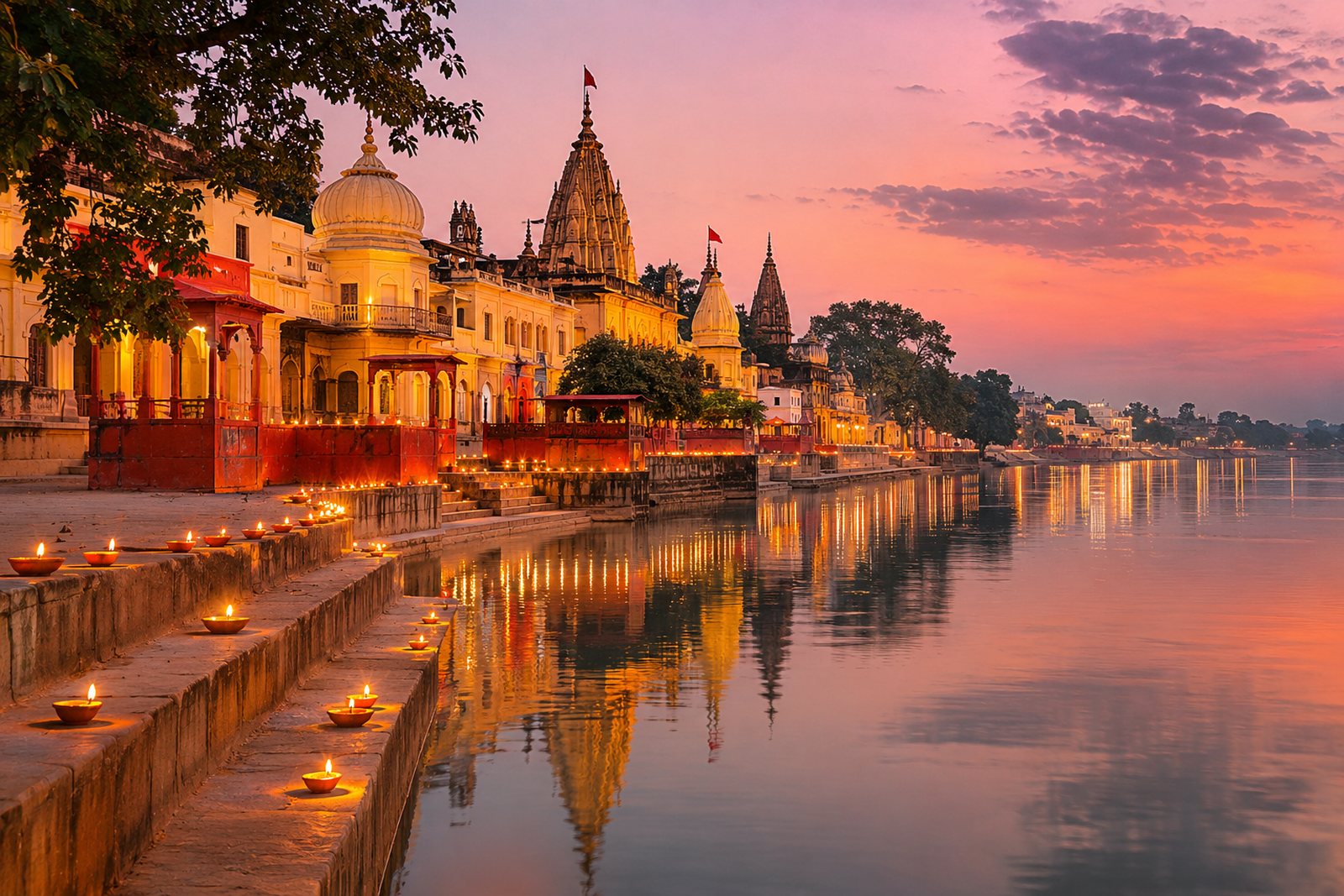
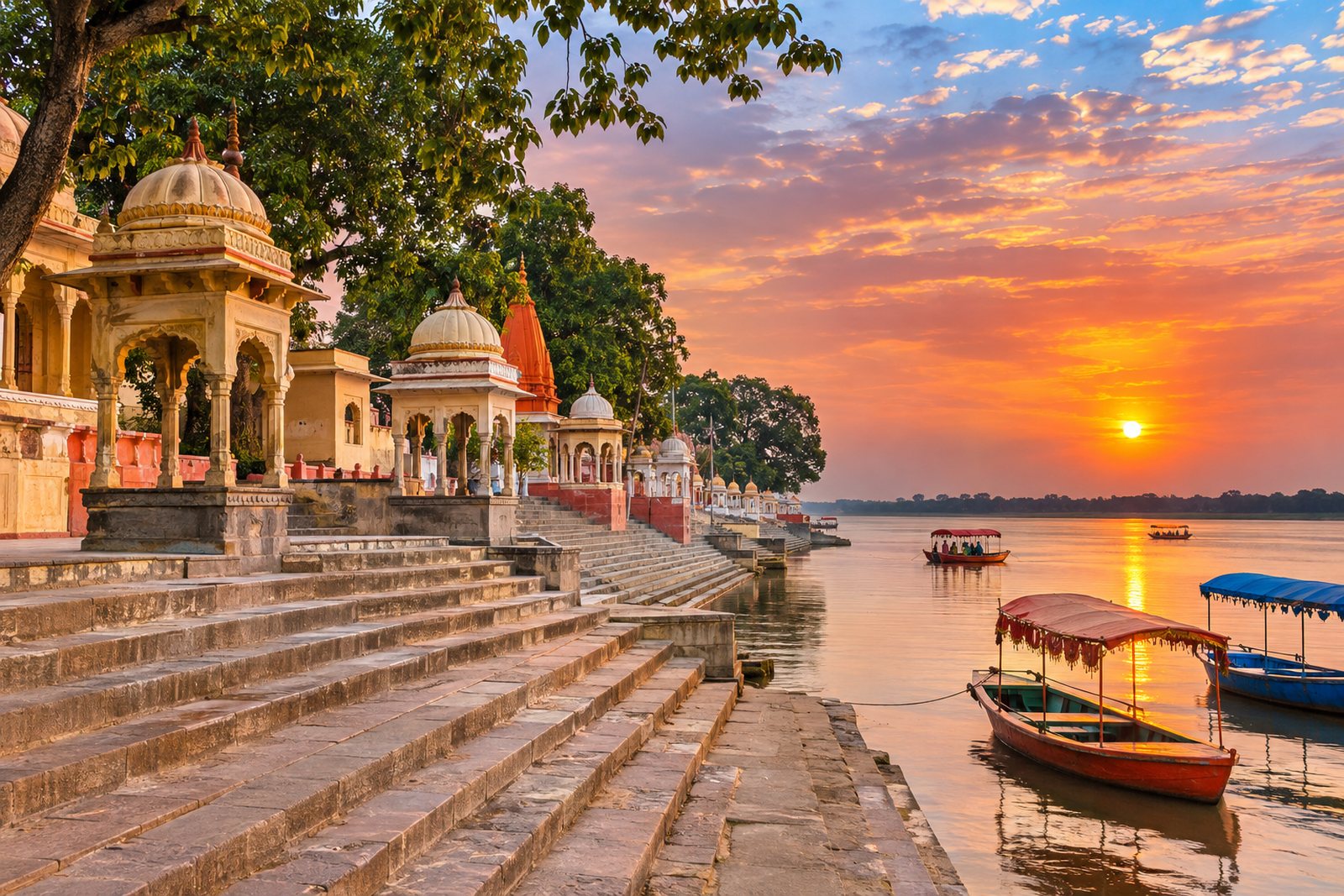
Come down to the river and you see wide stone steps going into the water, a row of small temples behind them, and the Saryu moving slowly past, broad and grey-green. The temples are mostly from the last couple of centuries, built and rebuilt by rulers and devotees. Among them is the shrine of Gupt Hari, and others devoted to Ram and to Vishnu in his different forms.
The ghat has been cleaned up and improved in recent years, with better paths and lighting. Yet it keeps its old feel. A sadhu sitting by a small fire. A family from Bihar doing a puja with their pandit. Boys diving off the lower steps. An old couple sitting for a long time without speaking.
Did you know? Some Ramayan tellings say that when Ram entered the Saryu, many people of Ayodhya and even animals followed him into the river, unwilling to stay in a world without him. Devotees mention this when they explain why the ghat feels so peaceful, as if everyone went home together.
Why Guptar Ghat feels different
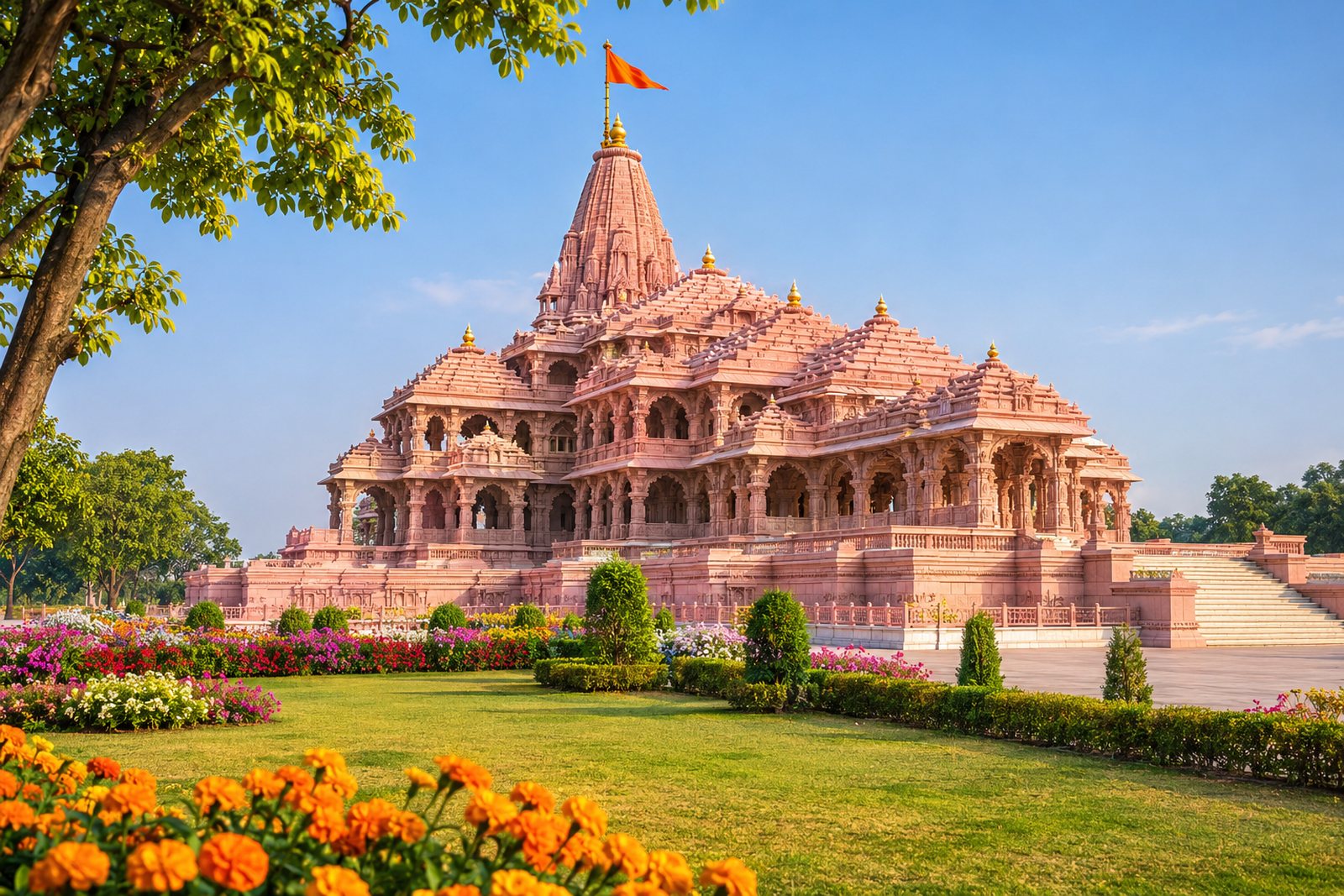
Ayodhya today is full. The Ram Mandir draws huge crowds, especially since its pran pratishtha in January 2024. The lanes around Hanuman Garhi and Kanak Bhawan buzz with bhakts, prasad shops and loudspeakers singing "Jai Shri Ram". That energy is beautiful in its own way.
Guptar Ghat is the other side of the same faith. Slower. Quieter. After the joy of Ram's birthplace, this is where you sit with the end of his story. Many families say the two feel right together: the beginning and the ending, in one trip.
Other ghats and temples in Ayodhya
- Ram Janmabhoomi Mandir, the main temple, with its own entry and security rules.
- Hanuman Garhi, the hilltop Hanuman temple, traditionally visited before Ram's darshan.
- Kanak Bhawan, linked to Sita, known for its beautiful idols of Ram and Sita.
- Ram ki Paidi and Naya Ghat, for the evening Saryu aarti and the lamp lights of Deepotsav at Diwali.
- Dashrath Mahal, the temple associated with King Dashrath's palace.
If you have only one night, Ayodhya Ram Darshan keeps it focused on the main darshan. With two nights, Ayodhya Darshan gives you time for the quieter ghats like Guptar too, as per the package itinerary. And for a fuller yatra, Kashi Ayodhya Prayag Yatra joins Ayodhya with Varanasi and Prayagraj over five nights.
How to visit Guptar Ghat today
- Where: On the Saryu, on the Faizabad side of Ayodhya, roughly 10 km from the Ram Janmabhoomi area. Allow around 20 to 30 minutes by road.
- Getting there: Ayodhya has an airport and the Ayodhya Dham railway station. Autos, e-rickshaws and cabs go to the ghat.
- Best time: October to March. Summers are very hot, and in the monsoon the river runs high.
- When in the day: Early morning or the hour before sunset. The light on the Saryu is soft and the ghat is calm.
- Holy dip: Stay in shallow water, follow local guidance, and keep children close. Avoid bathing when the river is high.
- Dress and respect: Modest clothes, and ask before photographing people doing rituals.
- Timings: Temple and aarti timings change, so check locally.
Our tip: Do the main temples in the morning, rest after lunch, and come to Guptar Ghat around sunset. Sit on the steps for twenty minutes without your phone. It is the part of the trip nani will talk about later.
Where the story goes quiet
Ayodhya celebrates Ram's birth with crowds, flowers and lamps. Guptar Ghat remembers his going with just a river and some old steps. Both are part of the same love. If you have come all this way for Ram, give a little time to the place where, in the faith of millions, he walked into the water and went home.
Planning your darshan? Read our Ayodhya Ram Mandir darshan guide or browse all Ayodhya holiday packages.
Frequently asked questions
What is the significance of Guptar Ghat in Ayodhya?
According to tradition, Guptar Ghat is where Lord Ram entered the waters of the Saryu at the end of his earthly life and returned to his divine form. Devotees treat it as one of the holiest ghats of Ayodhya.
Why is it called Guptar Ghat?
Gupt means hidden. The name is linked to the belief that Lord Ram disappeared into the river here, going 'hidden' from the world, which is why the place is called Guptar or Gupt Hari Ghat.
How far is Guptar Ghat from Ram Mandir?
Guptar Ghat is on the Faizabad side of Ayodhya, roughly 10 km from the Ram Janmabhoomi area. It takes around 20 to 30 minutes by road depending on traffic.
Can you take a holy dip at Guptar Ghat?
Many devotees bathe in the Saryu here, especially on festival days. Follow local guidance and safety rules, stay in shallow areas and avoid the river when the water is high.
Is boating available at Guptar Ghat?
Small boats are often available on the Saryu around Ayodhya's ghats. Availability and rules change with the season and water level, so check locally.