Maheshwari Saree History: Ahilyabai's Gift to Weavers
A queen on the Narmada, weavers brought from far away and a saree you can wear on either side. The Maheshwari saree story, and how to see the looms today.
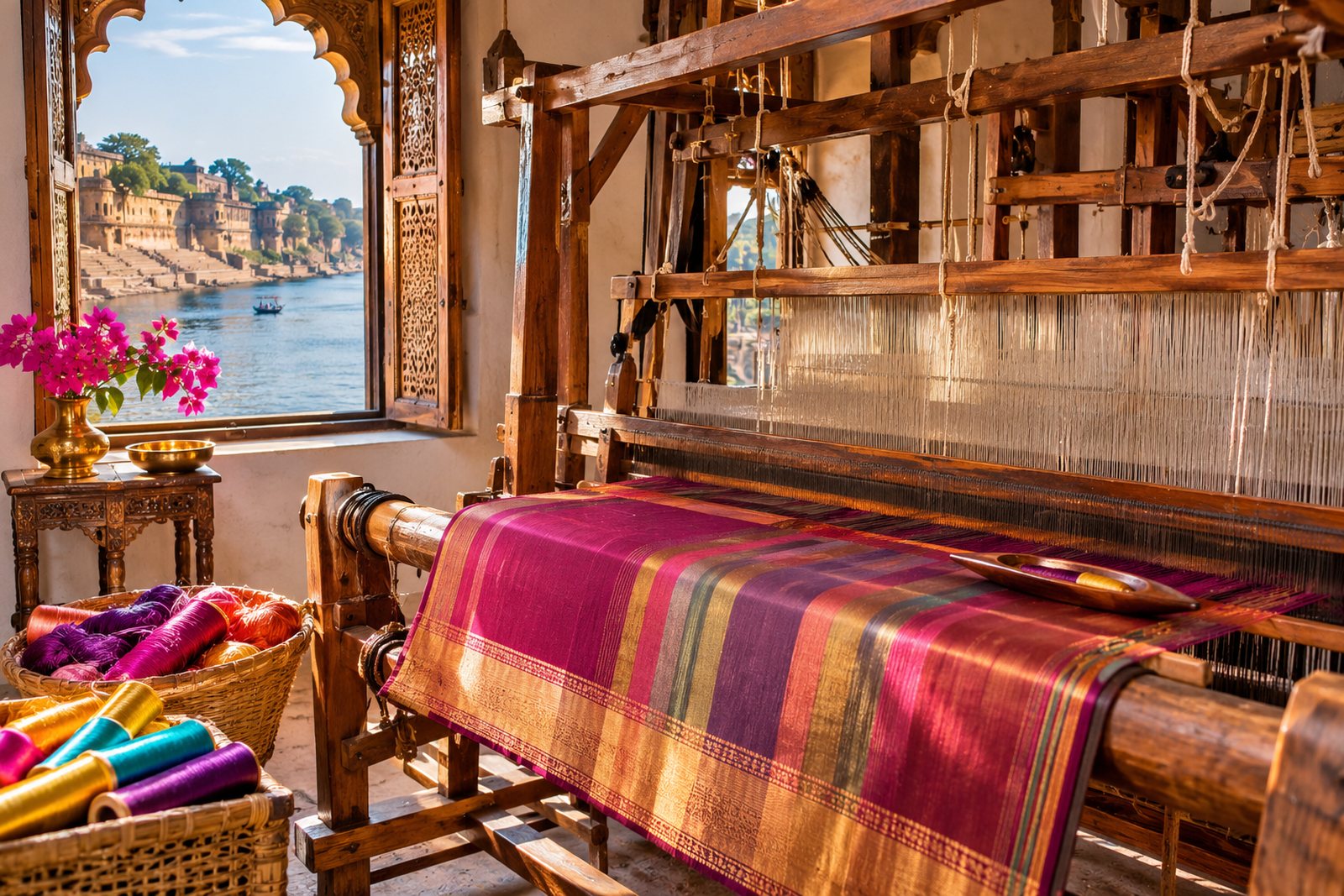
Clack. Thud. Clack. Thud. Walk down the lanes behind Ahilya Fort in Maheshwar in the late morning and you will hear it before you see anything: the sound of the shuttle flying across the loom and the beater pressing the thread down. In one doorway an old man is working with his reading glasses pushed up on his forehead. In the next, a young woman is doing the same, with a phone playing film songs on the windowsill.
They are weaving the Maheshwari saree, and the story of why they are doing it here, on this particular bank of the Narmada, goes back to a queen. Here is that story, the patterns, the near-loss and revival, and how to see the looms today.
A queen on the Narmada
Ahilyabai Holkar was not born to rule. She married into the Holkar family of Indore, lost her husband in battle, and later her father-in-law Malhar Rao Holkar and her son. By the 1760s, she was ruling Malwa herself, and she chose Maheshwar on the Narmada as her seat.
She is remembered across India for building and repairing temples, ghats, wells and dharamshalas, from Kashi to Somnath. In Maheshwar she also thought about something more everyday. A capital needed work, trade and skilled people.
Weavers invited from far away
According to the tradition told in Maheshwar, Ahilyabai invited skilled weavers from other regions, often said to include Surat, to come and settle here. The weaving of fine fabric in this region may be older than her reign, but most accounts agree that her patronage gave it shape and status.
The story goes that the earliest sarees were made for the royal household and as gifts for guests of the court. Some versions say Ahilyabai herself suggested designs. Whether or not that is literally true, it is what every weaver family here will tell you, and they say it with pride.
Patterns from the fort walls
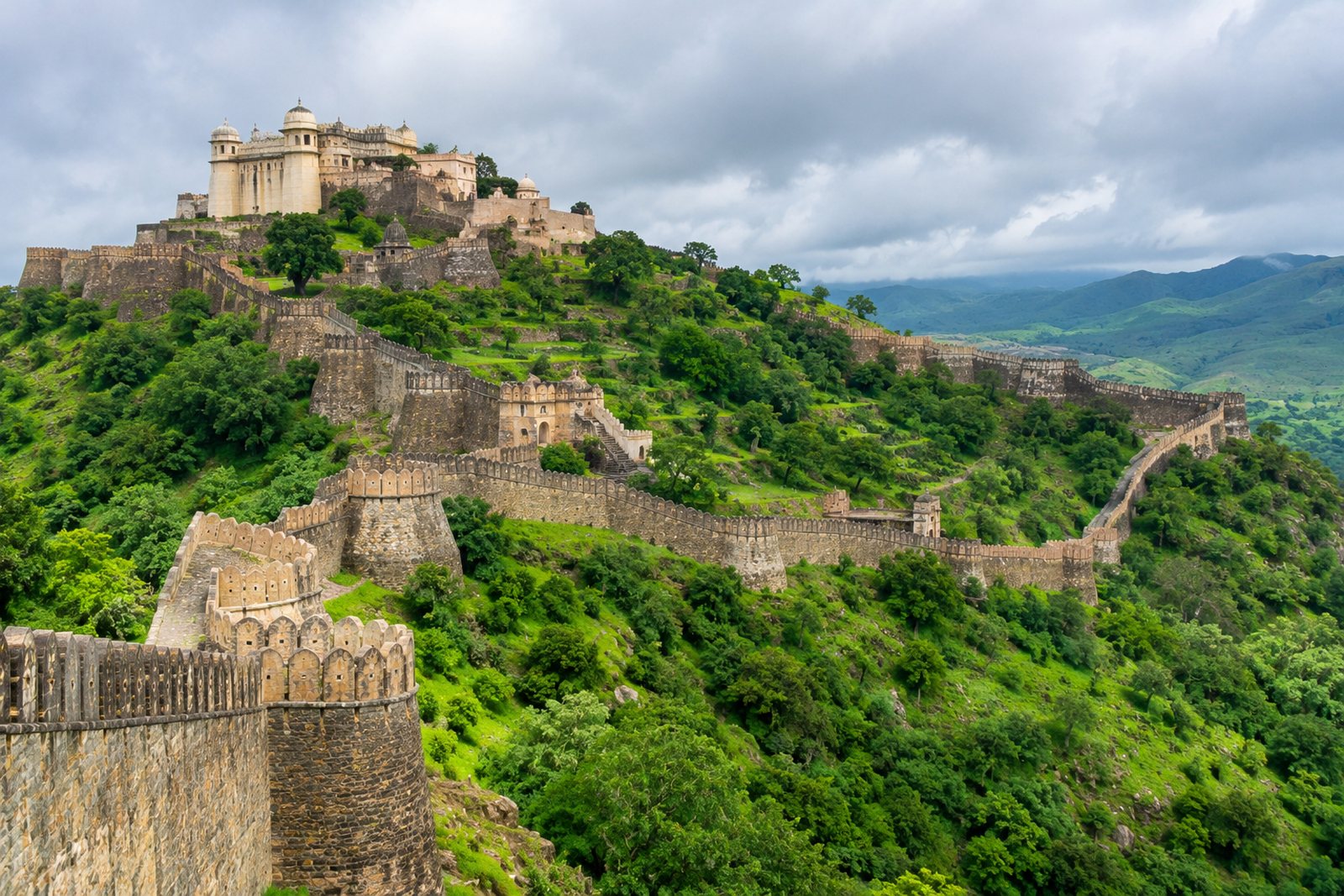
Look closely at a traditional Maheshwari border and you may see the fort. Weavers name several motifs after things around them: the chatai or woven-mat pattern, the brick, the diamond, the flower, the stepped shapes of the fort's own walls and niches. Pallus often carry neat stripes, sometimes five, sometimes three, in contrasting colours.
The fabric is the other half of the identity. Traditionally a mix of cotton and silk, the Maheshwari is light, slightly crisp, with a soft sheen. Perfect for Malwa heat. Perfect, many women will tell you, for a summer wedding where you still want to look dressed up.
Did you know? Many Maheshwari sarees have a border, often called bugdi, woven so neatly that it looks finished on both sides. That is why the saree can be worn either way round.
Near-loss and revival
By the 20th century, like many handloom traditions, Maheshwar's weaving was struggling. Cheaper machine-made cloth was everywhere and weavers' children were leaving for other jobs.
In the late 1970s, members of the Holkar family helped set up the Rehwa Society, a non-profit to support weavers, train new ones and find markets. It helped bring the craft back into fashion. Today the Maheshwar saree also has a Geographical Indication tag, and many more independent weavers work in the town than a few decades ago.
The fort, the ghats and the looms together
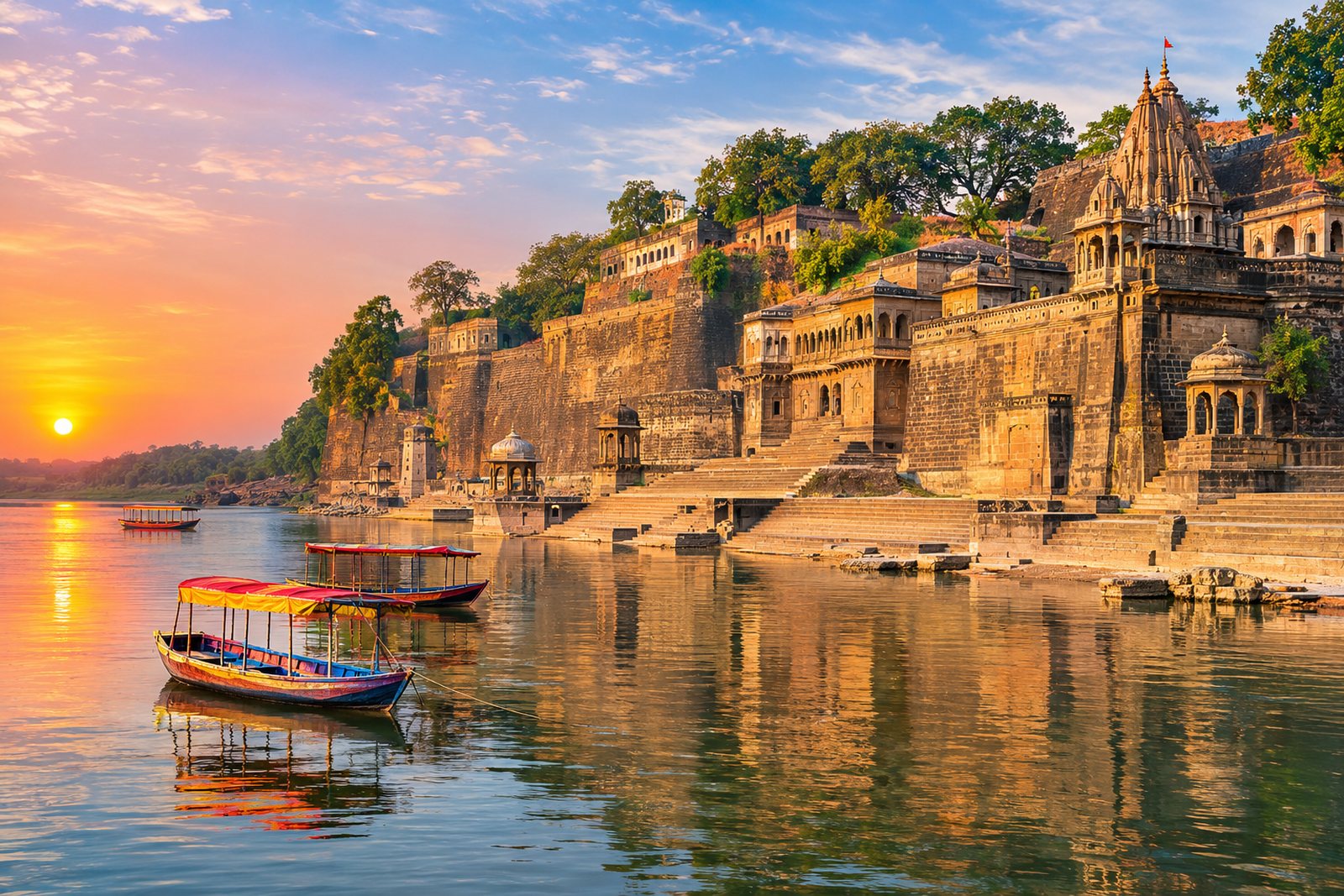
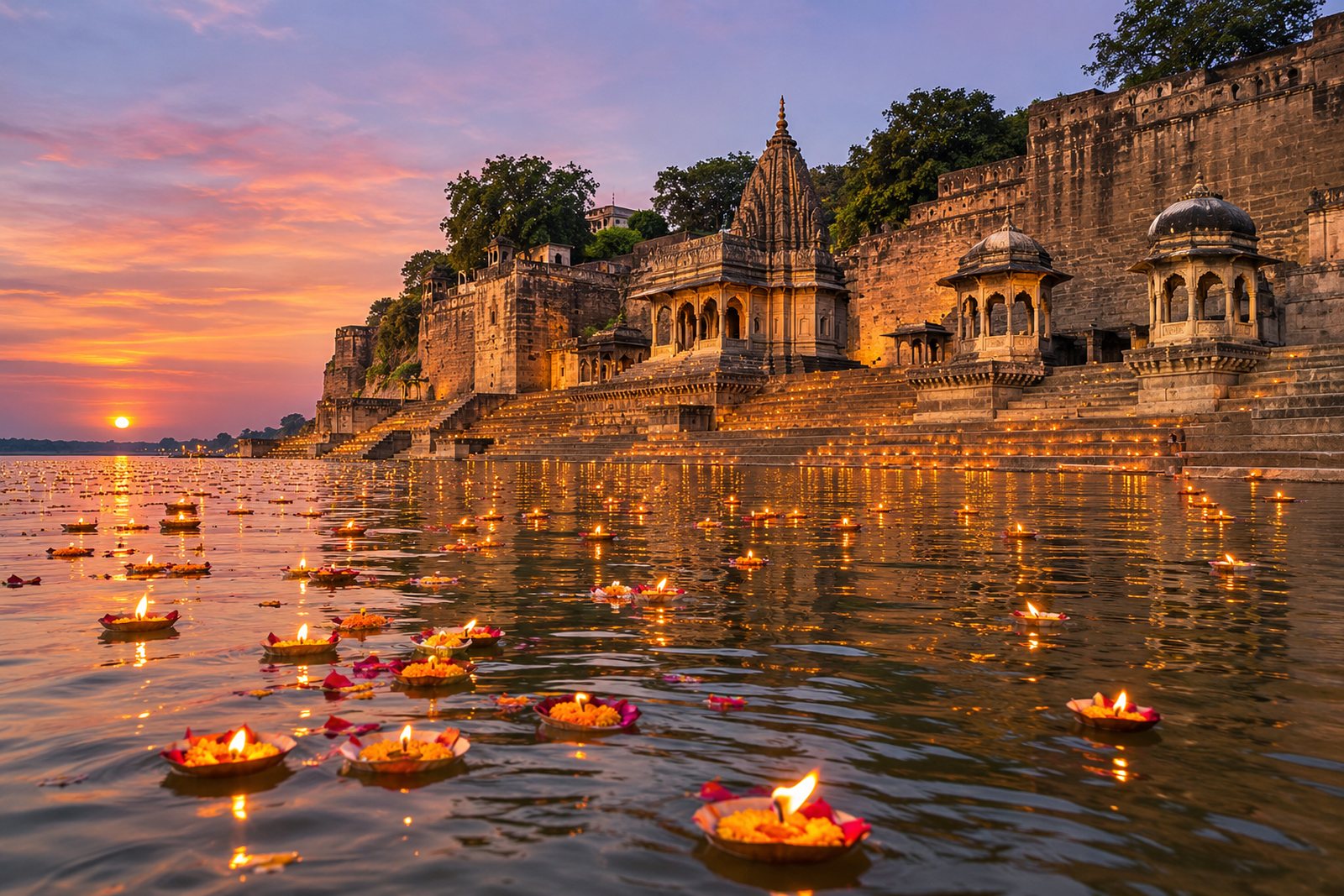
What makes Maheshwar special is that the craft and the history are in one frame. You can visit Ahilya Fort in the morning, see the queen's simple palace rooms, walk down to the ghats where temples line the steps and boats wait on the Narmada, and then spend an hour watching sarees being woven. Our story on Ahilya Fort Maheshwar covers the fort itself.
BellaSafar's Malwa Heritage Trail spends two nights in Maheshwar, with the fort, the ghats and Rehwa handloom on the plan, as per the package itinerary, alongside Indore, Mandu and Omkareshwar. Malwa Darshan is shorter, with one night each in Maheshwar and Omkareshwar, and Grand Madhya Pradesh carries on to Bhopal and Sanchi.
How to visit Maheshwar's looms today
- Getting there: Indore airport is roughly 90 to 100 km away, around two and a half hours by road.
- Best time: October to March. The Narmada ghats are lovely in winter; summers are very hot.
- Watching weavers: Many homes and workshops are near the fort. Ask before entering or taking photos.
- Buying: Buy from weavers or established cooperatives. Look for handloom marks and the GI label where available, and check the border on both sides.
- Festivals: Narmada Jayanti brings large crowds to the ghats. Dates change each year with the Hindu calendar.
- Combine with: Omkareshwar, Mandu and Indore's food streets.
Our tip: Buy one saree for yourself and one for your mother. Ask the weaver to name the motif in the border. You will remember the name every time it is worn.
A queen's quiet legacy
Ahilyabai built temples all over India. But in Maheshwar, one of her most lasting gifts is the sound of looms in the lanes. Every time someone drapes a Maheshwari on either side, a small part of her town goes with them.
For more on Narmada festivals, read our Narmada Jayanti guide or browse all Maheshwar holiday packages.
Frequently asked questions
What is the history of the Maheshwari saree?
Tradition credits Ahilyabai Holkar, who ruled from Maheshwar in the 18th century, with inviting skilled weavers to settle in the town. Their light cotton and silk sarees, with borders inspired by the fort's architecture, became the Maheshwari style.
Why is the Maheshwari saree reversible?
Many Maheshwari sarees have a border, often called bugdi, that is woven so it looks finished on both sides. That is why the saree can be draped either way.
What are Maheshwari sarees made of?
Traditionally they are woven in cotton or a cotton and silk blend, which keeps them light. Pure cotton and pure silk versions are also made today.
Where can I see Maheshwari sarees being woven?
In Maheshwar town itself, close to Ahilya Fort and the Narmada ghats, where many homes and workshops still have handlooms. Visitors can often watch weavers at work if they ask politely.
How do I know a Maheshwari saree is genuine?
Buy directly from weavers or established handloom cooperatives in Maheshwar, look for handloom marks and the Geographical Indication label where available, and check that the border looks neat on both sides.