Narmada Jayanti in Maheshwar and Omkareshwar
In the month of Magh, devotees float diyas on the Narmada to mark the river's birthday. How Narmada Jayanti feels on the ghats of Maheshwar and Omkareshwar.
Most rivers in India are worshipped. The Narmada is loved like a mother who also happens to be a goddess. People do not say "Narmada river" on her ghats. They say Narmada Maiya, or Ma Rewa, and when they wade into the water their voices go soft.
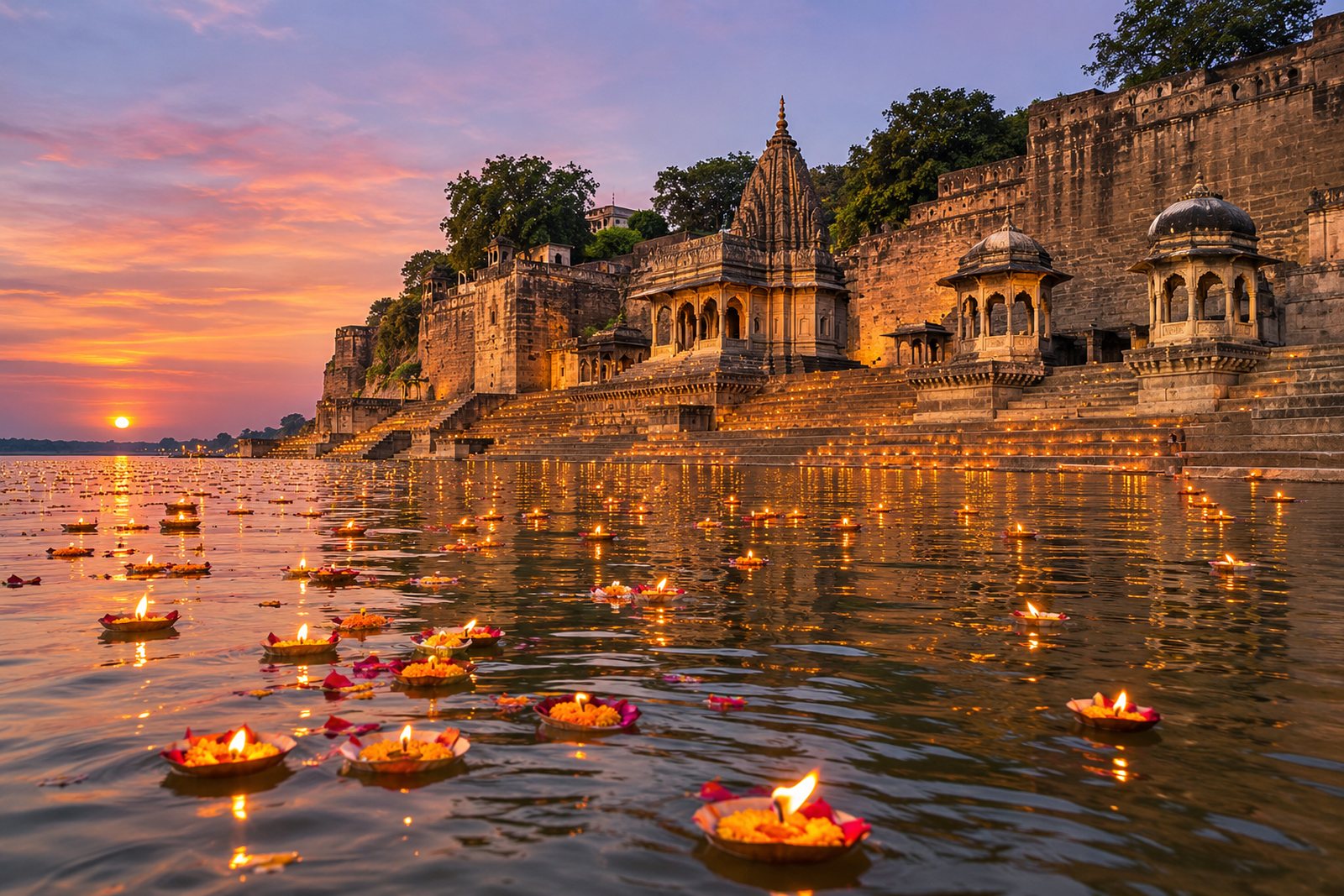
On one evening in the month of Magh, that love turns into light. Along the stone ghats of Maheshwar, women set small leaf-boats with diyas onto the water and give them a gentle push. Hundreds of flames drift away together, past the fort walls, past the temple spires, into the dark middle of the river. Bells ring from the ghats. Someone starts a bhajan and three other groups join in, slightly out of tune, nobody minding.
This is Narmada Jayanti, the birthday of the river. Here is what it means, how it feels in Maheshwar and Omkareshwar, and how to plan a trip around it.
What is Narmada Jayanti?
Narmada Jayanti falls on Magh Shukla Saptami, the seventh day of the bright half of Magh, which usually lands in January or February. Devotees believe this is the day the river appeared on earth.
The puranic stories differ in their details, but many describe the Narmada as born from Lord Shiva, which is why she is so closely tied to Shiva worship. There is a popular saying along her banks: "Narmada ke kankar, utne Shankar." Every pebble of the Narmada is a Shankar. The smooth stones from her bed, called Narmadeshwar or bana lingas, are worshipped as Shiva lingas in homes and temples.
Another belief, repeated by every boatman and pujari you meet, holds that while other holy rivers purify you when you bathe in them, the Narmada purifies you just by being seen. You will hear it said with total conviction.
Did you know? The Narmada is one of the very few rivers whose full parikrama, walking from source to sea along one bank and back along the other, is a living pilgrimage tradition. Devotees on the parikrama spend months on the road, and you may spot them in simple clothes, with a small bundle and a water pot, passing through these towns.
Narmada Jayanti in Maheshwar
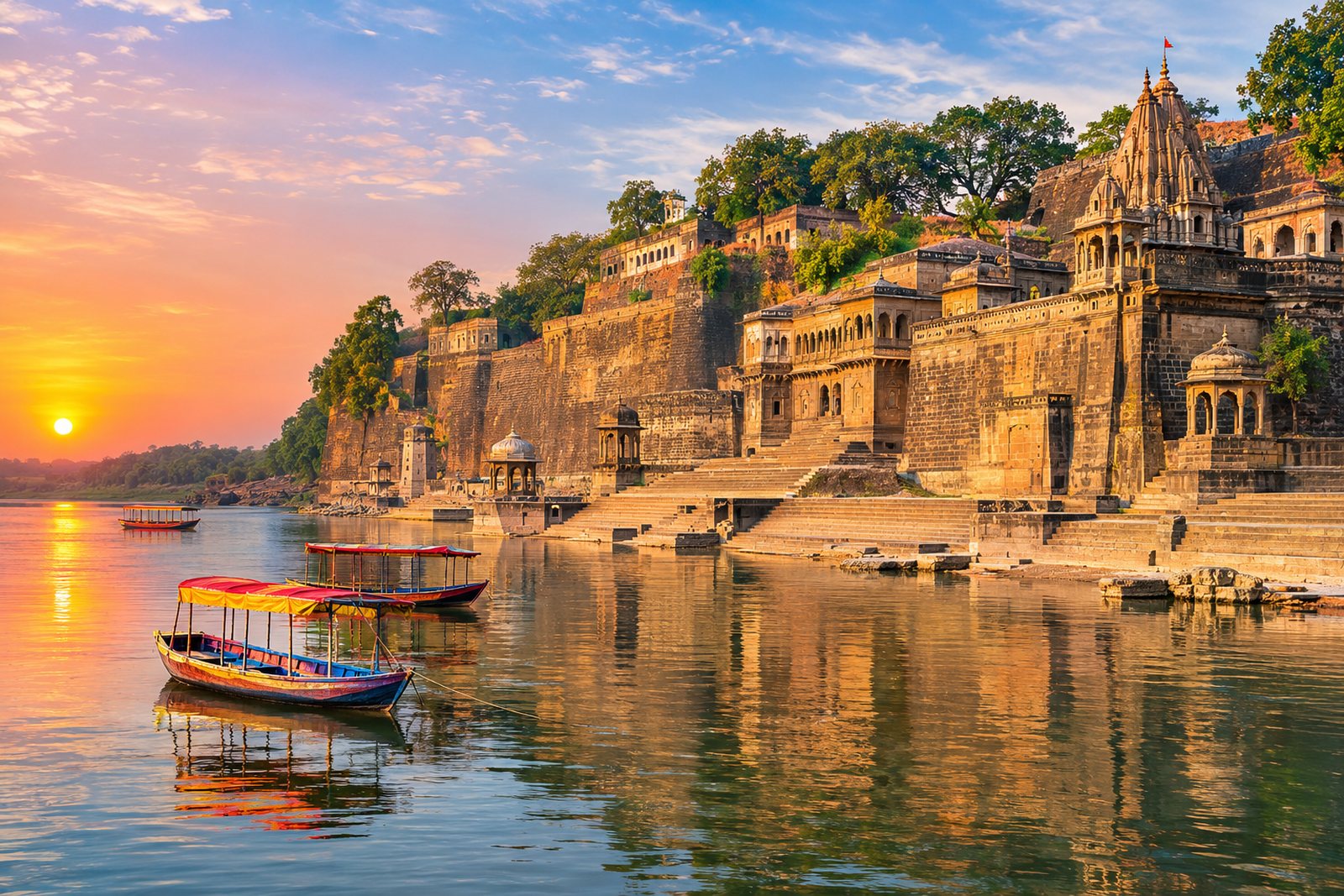
Maheshwar is where the festival feels most graceful. This was the capital of Ahilyabai Holkar, the Maratha queen remembered across India for building and restoring temples and ghats. Her fort sits right above the river, and the ghats below it are wide, stone-stepped and full of small shrines.
On Narmada Jayanti the ghats fill from early morning with people taking a holy dip. Through the day there is puja, singing and bhandaras. Long chunris are offered to the river in some places. As the light goes, the deepdaan begins, and the river slowly fills with floating flames.
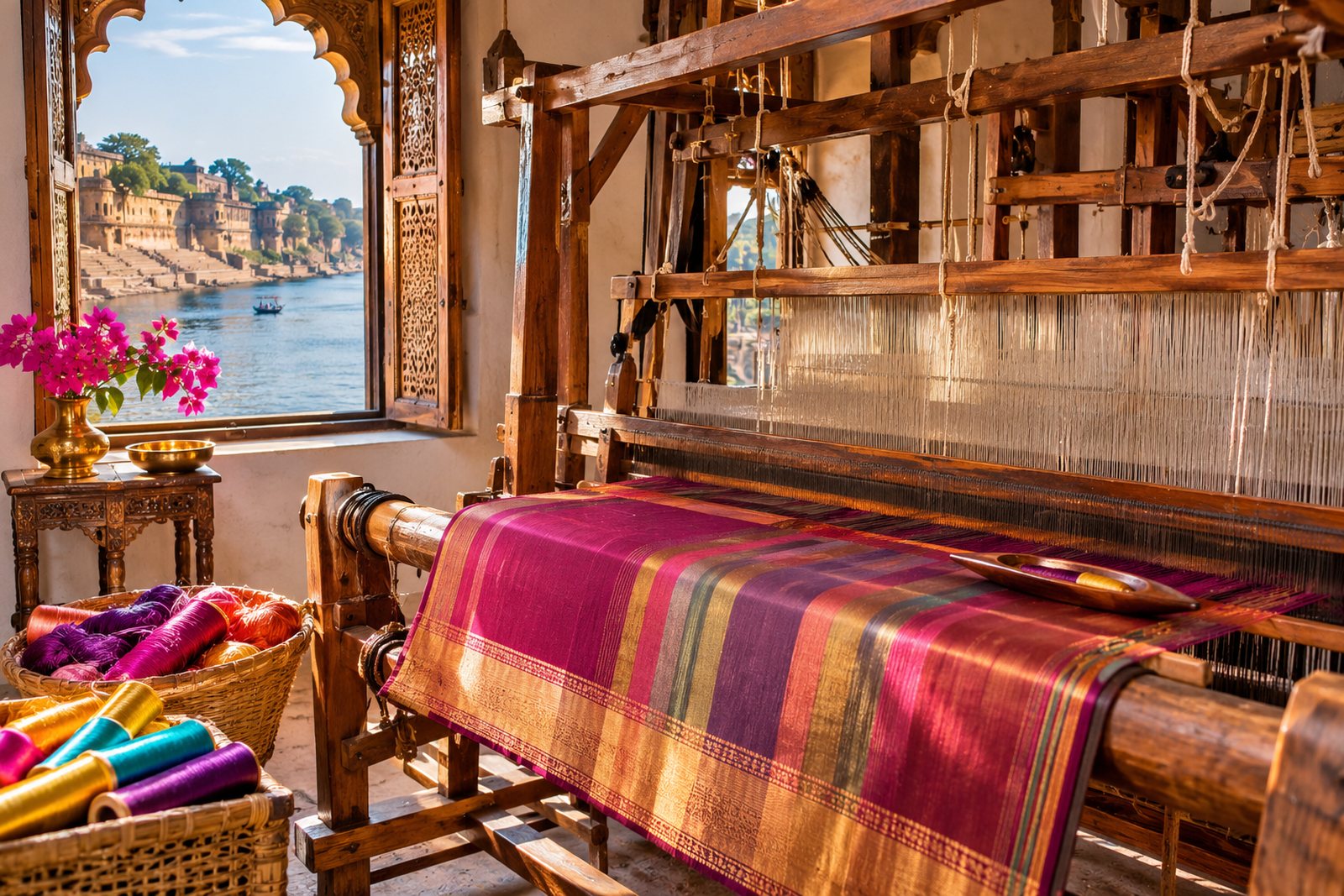
Between rituals, walk up through the fort, look at the carved temples, and visit the handloom workshops where Maheshwari sarees are woven. The rhythm of the looms is one of Maheshwar's sounds.
Narmada Jayanti in Omkareshwar
Downstream, Omkareshwar is all about Shiva. The town is built around an island in the Narmada that devotees say is shaped like Om, home to one of the twelve jyotirlingas, with Mamleshwar across the river.
On Narmada Jayanti the ghats here are busier and more energetic, with temple bells, boats and pilgrims crossing between banks. Darshan queues can be long, so start early. Many people do the island parikrama on foot before the day gets warm.
Crowd and booking reality
- Dates move. Check the panchang or local temple notices for your year's Magh Shukla Saptami.
- Ghats get crowded in the evening. Arrive early to find a spot.
- Stays are limited in both towns, so book early.
- Weather is kind. January and February are cool and comfortable in Malwa, with chilly mornings.
- Bathe safely. Use regular ghats, stay near the steps, and follow local instructions.
Our tip: Take a short boat ride at dusk in Maheshwar. Seeing the diyas float past at water level, with the fort lit up above you, is something no photo from the ghat can match.
Where to stay and how to plan
Indore is the gateway, with the airport and railway station. Maheshwar and Omkareshwar are each a few hours away and around a two-hour drive from each other.
The Malwa Heritage Trail is the most relaxed choice: a night in Indore, two in Mandu, two in Maheshwar and one in Omkareshwar, with an Ujjain excursion, as per the package itinerary. Two nights in Maheshwar give you time for both the morning snan and the evening deepdaan.
Short on days? Malwa Darshan fits Indore, Ujjain, Omkareshwar and Maheshwar into four nights. For a bigger loop that adds Bhopal and Sanchi, see Grand Madhya Pradesh.
A birthday for a river
There is something very Indian about celebrating a river's birthday. It turns a geography lesson into a family relationship. Stand on the Maheshwar ghat on that evening, watch an old woman fold her hands as her diya drifts away, and you see that for her the Narmada is not a resource or a view. She is Maiya, and it is her day.
Read our Ujjain and Omkareshwar darshan guide or browse all Maheshwar holiday packages.
Frequently asked questions
When is Narmada Jayanti celebrated?
Narmada Jayanti is celebrated on Magh Shukla Saptami, the seventh day of the bright half of the month of Magh, which usually falls in January or February. The exact date changes every year.
How is Narmada Jayanti celebrated?
Devotees bathe in the river, perform puja and aarti on the ghats, offer chunri and flowers to Narmada Maiya, and float diyas on the water in the evening. Bhajans, bhandaras and decorated ghats are common along the river.
Where is Narmada Jayanti celebrated?
It is celebrated all along the Narmada, especially at Amarkantak where the river rises, and at towns like Omkareshwar, Maheshwar, Narmadapuram and Jabalpur. Each has its own local traditions.
How far is Maheshwar from Omkareshwar?
Maheshwar and Omkareshwar are around 60 to 70 km apart, roughly a two-hour drive, and both are a few hours from Indore, which is why they are usually visited together.
Is it safe to bathe in the Narmada at Maheshwar?
Bathe only at regular ghats, stay near the steps, and follow local instructions, since water levels and currents can change. Keep children and seniors close, especially in festival crowds.