Mahabodhi Temple History: The Bodhi Tree and Ashoka's Shrine
A prince sat under a pipal tree and rose as the Buddha. Ashoka marked the spot, and the temple there is now UNESCO listed. The Mahabodhi story, and how to visit.
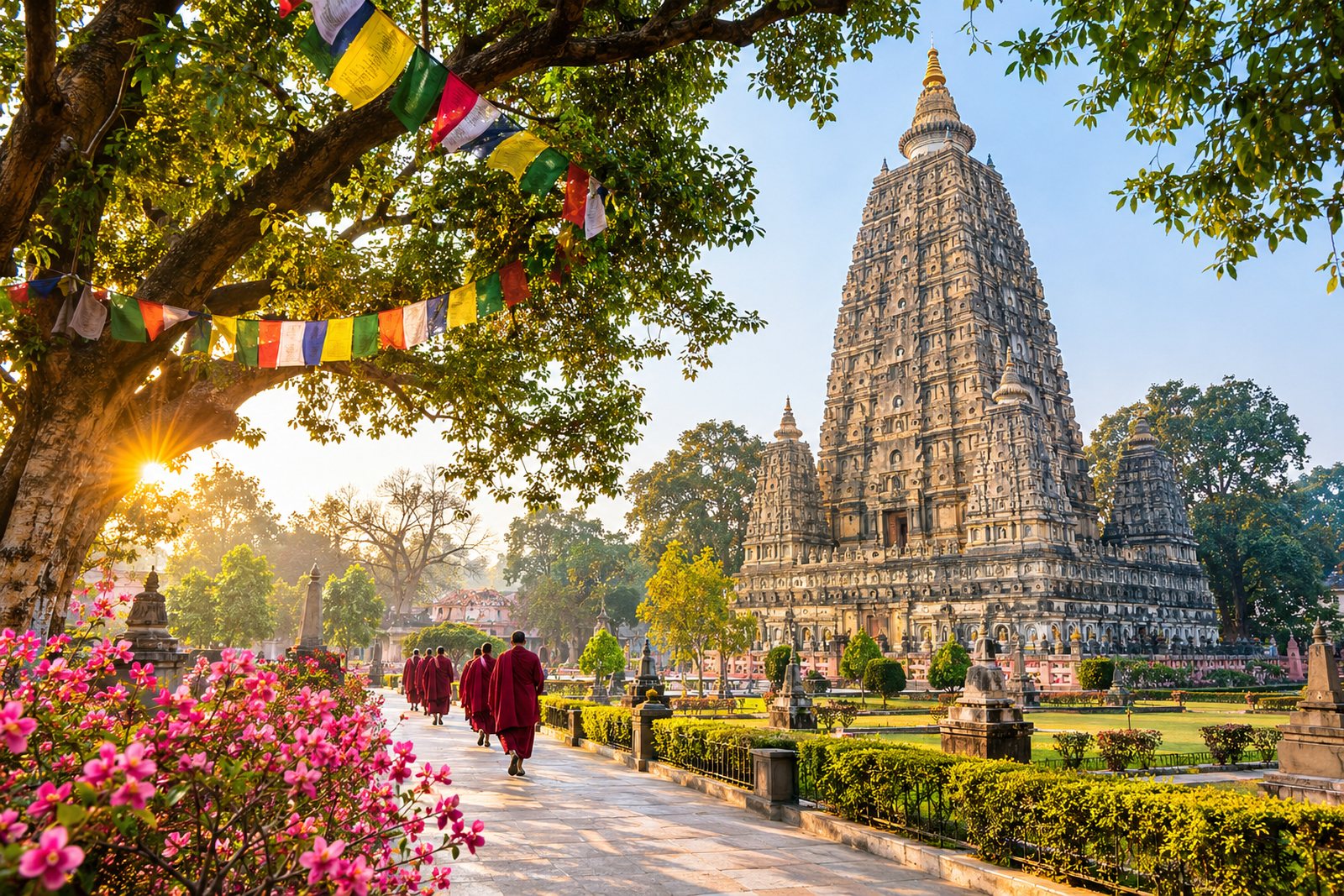
A pipal leaf, heart-shaped with a long thin tip, drifts down and lands on a monk's folded robe. He does not move. Around him, a woman from Sri Lanka is placing lotus flowers, a group from Thailand is chanting softly, and a family from Patna is quietly trying to keep a toddler from running onto the railing. Above them all, the tree.
This is Bodh Gaya, where the Buddhist story begins. Here is the history of the Mahabodhi Temple: the night under the tree, the emperor who marked the spot, the long centuries of neglect and revival, and how to visit it with respect.
The night under the pipal tree
Around two and a half thousand years ago, a young man from the Shakya clan, Siddhartha Gautama, gave up his princely life to find an answer to suffering. He tried harsh fasting until he was almost skin and bone. It did not work. Tradition says a village woman named Sujata offered him a bowl of rice cooked in milk, and he accepted it, choosing a middle path.
Then he sat down under a pipal tree near the Niranjana river and resolved not to get up until he understood. Buddhist texts describe a long night of struggle with Mara, the tempter, and at dawn, enlightenment. Siddhartha became the Buddha, the awakened one. The tree became the Bodhi tree, the tree of awakening.
Seven weeks around the tree
According to Buddhist tradition, the Buddha stayed in the area for seven weeks after that night, each week at a different spot. You can walk them inside the complex today. There is the place where he is said to have gazed at the tree without blinking, the raised walkway where he did walking meditation, with stone lotuses marking his steps, and the lotus pond linked to the story of the serpent king Muchalinda, who sheltered him from a storm.
These are traditions, lovingly kept. For pilgrims, walking them in order is part of the visit.
Ashoka comes to Bodh Gaya
The next big chapter belongs to Ashoka, the Mauryan emperor who turned to Buddhism after the Kalinga war. In the 3rd century BCE he visited Bodh Gaya and is believed to have built the first shrine here. The stone slab under the tree, the Vajrasana or diamond throne, marking the spot of the Buddha's meditation, is traditionally credited to him.
Did you know? The story goes that Ashoka's daughter, Sanghamitta, carried a sapling of the Bodhi tree to Sri Lanka, where it grew into the Sri Maha Bodhi at Anuradhapura. The present tree in Bodh Gaya is believed to be a descendant of the same line, so in a way the tree went abroad and came home.
The temple you see today
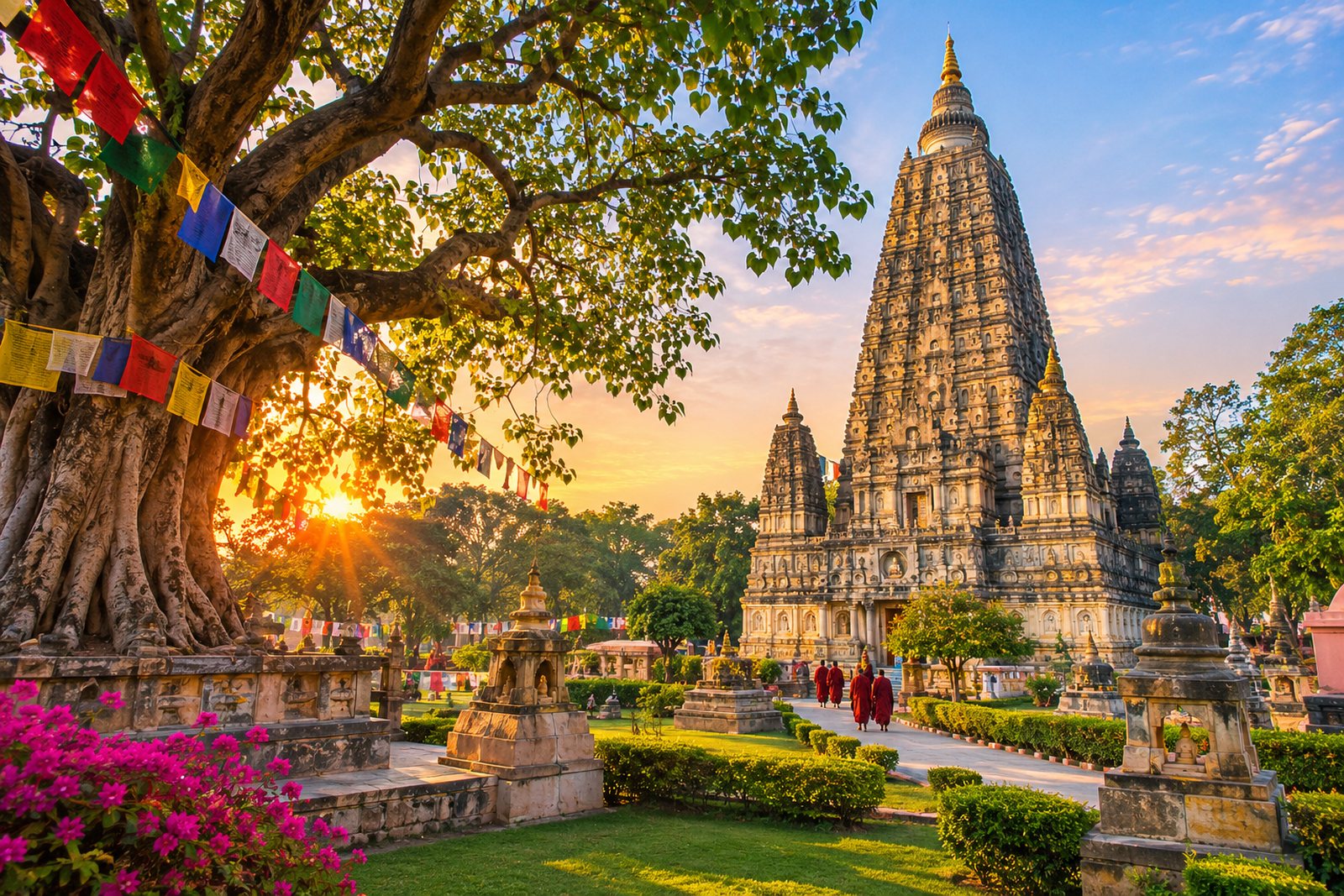
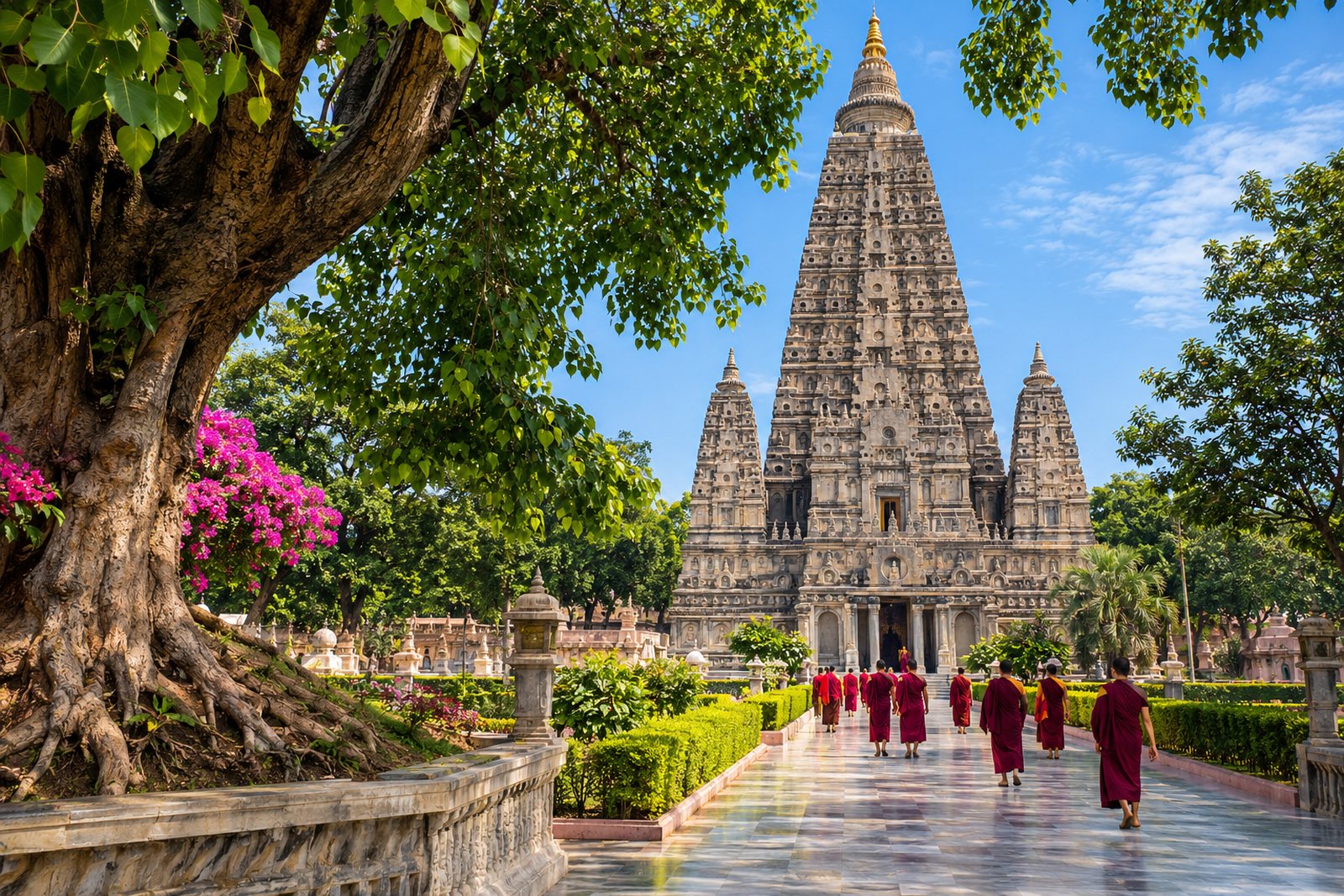
The tall brick tower, about 50 metres high, is much later than Ashoka. It is generally dated to around the 5th to 6th century CE, in the Gupta period, and UNESCO counts it among the earliest brick temples still standing in India. Over the centuries, as Buddhism declined in the region, the temple fell into neglect.
In the 19th century, Burmese missions and British archaeologists, Alexander Cunningham among them, carried out major repairs. Around the same time, the Sri Lankan Buddhist reformer Anagarika Dharmapala founded the Maha Bodhi Society in 1891 and campaigned for Buddhists to have a say in the temple's care. Since 1949, under a Bihar state law, a committee that includes both Buddhist and Hindu members has managed the temple. Some Buddhist groups have long asked for fully Buddhist management, and the question is still discussed. In 2002, UNESCO listed the Mahabodhi Temple Complex as a World Heritage Site.
Monasteries of many countries
Step out of the complex and Bodh Gaya turns into a small world map. Countries with Buddhist traditions have built monasteries and temples here, each in its own style: Thai roofs with golden edges, Tibetan prayer wheels, Japanese calm. There is also a giant seated Buddha statue in stone that families love to photograph.
BellaSafar's Bodh Gaya & Rajgir package spends one day on the Mahabodhi Temple, the Bodhi tree and the international monasteries, and another on Rajgir, with the ropeway up to the Vishwa Shanti Stupa, Griddhakuta and Venuvana, as per the package itinerary.
How to visit Mahabodhi Temple today
- Getting there: Gaya airport and Gaya railway station are both roughly 15 km away. Patna is around 110 to 120 km by road.
- Best time: October to March. Summers in Bihar are very hot. Winter brings large international pilgrim groups, so book stays early.
- Dress: Modest clothes, shoulders and knees covered. Shoes are removed before the inner area.
- Phones and cameras: Rules have changed over the years. Check at the entrance.
- Silence: People are meditating. Speak softly, walk clockwise around the temple and do not sit with your feet pointing at the shrine.
- Combine with: Rajgir and the ruins of Nalanda, if you add time.
Our tip: Go at first light. The chanting starts early, the stone is cool under bare feet, and you see the temple before the tour buses do. Read our Bodh Gaya etiquette guide before you go.
Under the same leaves
You do not need to be a Buddhist to feel it. Sit on the grass near the tree for ten minutes, watch the leaves fall on people from twenty countries, and the noise in your own head goes down a little. That is probably the point.
Planning the full circuit? Read our Bodh Gaya Rajgir Nalanda plan or browse all Bodh Gaya holiday packages.
Frequently asked questions
Who built the Mahabodhi Temple?
Emperor Ashoka is believed to have built the first shrine at the spot in the 3rd century BCE. The present brick temple is generally dated to around the 5th to 6th century CE and has been restored several times since.
Is the Bodhi tree at Bodh Gaya the original tree?
The present tree is believed to be a descendant of the original one under which the Buddha attained enlightenment. Tradition links it to the Sri Maha Bodhi in Anuradhapura, Sri Lanka, which grew from a sapling taken from Bodh Gaya in Ashoka's time.
When did Mahabodhi Temple become a UNESCO World Heritage Site?
The Mahabodhi Temple Complex at Bodh Gaya was inscribed on the UNESCO World Heritage List in 2002.
Are phones allowed inside Mahabodhi Temple?
Rules on phones and cameras have changed over the years. Check at the entrance or with the temple management before your visit, and use the deposit facility if phones are not allowed.
How far is Rajgir from Bodh Gaya?
Rajgir is roughly 75 to 80 km from Bodh Gaya, around two hours by road, so it works well as a day trip.