Kohima War Cemetery: The Battle of the Tennis Court, 1944
In 1944 a garden tennis court in Kohima became a front line of the Second World War. The story of the battle and how to visit the cemetery from Dimapur.
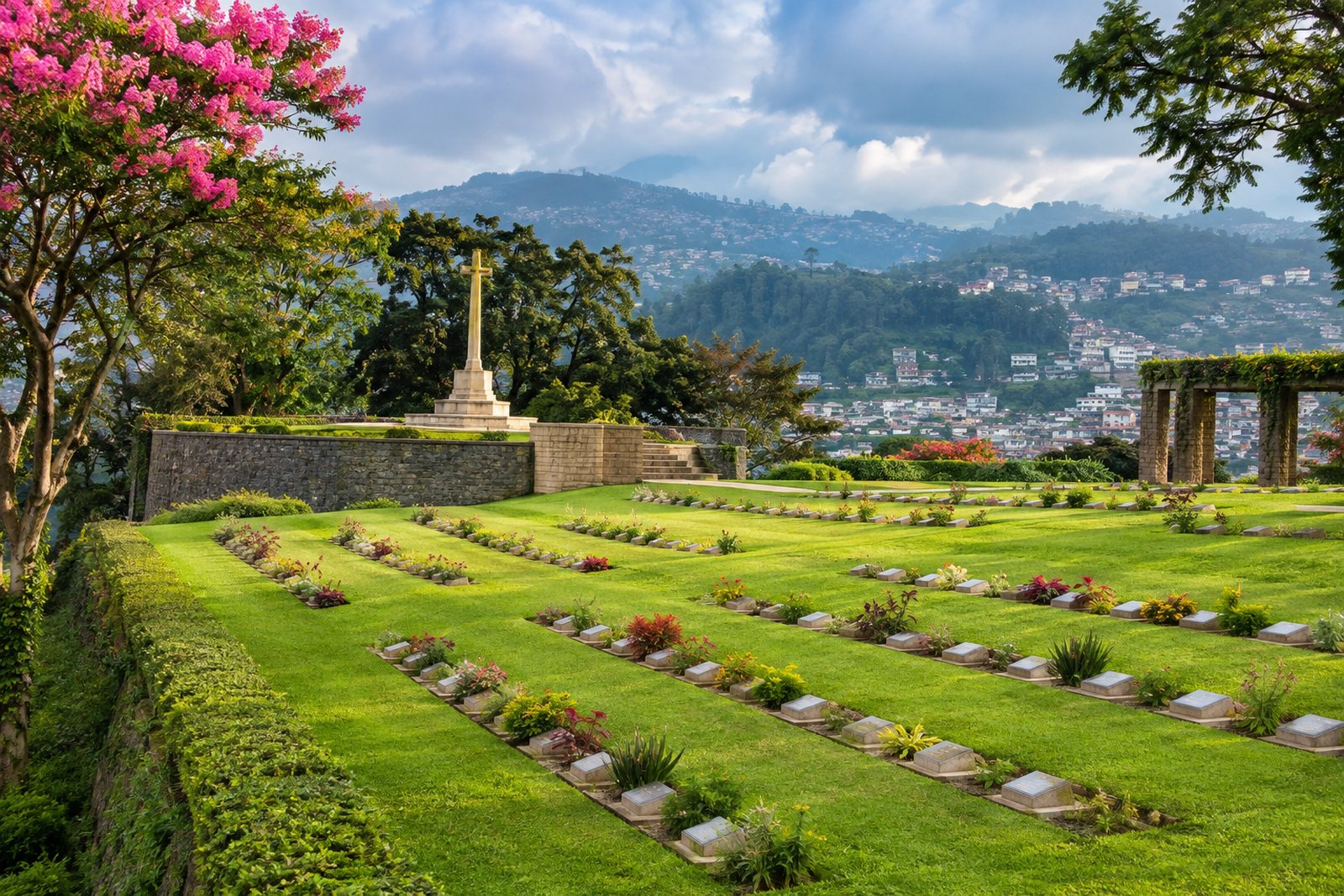
The tennis court is still there. It does not have a net, and nobody has played on it for more than eighty years. But on a terrace on Garrison Hill in Kohima, the white lines of the court are marked out carefully on the grass, between rows of graves.
In April 1944, this was a front line. Soldiers lay on one side of the court and the enemy on the other, close enough to throw grenades across the baseline. Today the only sound is birds, a few pine trees and the traffic of Kohima town below.
This is the Kohima War Cemetery, and this is the story of the battle that came to be known as the Battle of the Tennis Court. And how to visit it on a trip from Dimapur.
How the war reached the Naga Hills
By 1944 the Second World War had moved into Asia. Japanese forces had taken Burma, and in early 1944 they launched a major push across the border into north-east India, towards Imphal in Manipur and Kohima in the Naga Hills.
Kohima mattered because of the road. It sat on the route linking Imphal with Dimapur, where the railway and the big supply depots were. If Kohima fell, Imphal could be cut off and the road to the plains of Assam would open up.
The defenders at Kohima were few. A garrison of soldiers including Indian and British units, the Assam Regiment, Assam Rifles and others, with wounded, cooks and clerks. They dug in on the ridge around the Deputy Commissioner's bungalow.
The siege of Garrison Hill
From early April 1944 the siege was on. Water was short. The wounded were crowded into trenches. Supplies were dropped by air, and some of it fell on the wrong side.
The Japanese pushed the defenders back terrace by terrace. And then the fighting reached the Deputy Commissioner's garden, and his tennis court. For days the two sides held opposite ends of it. A few metres of grass separated them. Grenades went back and forth across a court where, only months earlier, officers had played friendly games in the evening.
Relief forces fought their way up from Dimapur. In mid-April they broke through to the garrison. But the battle for Kohima went on for weeks more, through the monsoon, ridge by ridge, until the Japanese withdrew by June 1944. Together with the battle at Imphal, it became a turning point of the war in this part of the world.
Did you know? A cherry tree in the cemetery marks the point of the furthest Japanese advance on the hill. The original tree, which was used as a sniper's post, was damaged in the fighting, and the tree you see today was grown from it.
The Nagas who stood with the defenders
The battle is often told as a story of armies. It should also be told as a story of the Naga people. Many villagers helped the Allied forces as guides, scouts and stretcher bearers, carrying supplies and wounded through steep jungle. Their homes and villages also suffered badly in the fighting. Any visit to Kohima is better when you remember that this was their land, and their war too.
"When you go home"
Walk up to the top of the cemetery and you will find the memorial of the British 2nd Division. On it are four short lines, credited to the English writer John Maxwell Edmonds, known around the world as the Kohima Epitaph. Its last line reads, "For your tomorrow, we gave our today."
The cemetery is cared for by the Commonwealth War Graves Commission. There are more than a thousand graves here, laid out on terraces that follow the hill. Lower down is a memorial to Hindu and Sikh soldiers who were cremated according to their faith. Read the names slowly. Many of the soldiers were very young. Many came from villages in Punjab, the hills and the plains of India.
Kohima town and Dimapur
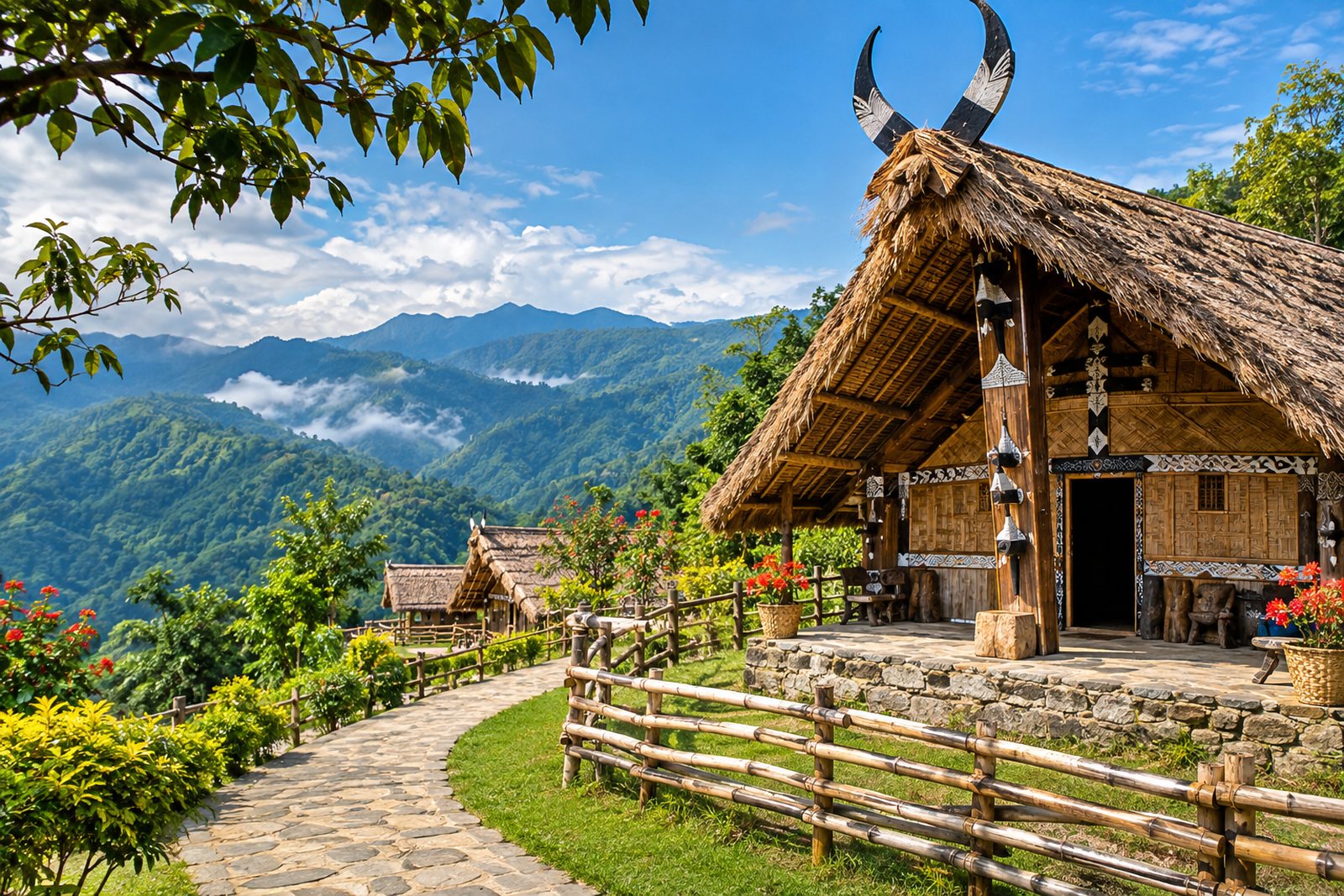
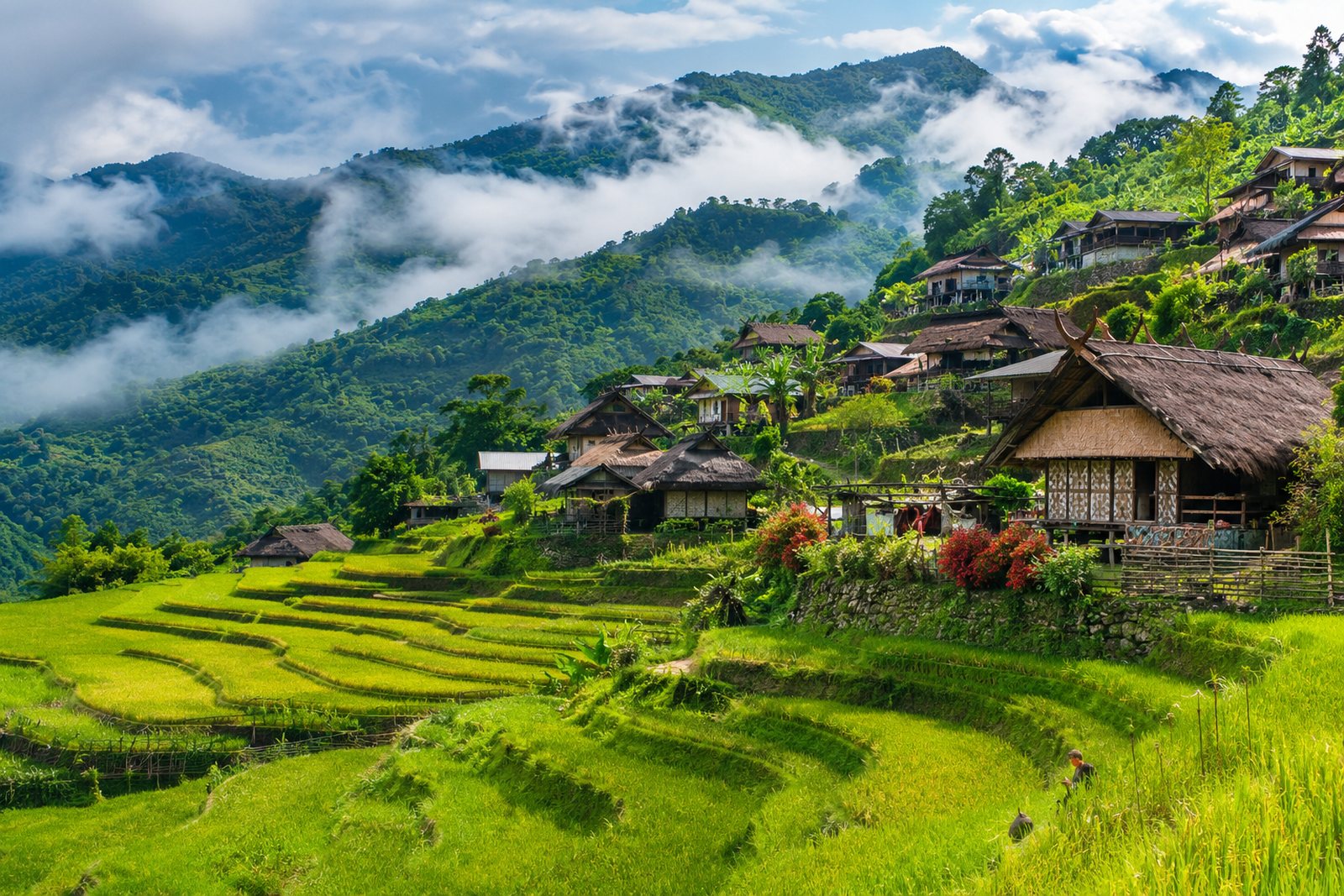
Kohima is the capital of Nagaland. Beyond the cemetery, the State Museum has a good collection on Naga tribes, their dress, tools and customs. Bara Basti, one of the oldest and largest Naga villages, is on a ridge in the town. In early December, the Hornbill Festival at nearby Kisama brings together dances, food and crafts of the Naga tribes.
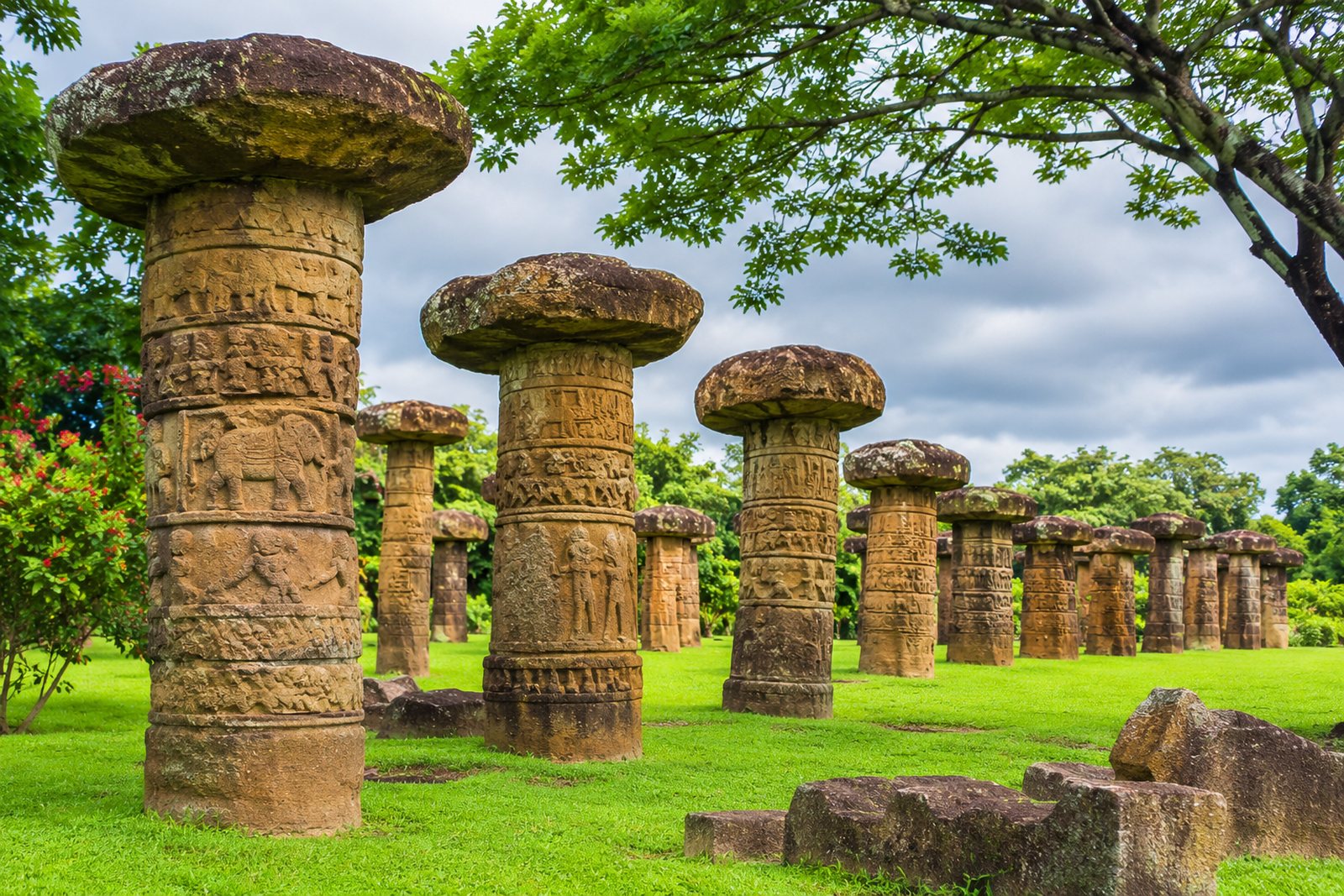
Back in Dimapur, the Kachari ruins have strange mushroom-shaped pillars from an old kingdom. We told their story in Kachari Ruins Dimapur.
The Dimapur & Kohima package gives you 2 nights in Dimapur, with Kachari ruins, Diezephe craft village and Triple Falls on one day and a Kohima day excursion for the War Cemetery, State Museum and Bara Basti on the other, as per the package itinerary.
How to visit Kohima War Cemetery today
- Where: Garrison Hill, in the heart of Kohima. Kohima is around 3 hours by road from Dimapur, which has the nearest airport and railway station.
- Permit: Indian tourists from outside Nagaland need an Inner Line Permit. Read our Nagaland Inner Line Permit guide and check the official portal.
- Best time: October to May. The monsoon brings heavy rain and landslides on the hill roads.
- Timings: These can change, so check locally.
- Respect: It is a cemetery. Walk on the paths, speak softly, and keep photography respectful.
- Combine with: The State Museum and Bara Basti in Kohima, and the Kachari ruins in Dimapur.
Our tip: Leave Dimapur early so you reach the cemetery before noon. The light is softer, the terraces are quiet, and you will have time to sit near the tennis court before the rest of the Kohima day.
A garden that remembers
The war came to Kohima from far away, and it left as quickly as it came. What it left behind is a garden on a hill, a tennis court with no net and thousands of stories that never got to go home. Stand there for a few minutes. Then go home, and tell them.
Planning the North-East trip? Read our Nagaland trip guide or browse all Dimapur holiday packages.
Frequently asked questions
What happened at Kohima in 1944?
In April 1944, Japanese forces advanced into north-east India and besieged the small Allied garrison at Kohima. Fierce fighting went on for weeks, including on the tennis court of the Deputy Commissioner's bungalow, until the siege was broken and the Japanese withdrew by June 1944.
Why is it called the Battle of the Tennis Court?
Some of the closest fighting took place across the tennis court of the Deputy Commissioner's bungalow on Garrison Hill, with the two sides only metres apart. The court's lines are marked today inside the cemetery.
What is written on the Kohima epitaph?
The memorial of the British 2nd Division carries the Kohima Epitaph, which begins 'When you go home'. It is credited to the English writer John Maxwell Edmonds and is quoted at remembrance events around the world.
Who maintains the Kohima War Cemetery?
The cemetery is maintained by the Commonwealth War Graves Commission. It holds graves of soldiers from Britain and the Indian Army, and memorials for those who were cremated according to their faith.
Do Indians need a permit to visit Kohima?
Indian tourists from outside Nagaland need an Inner Line Permit to visit the state. Rules and the application process can change, so check the official Nagaland portal before you travel.