Kachari Ruins Dimapur: The Mushroom Pillars of an Old Kingdom
Rows of carved stone pillars stand in the middle of Dimapur town, left behind by the Dimasa Kachari kings. Their story, the legends, and how to visit.
Is it a chess set? A temple that lost its roof? A row of giant stone mushrooms someone forgot to take home? Stand among the pillars in the middle of Dimapur and you will hear all three guesses within ten minutes, usually from the same family.
These are the Kachari Ruins, the last standing pieces of an old royal capital in Nagaland's busiest town. Here is what we know about them, what we do not, and how to see them on a Dimapur and Kohima trip.
Who were the Dimasa Kacharis?
Long before Dimapur became a railhead and a trading town, it was a capital. The Dimasa Kacharis, one of the old peoples of the Northeast, ruled a kingdom in the plains and hills of what is now Assam and Nagaland, and Dimapur was one of their seats of power.
Their neighbours to the north were the Ahoms, a powerful kingdom in the Brahmaputra valley. The two fought more than once. In the 16th century, after a serious defeat, the Kacharis moved their capital further south, away from Dimapur. The old city was left to the forest.
What remained, when the jungle was cleared centuries later, were brick walls, a gateway, ponds, and these strange stone pillars.
What do the mushroom pillars look like?
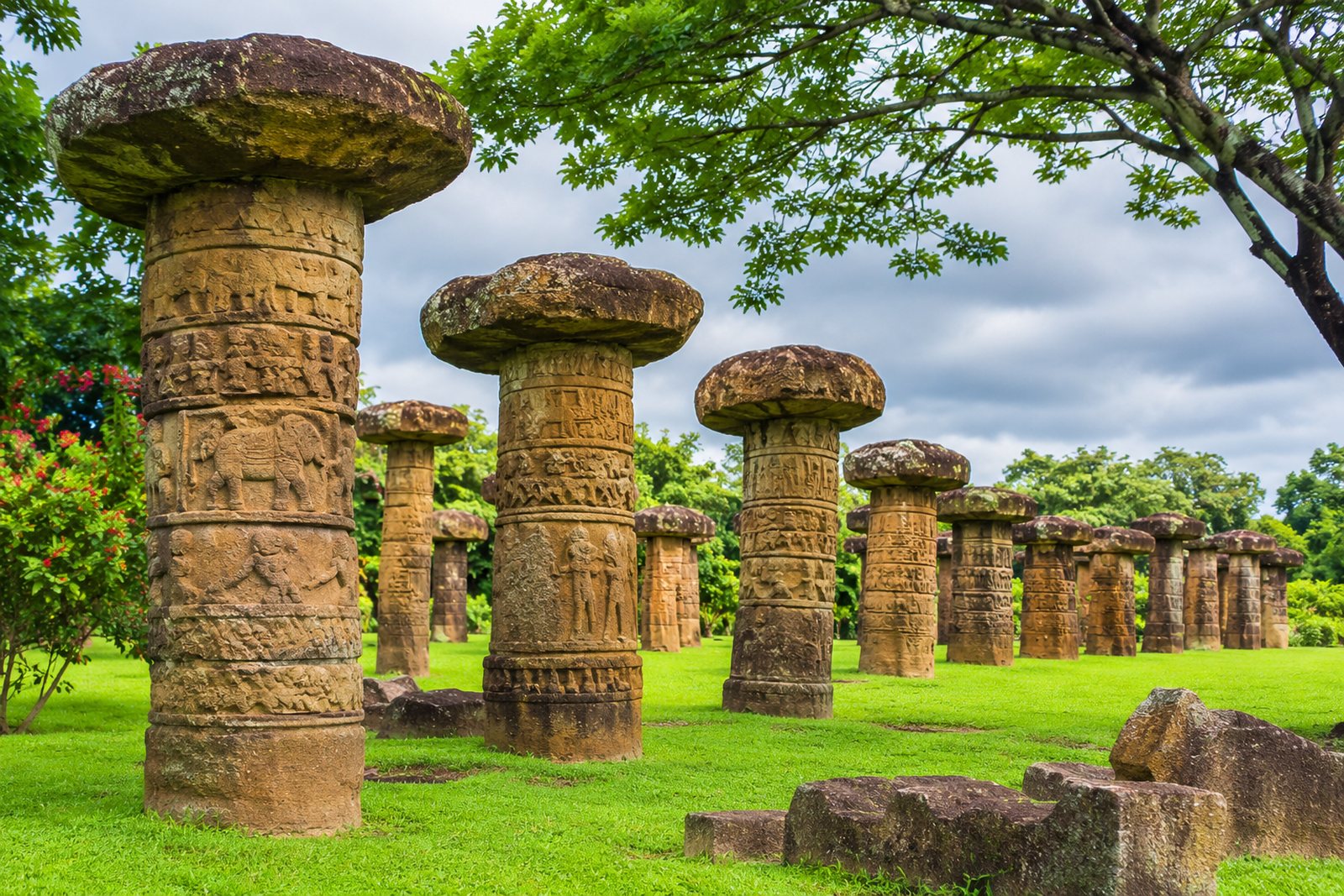
Picture a line of tall sandstone pillars, some taller than a grown man, each with a rounded dome on top, like a mushroom cap. Look closely and the sides are carved: flowers, leaves, animals, geometric patterns, lines that might be birds or might be something else. Some pillars are broken. Some lean. A few lie on the grass where they fell.
There is no roof, no hall, nothing to explain them. Just the stones, standing in rows, as if waiting for someone to come back and finish the building.
What were they for? Legend and history
Here is where Dimapur gets interesting.
Local legend connects the town with the Mahabharata. Dimapur, the story says, comes from Hidimbapur, the city of Hidimba, the rakshasi who married Bhima during the Pandavas' years in exile. In this telling, the pillars were the pieces of a giant chess game Bhima played. It is a fun story, and people tell it with a smile.
Historians are more cautious. Some suggest the pillars had a ritual meaning, possibly linked to fertility or to memorials. Others see them as part of the royal complex. The honest answer is that nobody knows for certain, and the people who built them did not leave a guidebook.
Did you know? Remains linked with the Kachari kings are found at other old Kachari sites in Assam too, which tells you how far this kingdom once spread.
Dimapur beyond the ruins
Dimapur is a working town, not a postcard. That is part of its charm.
- The markets: busy, loud and full of Naga produce. Fresh bamboo shoot, smoked meat, king chilli, local greens you will not see elsewhere.
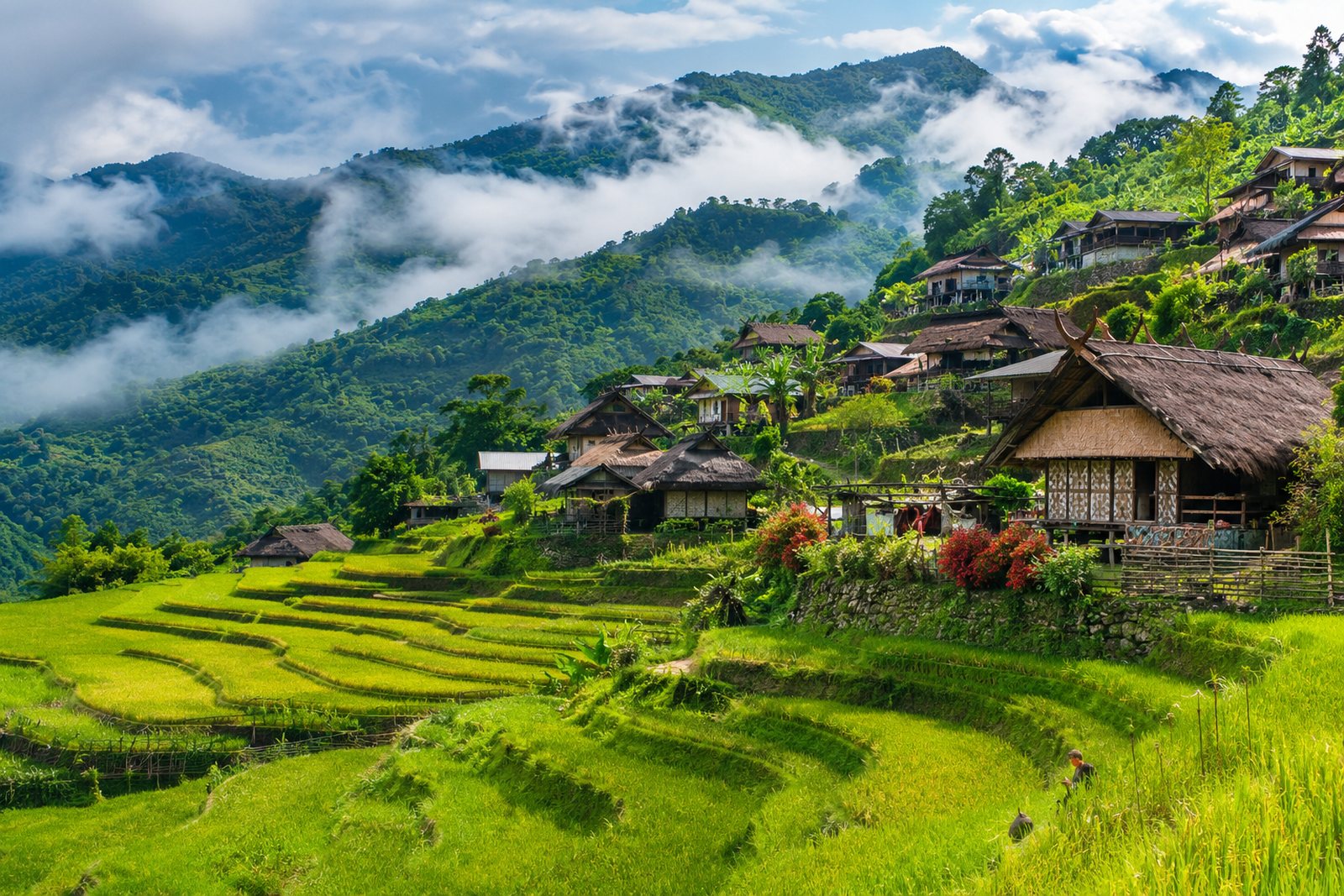
- The nearby hills: a short drive out of town for green views and an easy outing in the cooler months.
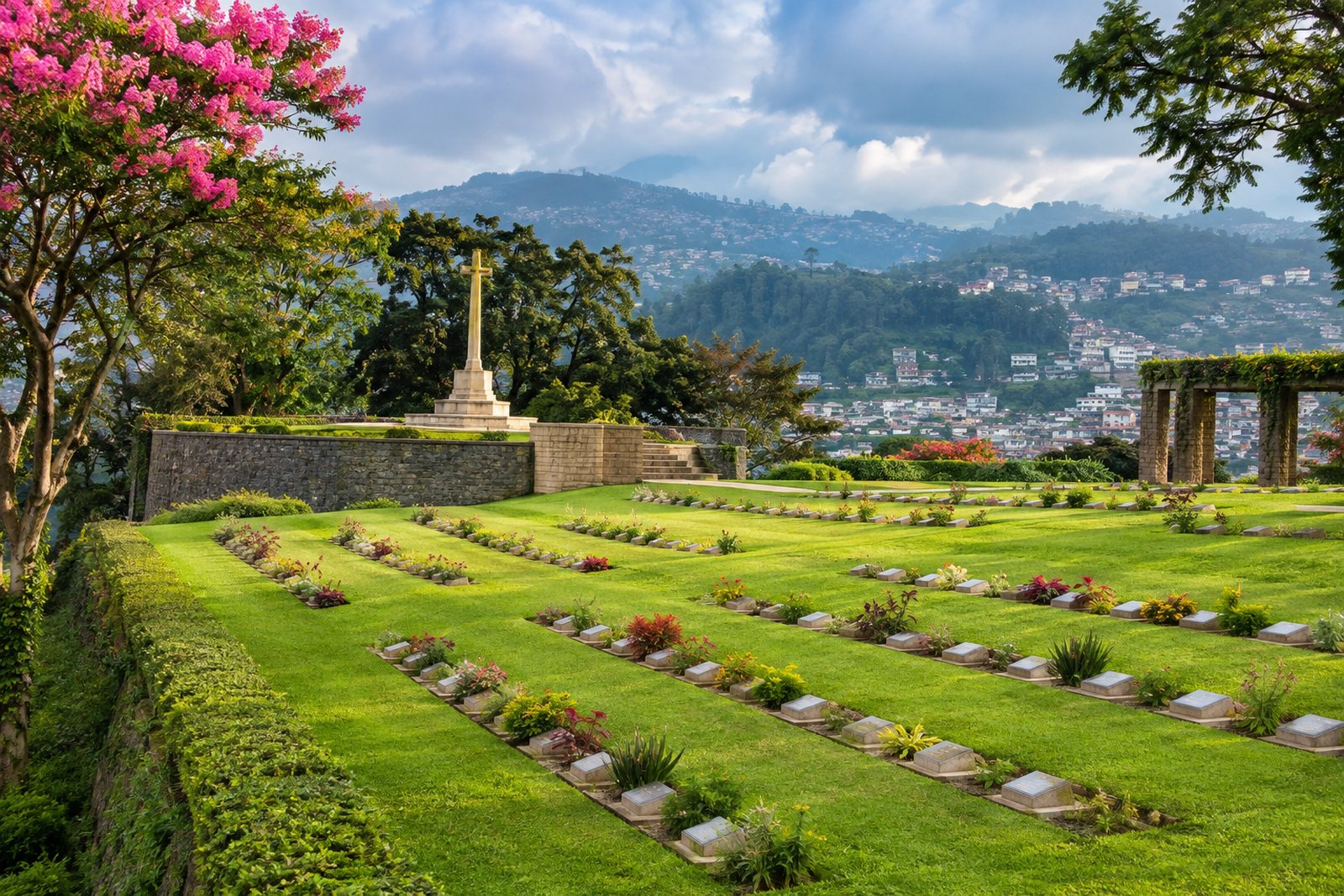
- The road to Kohima: a winding climb into the hills, with the air cooling as you go. Kohima, the state capital, holds the Second World War cemetery that remembers the Battle of Kohima of 1944.
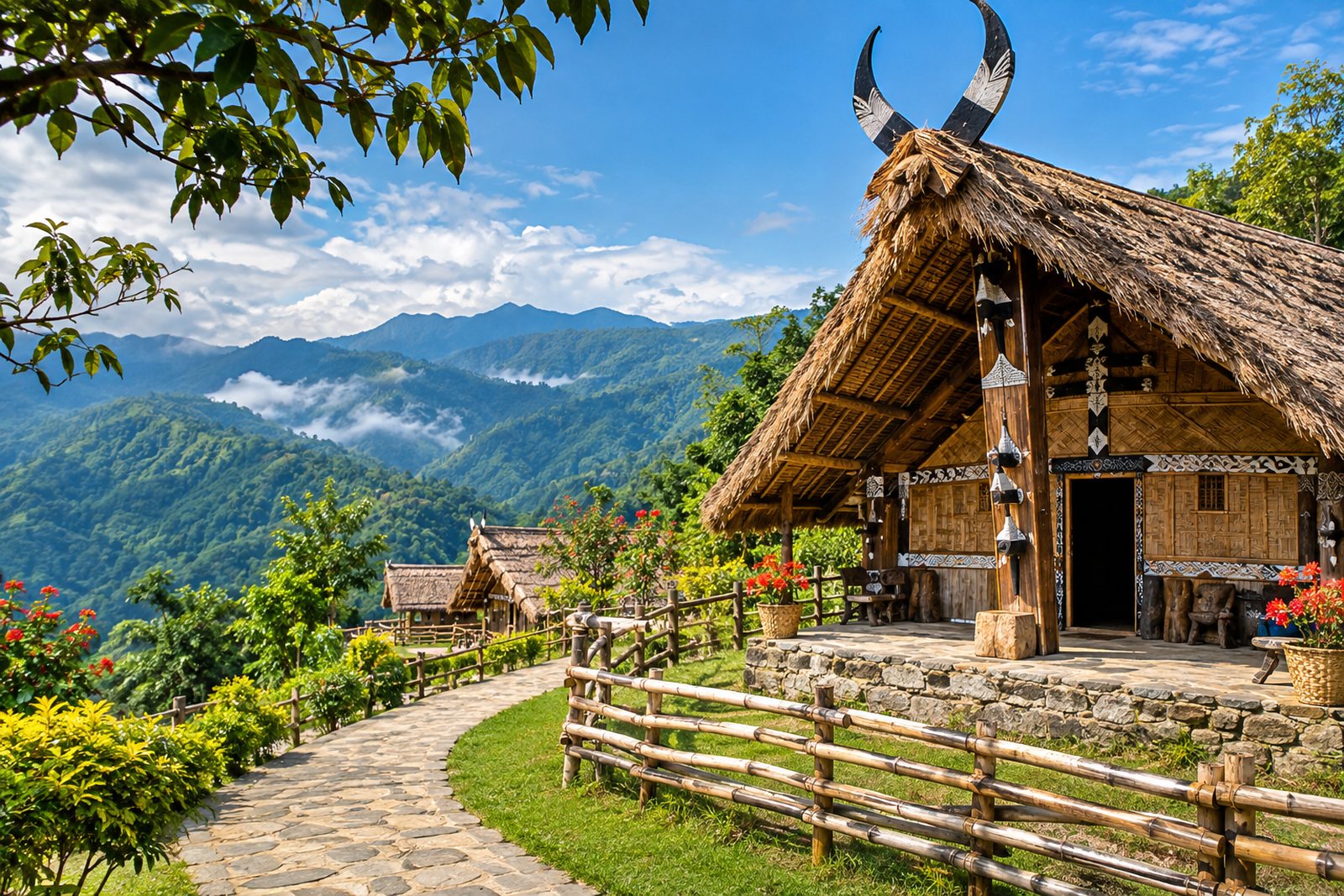
- Hornbill Festival: held near Kohima every December, the state's big celebration of Naga tribes, music and food. Book early if your dates overlap.
Our Dimapur & Kohima trip is a two-night introduction to Nagaland, with Dimapur as the arrival point and the hills of Kohima on the route, as per the package itinerary. It works well as a long weekend or as an add-on to an Assam trip.
How to visit the Kachari Ruins today
- Where: inside Dimapur town, a short drive from the railway station and the airport.
- Permit: Indian tourists to Nagaland need an Inner Line Permit. Rules for Dimapur have changed over the years, so check the official ILP portal before travel. Our Nagaland Inner Line Permit guide explains the basics.
- Best time: October to March. Summer is humid and monsoon rain is heavy.
- Timings and entry: these can change, so check locally on the day.
- Respect the site: please do not climb on the pillars or lean on the broken ones. They have survived centuries; they do not need our selfies on top of them.
- Time needed: about an hour, ideally in the late afternoon when the light is soft.
Our tip: Pair the ruins with an evening walk through a Dimapur market. Stones of a lost capital in the afternoon, the noise of a living town in the evening.
Stones that kept their secret
Most monuments in India come with a plaque and a date. These pillars come with a question mark. Maybe that is why people stay longer than they planned, walking from stone to stone, trying to read carvings nobody can fully explain.
Planning the trip? Read our Dimapur and Kohima trip guide or browse all Dimapur holiday packages.
Frequently asked questions
What are the Kachari Ruins in Dimapur?
They are the remains of the old capital of the Dimasa Kachari kingdom, best known for rows of tall carved stone pillars with rounded, mushroom-like tops.
Who built the Kachari Ruins?
They are linked with the Dimasa Kachari rulers, who had their capital at Dimapur before they moved further south after conflict with the Ahoms in the 16th century.
What were the mushroom pillars used for?
Nobody knows for certain. Historians have suggested ritual or memorial purposes, while local folklore calls them the chess pieces of Bhima from the Mahabharata.
Do I need an Inner Line Permit for Dimapur?
Indian tourists visiting Nagaland need an Inner Line Permit. Rules for Dimapur have changed over time, so check the official Nagaland ILP portal before you travel.
How much time do I need at the Kachari Ruins?
Around an hour is enough for most visitors. It is easy to combine with a drive to Kohima on the same trip.