National Research Centre on Camel Bikaner: Camel Milk Ice Cream
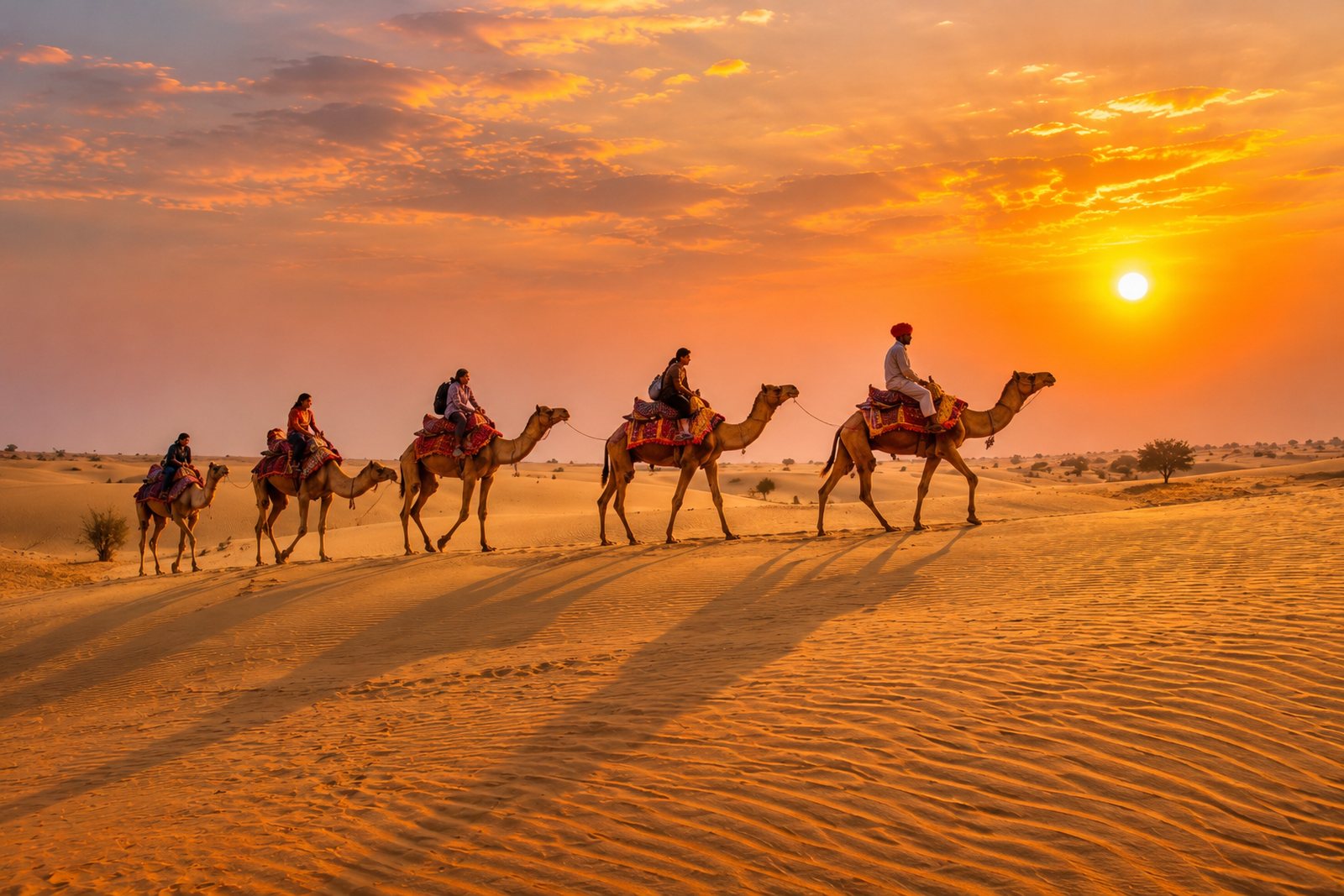
Camel breeds up close, the evening herd walking home and camel milk ice cream: a family guide to the National Research Centre on Camel in Bikaner.
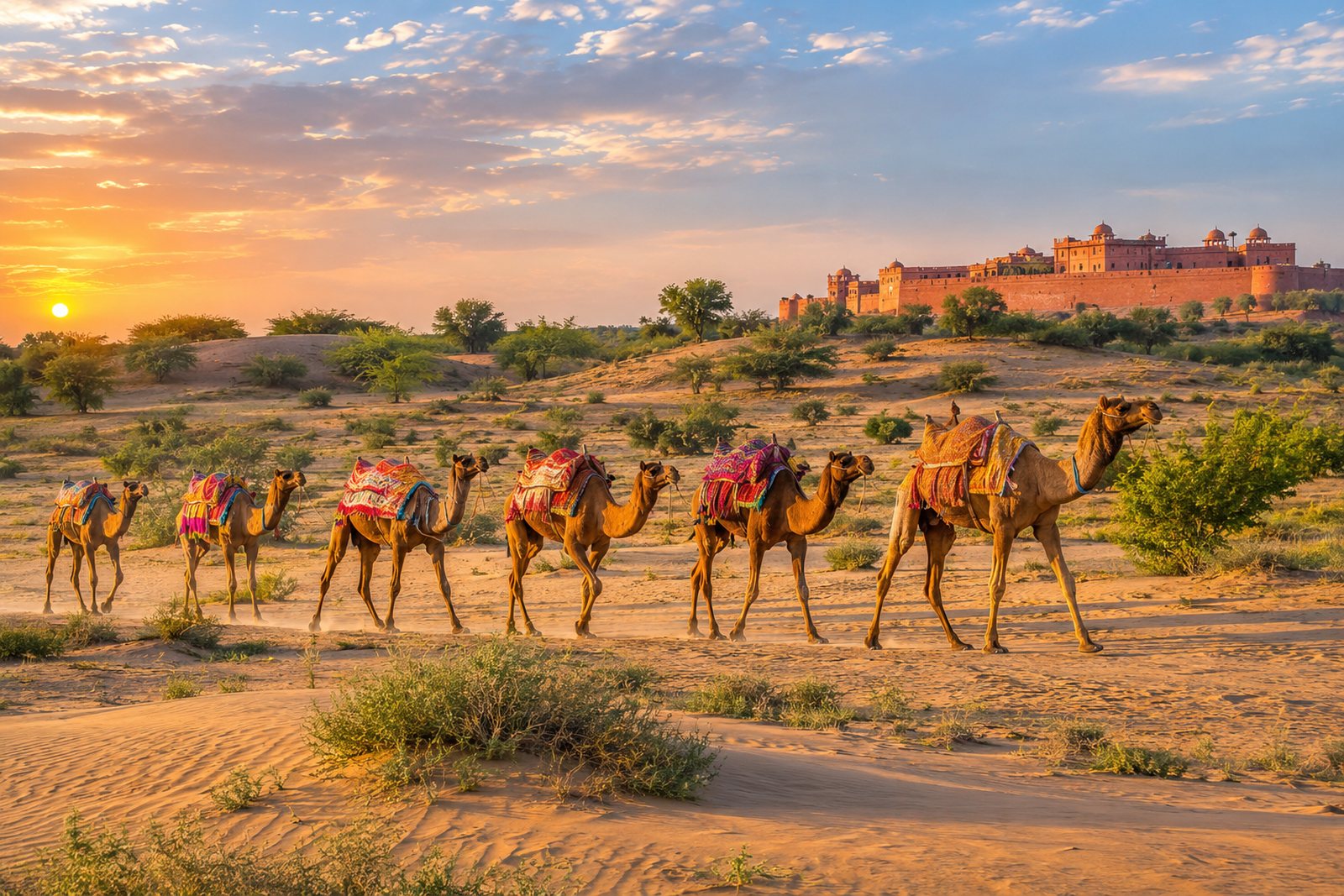
Late afternoon on the edge of Bikaner, the dust rises before you see them. Then they come, a long line of camels walking home from grazing, slow and unbothered, necks swaying, a few young ones trotting to keep up. Kids at the fence go silent. Parents stop scrolling. For a few minutes, nobody needs to be told to put the phone away.
That evening return is one of the quiet joys of the camel research centre Bikaner, the National Research Centre on Camel, run under the Indian Council of Agricultural Research. It is a working science campus, not a theme park, and that is exactly why it is worth a visit.
What is the National Research Centre on Camel?
It is a government research institute set up in the 1980s to study the camel: its breeding, health, milk, and its role in desert life. Bikaner was a natural home. The region has lived with camels for centuries, and the old Bikaner state even had a famous camel corps.
For visitors, the centre opens a small window into that world. You can see different camel breeds up close, visit a museum section, and try camel milk products at a parlour on the campus. Timings and entry rules change, so check locally or on the official site before you go.
How far is it from Bikaner city?
The centre lies a short drive outside the city, roughly 8 to 10 km away. An auto or your package car can take you there easily. Most people combine it with the afternoon or evening of a Bikaner sightseeing day.
What will you see at the camel centre?
Camel breeds of India
Not all camels look alike. The centre keeps several Indian breeds, and once you see them side by side, the differences are obvious. You may see the strong, heavier Bikaneri, the lighter and faster Jaisalmeri, and breeds from Kutch and Mewar. Guides or signboards explain which breed is suited to what: heavy work, speed, or milk.
Children love the calves. Adults are usually surprised by how big a full-grown camel really is when you stand next to its legs.
The museum
A small museum section covers camel biology, history and their use in the desert, from farming and transport to the camel corps. It is simple and educational, good for 20 to 30 minutes.
The evening herd return
The camels are taken out to graze and come back towards evening. If you time your visit for late afternoon, you may catch the herd walking back in. It is not a scheduled show, so it depends on the day, but it is the moment most visitors remember.
Did you know? Camel milk has smaller fat globules than cow's milk and is naturally a little salty. That is part of why camel milk products taste so different from what you expect.
Camel milk ice cream, kulfi and coffee
This is the part everyone asks about. The milk parlour on campus usually offers camel milk ice cream, kulfi, flavoured milk, tea or coffee made with camel milk. Products and flavours vary.
What does it taste like? A little lighter than cow's milk, slightly salty, very smooth. The ice cream is creamy enough that most people only notice the difference when told. The coffee is the real test. Some love it. Some take one sip and quietly pass it to their spouse.
Can you ride a camel at the centre?
Short camel rides are sometimes offered on the campus, but this depends on the season and the centre's rules. Do not count on it. If a camel ride is your main goal, a desert camp in Jaisalmer or a ride near the dunes is the surer option.
Best time to visit
- Season: October to March, when Bikaner afternoons are pleasant
- Time of day: late afternoon, to catch the herd coming back and avoid midday heat
- January: Bikaner hosts a camel festival, organised by Rajasthan Tourism, with camel decoration, races and folk performances; dates vary each year, so check the official tourism site
- Summer: very hot, so plan early morning or late visits only
How to plan a Bikaner day around it
A comfortable Bikaner day looks like this:
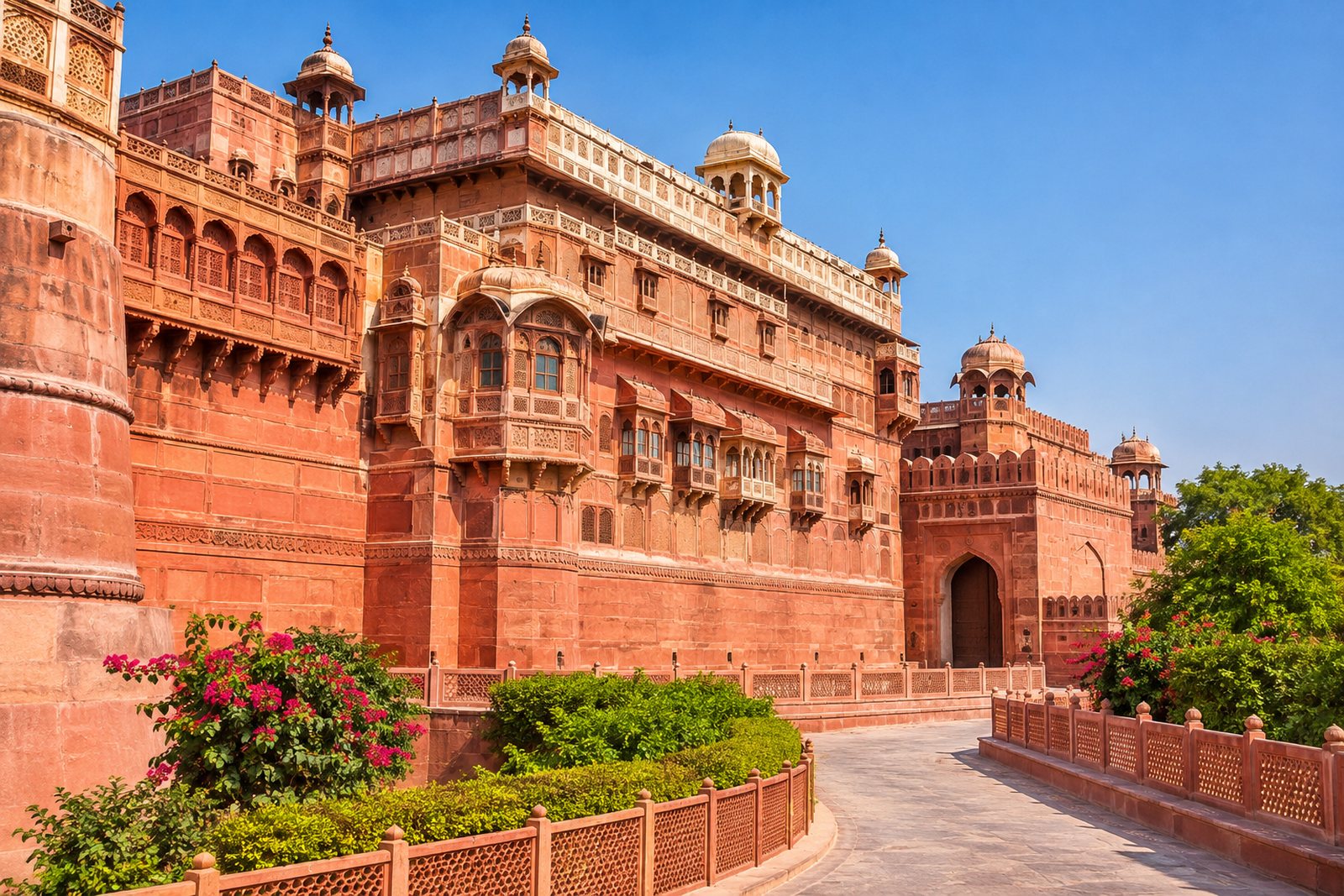
- Morning: Junagarh Fort, before it gets hot
- Midday: lunch, and a bhujia and rasgulla stop in the old city
- Afternoon: Karni Mata Temple at Deshnoke, around 30 km away, famous for its thousands of rats that are revered as sacred
- Late afternoon: the camel research centre, timed for the herd return
- Evening: Lalgarh Palace from outside, or a walk in the old city
Our tip: Carry a cap and water, and wear closed shoes. The campus has open, dusty stretches, and camel enclosures are not the place for new white sneakers.
The Bikaner Getaway is a one-night stay with a full-day local sightseeing plan including Junagarh Fort and Karni Mata Temple, so ask us to fit the camel centre into the afternoon. For a longer desert loop, Desert Triangle links Jaipur, Bikaner, Jaisalmer and Jodhpur over six nights, and Bikaner Jaisalmer Jodhpur does the three desert cities in four nights.
Most people come to Bikaner for the fort and the bhujia. The camels are what surprises them. Something about watching a herd walk home across sand, while you hold a cup of camel milk coffee, makes the desert feel less like a postcard and more like a place where people actually live.
Hungry already? Read our Bikaner bhujia and rasgulla guide, or browse all Bikaner holiday packages.
Frequently asked questions
What is the National Research Centre on Camel?
It is a research institute under the Indian Council of Agricultural Research in Bikaner that studies camel breeding, health and milk, and is open to visitors.
What can you eat at the camel research centre Bikaner?
The milk parlour usually offers camel milk ice cream, kulfi, flavoured milk and tea or coffee. Products vary, so check on the day.
How far is the camel research centre from Bikaner?
It is a short drive outside the city, roughly 8 to 10 km away.
What is the best time to visit the camel centre?
Late afternoon in October to March, when the weather is pleasant and you may see the herd returning from grazing.
Is the Bikaner camel centre good for kids?
Yes. Children enjoy seeing camel calves, different breeds and trying camel milk ice cream. Carry water and caps for the open campus.