Vishram Ghat Legend: Where Krishna Rested After Defeating Kansa
Tradition says Krishna sat down to rest at Vishram Ghat after killing Kansa. The legend, the Bhai Dooj dip, Mathura's history and evening aarti tips.
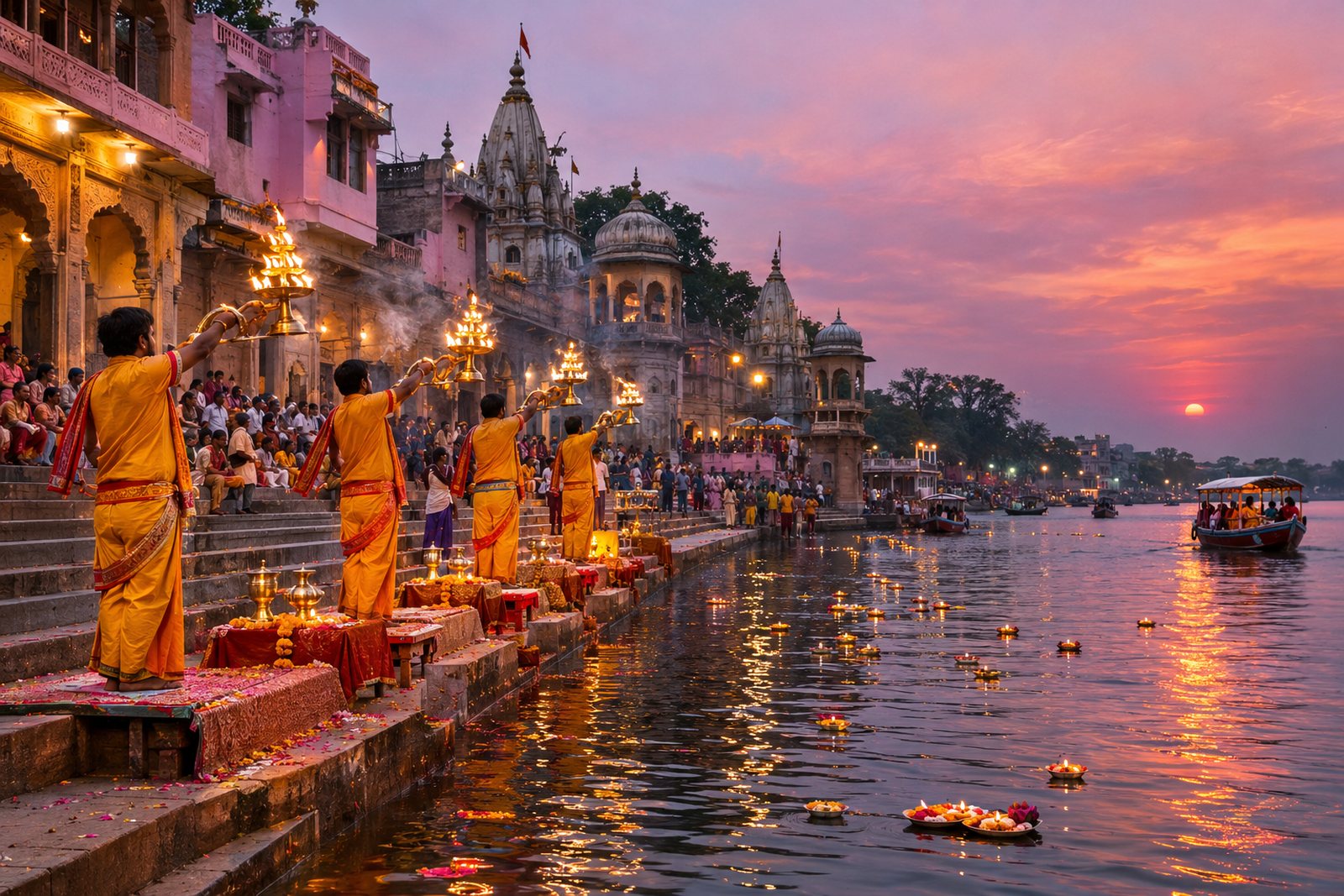
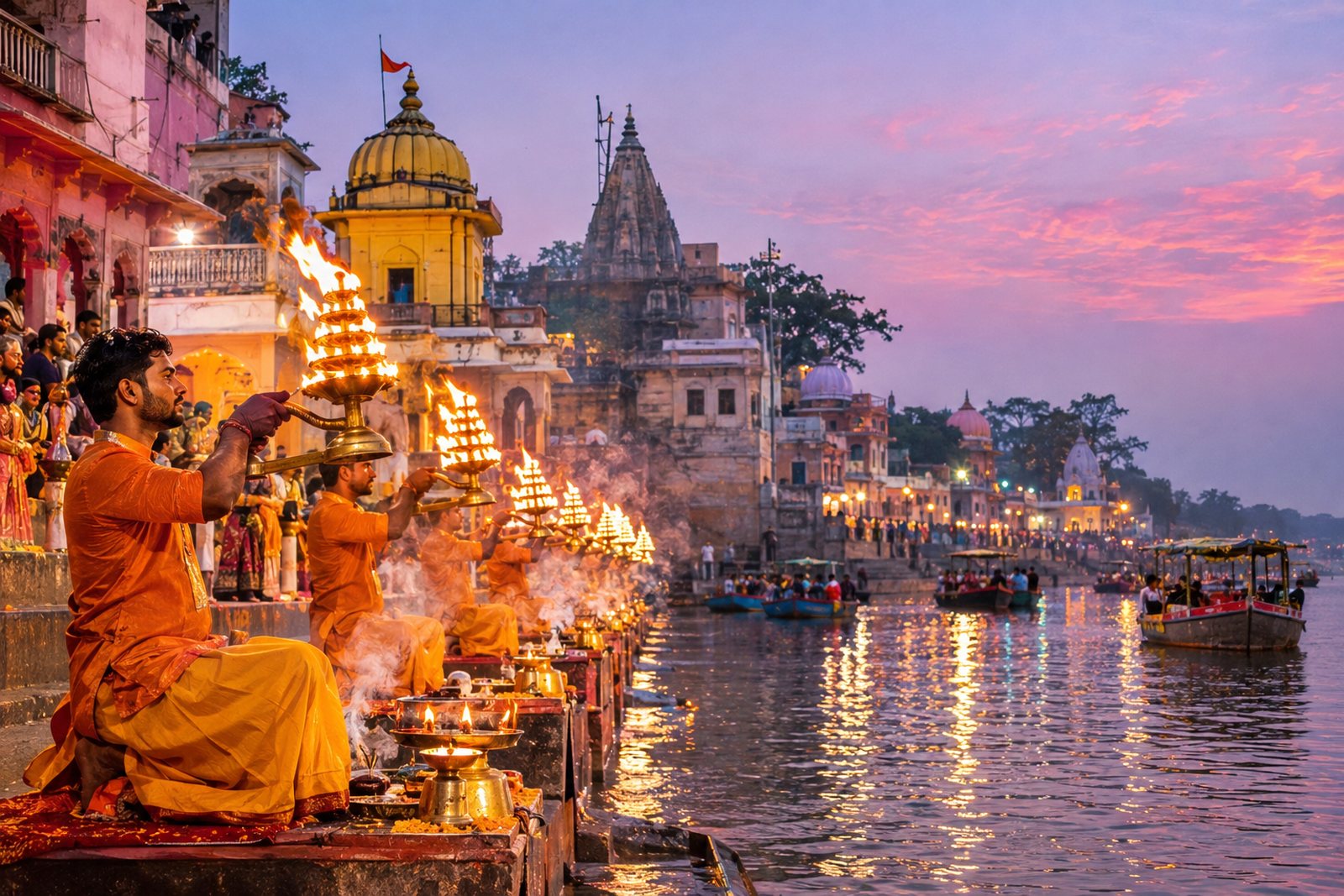
A leaf bowl drifts away from the steps, a tiny flame wobbling inside it, and for a few seconds it is the brightest thing on the dark Yamuna. Then another follows. Then twenty more. Behind them the bells start, the big brass lamps rise in the priests' hands, and a crowd of strangers sings the same line together, "Yamuna maiya ki jai".
You are standing at Vishram Ghat in Mathura, the ghat where, tradition says, Krishna sat down to rest after the hardest fight of his young life. This is the Vishram ghat legend, what history tells us about Mathura's riverfront, and how to make the most of the evening aarti.
The legend: the night Kansa fell
Every child in Braj knows how the story begins. Kansa, the cruel king of Mathura, was told by a voice from the sky that the eighth son of his sister Devaki would kill him. So he threw Devaki and her husband Vasudeva into prison and killed their children one by one.
The eighth child was Krishna. On the stormy night he was born, the prison doors opened by themselves, the guards fell asleep, and Vasudeva carried the baby across the flooded Yamuna in a basket to Gokul, where Nanda and Yashoda raised him as their own.
Years passed. Kansa sent demon after demon to Gokul and Vrindavan, and the boy cowherd dealt with every one of them. At last Kansa invited Krishna and his elder brother Balarama to Mathura for a wrestling festival, a trap with a mad elephant at the gate and the king's strongest wrestlers waiting inside. The brothers came anyway.
The elephant fell. The wrestlers fell. And then Krishna leapt onto the royal platform, dragged Kansa down and killed him in front of the whole city.
After that, the story goes, he walked down to the river, tired, and sat on the steps to rest. Vishram means rest. The ghat has carried that name ever since.
Why bhakts start and end here
Because of that moment, devotees consider Vishram Ghat the most important of Mathura's ghats, the one where a parikrama of the city's ghats traditionally begins and ends. Some traditions also connect the spot to an older rest, of Vishnu in his Varaha form after he defeated the demon Hiranyaksha. Mathura is like that. Stories sit on top of stories.
There is also a sweet sibling legend tied to this ghat. Yamuna, the river goddess, is said to be the sister of Yama, the god of death. On Yama Dwitiya, the day after Govardhan Puja that most of us know as Bhai Dooj, Yama visited his sister and granted a boon: brothers and sisters who bathe together here on that day need not fear him. So on that morning you will see siblings of every age holding hands on the steps and taking the dip together, the elder brother usually pretending the water is not cold.
Did you know? Mathura's riverfront has a long line of ghats, around two dozen by most counts, and Vishram Ghat sits roughly in the middle of them, which is why the traditional walk of the ghats begins here.
What history says about Mathura's ghats
Mathura is one of India's oldest cities. It was an important centre in the time of the Kushana kings, around the early centuries CE, and its sculpture workshops gave the world some of the earliest carved images of the Buddha and of Hindu and Jain deities. The Government Museum in the city holds many of them.
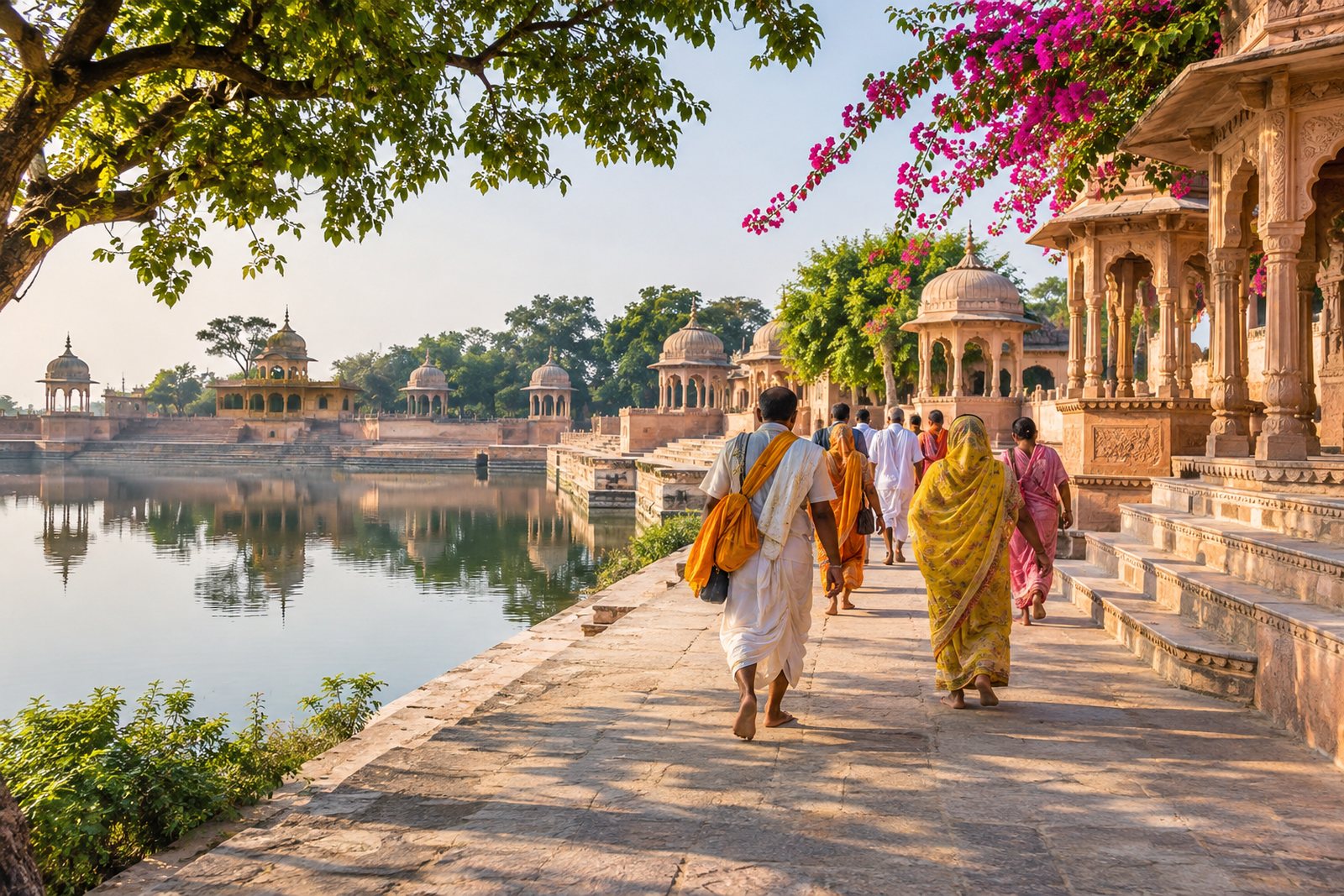
The ghats you walk on today are much more recent. Like riverfronts in Varanasi and elsewhere, they were built and rebuilt over the last few centuries by kings, merchants and devotees, and the small temples and chhatris above the steps come from different periods. Historians are careful to separate the faith in the place from the age of any building on it. For the bhakt, the two do not need to match. The Yamuna is the same river.
Visiting Vishram Ghat and the evening aarti today
- Location: in the old city of Mathura, near the riverfront lanes and the Dwarkadhish temple. Mathura Junction is the main railway station, and the nearest big airport for most people is Delhi or Agra.
- Aarti: the Yamuna aarti is held every evening around sunset. Arrive a little early to find a spot on the steps; timings shift through the year, so check locally.
- Boat ride: small boats go out on the river around aarti time. Settle the fare and how long the ride lasts before you step in.
- Deep daan: you can buy small leaf lamps on the ghat to float on the river.
- Crowds: Janmashtami, Holi season and Bhai Dooj bring huge crowds. Keep elders and children close in the narrow lanes.
- Respect: take off footwear where asked, dress modestly, and do not throw plastic into the river.
- Best season: October to March is the most comfortable; summer afternoons are very hot.
Our tip: Do Krishna Janmabhoomi and Dwarkadhish in the afternoon and finish at Vishram Ghat for the aarti. It follows the story itself: the prison where he was born, then the river where he finally rested.
BellaSafar's Mathura Vrindavan Darshan gives you two nights, with Krishna Janmabhoomi, Dwarkadhish and the Vishram Ghat aarti on one day and Vrindavan on the next, as per the package itinerary. Short on time? Mathura Vrindavan Quick Darshan fits the same two days of sightseeing around one night. For the full Braj circle, Braj Darshan adds a day for Govardhan, Barsana and Nandgaon.
The ghat where even God sat down
Think about it. The hero of a thousand stories wins his biggest fight, and the first thing he does is not celebrate. He goes and sits by the water. There is something very human in that. Most of us come to Mathura carrying something heavy too. Vishram Ghat is where you are allowed to put it down for an evening.
Read our Mathura Vrindavan Braj darshan guide and the Govardhan Parvat legend, or browse all Mathura holiday packages.
Frequently asked questions
What is the legend of Vishram Ghat?
Tradition says that after Krishna killed his cruel uncle Kansa in Mathura, he came to this ghat on the Yamuna and sat down to rest. Vishram means rest.
What time is the Yamuna aarti at Vishram Ghat?
The aarti is held every evening around sunset. The exact time shifts with the season, so check locally and arrive a little early for a good spot.
Why do brothers and sisters bathe at Vishram Ghat on Bhai Dooj?
Legend says Yama, god of death, visited his sister Yamuna on Yama Dwitiya and blessed siblings who bathe together here that day, so many come for a joint dip.
Is a boat ride available at Vishram Ghat?
Yes, small boats go out on the Yamuna, especially around aarti time. Agree on the fare and duration before you get in.
How many days are enough for Mathura and Vrindavan?
Two days covers the main temples of Mathura and Vrindavan. Add a third day for Govardhan, Barsana and Nandgaon.