Udayagiri Khandagiri Caves History: King Kharavela's Jain Monks
Two small hills outside Bhubaneswar hold rock-cut rooms made for Jain monks and a royal inscription over 2,000 years old. Here is the story and how to visit.
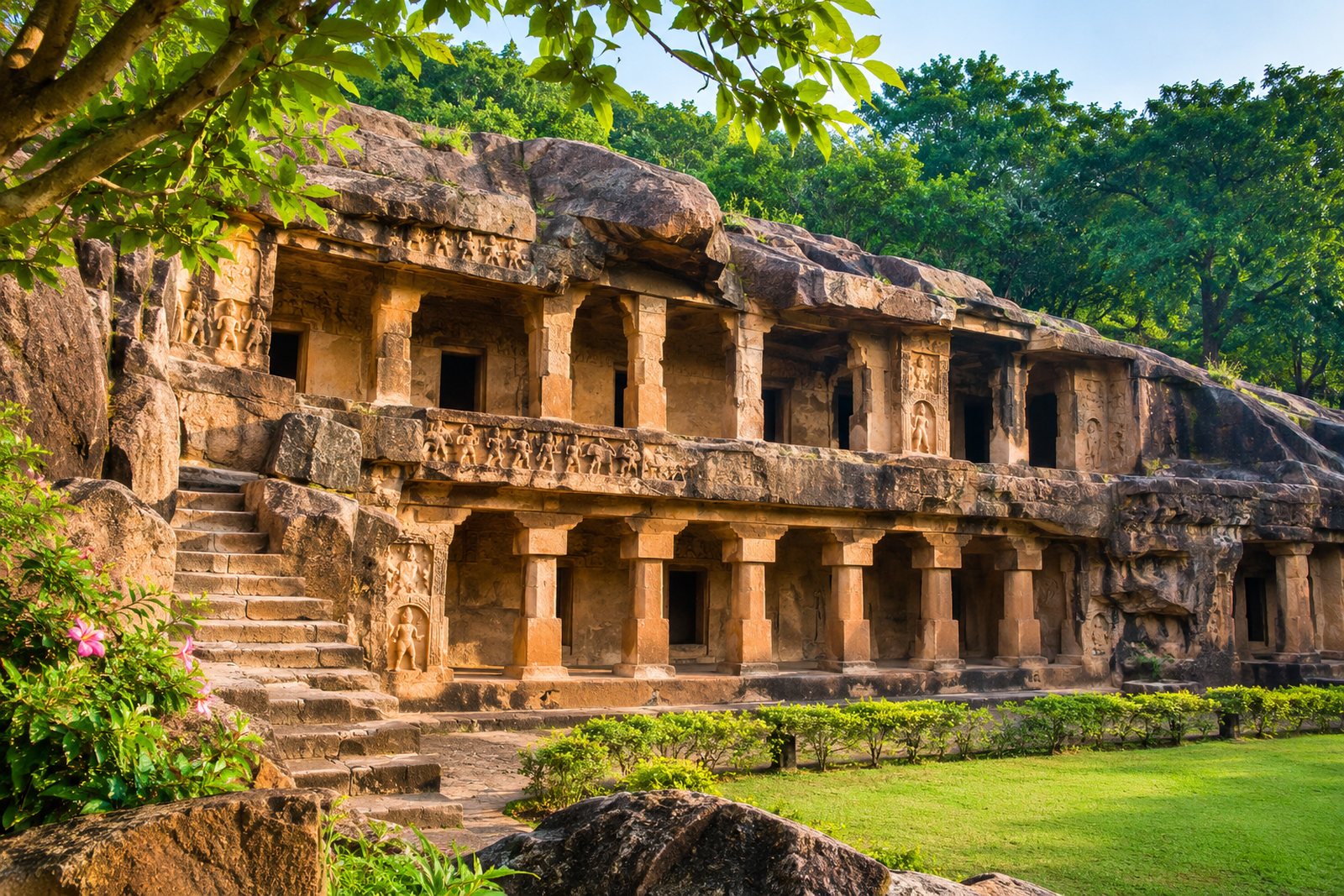
The steps are uneven, worn into shallow dips by a few thousand years of bare feet. A langur sits on the railing and watches you climb as if he owns the hill, which, frankly, he does. Then the path turns, the trees open, and in front of you is a row of small doorways cut straight into the sandstone, each one just tall enough to crawl through.
Somebody lived in these rooms. Not kings, not soldiers. Monks. This is the story of the Udayagiri and Khandagiri caves, the twin hills on the edge of Bhubaneswar, and the Kalinga king whose words are still written on the rock above one of them.
The hills before the temples
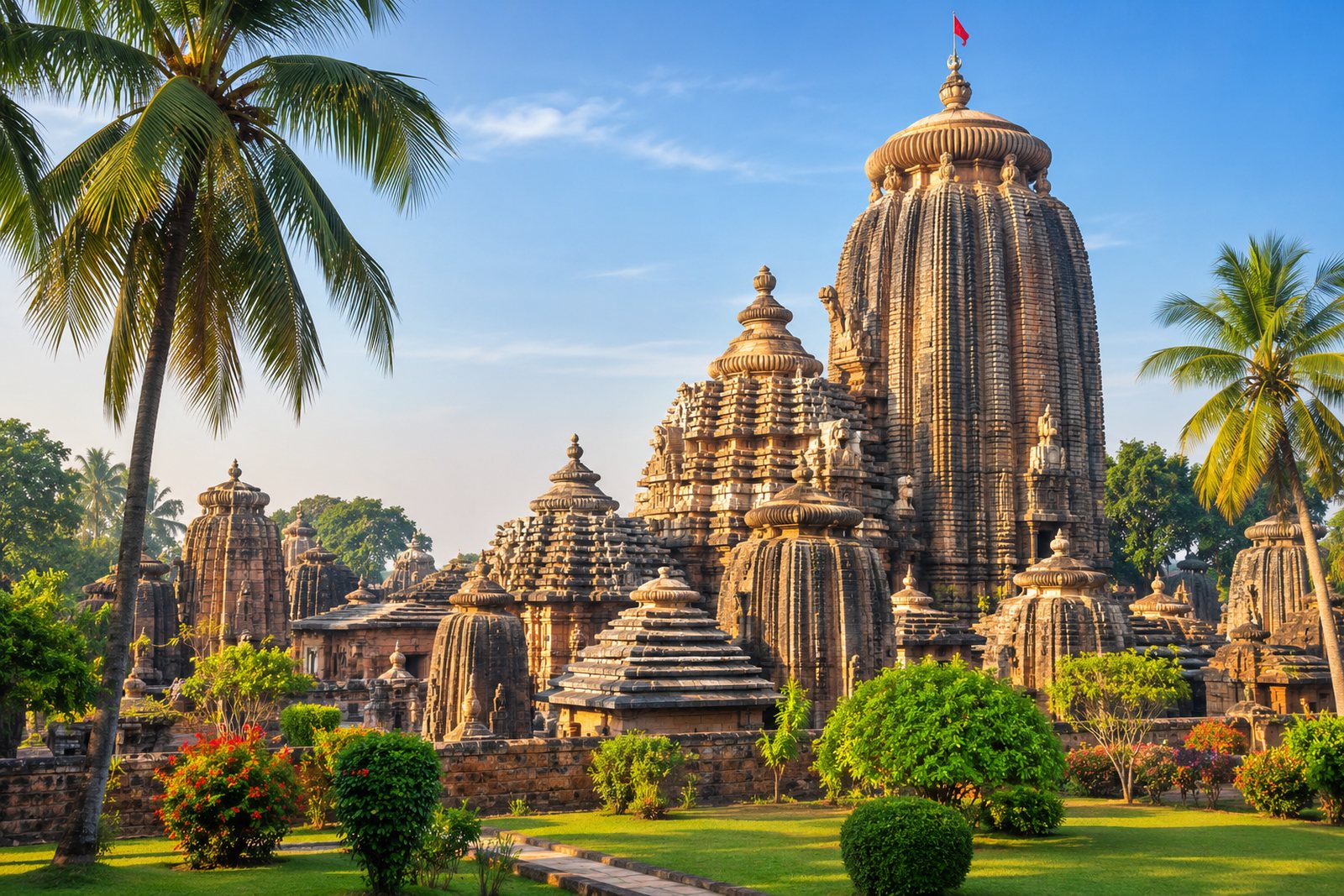
Bhubaneswar today is the temple city, the Lingaraj and the Mukteshwar and hundreds of smaller shikhars. But the caves are older than all of that. Long before the great Shiva temples of Odisha came up, these two hills were a quiet retreat for Jain monks who wanted to be away from the town and still close enough to receive food from lay followers.
Udayagiri means the hill of sunrise. Khandagiri is usually read as the broken hill. Together they hold more than thirty caves, some plain cells, some with carved verandahs and pillars. They slept on raised stone benches, some with a slightly lifted end that worked as a pillow. Many rooms are so low that a grown man cannot stand up straight inside. That was not a mistake. A monk's life was meant to be bent towards humility, or at least that is how guides like to explain it.
Who was King Kharavela?
Kalinga is the old name for this coast, and most of us know it from school for one reason: Ashoka's war, and the change of heart that followed. Dhauli, just outside the city, still has his edicts on a rock.
Kharavela came later, generally placed around the 1st century BCE, though historians argue over the exact dates. He belonged to the Mahameghavahana line and, by his own account, he was a busy ruler. He repaired the city after a storm, extended a canal, held festivals with music and dance, and led campaigns in several directions.
How do we know all this? Because he had it carved.
The Hathigumpha inscription
On Udayagiri there is a natural cavern called Hathigumpha, the elephant cave. Across its overhanging brow runs a long inscription in Brahmi script, in a Prakrit language, about seventeen lines long. It opens with a salutation to the Jain arhats and siddhas, and then walks through Kharavela's reign almost year by year.
Parts of it are worn and scholars still debate certain readings. One line that gets quoted often is usually understood to say that Kharavela brought back a Jina image which a Nanda king had once taken away from Kalinga. Think about that. A king, more than two thousand years ago, wanting to be remembered for bringing his people's sacred image home.
Did you know? The Hathigumpha inscription is one of the most important early sources for the history of Odisha. Historians lean on it for a period of Kalinga that would otherwise be almost blank.
Rani Gumpha and the carved stories
The cave most people photograph is Rani Gumpha, the Queen's Cave. It is two storeys high, with rooms around a courtyard, and along its walls run friezes of processions, musicians, women dancing, animals, a royal figure on the move. Some panels are clear, some have been softened by rain and time, and part of the fun is standing there trying to work out who is chasing whom.
Ganesh Gumpha has elephants carved near its steps. Bagh Gumpha is shaped like the open mouth of a tiger, the doorway set inside the jaws. Kids love that one. So do the adults, if they are honest.
Cross the road to Khandagiri and climb a little higher. At the top is a Jain temple from a much later period, still visited by Jain pilgrims, and on a clear day the whole of Bhubaneswar is spread out below you, temple spires poking up between the buildings.
What to pair with the caves
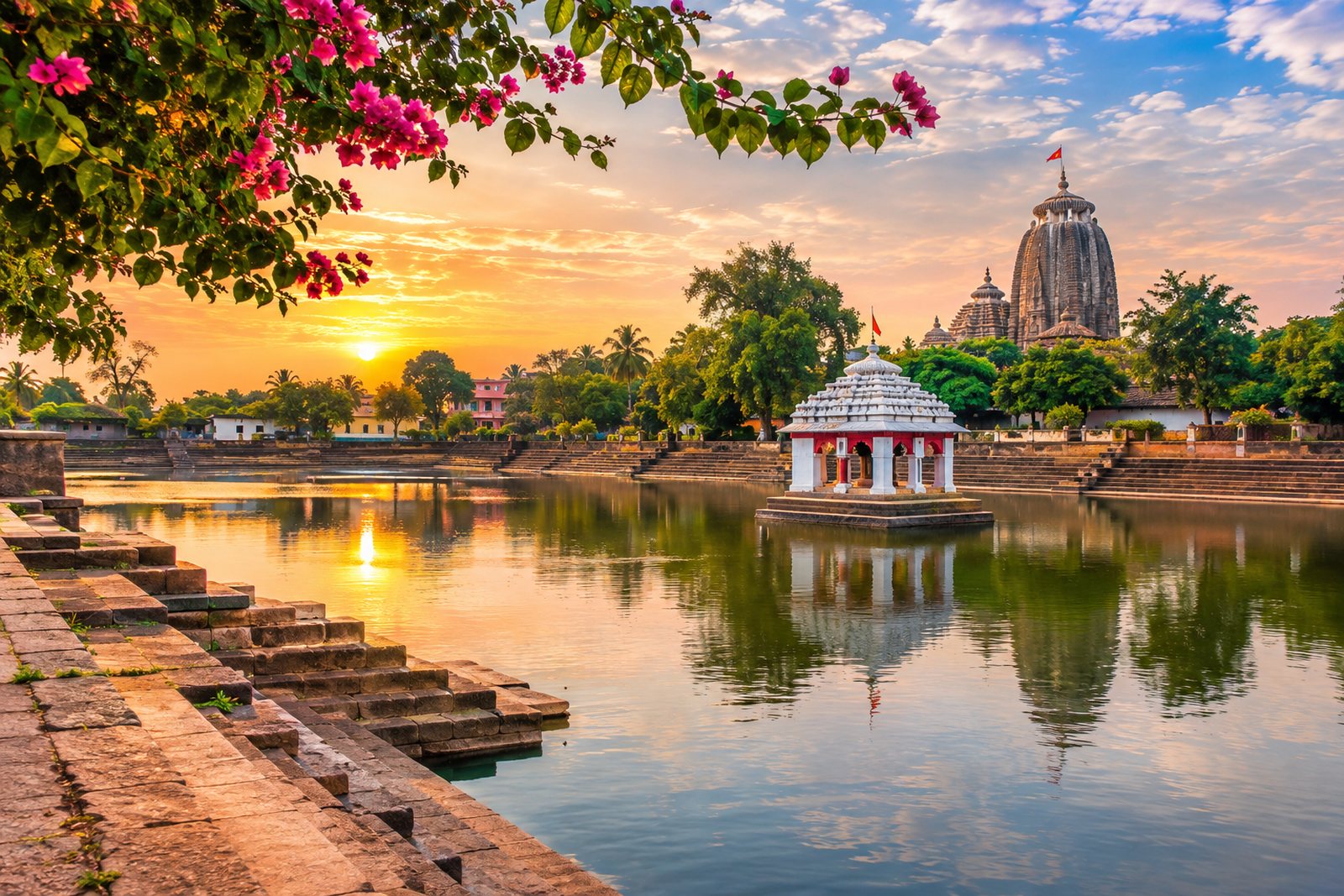
The caves fit neatly into a Bhubaneswar day with the Dhauli Peace Pagoda and Ashoka's rock edicts, and the Odisha State Tribal Museum, which is excellent and usually underrated. The old town has the Lingaraj, and if you want the story of the holy lake beside it, read our piece on the Bindu Sagar legend.
BellaSafar's Bhubaneswar Temple City package gives one full day to the temples and the next to the caves, Dhauli and the Tribal Museum, as per the package itinerary. Bhubaneswar with Chilika adds a day on the lake for birds and Kalijai island, and the Odisha Golden Triangle brings in Puri and Konark.
How to visit Udayagiri and Khandagiri today
- Where: The western edge of Bhubaneswar, roughly 6 to 8 km from the old temple area. Biju Patnaik Airport and Bhubaneswar railway station are both a short drive away.
- Best time: October to February. From March the rock heats up fast, and monsoon steps can be slippery.
- Time needed: Two to three hours for both hills.
- Entry: The site is protected by the ASI. Ticket rules and opening hours can change, so check the official ASI site or ask locally.
- Footwear: Proper shoes, not slippers. The steps are steep and uneven in places.
- Respect: Do not climb on carvings or scratch walls. The Jain temple on Khandagiri is an active place of worship, so dress modestly there.
Our tip: Keep your snacks inside the bag. The monkeys on Udayagiri are experts, and a packet of chips in an open hand will not stay yours for long.
Small rooms, long memory
The temples of Bhubaneswar were built to be seen. These caves were built so a few people could sit still in the dark and think. Somehow both have lasted. Sit on one of those stone benches for a minute, out of the sun, and you will understand why the monks chose this hill.
Planning the full circuit? Read our Puri Konark Bhubaneswar tour plan or browse all Bhubaneswar holiday packages.
Frequently asked questions
Who built the Udayagiri and Khandagiri caves?
Most of the caves are linked to King Kharavela of Kalinga and his family, who had them cut as living and meditation rooms for Jain monks. They are generally dated to around the 1st century BCE, though historians debate the exact years.
What is the Hathigumpha inscription?
It is a long inscription in Brahmi script on the brow of the Hathigumpha cave on Udayagiri. It describes King Kharavela's reign almost year by year and opens with a Jain invocation, which is why it matters so much to historians of Odisha.
How far are Udayagiri and Khandagiri caves from Bhubaneswar?
They are on the western edge of Bhubaneswar, roughly 6 to 8 km from the old temple area, so an easy half-day trip by car.
Which is the most famous cave at Udayagiri?
Rani Gumpha, the Queen's Cave, is the best known. It has two storeys and long carved friezes of processions, dancers and animals.
How much time do you need at Udayagiri and Khandagiri?
Two to three hours is enough for both hills at an easy pace. Go early in the morning, as the stone and steps heat up quickly by noon.