Thiruvalluvar Statue Kanyakumari: 133 Feet for 133 Chapters
A poet whose 1,330 couplets every Tamil child knows, and a statue whose every foot means something. The Thiruvalluvar statue story and how to visit it.
One thousand three hundred and thirty couplets. Seven words each, give or take. Most Tamil children can recite at least a few by heart before they can spell their own address, and many grown-ups still drop a kural into an argument to win it.
So when Tamil Nadu decided to honour the poet who wrote them, it made sure every foot of the monument meant something. Here is the story of the Thiruvalluvar statue in Kanyakumari, the numbers behind it, the sea that tested it, and how to visit it today.
The poet nobody can quite pin down
Thiruvalluvar is one of those figures who is everywhere and nowhere at once. His image is in schools, buses and government offices across Tamil Nadu. But almost nothing about his life is known for certain. Scholars place him anywhere from a few centuries before the common era to around the 5th century CE. Tradition holds that he was born in Mylapore in present-day Chennai and was a weaver, but these remain traditions, not records.
What survives beyond doubt is the work. The Thirukkural has 133 chapters of ten couplets each, divided into three parts: Aram, on virtue; Porul, on wealth, politics and statecraft; and Inbam, on love. It is short, practical and surprisingly modern. It talks about honesty, friendship, good government, patience, hospitality, even how to deal with an angry boss.
Why 133 feet
Here is where the design gets clever.
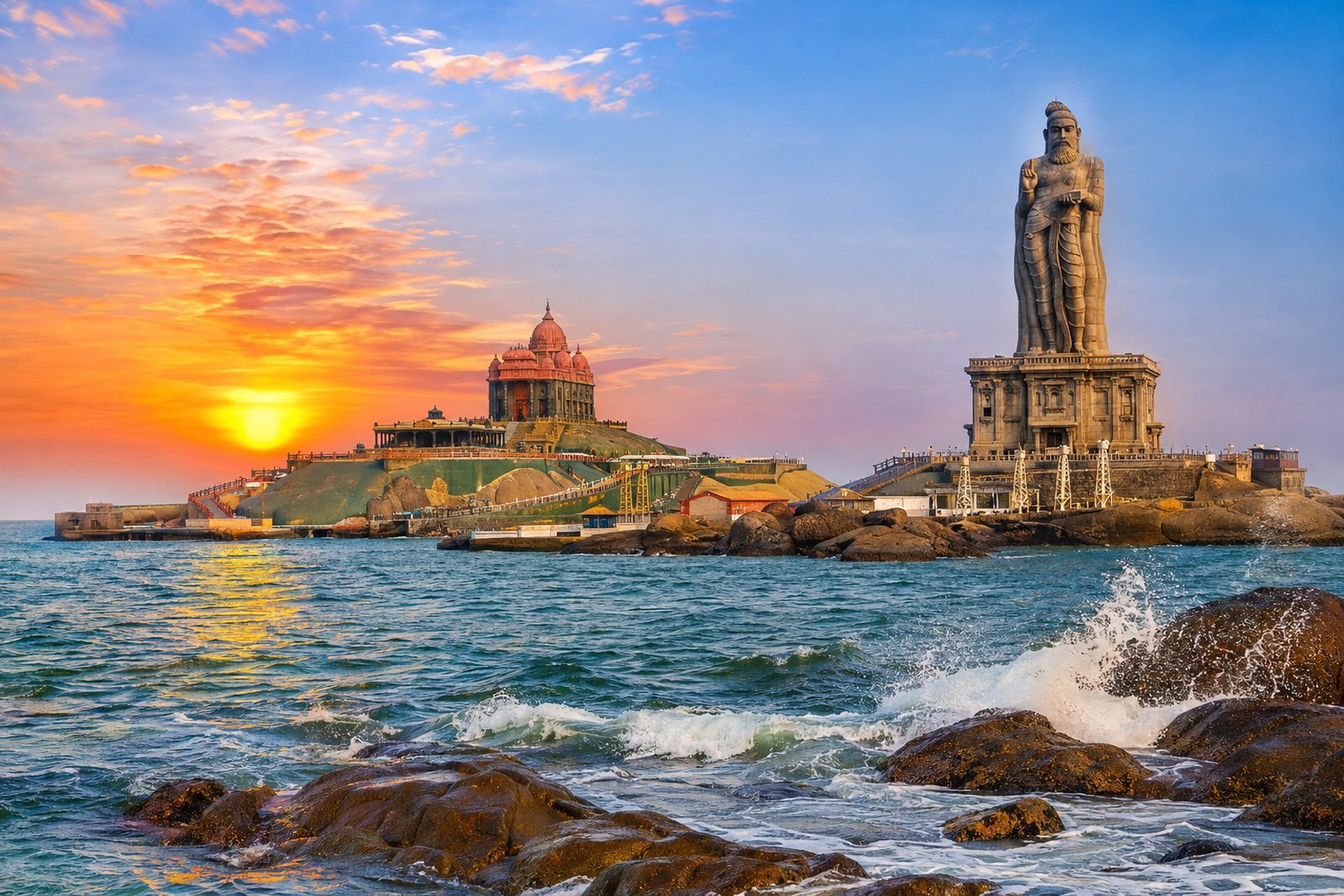
The statue stands 133 feet tall in total, one foot for each chapter of the Kural. The pedestal is 38 feet high, for the 38 chapters on virtue. The figure of the poet rises 95 feet above it, for the 70 chapters on wealth and the 25 on love. Virtue is the base, the message goes, and everything else stands on it.
The statue was designed by V. Ganapati Sthapati, a famous traditional temple architect, and built from thousands of carved granite blocks. It was inaugurated on 1 January 2000, the first day of a new millennium, on a small rock island just off the tip of India.
Did you know? When the Indian Ocean tsunami hit on 26 December 2004, waves crashed around the rock with huge force. The statue survived without serious damage, which many engineers and locals still talk about with pride.
Next to Vivekananda Rock
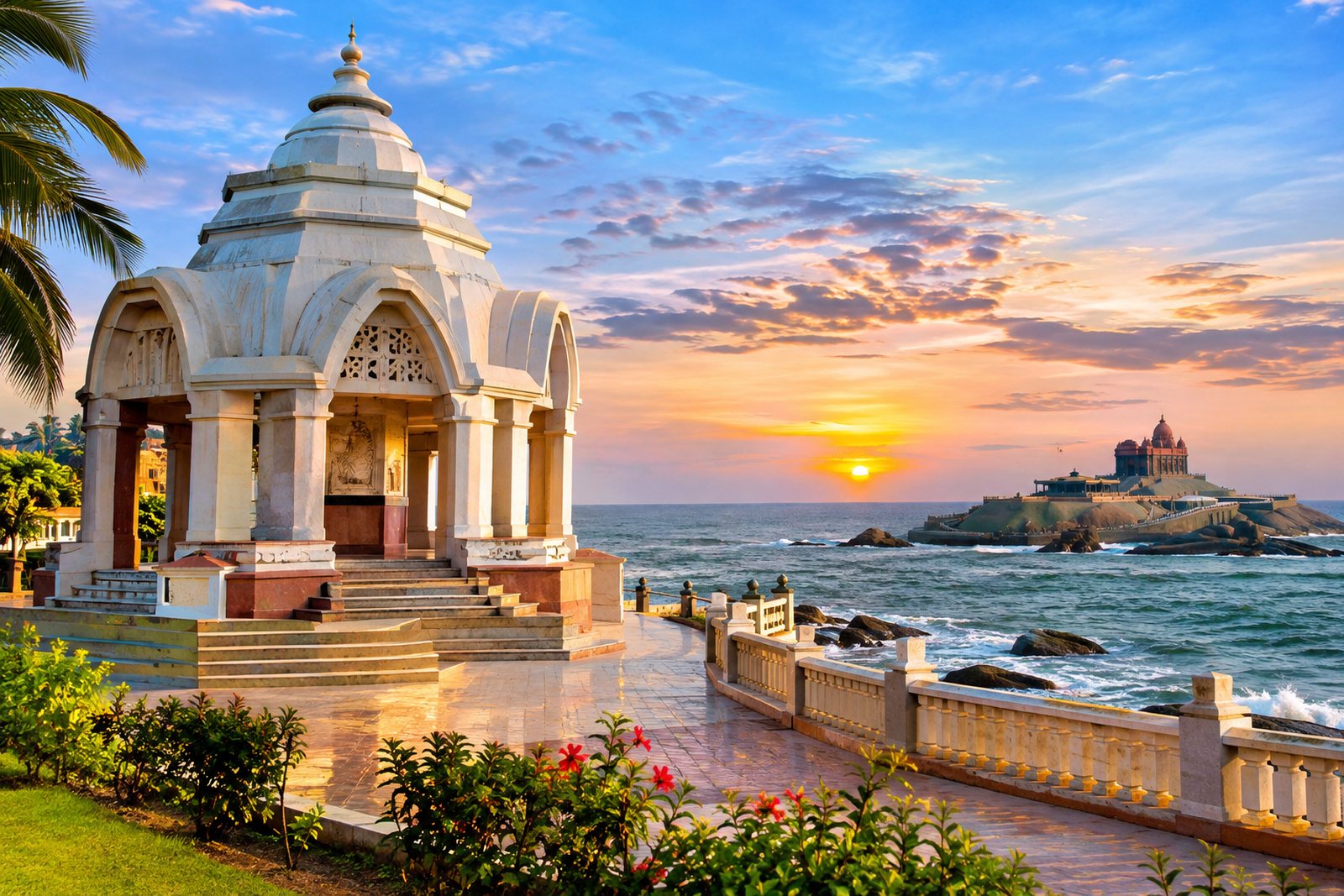
The statue shares the sea with a much older story. On the neighbouring rock, Swami Vivekananda is believed to have meditated in December 1892, before he set out on the journey that took him to Chicago. The Vivekananda Rock Memorial built there opened in 1970.
For years, visitors took the ferry to one rock and then the other, depending on sea conditions. At the end of 2024 a glass bridge was opened between the two, letting people walk across with the sea moving under their feet. Expect a lot of excited children. And some uncles who suddenly discover they are scared of heights.
Kanyakumari around the statue
The town sits at the meeting point of the Arabian Sea, the Bay of Bengal and the Indian Ocean. Sunrise over the water is the main event; people gather before dawn on the shore and on hotel terraces. Sunset is good too. The Kumari Amman temple, the Gandhi Mandapam (read our Gandhi Mandapam story) and the beach stalls with shell necklaces and roasted corn make up the rest of a classic day.
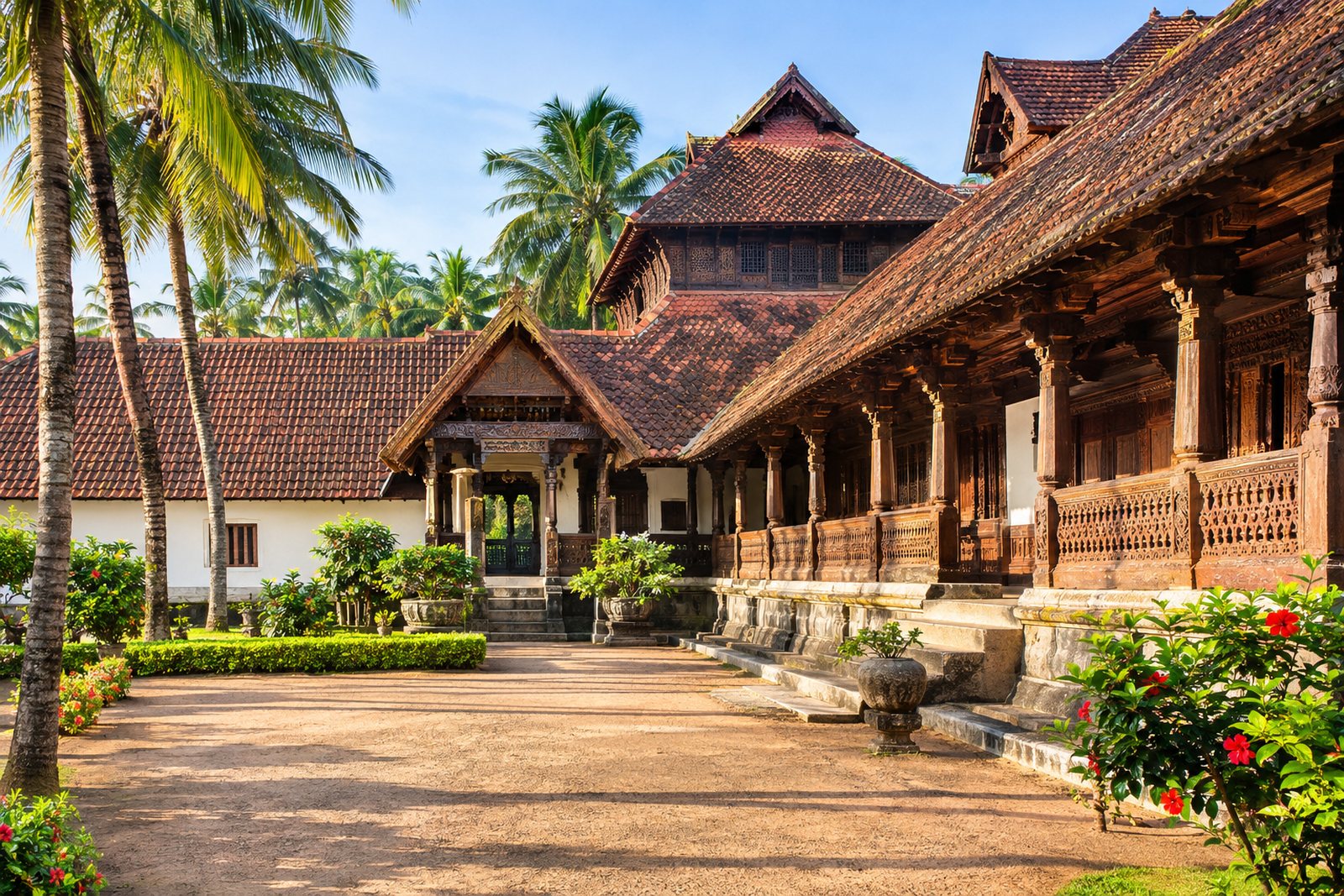
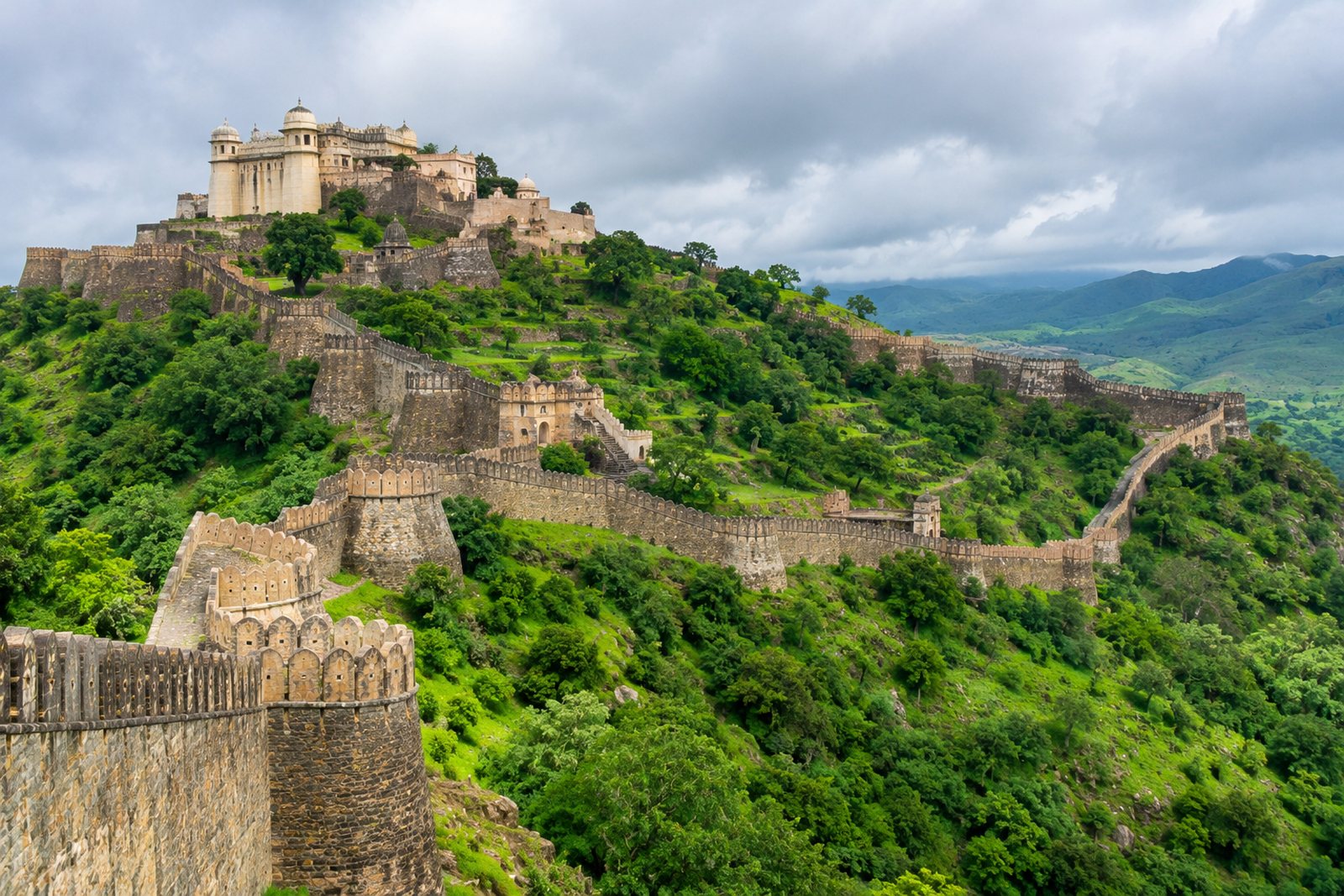
Further out, Suchindram's temple, the old Padmanabhapuram Palace across the Kerala border and the seaside Vattakottai fort make good half-day trips.
BellaSafar's Kanyakumari Getaway gives two days here, one for Vivekananda Rock, the statue and the sunset point, and one for Padmanabhapuram, Suchindram and Vattakottai, as per the package itinerary. Madurai Rameshwaram Kanyakumari ends with two nights here after the temple towns, and Kerala & Kanyakumari Grand finishes its Kerala loop with a night at the tip.
How to visit the Thiruvalluvar statue today
- Getting there: Thiruvananthapuram airport is roughly 90 to 100 km away, around two to two and a half hours by road. Kanyakumari has its own railway station.
- Ferry: A state-run ferry leaves from the Kanyakumari jetty. Queues can be long in season and on weekends.
- Sea conditions: Services can stop in rough weather, and the statue is closed at times for maintenance. Check locally on the day.
- Best time: October to March. Summers are hot, and the monsoon can make the sea choppy.
- What to carry: Water, a cap and sunscreen. There is little shade on the rocks.
- Combine with: Sunrise, Kumari Amman temple and Gandhi Mandapam on the same day.
Our tip: Take the first ferry of the morning. The light is soft, the queue is shortest, and you can stand on the glass bridge before it fills up.
A poet facing the ocean
There is something fitting about it. A man whose words have travelled further than he ever did, standing at the very end of the land, looking out at three seas. Read a kural or two before you go. It makes the statue feel less like a monument and more like a person.
Coming from Kerala? Read our Trivandrum to Kanyakumari day trip or browse all Kanyakumari holiday packages.
Frequently asked questions
Why is the Thiruvalluvar statue 133 feet tall?
The height stands for the 133 chapters of the Thirukkural. The 38-foot pedestal represents the 38 chapters on virtue, and the 95-foot statue represents the 95 chapters on wealth and love.
When was the Thiruvalluvar statue built?
The statue was inaugurated on 1 January 2000. It was designed by the noted temple architect and sculptor V. Ganapati Sthapati.
How do you reach the Thiruvalluvar statue?
A state-run ferry from the Kanyakumari jetty goes to the Vivekananda Rock and the Thiruvalluvar statue. A glass bridge opened at the end of 2024 links the two rocks.
Who was Thiruvalluvar?
Thiruvalluvar was the Tamil poet and philosopher who wrote the Thirukkural, 1,330 couplets on virtue, wealth and love. Scholars differ widely on when he lived, and little is known for certain about his life.
Is the Thiruvalluvar statue open every day?
Ferry services and access to the statue depend on sea conditions and maintenance work, and the statue is closed at times. Check locally before you plan the trip.