Things to Do in Mandu: Monsoon Ruins and Baobab Trees
A ship-shaped palace between two lakes, a queen's pavilion over the Narmada plains and African baobabs by the road. What to do in Mandu, MP.
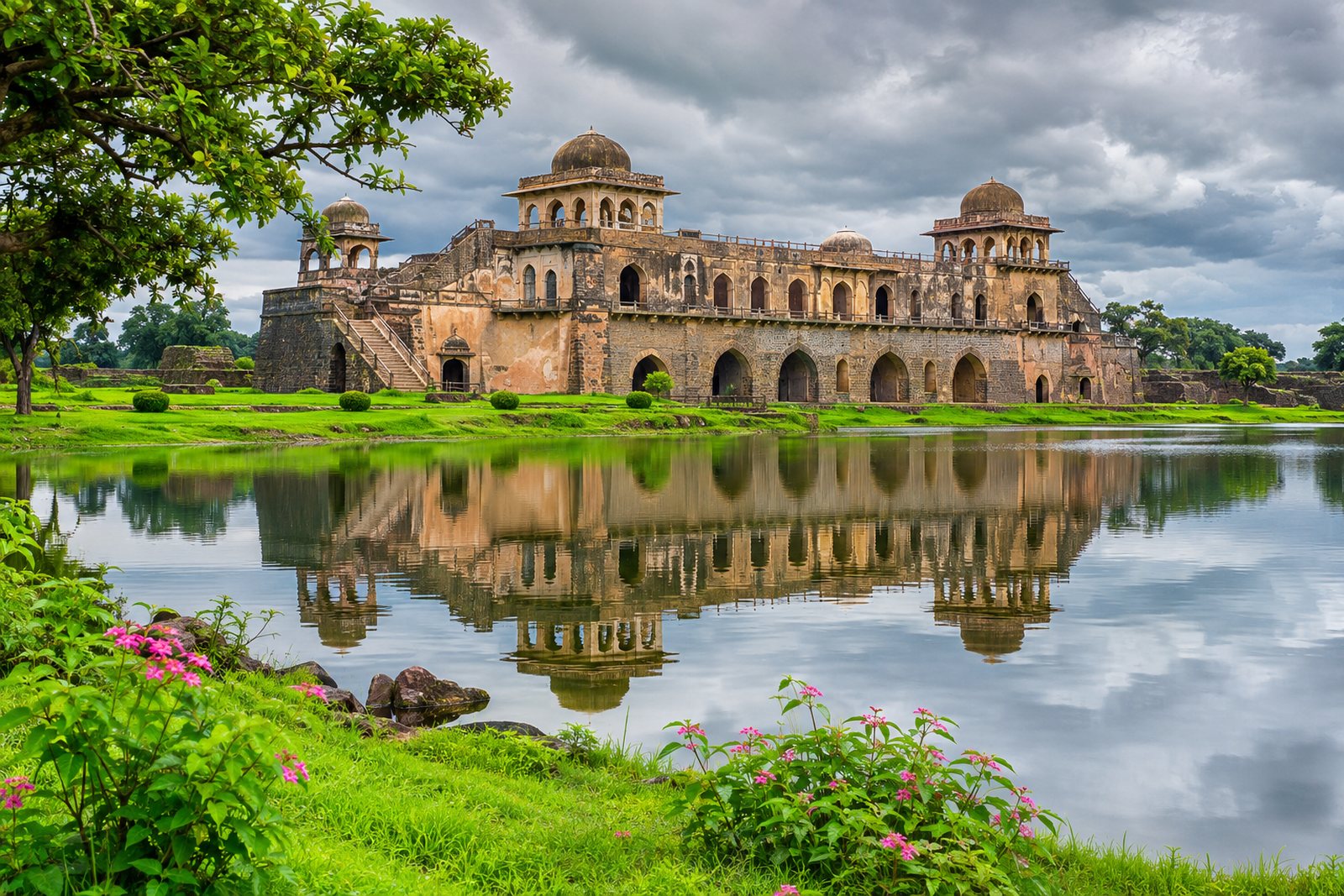
The first raindrops hit the plateau, and within a week Mandu changes colour. Dry yellow grass turns a green so bright it almost hurts. Water fills the old tanks. The arches of a palace built five hundred years ago suddenly have a perfect twin, upside down, in the lake below. Locals have a phrase for it: Mandu in the rains is a different place.
This is a ground-level guide to things to do in Mandu, the old Malwa capital on a plateau above the Narmada valley in Madhya Pradesh, with the ruins grouped the way you will actually visit them.
First, a little Mandu backstory
Mandu, also called Mandav, sits on a plateau cut off by deep ravines, which made it a natural fortress. It became the capital of the Malwa Sultanate in the 15th century, and its rulers filled it with palaces, mosques, tombs, tanks and pavilions. Later it passed to the Mughals.
The ruins spread over a large area, so think of Mandu as several clusters rather than one site. A car and a full day, or better two, make all the difference.
The Royal Enclave: Jahaz Mahal and Hindola Mahal
Start at the Royal Enclave, the most famous group.
Jahaz Mahal, the Ship Palace, is long and narrow, built between two lakes, Munj Talao and Kapur Talao. When the lakes are full, it really does look like a ship at anchor. Walk up to the terrace and look out at the water and the pavilions. In the monsoon the reflection is the photo.
Next door is Hindola Mahal, the Swinging Palace, named for its sloping side walls that make it look as if it is swaying. It is one of those buildings that makes you tilt your head without meaning to.
Look around the enclave for old step-wells, baths and water channels. The builders of Mandu were obsessed with water, and you can see why: on a dry plateau, every drop counted.
Jami Masjid and Hoshang Shah's Tomb
In the village centre stand two of Mandu's most important monuments.
The Jami Masjid is a large mosque with a grand courtyard and rows of arches and domes. It is calm and symmetrical; walk slowly and let your eyes follow the lines of arches.
Behind it is Hoshang Shah's Tomb, built for one of the early Malwa sultans.
Did you know? Hoshang Shah's Tomb is often described as one of the earliest marble structures in India, and an inscription there is said to record that architects of Shah Jahan's time visited it. Many guides link it to the Taj Mahal for that reason.
Respect the space: dress modestly and remove footwear where asked.
Roopmati's Pavilion and Baz Bahadur's Palace
At the southern edge of the plateau is the Mandu every romantic comes for.
Baz Bahadur's Palace belonged to the last independent ruler of Malwa in the 16th century. Above it, on the edge of a cliff, is Rani Roopmati's Pavilion.
The story, as local legend and poetry tell it: Baz Bahadur fell in love with Roopmati, a singer, and she agreed to come to Mandu only if she could see the Narmada every day from her home. The pavilion was her window to the river. When Mughal armies came, the story ends in tragedy. Historians treat many details as folklore, but standing in that pavilion at sunset, looking out over the plains, you understand why the story has lasted.
Below it is Rewa Kund, a tank said to have supplied water to the pavilion.
The baobab trees on the roadside
Driving around Mandu, you will notice strange fat-trunked trees with thin branches, looking like someone planted them upside down. These are baobabs, native to Africa.
They are believed to have arrived in this area centuries ago through trade and travel links with Africa and the Arab world. Locals call the fruit khurasani imli, and during the season you will see vendors by the road selling the hard, velvety pods. Try the sour, chalky pulp inside. It is unlike anything else.
Our tip: Ask your driver to stop at one of the bigger baobabs for a family photo with everyone holding hands round the trunk. You may need more family than you brought.
Nilkanth, Rupayan and quieter corners
On the second day, add:
- Nilkanth: A Shiva shrine on a slope with water flowing through a small channel, built in a Mughal-era structure. A peaceful stop for devotees.
- Darya Khan's Tomb and the Hathi Mahal: Lesser-visited ruins with fewer crowds.
- Village lanes: Sit for chai, watch the slow pace of life on the plateau.
What to eat in Mandu
Food here is simple Malwa fare. Look for dal bafla (like Rajasthan's dal baati, but boiled before baking), poha-jalebi for breakfast and hot bhutte (corn) in the monsoon. Indore, a couple of hours away, is where you go for the big food feast.
Planning Mandu
Mandu is about 95 km from Indore, usually around 2.5 hours by road, and is best combined with Maheshwar and Omkareshwar.
The Malwa Heritage Trail gives you two nights in Mandu with two sightseeing days, plus Maheshwar, Omkareshwar and Indore, as per the package itinerary. The Grand Madhya Pradesh also spends two nights here and adds Bhopal and Sanchi. Short on time? Heart of Madhya Pradesh covers Mandu in one night on a wider MP circuit.
- Best time: July to September for green monsoon ruins; October to February for cool, dry sightseeing.
- Wear: Good grip shoes; old stone gets slippery in rain.
- Entry and timings: ASI monuments have their own rules; check locally or on the official site.
Mandu is a place you feel rather than tick off. Rain on old stone, a queen's window over the river, a baobab nobody expected. Come slowly.
Plan the full circuit with our Madhya Pradesh tour guide or browse all Mandu holiday packages.
Frequently asked questions
Why is Mandu best in the monsoon?
After the rains the plateau turns green, the lakes and tanks fill up and the ruins are reflected in water. Mist often drifts over the ravines. Paths can be slippery, so wear good shoes.
Who were Baz Bahadur and Rani Roopmati?
Baz Bahadur was the last independent ruler of Malwa in the 16th century. Roopmati is remembered as a singer he loved. Their romance is told in local legend and poetry, and historians treat many details as folklore.
Why are there baobab trees in Mandu?
Baobabs are native to Africa. They are believed to have been brought to the Mandu area centuries ago through trade and travel links, and locals call the fruit khurasani imli.
How far is Mandu from Indore?
Mandu is around 95 km from Indore, usually around 2.5 hours by road.
How many days do I need in Mandu?
One full day covers the main groups of monuments. Two days lets you see them at a relaxed pace, including Roopmati's Pavilion at sunset and Nilkanth.