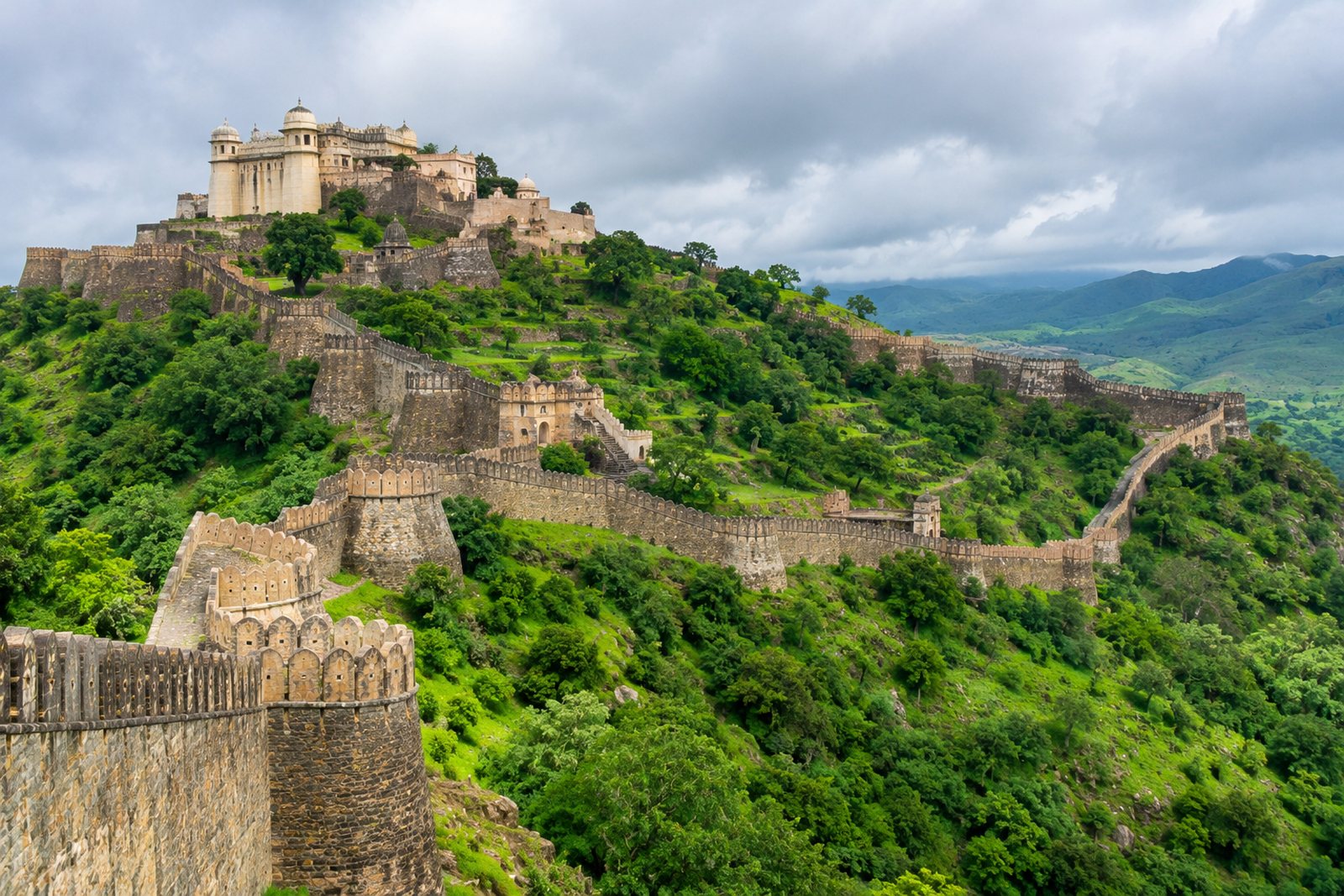
Ramtek Legend: Where Lord Ram Rested on the Way South
Tradition says Ram stayed on Ramtek hill during his exile, and many scholars link Kalidas's Meghaduta to the same hill. The Ramtek legend, its history and how to visit from Nagpur.
A cloud once carried a love letter from this hill.
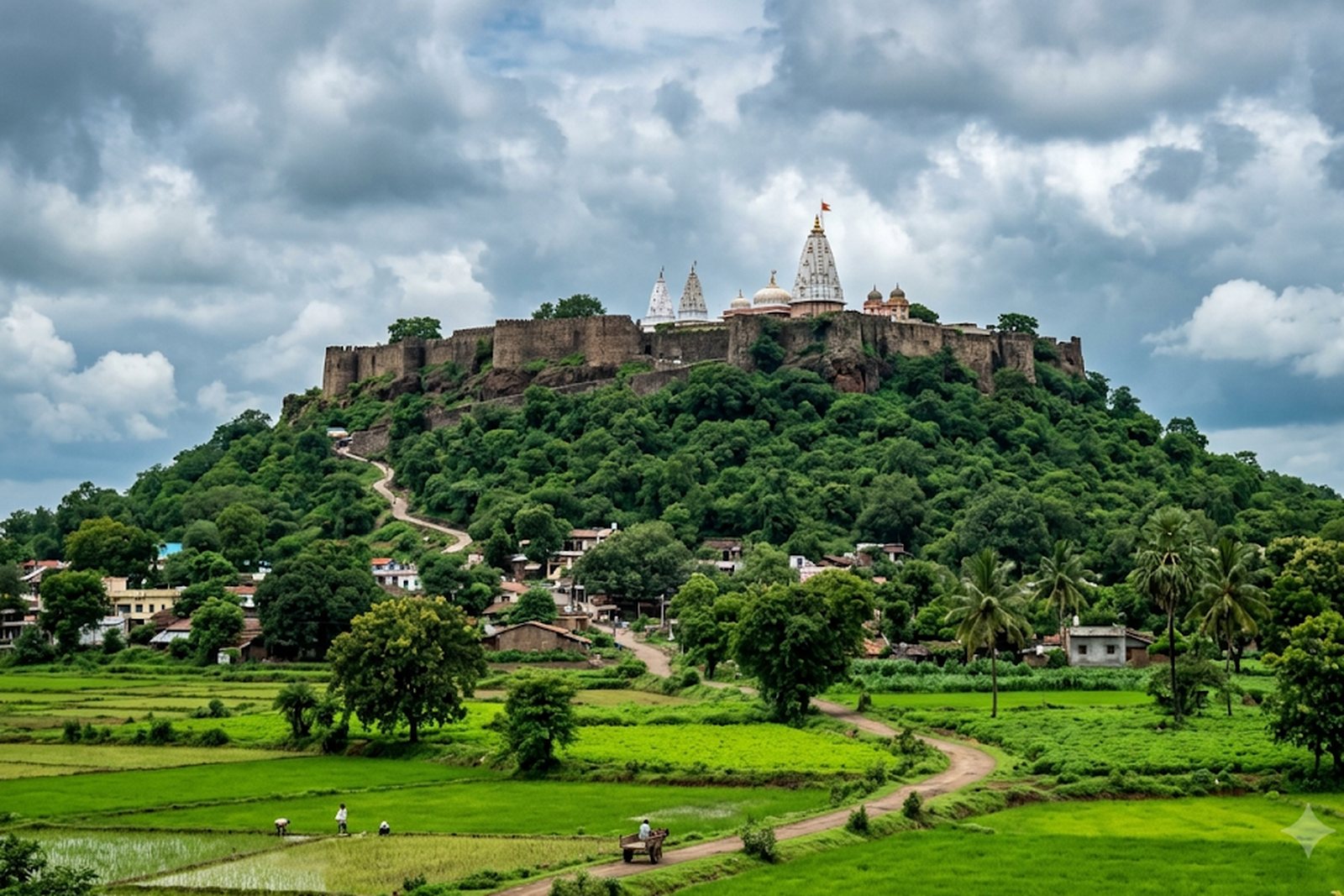
At least, that is what a great many scholars believe. Long before anyone wrote down the travel tips, a poet sat with the idea of an exiled lover on a hilltop in central India, begging a passing monsoon cloud to fly north with a message for his wife. The hill in that poem was called Ramagiri, Ram's hill. Many people think it is the one you can see from the Nagpur highway today, with its fort walls and white spires.
This is the Ramtek legend: the tradition of Ram resting here on his long walk south, the Kalidas connection, what history adds, and how to visit the hill from Nagpur.
The legend: Ram's vow on the hill
The Ramayan describes Ram, Sita and Lakshman crossing many forests during their fourteen years of exile, moving steadily south towards the Godavari and beyond. Local tradition says Ramtek was one of their halts.
Here, the story goes, Ram met the sage Agastya and other rishis living in the forest. They told him how the rakshasas troubled them, disturbing their yajnas and frightening the villages. Ram listened, and on this hill he made a promise. He would rid the land of that fear.
That promise, tek in the local language, a resolve, is said to have given the hill its name: Ram-tek, the hill of Ram's vow. Some tellings say Ram stayed here during the rainy months, waiting out the monsoon before moving on. Others point to rocks and small kunds on the hill and link each to a moment from the exile.
As with most places on the Ram Van Gaman route, the details are folk tradition rather than something written in the Valmiki Ramayan itself. What is undeniable is how strongly people here feel it.
The Kalidas connection: a cloud as messenger
Now the second story, which is literary rather than religious.
Kalidas, the great Sanskrit poet, wrote the Meghaduta, the Cloud Messenger. In it, a yaksha banished for a year by his master lives on a hill called Ramagiri. When the monsoon clouds arrive, he cannot bear the separation any longer and asks a cloud to carry his message to his wife in the Himalayan city of Alaka. Then he describes the whole route the cloud must fly, rivers, cities and mountains along the way.
Many scholars identify Ramagiri with Ramtek. Others suggest different hills in central India; the debate is old and polite. Maharashtra has honoured the link with a Kalidas memorial near the hill, and a Sanskrit university in the area also carries the poet's name.
So if you climb Ramtek in July and watch the clouds roll in from the south, you are, quite possibly, looking at the opening scene of one of India's most famous poems.
What history says about Ramtek
The hill has a long human story. Archaeologists link some of the oldest temples on and around it to the Vakataka period, roughly the 4th to 5th centuries CE, when this region was an important political centre. Nearby Mansar has excavated remains from that era too.
The fort and the main Ram temple complex you see today were largely rebuilt in the 18th century under the Bhonsle rulers of Nagpur, with thick stone walls, gateways and a cluster of shrines on the hilltop. There is also an old Jain temple complex at the foot of the hill, visited by many pilgrims.
Did you know? Kalidas's yaksha does not just send a message. He gives the cloud a full travel itinerary, rivers to drink from, cities to admire, peaks to rest on. It is often called one of the earliest travel poems in Indian literature, written from a hill that may be Ramtek.
Visiting Ramtek today: safety, timings, respect
- Where: around 50 km north-east of Nagpur, roughly an hour and a half by road.
- Getting up: a road goes close to the hilltop; there are also steps for those who want to climb. Inside the fort, floors are uneven stone.
- Season: October to February is comfortable. Summers in Vidarbha are fiercely hot. The monsoon makes the hill green and the Kalidas link feel real, but steps get slippery.
- Timings: temple timings vary and change on festival days such as Ram Navami, when crowds are large. Check locally.
- Monkeys: there are many. Keep food and bags closed and do not feed them.
- Respect: footwear off at temple entrances, modest dress, and no climbing on fort walls.
- Combine with: Khindsi lake nearby, and in Nagpur, Deekshabhoomi and the Zero Mile marker.
Our tip: Reach Ramtek by mid-morning, finish the temple and the fort walls, then drive down to Khindsi lake for a quiet lunch break by the water before heading back to Nagpur.
BellaSafar's Nagpur Getaway gives you two nights in Nagpur with a Ramtek day built in, as per the package itinerary, along with the city's main sights. Our Nagpur trip plan has more on Deekshabhoomi and what else to see.
A hill of two exiles
Ramtek holds two exiles at once. A prince walking south through the forest, keeping a promise, and a lonely yaksha watching the sky for a cloud to carry his words. One story is faith, the other is poetry. Sitting on those old fort walls in the late afternoon, you do not really have to choose.
Planning the trip? Browse all Nagpur holiday packages.
Frequently asked questions
What is the Ramtek legend?
Tradition says Lord Ram stayed on Ramtek hill during his exile, met sages here, and took a vow to rid the forests of rakshasas. The name is often explained as Ram plus tek, a vow or resolve.
What is the connection between Ramtek and Kalidas?
In Kalidas's poem Meghaduta, an exiled yaksha sends a message to his wife through a cloud from a hill called Ramagiri. Many scholars identify Ramagiri with Ramtek, and a memorial to Kalidas stands near the hill.
Who built the Ramtek temple?
The present fort temple complex was largely rebuilt in the 18th century under the Bhonsle rulers of Nagpur. Some older structures on and around the hill are linked by archaeologists to much earlier periods.
How far is Ramtek from Nagpur?
Ramtek is around 50 km north-east of Nagpur, roughly an hour and a half by road, so it makes an easy half-day or day trip.
Can senior citizens visit Ramtek temple?
Yes. A road goes up close to the temple, though there are steps and uneven stone floors inside the fort. Go in the cooler morning hours and wear comfortable footwear.