Munnar in Monsoon: Mist, Waterfalls and Ayurveda Season
From June to August, rain fills every waterfall around Munnar and Kerala calls it Ayurveda season. What a monsoon trip really feels like.
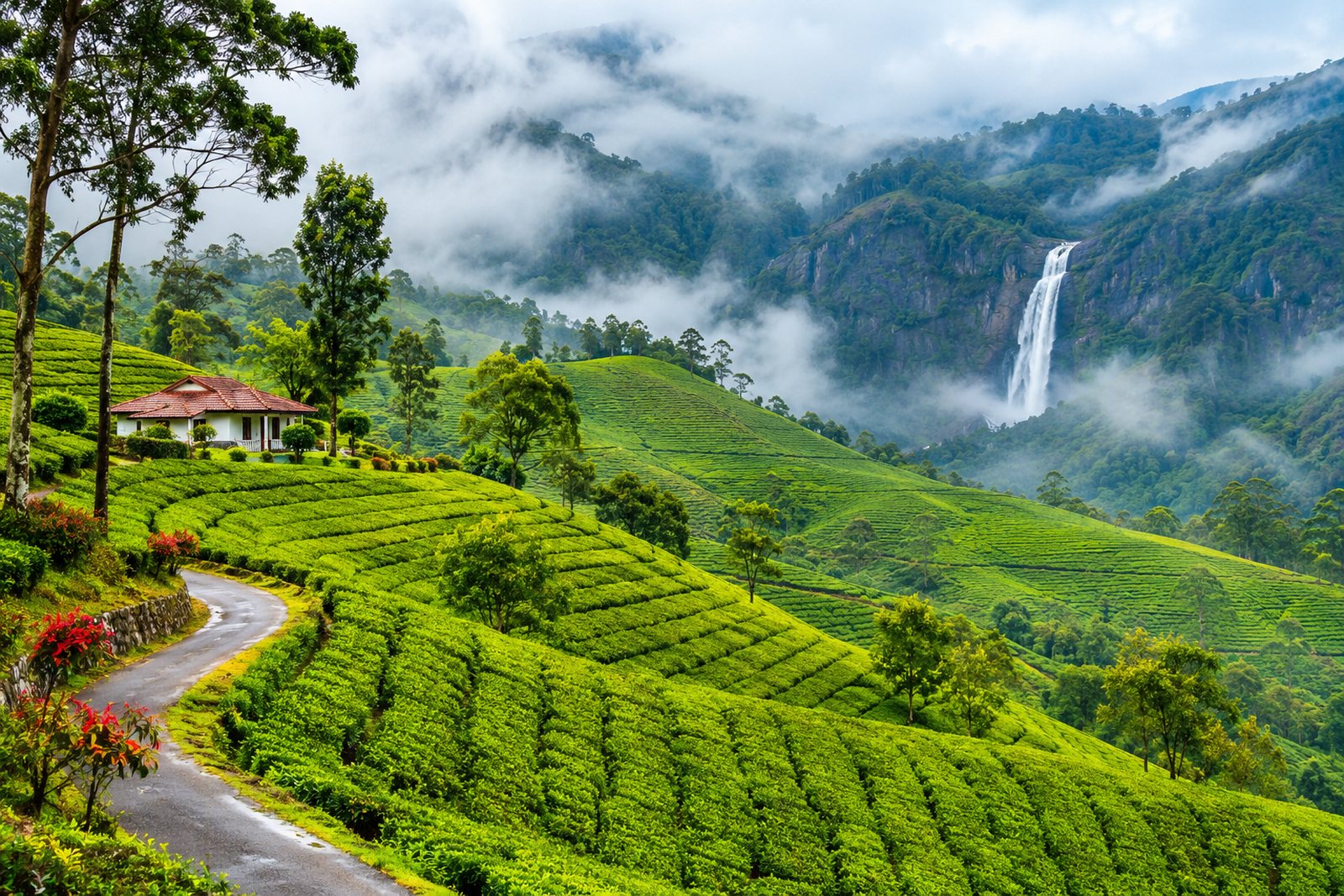
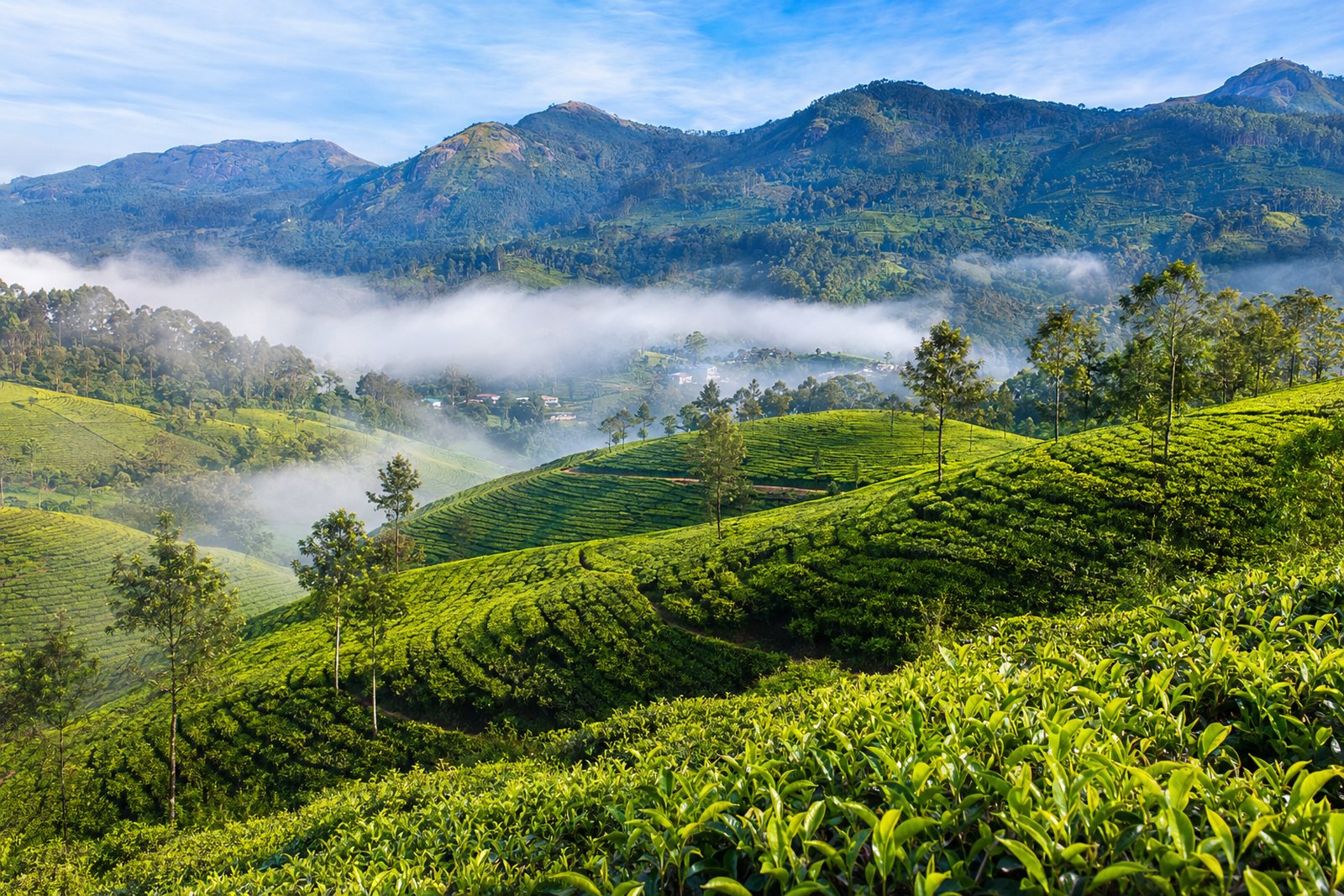
Here is how a monsoon morning in Munnar starts. You wake up, open the curtain, and there is nothing. No hills, no tea, no sky. Just white. You make chai, and while the kettle hisses the cloud slides away like someone pulling a sheet off old furniture, and suddenly there are a hundred shades of green out there, every slope combed into neat rows of tea, every rock face running with silver water.
Ten minutes later it is raining again.
That is Munnar in monsoon: moody, wet, quiet and very, very green. Most people come in winter. This guide is for the ones curious about the other season: what June to August is really like, where the waterfalls are, why Kerala calls it Ayurveda season, and what to be careful about.
When is monsoon in Munnar?
The south-west monsoon usually reaches Kerala in early June and stays heavy through June, July and August, easing in September. Munnar, high in the Western Ghats in Idukki district, gets a good share of it. Some days it drizzles on and off. Some days it pours without stopping.
Patterns change every year, and so do the warnings. Before you travel, and every morning while you are there, glance at the Kerala and district weather alerts. Locals do.
The waterfalls are the real show
In winter many of Munnar's falls are thin silver threads. In the monsoon they wake up.
On the drive up from Kochi, the road passes Cheeyappara and Valara, around the Adimali stretch, where water comes crashing down right beside the highway. Every bus and car stops for photos. Closer to Munnar, Attukad falls through a green valley and Lakkam is a family favourite because it is easy to reach.
Enjoy them from where you are meant to. Rocks near falls are slippery in the rain, currents are strong, and the safest photo is the one taken from behind the railing.
Did you know? Munnar is also famous for the neelakurinji, a shrub that turns whole hillsides blue when it blooms, roughly once in twelve years. It flowers after the monsoon rather than during it, so you need luck with the year as well as the month.
Why monsoon is called Ayurveda season
Kerala's Ayurveda tradition has a soft spot for the rains. The Malayalam month of Karkidakam, falling around mid-July to mid-August, is traditionally seen as the time when the body responds best to rejuvenation. The air is cool and moist and the oils soak in, or so the old texts and vaidyas say.
Many Ayurveda centres across Kerala, including around Munnar, offer monsoon programmes then, from simple oil massages to longer therapy plans. You will also find Karkidaka kanji, a medicinal rice porridge with herbs, on many home tables.
A word of care: treatments should be guided by a qualified practitioner, especially for seniors and anyone with health conditions. Ask questions before you book anything.
What else to do on a rainy day
Rain does not mean sitting in the room all day. A few things that work well:
- A tea museum or factory visit to see how leaf becomes the chai in your cup.
- A slow drive through the plantations, windows down, whenever the rain pauses.
- Mattupetty, Echo Point and Kundala lake, which look lovely wrapped in cloud.
- Top Station, if the sky is kind. On a misty day you may see only white, so keep it flexible.
- A long lunch of appam and stew, or puttu and kadala curry, with a second round of coffee.
The honest side of monsoon travel
We would rather you go prepared than come back unhappy.
- Roads slow down. The ghat roads are winding, and in rain they need patience. Avoid driving after dark.
- Landslides happen in heavy years. The Idukki hills have seen serious landslides in some monsoons. Follow official alerts and change plans if there are warnings.
- Leeches love plantations. A pinch of salt or leech socks help. Kids find them hilarious until one finds them.
- Views come and go. Plan for mist. If a viewpoint is clouded, come back later rather than waiting in the rain.
- It is quieter, which is lovely. Fewer crowds, softer light, and the hills nearly to yourself.
Planning a monsoon trip to Munnar
Kochi is the gateway, with the airport and railway station, and the drive up takes around four to five hours depending on weather and stops.
For a pure Munnar break, the Munnar Escape gives you three nights in the hills with local sightseeing and a Top Station, Kundala and Echo Point day, as per the package itinerary. Three nights is the sweet spot in monsoon, because it leaves spare time if one day is a washout.
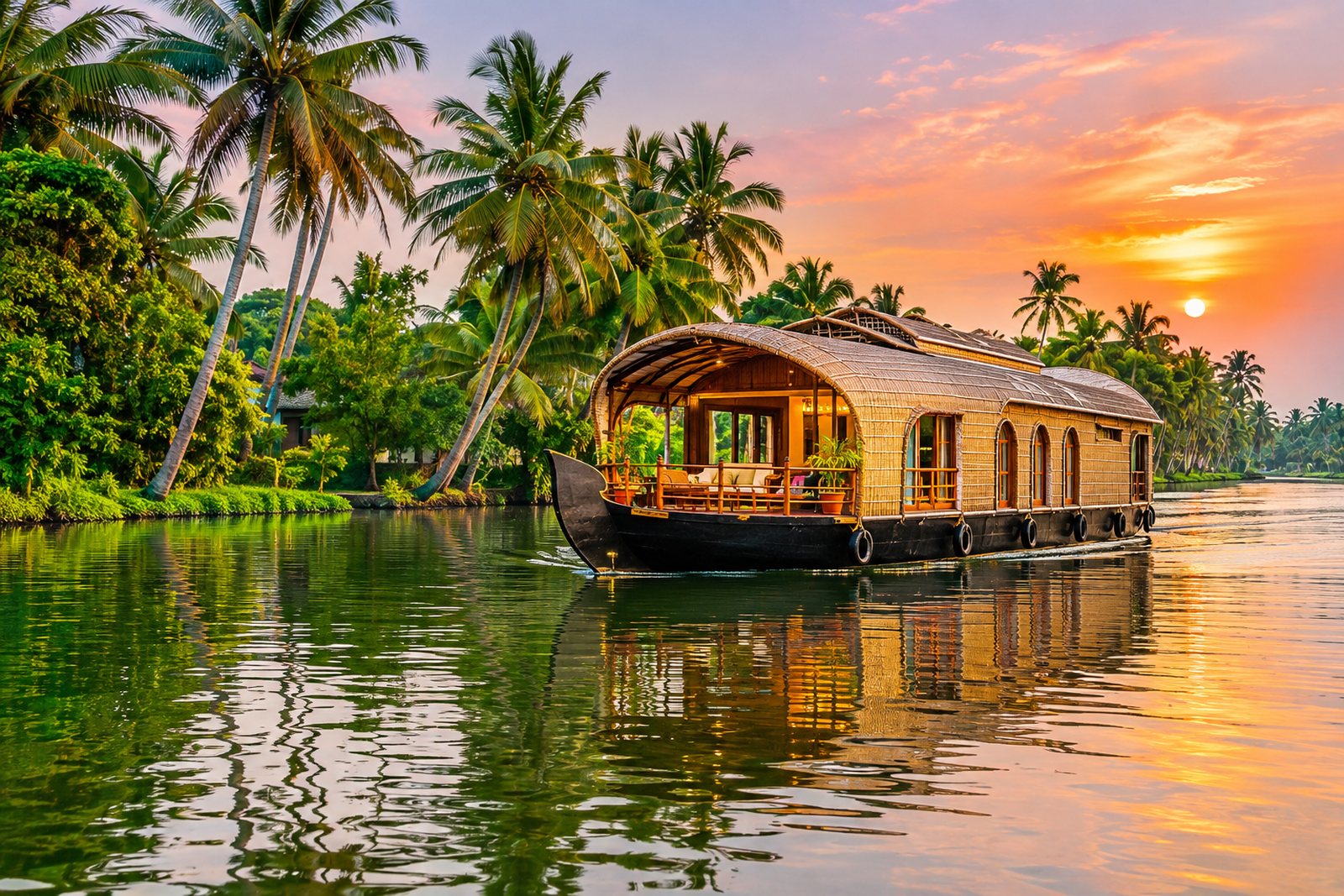
If you want the backwaters too, Munnar & Houseboat Budget splits two nights in Munnar with a night in Alleppey. And Kerala Delight adds Thekkady's spice plantations and Periyar before ending in Alleppey.
Our tip: Keep one afternoon completely unplanned. In monsoon Munnar, the best hour of the trip is usually the one when the rain stops without warning and the whole valley appears at once.
Rain as the main attraction
Some places you visit in spite of the rain. Munnar is one of the few you might visit because of it. Go slow, carry a good umbrella, and let the mist decide the day's plan.
Read our Kerala itinerary guide or browse all Munnar holiday packages.
Frequently asked questions
Is it good to visit Munnar in monsoon?
Yes, if you enjoy rain, mist and full waterfalls and do not mind slower roads. It is quieter than winter. Avoid days with heavy-rain warnings and keep your plans flexible.
Which waterfalls are best in Munnar during monsoon?
Attukad and Lakkam are popular near Munnar, and Cheeyappara and Valara are on the Kochi to Munnar road around Adimali. All are at their fullest in the rains, but stay behind barriers and away from slippery rocks.
Why is monsoon called Ayurveda season in Kerala?
Traditional Ayurveda holds that the cool, moist monsoon, especially the Malayalam month of Karkidakam around July and August, is a good time for rejuvenation therapies. Many centres offer special monsoon treatments then.
Is Munnar safe during heavy rain?
Most days are fine, but landslides and road blocks can happen in very heavy spells. Follow Kerala government and district weather alerts, avoid night driving and ask locals before visiting remote viewpoints.
What should I pack for Munnar in monsoon?
A good umbrella, a light raincoat, quick-dry clothes, a warm layer for evenings, shoes with grip, and salt or leech socks if you plan to walk through plantations.