Mumbai Markets: Colaba Causeway, Crawford and Chor Bazaar
Trinkets at Colaba Causeway, mangoes and dry fruit at Crawford Market, old gramophones at Chor Bazaar: a local's route through the best Mumbai markets in one day.
"Last price bolo, bhaiya. Sach mein last." The stall owner on Colaba Causeway sighs like you have insulted his whole family, turns the silver-coloured jhumka over in his palm, and names a number. You counter. He laughs. A tourist from somewhere far away watches the whole exchange with deep respect.
That little drama plays out a few hundred times a day across the Mumbai markets, and it is half the fun. Here is a local's walk-through of the three great South Mumbai markets, Colaba Causeway, Crawford Market and Chor Bazaar, plus a couple of suburban favourites, grouped so you can do them in one long day without losing your mind.
Colaba Causeway: the morning warm-up
Start near the Gateway of India and walk up Colaba Causeway. The pavement is lined with stalls: oxidised jewellery, bags, sunglasses, scarves, phone covers, embroidered cushion covers, little brass elephants and t-shirts that say things about Mumbai.
The Causeway is best mid-morning, after shops open and before the afternoon crowd. It is touristy, and prices start high for anyone carrying a camera. That is fine. Look around first, buy on the way back.
What works well here:
- Junk jewellery and jhumkas for gifting.
- Kurtis, stoles and light cotton tops.
- Leather-look bags and wallets.
- Small souvenirs for the office.
Crawford Market: fruit, dry fruit and a Victorian hall
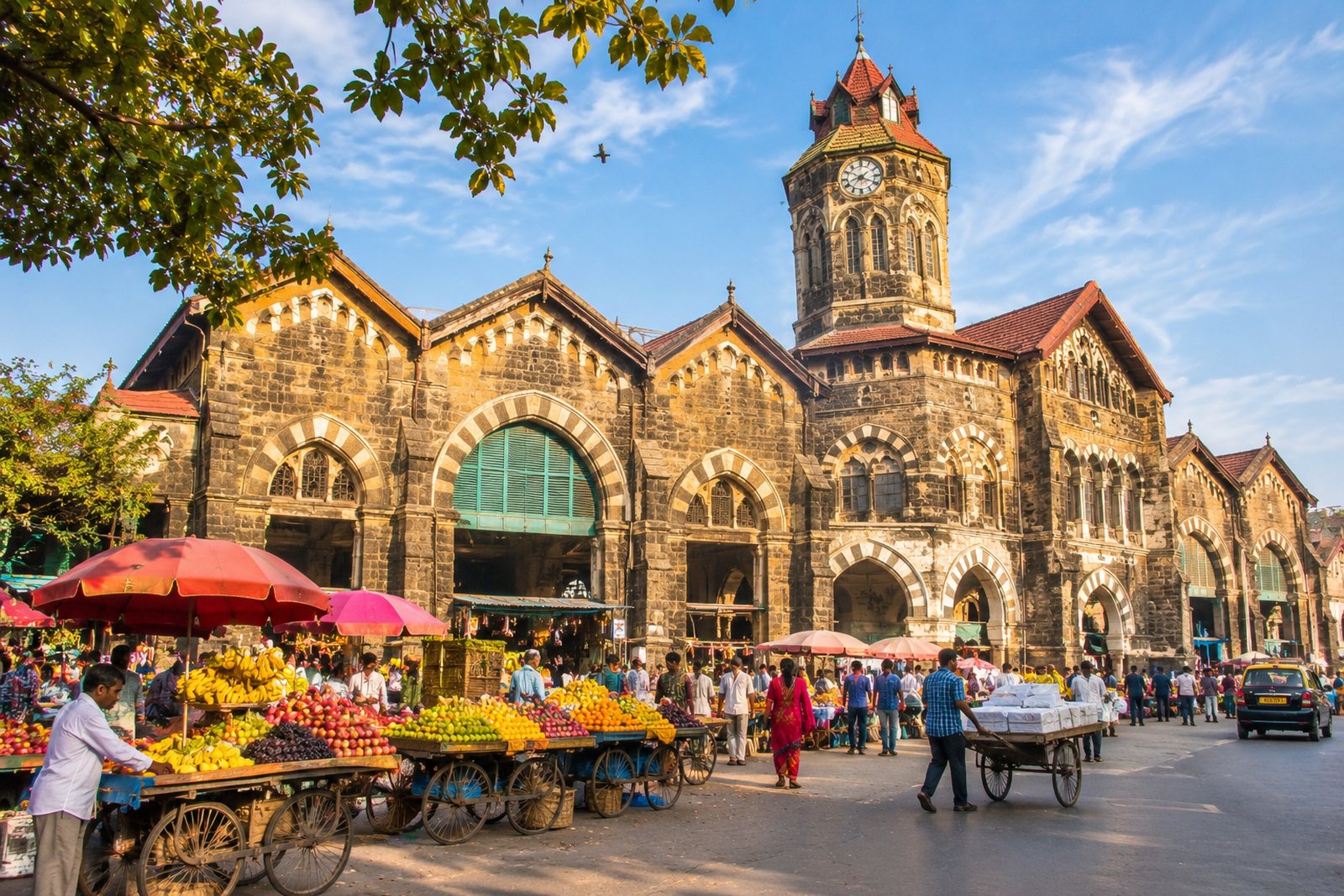
Take a cab north to Crawford Market, officially Mahatma Jyotiba Phule Mandai. The building, completed in 1869, is a big stone hall with a clock tower and carved panels at the entrance. Most visitors walk straight past them to the fruit, which is a pity.
Inside it is noisy, wet in places and wonderful. In season, mangoes are stacked in pyramids, and the Alphonso debate begins: Ratnagiri or Devgad? Everyone has an opinion. Out of season you will find dry fruits, dates, spices, imported chocolates and biscuits, kitchen tools and every kind of household thing your mother has been looking for.
Did you know? The carved stone friezes at the Crawford Market entrance were designed by John Lockwood Kipling, father of the writer Rudyard Kipling, who was born in Bombay.
Zaveri Bazaar and Mangaldas: the side lanes
From Crawford, the lanes around it lead into some of the oldest trading streets in the city. Zaveri Bazaar is the jewellery district, serious business, with families buying wedding gold. Mangaldas Market is a covered fabric market where you can find dress material and sarees by the metre. These are not for browsing tourists so much as for people with a purpose. Go if you have one.
Chor Bazaar: antiques, posters and stories
A short ride further north brings you to Chor Bazaar, around Mutton Street. The popular story says it was once Shor Bazaar, the noisy market, and the name changed over time. Nobody can quite prove it.
What it is known for today:
- Old brass lamps, locks, clocks and gramophones.
- Vintage Hindi film posters and lobby cards.
- Old furniture, some genuine, some "restored", some newly made to look old.
- Car and bike spare parts, which is another world entirely.
This is a market for slow walking and good questions. Ask how old something is, and decide for yourself whether you believe the answer. If a piece is expensive, take time, compare, and never let anyone rush you.
Our tip: Carry a small torch or use your phone light inside the darker antique shops. Old brass and wood look very different when you can actually see them.
Fashion Street and Bandra: the suburban round two
- Fashion Street, opposite Azad Maidan: a long row of stalls selling budget clothes, mostly for college students. Try things against your body, since trial rooms are rare.
- Linking Road and Hill Road, Bandra: clothes, footwear, bags and accessories, great for an evening. Combine with Bandra Bandstand, where the sea and the selfie crowd meet.
A practical day plan for Mumbai markets
- Morning: Gateway of India, then Colaba Causeway.
- Late morning: Crawford Market and the side lanes.
- Lunch: a vada pav or a proper sit-down meal nearby.
- Afternoon: Chor Bazaar.
- Evening: rest, or Linking Road in Bandra if you still have energy.
General tips:
- Wear comfortable shoes and carry a light cloth bag.
- Keep your phone and wallet in a front pocket in crowded lanes.
- Use the local trains or cabs between areas; driving and parking in South Mumbai is slow.
- Some older markets slow down or shut on Sundays and public holidays, so check locally.
- The monsoon makes markets messy; November to February is the most comfortable time.
On Mumbai Darshan, the first day covers the Gateway of India, Marine Drive and South Mumbai, so Colaba Causeway is a short walk away; keep the evening for shopping. Mumbai Explorer adds Sanjay Gandhi National Park and the Kanheri Caves, and Mumbai with Lonavala adds a day in Lonavala with the Karla and Bhaja caves, Lohagad and Bhushi Dam, as per the package itinerary. Free time for Crawford or Chor Bazaar fits best around these days.
Mumbai markets are not designed for you. They were built for traders, maids, chefs, collectors and wedding families, and they let you in anyway. Go with an open bag and a sense of humour.
Hungry after all that walking? Read our Mumbai street food guide, or browse all Mumbai holiday packages.
Frequently asked questions
Which are the most famous markets in Mumbai?
Colaba Causeway for street shopping, Crawford Market for fruit, dry fruit and household goods, Chor Bazaar for antiques and vintage items, Fashion Street for budget clothes, and Linking Road and Hill Road in Bandra for clothes and footwear.
What is Crawford Market's official name?
It is officially called Mahatma Jyotiba Phule Mandai. Most Mumbaikars still call it Crawford Market.
Why is it called Chor Bazaar?
The popular story is that it was once Shor Bazaar, the noisy market, and the name changed over time. Whatever the origin, today it is known for antiques, vintage posters, old brass and furniture.
Can I bargain in Mumbai markets?
Yes, at street stalls in Colaba Causeway, Fashion Street, Linking Road and Chor Bazaar bargaining is expected. Fixed-price shops will tell you so.
Are Mumbai markets open on Sundays?
Street markets like Colaba Causeway and Linking Road are usually busy on Sundays, but some wholesale shops and parts of older markets stay shut. Check locally before you plan the day.