Machli the Tigress: The Queen of Ranthambore's Lakes
She fought a crocodile, ruled the lakes below a fort and became the most photographed tigress anywhere. The story of Machli of Ranthambore.
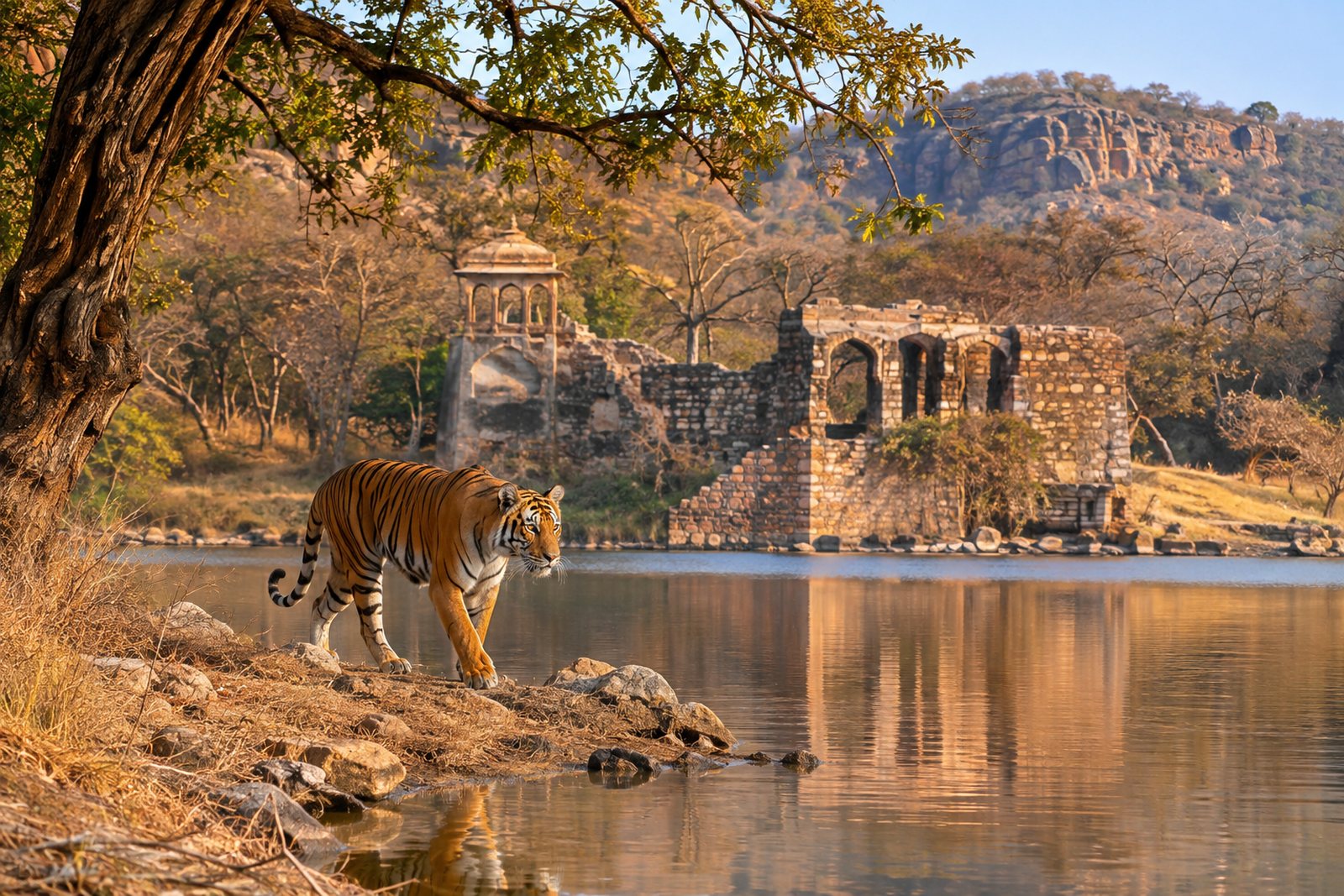
The jeep stops. The guide lifts one hand, not saying a word. Somewhere in the grass by the lake a sambar has started barking, sharp and frantic, and the langurs in the banyan tree above you have gone very quiet. Everyone in the gypsy holds their breath. Even the kid who wanted chips five minutes ago.
For almost two decades, in moments exactly like this one, the tiger that walked out of the grass at Ranthambore's lakes was very often the same tigress. Forest staff called her T-16. The whole world called her Machli. This is her story, and how to go looking for her kingdom today.
A cub with a fish on her face
She was born in the late 1990s in Ranthambore, a forest of dhok trees, ravines and old stone, wrapped around a very old hill fort. Her mother, the story goes, was also called Machli, and the daughter got the name too, thanks to a marking on her cheek shaped like a fish.
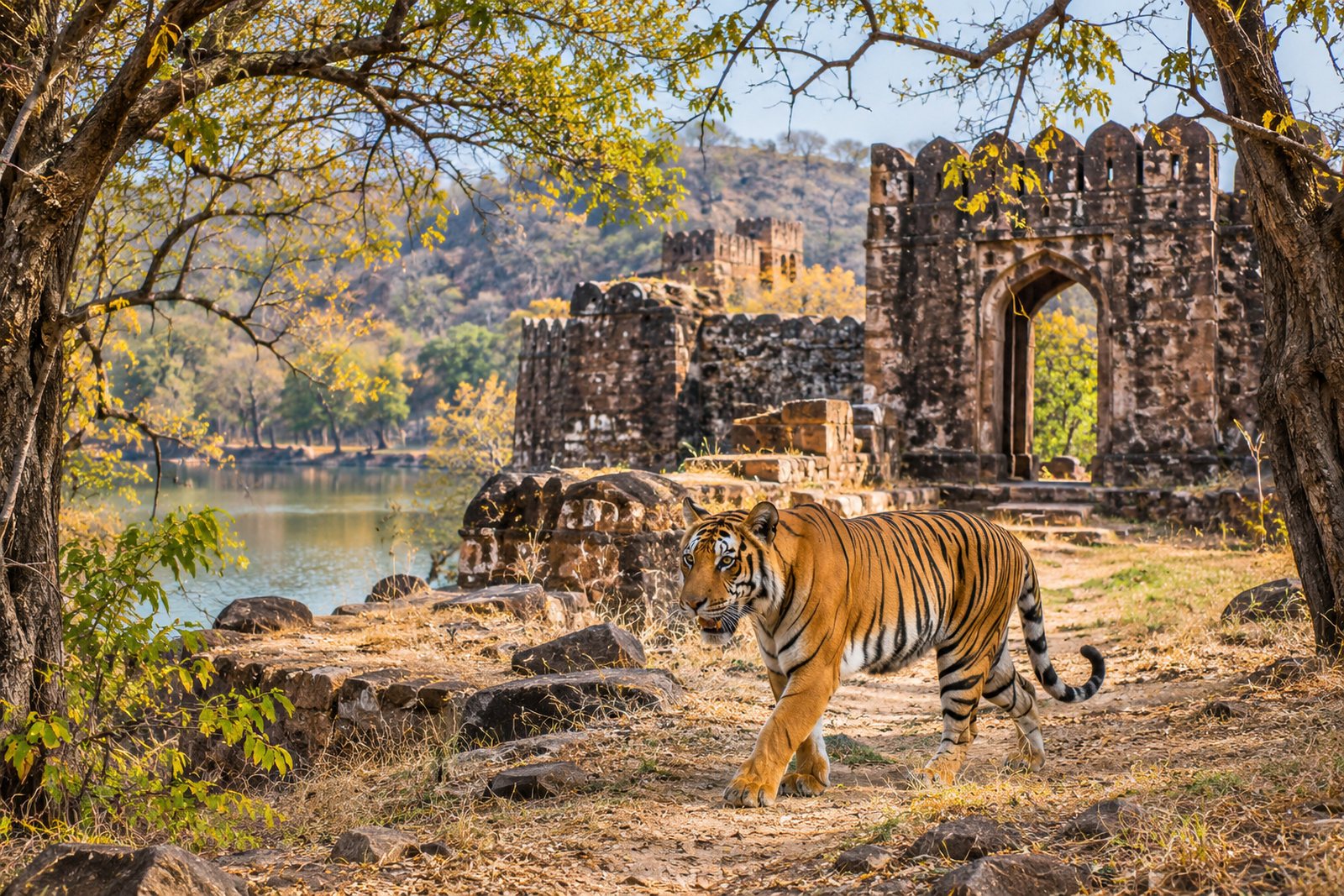
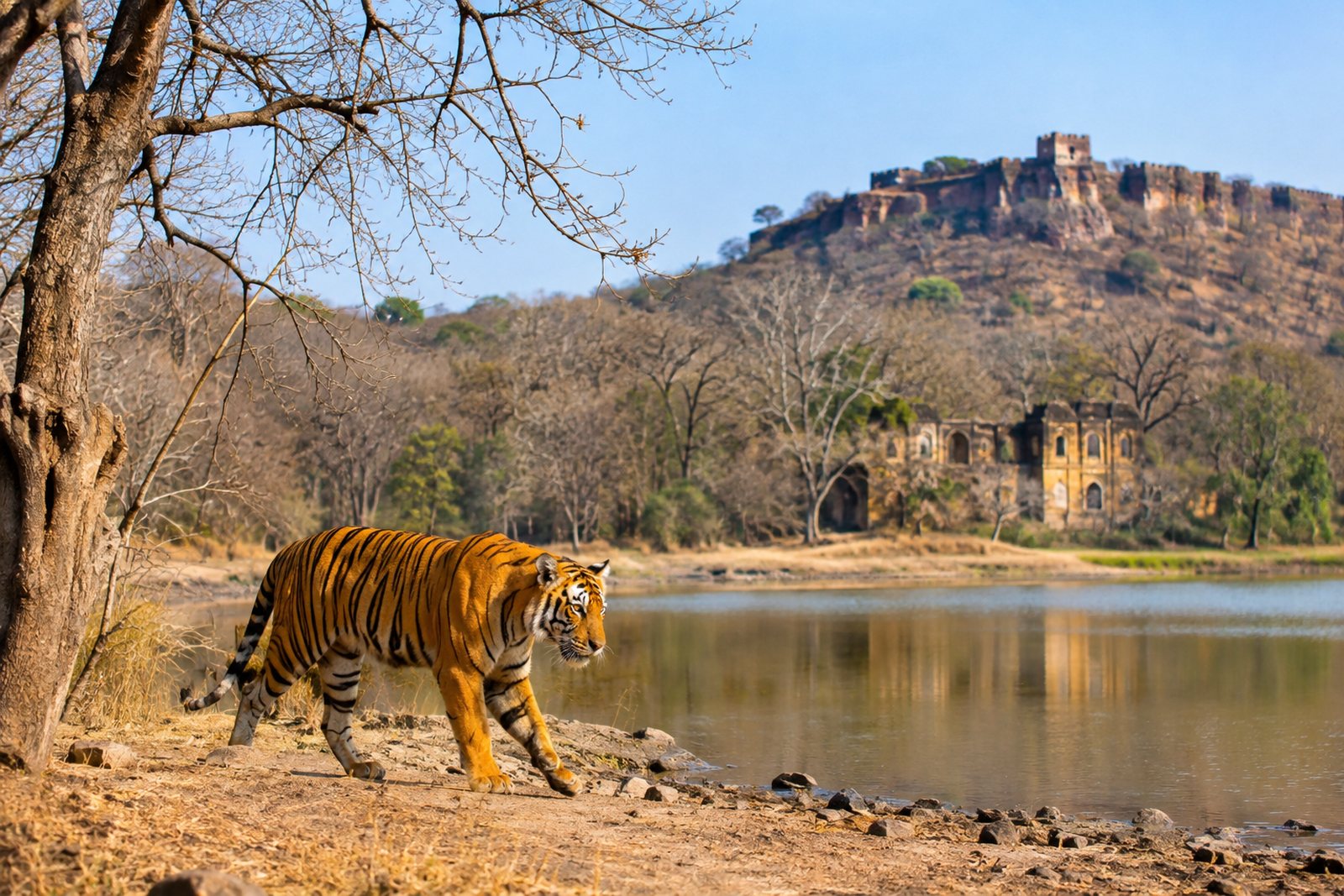
As she grew, she did something few young tigresses manage. She took over the best territory in the park: the lakes. Padam Talao, Rajbagh, Malik Talao. Water, ruins, deer coming down to drink. Prime real estate, as any jeep driver will tell you with a laugh.
And she held it. For years.
The crocodile fight
Every Ranthambore guide has told this story a thousand times, and it still gets a reaction.
In the early 2000s, at one of the lakes, Machli took on a mugger crocodile, a big one, reportedly around four metres long. Tigers usually avoid fully grown crocodiles. They are armoured, heavy, and in water they have every advantage. Machli went in anyway. The fight lasted a long time and was caught on camera. At the end of it, the crocodile was dead.
She paid for it. In fights over the years she lost canine teeth, which for a tiger is a serious problem. Yet she kept hunting and kept her place for years after.
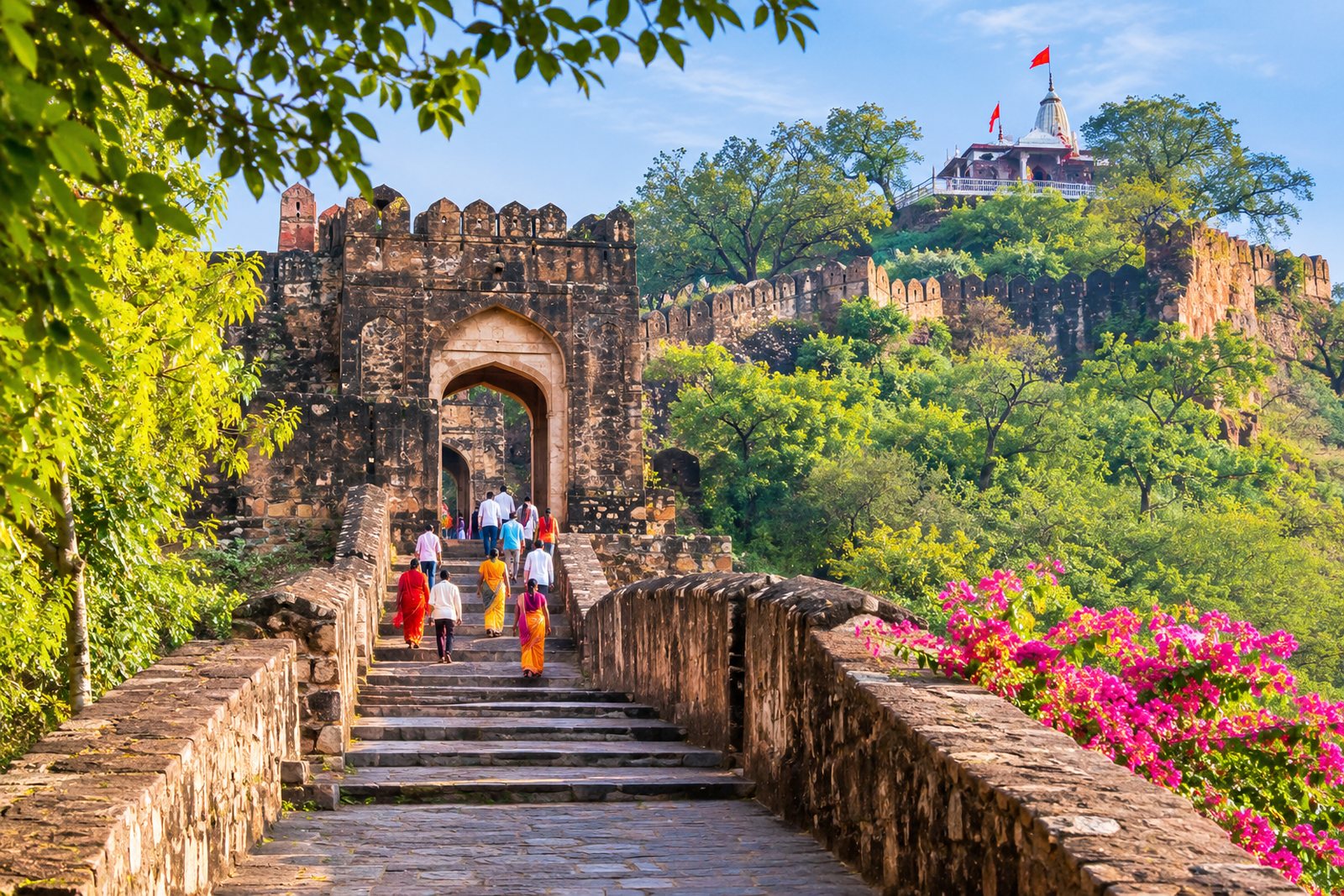
Did you know? The fort that so often stood behind Machli in her photographs, Ranthambore Fort, is part of the UNESCO World Heritage listing of the Hill Forts of Rajasthan. Very few tigers anywhere have posed in front of a World Heritage site.
A mother of generations
Machli raised several litters of cubs in her lifetime. Her daughters took over pieces of her territory around the lakes and the fort. Her bloodline spread through the park.
It went further. When Sariska Tiger Reserve, a few hours north, lost its tigers in the mid-2000s, tigers were shifted there from Ranthambore to begin again. Some of them were from Machli's line. So when someone in Sariska tells you about their tigers today, there is a fair chance a bit of Machli is in that story too.
Fame, photographs and an old queen
Machli was relaxed around jeeps in a way that made her a photographer's dream. She would walk down the track in front of a gypsy as if it wasn't there, sit by the water, yawn, ignore you completely. Documentaries were made about her. She was often called the most photographed tigress in the world, and nobody really argued.
Then, slowly, she got old. Younger tigresses, some of them her own daughters, pushed her out of the lakes. Thin, nearly toothless, she moved to the edges of her old kingdom. In August 2016, at around 19 or 20, very old for a wild tiger, she died. Forest staff gave her a farewell inside the park, and people who had never met her mourned her across the country.
Ranthambore beyond Machli
- Ranthambore Fort, the old hill fort inside the park, with views over the forest.
- Trinetra Ganesh temple inside the fort, where devotees send wedding invitations by post.
- Padam Talao and Jogi Mahal, the old lake and hunting lodge area at the heart of Machli's range.
- Sawai Madhopur town, for a chai and a walk before the evening drive back.
If you just want a quick forest break, the Ranthambore Getaway gives you two nights near the park, with safaris arranged as per the package itinerary. Jaipur & Ranthambore adds two nights of Jaipur's forts first, and families covering more of north India like Golden Triangle with Ranthambore, which runs through Delhi and Agra before the tigers.
How to plan a Ranthambore safari today
- Where: Sawai Madhopur, Rajasthan, around 3.5 to 4 hours by road from Jaipur. Sawai Madhopur railway station is a few kilometres from the park gates.
- Season: Roughly October to June. The core zones usually close during the monsoon months. Check the official forest department portal for current dates.
- Gypsy or canter: A gypsy is smaller and quieter; a canter is a bigger open bus. Both run at fixed slots.
- Booking: Safari seats and zones are allotted through the official Rajasthan forest booking system. Book early in winter and holiday weeks, and carry the ID you booked with.
- What to wear: Earth colours, a warm layer for winter mornings, a cap and dust cover for summer.
- Expectations: Sightings are never guaranteed. Enjoy the birds, the deer and the forest too.
Our tip: Book two or three safaris instead of one. The first is usually the excited one. By the second, you start noticing the alarm calls, the pugmarks, the way the forest goes still, and that is when the park really opens up.
Why people still talk about her
Plenty of tigers live in Ranthambore. Very few became characters, with a name, a fight, a family and an old age that people followed like a long serial. Machli did. When you sit by the lake at Padam Talao and the sambar starts barking, you will understand why the guides still lower their voices when they say her name.
Read our Ranthambore safari guide for zones and season, or browse all Ranthambore holiday packages.
Frequently asked questions
Who was Machli the tigress?
Machli was a Bengal tigress of Ranthambore National Park, recorded as T-16. She ruled the lake area near Ranthambore Fort for many years and became one of the most photographed tigers in the world.
Why was she called Machli?
Machli means fish in Hindi. The name came from a fish-shaped marking on the side of her face, a name she is said to have inherited from her mother.
Did Machli really fight a crocodile?
Yes. In the early 2000s she was filmed fighting and killing a large mugger crocodile at one of Ranthambore's lakes. The footage made her famous worldwide.
When did Machli die?
Machli died in August 2016 at around 19 or 20 years of age, which is very old for a wild tiger. The forest department gave her a farewell inside the park.
Can I see Machli's descendants in Ranthambore today?
Many tigers in Ranthambore and in other reserves like Sariska are believed to be from her line. Sightings are never guaranteed, and zones are allotted through the official booking system.