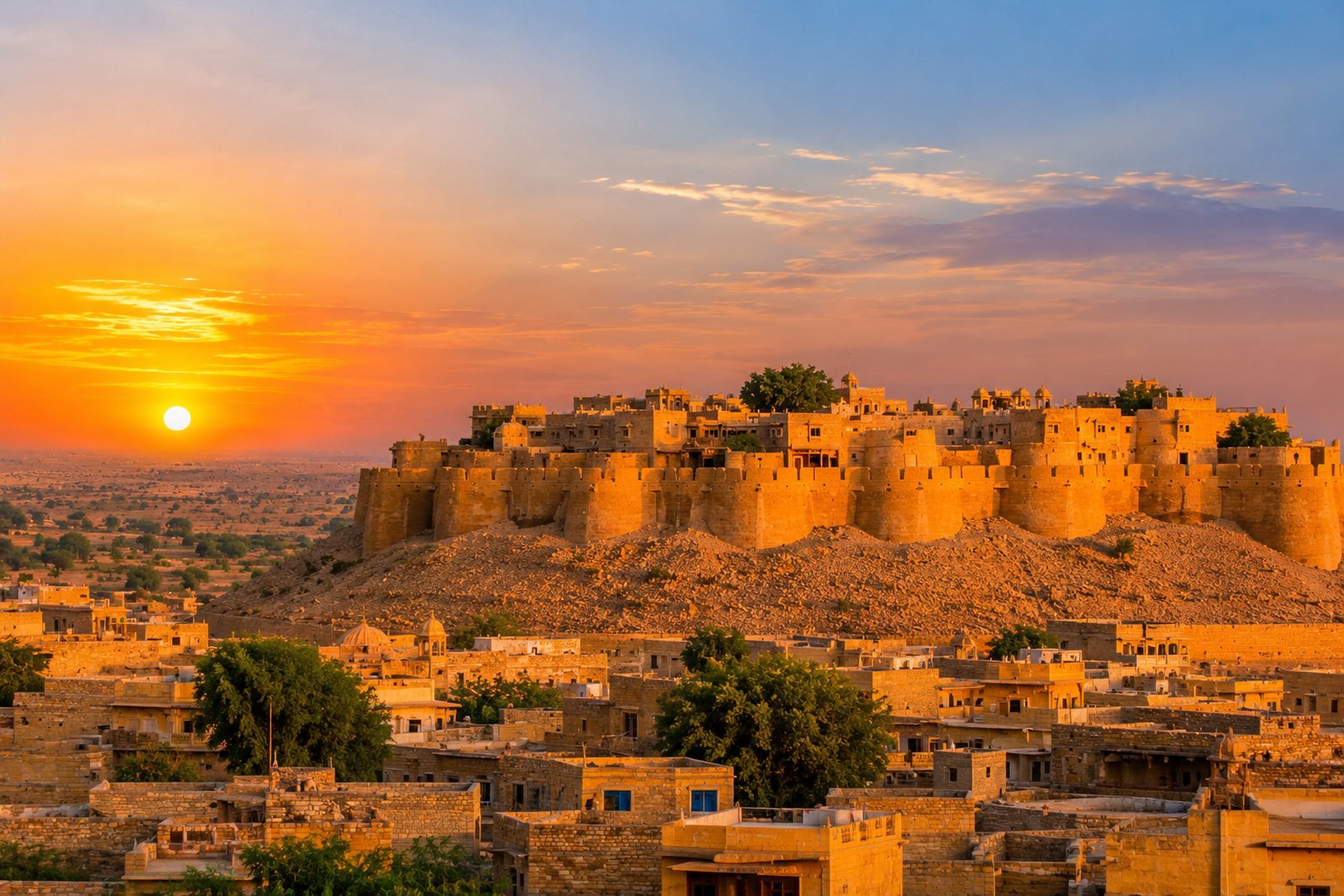
Kuldhara Village Legend: The Paliwals Who Left in a Single Night
Local legend says the Paliwals emptied Kuldhara and 83 other villages in one night and cursed the land. Here is the story, what history suggests and how to visit.
"Bhaiya, raat ko yahan koi rukta hai kya?"
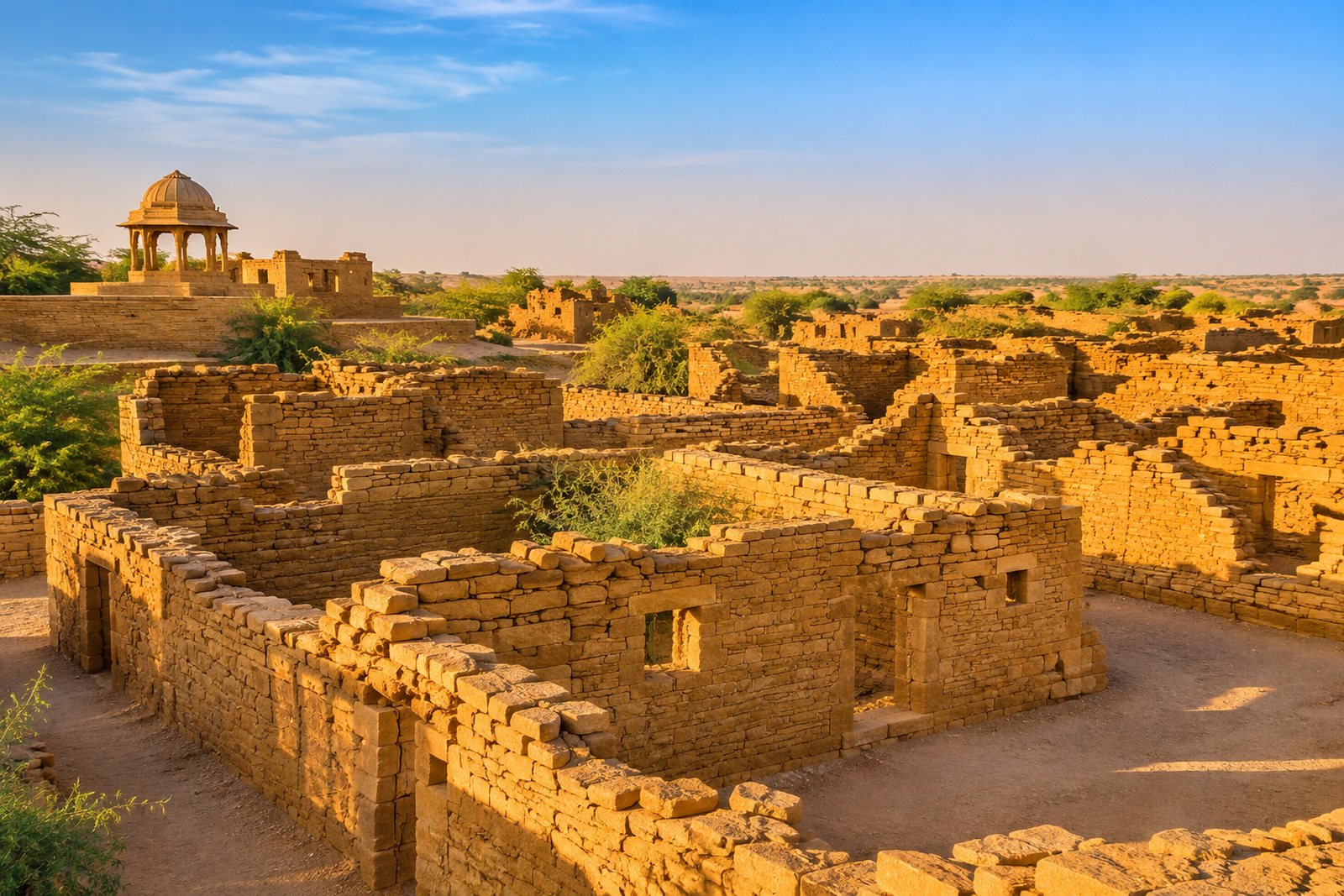
The question comes from the back seat, from a twelve-year-old who has watched far too many ghost videos on his phone. The driver laughs, switches off the engine and points at the rows of roofless houses shimmering in the afternoon heat. "Raat ko? Beta, yahan toh din mein bhi koi nahi rukta."
This is Kuldhara, the empty village west of Jaisalmer that has turned into Rajasthan's favourite ghost story. Below: the legend as locals tell it, what history actually suggests, and how to see the ruins without getting lost in the spooky hype.
The Kuldhara village legend, as it is told
Kuldhara was a village of Paliwal Brahmins, a community known around Jaisalmer as sharp farmers and traders who could pull a crop out of sand that others had given up on. According to local legend, Kuldhara was one of 84 Paliwal villages in the area, settled over several centuries, with wells, temples and neat lanes.
Then, the story goes, a powerful minister of the Jaisalmer state came calling. In most tellings his name is Salim Singh, the diwan. He saw the daughter of the village chief and decided he would marry her. He gave the village a deadline. Agree, or face what comes.
The elders met that night. Not just Kuldhara, the legend insists, but all the villages together. They could not fight the state. They would not hand over the girl. So they chose a third way. Before dawn, thousands of people loaded what they could onto carts and camels, left their homes, their grain stores and their gods, and walked out into the dark. Nobody saw where they went.
Before leaving, they cursed the land. Whoever tried to settle here would never prosper.
That is the version you will hear from guides, from the boy selling water bottles near the gate, and from a hundred YouTube channels. Some add their own spice: footprints in the dust, voices at dusk, a family that tried to stay and fled the same night. Enjoy all that as campfire material. It belongs to the fun, not to the record.
What history actually says about Kuldhara
Some parts are reasonably well established. The Paliwals were a real and prosperous community of the Jaisalmer region. Kuldhara and its neighbouring villages were abandoned, and the period usually cited is the early 19th century. Salim Singh was a real diwan of Jaisalmer in that era, and he is remembered in regional histories as a feared figure, with heavy taxes often mentioned.
The "single night" is where things get shaky. Researchers who have looked at the area point to a mix of reasons: crushing taxes, falling water levels and failing wells, poor rains, and the slow decline of the old caravan trade that once made Jaisalmer rich. People rarely leave land in one dramatic night. More often they go over months or years, family by family, when life simply stops working. A legend can be a community's way of holding a long, painful loss in one sharp image.
Where did the Paliwals go? The usual answer is that they spread out to other parts of Rajasthan and beyond. The Paliwal surname is still found across north and west India today.
Did you know? Kuldhara was a planned village. Walk around and you can still trace straight lanes running side by side, houses lined up along them and a small temple near the heart of the settlement. Desert farmers, it turns out, were also careful town planners.
Why the ghost tag stuck
Partly, it is the place itself. There is no shade, no sound except wind and your own chappals on the stones, and doorways that open onto nothing. Partly, it is television and the internet, which love an abandoned village with a curse attached. Some of the houses have been restored a little, which makes the empty rooms feel even stranger, as if someone stepped out a moment ago.
Go with that feeling. Just do not let it frighten the kids before bedtime.
Khaba Fort, the other empty village
Kuldhara is not alone. Khaba, another old Paliwal village in the same belt, has a small fort on a ridge above its ruined houses. Climb up and the abandoned settlement spreads below you like a map of brown squares. It is usually quieter than Kuldhara and gives you a better sense of how large these villages once were.
How to visit Kuldhara today
- Where: around 18 km west of Jaisalmer city, roughly half an hour by car. Easy to club with Khaba and an evening at the Sam dunes.
- Best time: October to March. Summer afternoons out here are punishing.
- Timings: the site has an entry gate and is generally open only in daylight, closing around sunset. Timings and ticket rules change, so check locally.
- Safety: uneven ground, loose stones and half-broken walls. Wear proper shoes, do not climb on walls, keep children close, carry water and a cap.
- Respect: these were somebody's homes. Do not scratch names on walls or carry stones away as souvenirs.
- Combine with: Jaisalmer Fort, Gadisar Lake, Patwon ki Haveli and a desert camp night.
Our tip: Reach Kuldhara in the late afternoon, when the sandstone turns the colour of honey, spend an hour there, and then head straight to the dunes for sunset. Ghost village, then camel ride. Kids remember that combination for years.
BellaSafar's Jaisalmer Desert Special gives you three nights with a day of Jaisalmer sightseeing and a night at a desert camp, as per the package itinerary. Short on time? The two-night Jaisalmer Desert Camp keeps the camp night, and Jodhpur & Jaisalmer adds two nights in Jodhpur before the desert.
What Kuldhara leaves you with
The curse is a good story. The quieter truth is better. A whole community once built a working life in one of the driest corners of India, and then, for reasons we only half understand, they let it go. Stand in one of those roofless rooms with the wind coming through the window and you feel the weight of that choice.
Planning your trip? Read our Jaisalmer trip plan or browse all Jaisalmer holiday packages.
Frequently asked questions
What is the Kuldhara village legend?
Local legend says the Paliwal Brahmins of Kuldhara and nearby villages left overnight to escape a powerful diwan who wanted to marry the village chief's daughter, and cursed the land so no one could settle there again.
Is Kuldhara really haunted?
There is no evidence that Kuldhara is haunted. The ghost stories are folklore built around a genuinely abandoned village. It is a heritage site that is safe to visit in daylight.
Why was Kuldhara abandoned?
Historians suggest a mix of reasons such as heavy taxes, water scarcity and failing wells, and the decline of old trade routes. The single-night exodus is part of the legend rather than a proven fact.
Can you visit Kuldhara at night?
No. The site is generally open only in daylight and closes around sunset. Timings and ticket rules change, so check locally before you go.
How far is Kuldhara from Jaisalmer?
Kuldhara is around 18 km west of Jaisalmer city, roughly half an hour by car, and is easy to combine with Khaba Fort and an evening at the Sam dunes.