Khajuraho Hemavati Legend: How the Temples Began
Legend says the moon god fell for Hemavati, and their son Chandravarman founded the Chandela line that built Khajuraho. The legend, the real history and how to visit.
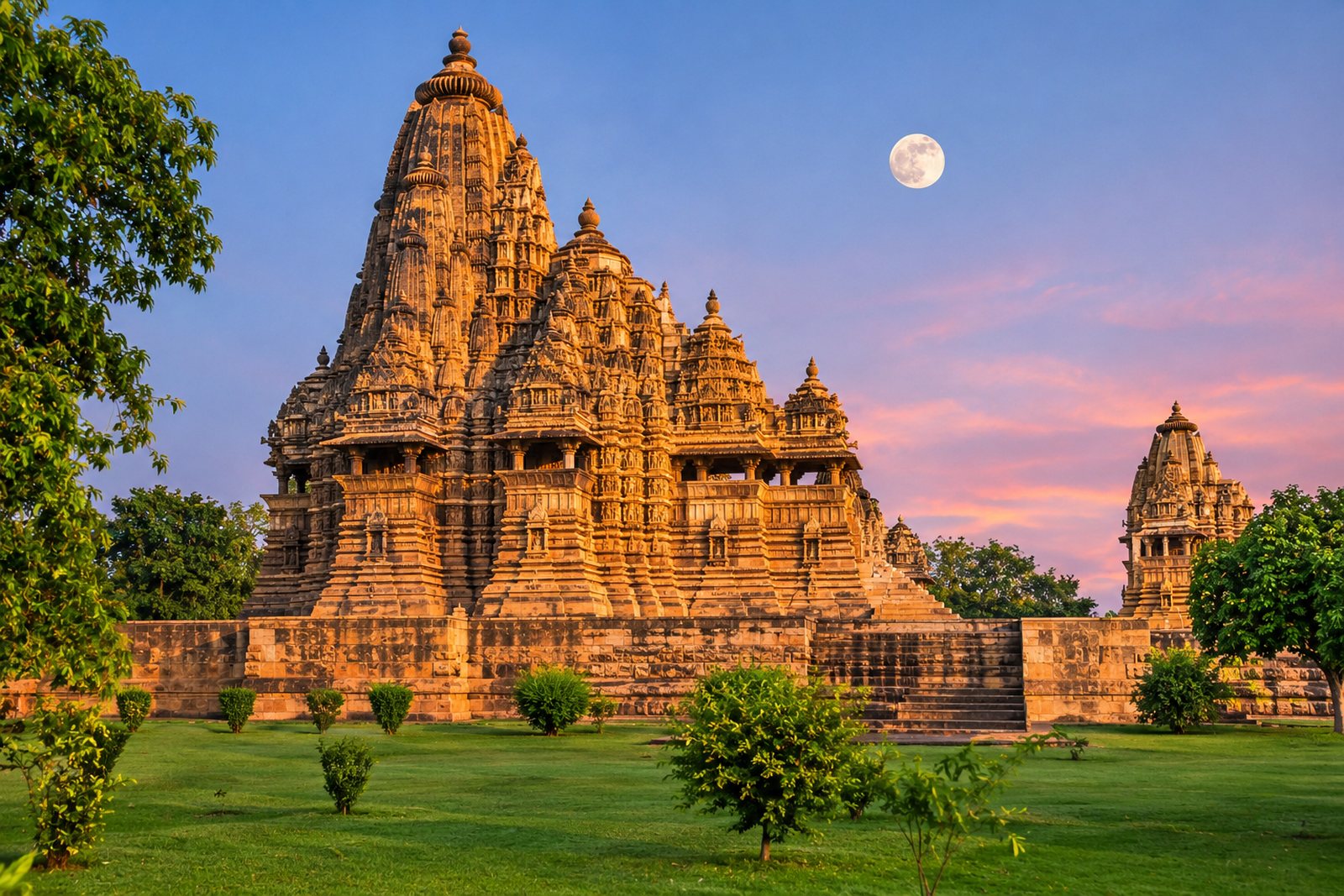
A full moon over a quiet pool. A young woman steps into the water, thinking she is alone. She is not. Someone is watching from the sky.
It sounds like the start of a Bollywood song sequence. It is actually how one of India's best-known temple towns explains its own beginning.
This is the Khajuraho Hemavati legend, the story of a woman, the moon god and the dynasty they are said to have founded, followed by what history actually tells us about Khajuraho and how to plan your visit.
The legend: Hemavati and the moon
The tale is told in slightly different ways, but the heart of it is this. Hemavati was a young woman of great beauty, in many tellings the daughter of a priest. One summer night she went to bathe in a pool under the full moon.
Chandra, the moon god, saw her and fell in love. He came down to earth, and Hemavati, the legend says, returned his love. But a moon cannot stay on earth. Chandra had to leave.
Hemavati was left with a child and with the harsh judgement of people around her. She went away into the forest and raised her son there alone. Chandra, in some versions, promised her that the boy would grow into a great king. The son was named Chandravarman, armoured by the moon.
He grew up strong, brave and clever. As the legend goes, he went on to found a royal line named after his father, the Chandelas, descendants of the moon. And in the most popular telling, Hemavati asked her son to build temples that would show every side of human life, love and desire included, without shame. Khajuraho, the story says, is that promise kept.
What history says about the Chandelas
The legend belongs to a well-known Indian tradition. Many royal houses claimed descent from the sun, the moon or fire, the Suryavanshi, Chandravanshi and Agnivanshi lines. Historians treat the Hemavati story as a dynastic origin legend rather than history.
The Chandelas themselves are very real. They ruled the region known as Jejakabhukti, roughly today's Bundelkhand, and Khajuraho was one of their important centres. Most of the temples were built between around the 10th and 11th centuries CE. Historians often cite that there were once around 85 temples, of which a little over twenty survive.
They are not all Hindu. Alongside temples to Shiva, Vishnu and other deities, the Eastern Group holds important Jain temples, built in the same period and style, a reminder of how faiths shared space here.
After the Chandelas declined, Khajuraho slowly faded from the main routes and the forest grew around many temples, which may be one reason so many survived. It was brought to wider attention in the 19th century, and the temples became a UNESCO World Heritage Site in 1986.
Did you know? The famous erotic panels are only a small fraction of the carving. Look closely and you will find armies on the march, musicians, teachers with students, people cooking, a woman removing a thorn from her foot and a dozen ways of wearing jewellery.
The temples worth slowing down for
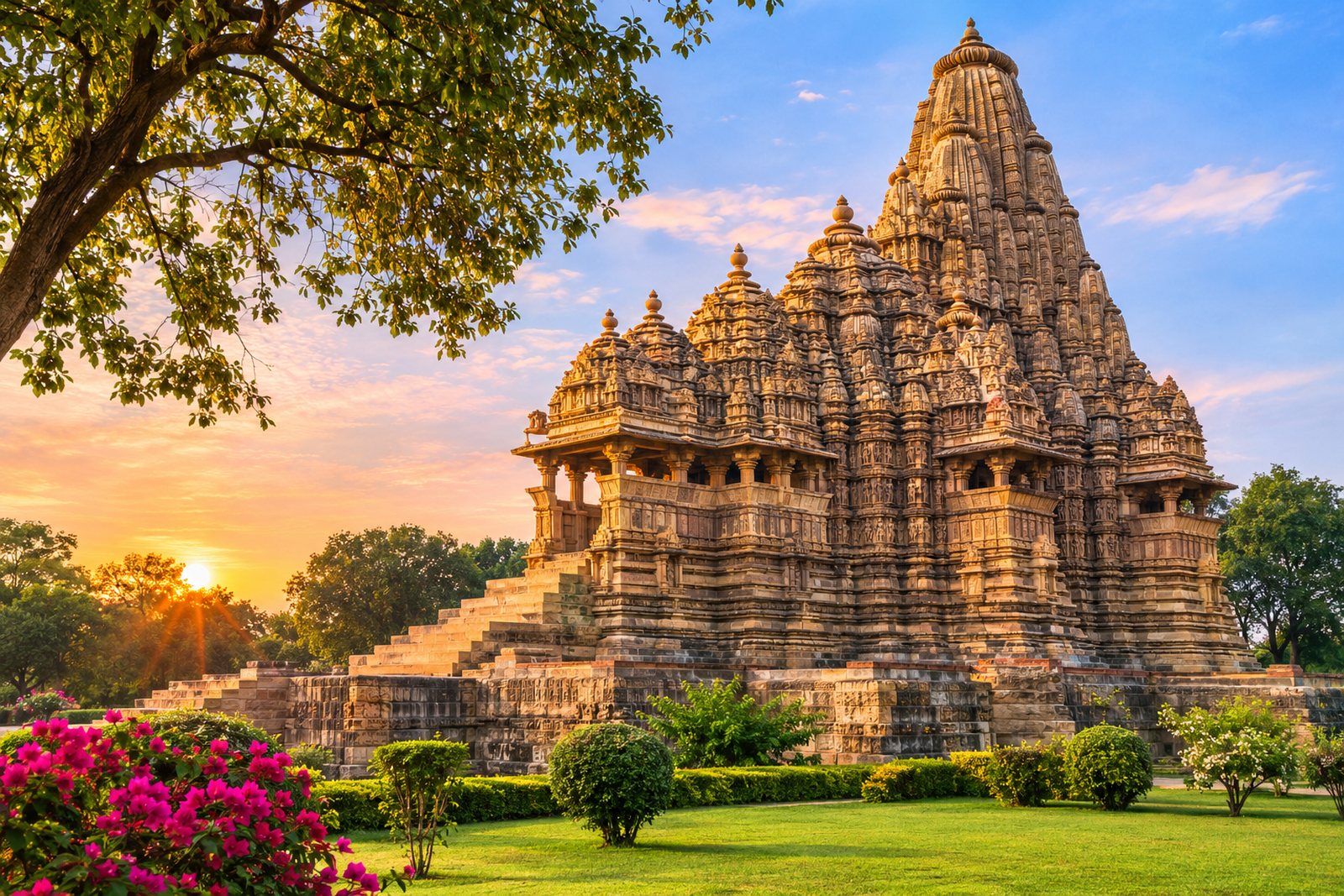
The Western Group holds the showpieces. The Kandariya Mahadeva is the largest, its spires rising like a range of hills towards the main peak. The Lakshmana temple, one of the earliest and best preserved, has carvings so dense you could spend an hour on one wall. Right next door, the Matangeshwar temple is still in active worship, and families come for Shiva puja there, especially around Mahashivratri.
Further away, the Eastern Group's Jain temples and the Southern Group's quieter shrines show a different, calmer side of the town.
Visiting Khajuraho today: safety, timings, respect
- Season: October to March is comfortable. Summers are very hot; start early in the day.
- Timings: the monument groups are generally open from sunrise to sunset. Ticket rules and timings change, so check the official site or locally.
- Guides: hire only licensed guides from the official counter. A good one makes the carvings come alive.
- Children: some panels are explicit. Most families find a matter-of-fact approach works best, and the guides are used to it.
- Respect: do not touch or lean on the sculptures, do not climb plinths for photos, and remove footwear at the active Matangeshwar temple.
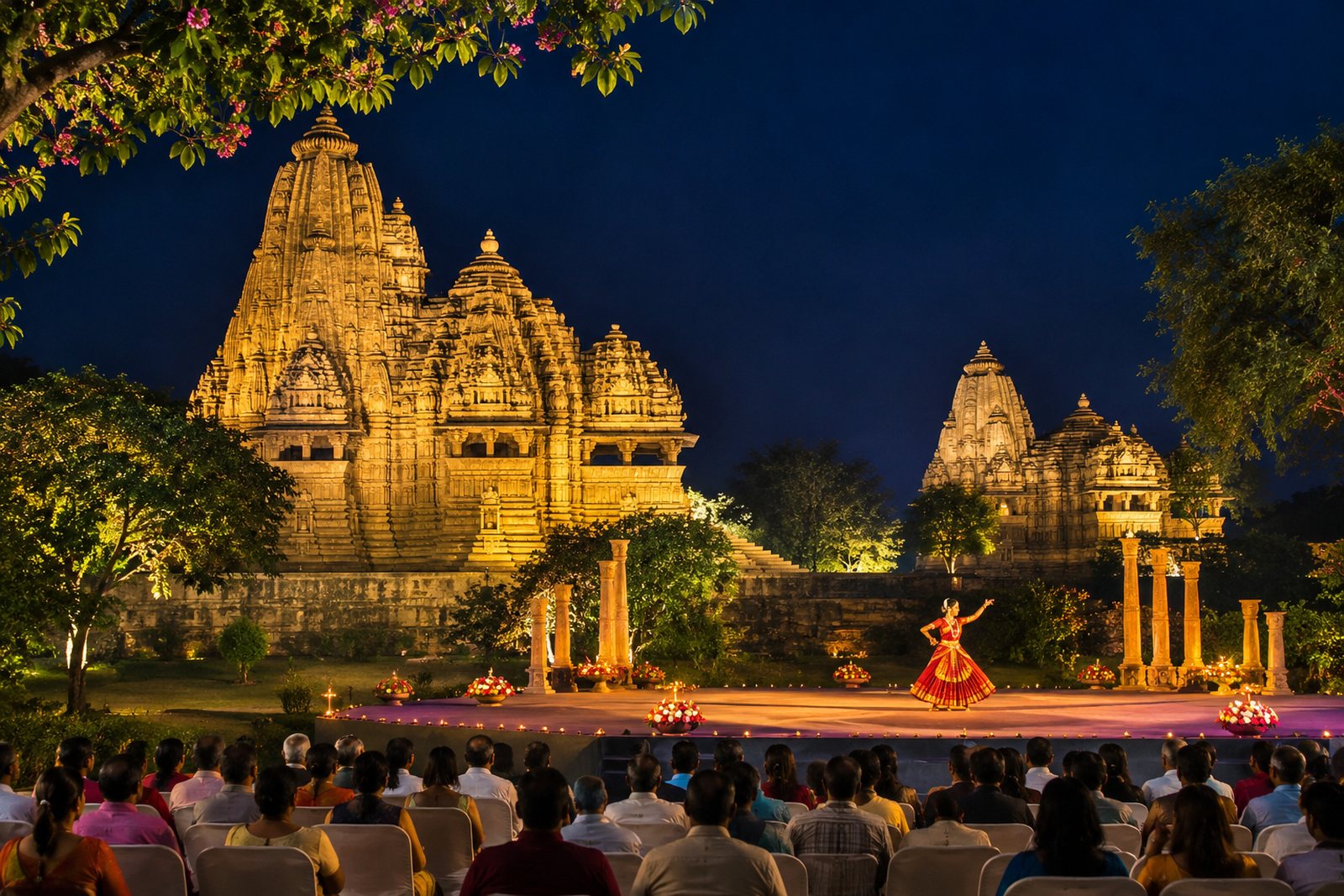
- Combine with: the evening light and sound show, Raneh Falls, and Panna National Park nearby.
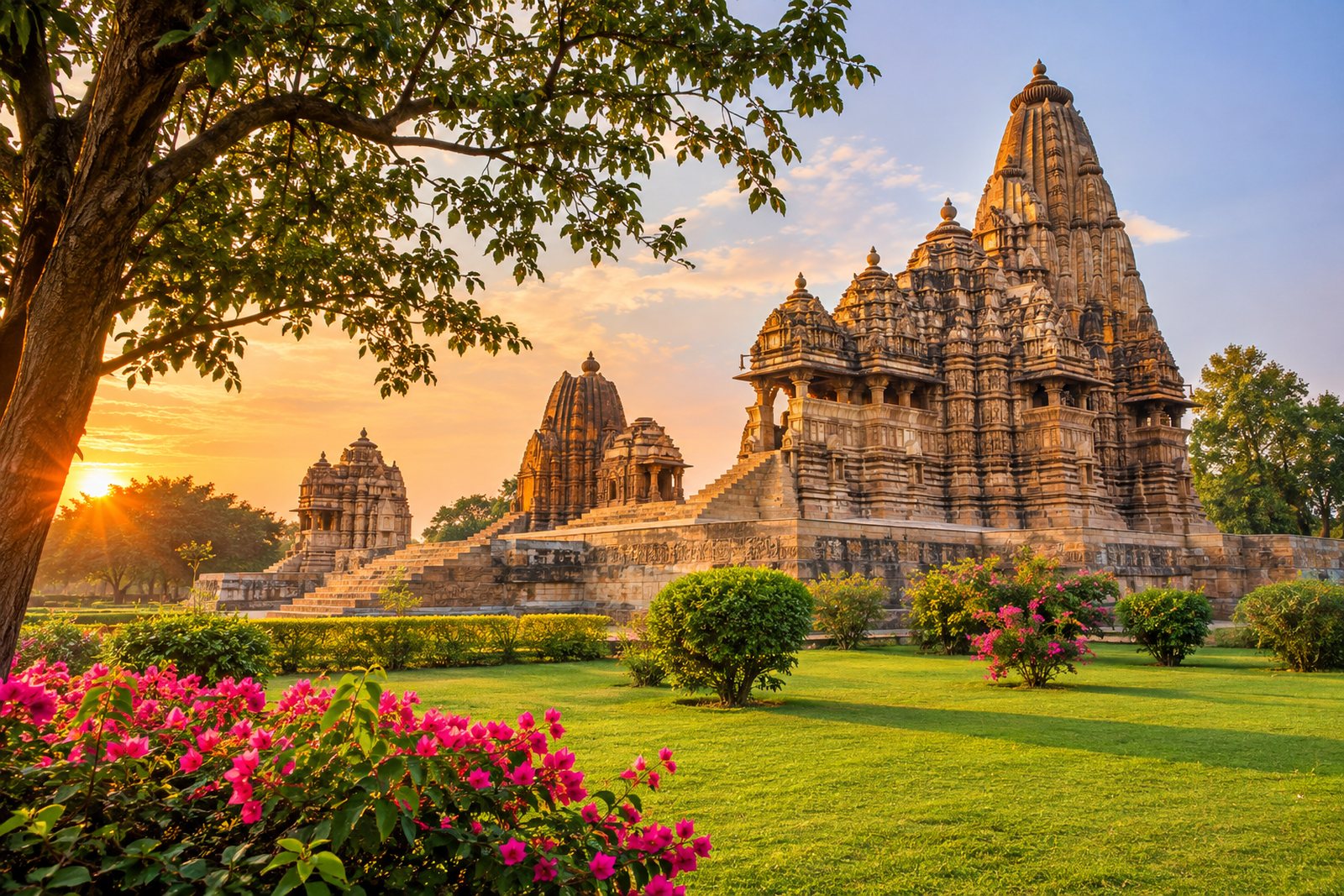
Our tip: Walk the Western Group twice, once in the soft morning light for photos, and once late in the afternoon when the sandstone turns gold and you can sit on the lawns and look at the spires in silence.
BellaSafar's Khajuraho Explorer gives you three nights, enough for all temple groups and a day out to Raneh Falls or Panna, as per the package itinerary. Khajuraho Temple Tour keeps it to two nights, and Khajuraho Temples Getaway is a quick one-night stop. If you are coming in February, read about the Khajuraho dance festival.
A town that began with a moonlit night
The moon may not have fathered a dynasty. But stand among these spires on a full-moon evening, when the stone glows faintly and the lawns go silver, and you can see why someone, long ago, decided this place had to begin with the moon.
Planning the trip? Read our Khajuraho trip guide or browse all Khajuraho holiday packages.
Frequently asked questions
What is the Khajuraho Hemavati legend?
Legend says Hemavati, a beautiful young woman, was bathing on a moonlit night when the moon god Chandra fell in love with her. Their son Chandravarman grew up to found the Chandela dynasty, and the dynasty later built the Khajuraho temples.
Is the Hemavati story true?
It is a dynastic origin legend. Many Indian royal families traced their line to the sun or moon. Historians treat it as folklore, while the Chandela dynasty itself and its temple building are well documented.
Who built the Khajuraho temples?
The temples were built by the Chandela rulers, mostly between roughly the 10th and 11th centuries CE. Only a part of the original temples survive today.
Are all Khajuraho sculptures erotic?
No. Erotic carvings form only a small part of the sculpture. Most panels show gods, goddesses, dancers, musicians, warriors, animals and scenes of daily life.
Which Khajuraho temple is still in worship?
The Matangeshwar temple, next to the Western Group, is still an active Shiva temple, and its festivities around Mahashivratri draw large crowds.