Kashi Vishwanath Temple History: The City Shiva Never Leaves
Destroyed, rebuilt, crowned in gold and opened to the Ganga again. The story of Kashi Vishwanath, and how to plan your darshan in Varanasi today.
Four in the morning in Varanasi, and the galis are already awake. A milkman's cycle bell. A bull who refuses to move and is not asked twice. A shopkeeper rolling up his shutter with a clang. Above it all, faint and steady, the sound of the Mangala Aarti drifting out of a temple with a golden top. Someone shouts "Har Har Mahadev" and a dozen voices answer without even looking up.
This is Kashi Vishwanath, the Lord of the Universe, in the oldest living city most of us will ever walk through. Here is the story: why Shiva is said never to leave Kashi, how the temple fell and rose again, the queen who built the one you see, the gold on its roof, and how to plan your darshan today.
Why Kashi is Shiva's own city
Kashi has an old name, Avimukta, the place that is never abandoned. Tradition says Shiva never leaves it. Another belief says the city rests on the tip of his trishul, so when the universe ends in pralaya and everything goes under, Kashi alone stays above.
Then there is the belief that brings old couples here to spend their last years. Dying in Kashi, it is said, brings moksha. At Manikarnika ghat, where the funeral fires never go out, Shiva himself is believed to whisper the Taraka mantra into the ear of the dying. You can hear the crackle of those fires from the lanes behind the temple. Varanasi does not hide death. It sits next to it and drinks chai.
The jyotirlinga story itself goes back to the Shiva Purana, where Shiva appears as an endless pillar of light to settle an argument between Brahma and Vishnu. Of all the places that light touched, devotees will tell you, Kashi is the one Shiva loved most.
History of Kashi Vishwanath temple
A Vishwanath temple has stood in Kashi for a very long time, and it has been broken more than once. In the late 12th century, when the armies of Muhammad of Ghor swept across north India, the temple was destroyed. It was rebuilt, damaged again, rebuilt again over the following centuries.
In the late 16th century, during Akbar's reign, Raja Todar Mal is credited with helping rebuild it. Then, in 1669, on the orders of Aurangzeb, it was demolished once more. For about a hundred years Kashi had no grand temple for its own Lord.
That changed in 1780. Ahilyabai Holkar, the Maratha queen of Indore, built a new Kashi Vishwanath temple close to the old site. It is the temple you visit today. Modest in size, honestly, but nobody comes here for the size. The same queen funded ghats, dharamshalas and temples across India, including a Somnath temple on the Gujarat coast a few years later.
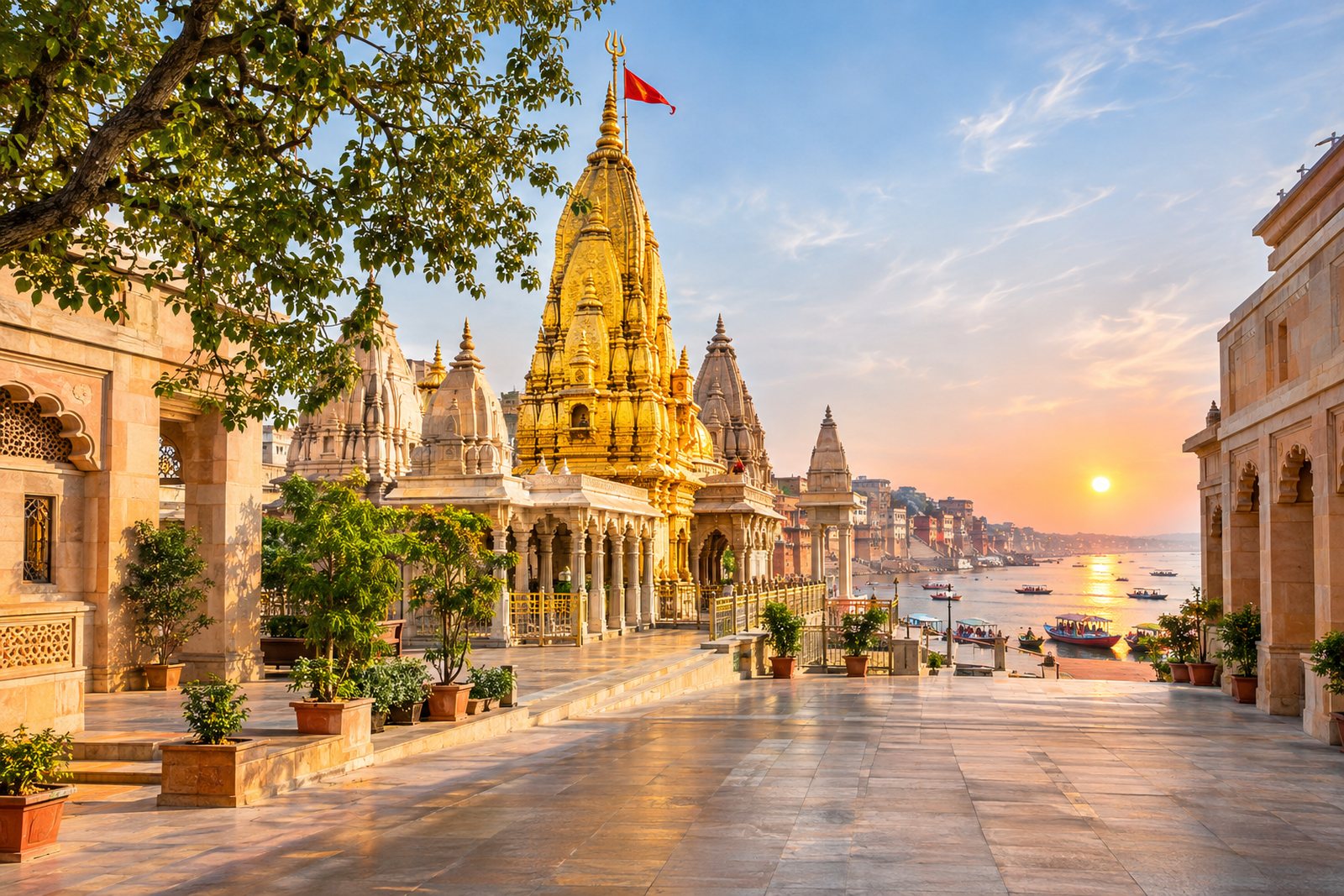
Did you know? The gold on the temple's shikhars came from Punjab. In the 19th century, Maharaja Ranjit Singh donated a huge amount of gold to cover them, which is why many locals still call it the Golden Temple of Varanasi.
The Kashi Vishwanath Dham corridor
For most of living memory, darshan meant squeezing through lanes barely wide enough for two people and a cow. Your chappals went one way and your family went another.
In December 2021, the Kashi Vishwanath Dham corridor was inaugurated. It links the temple straight to the Ganga ghats, with wide stone courtyards, rest areas and facilities. During the work, dozens of small old temples that had been swallowed up inside houses over the centuries came back to light and were kept within the complex. Today you can take a dip in the Ganga, fill your lota and walk up to Baba with the river water, the way pilgrims are said to have done long ago.
Kaal Bhairav, Annapurna and the ghats
In Kashi, protocol matters. Kaal Bhairav is the kotwal, the city's guardian, and tradition says you should take his blessing too. Many families visit him before or after Vishwanath. Close to the main temple is Annapurna Devi. Legend says Shiva himself once came to her with a begging bowl, which is why devotees believe no one in Kashi sleeps hungry.
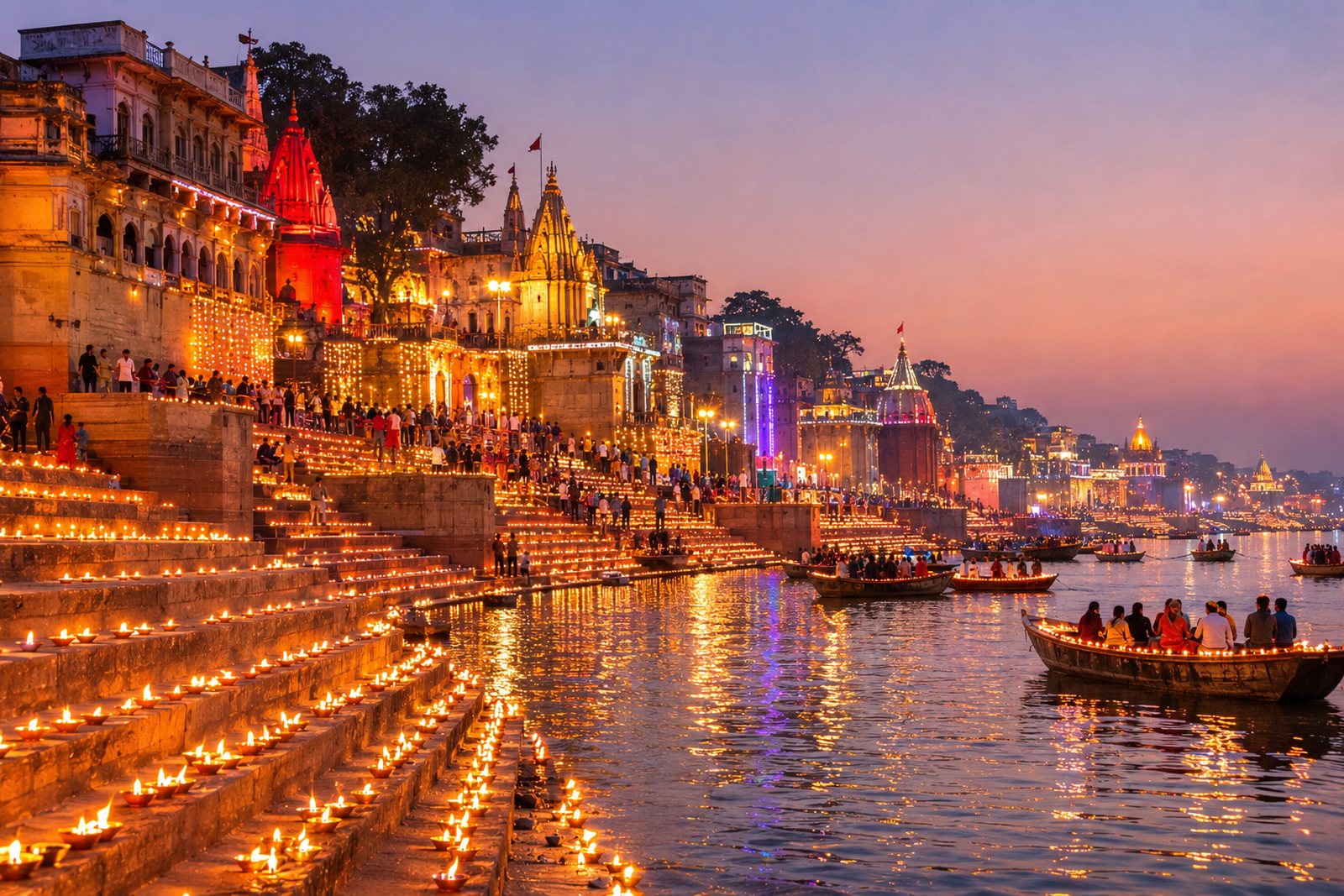
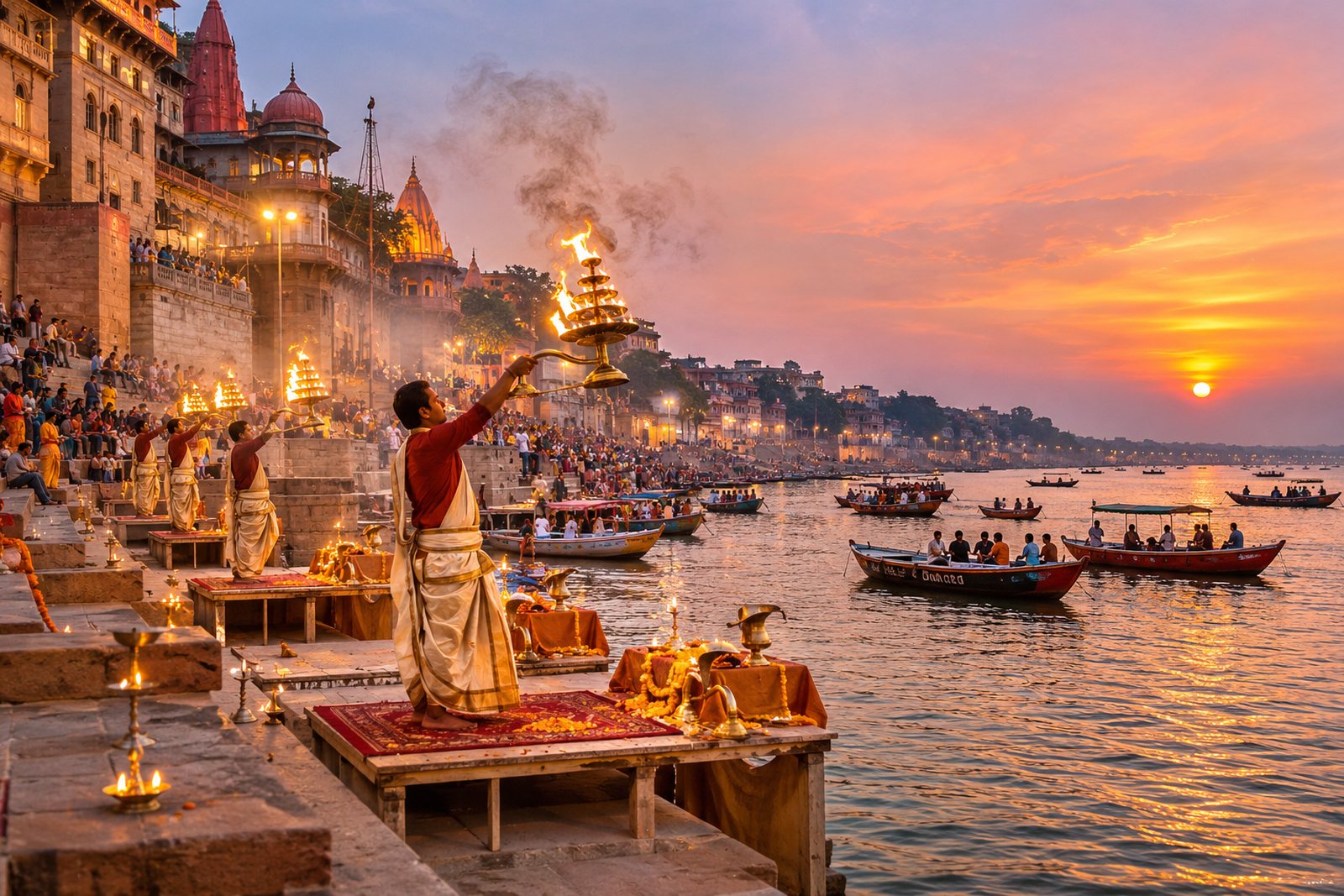
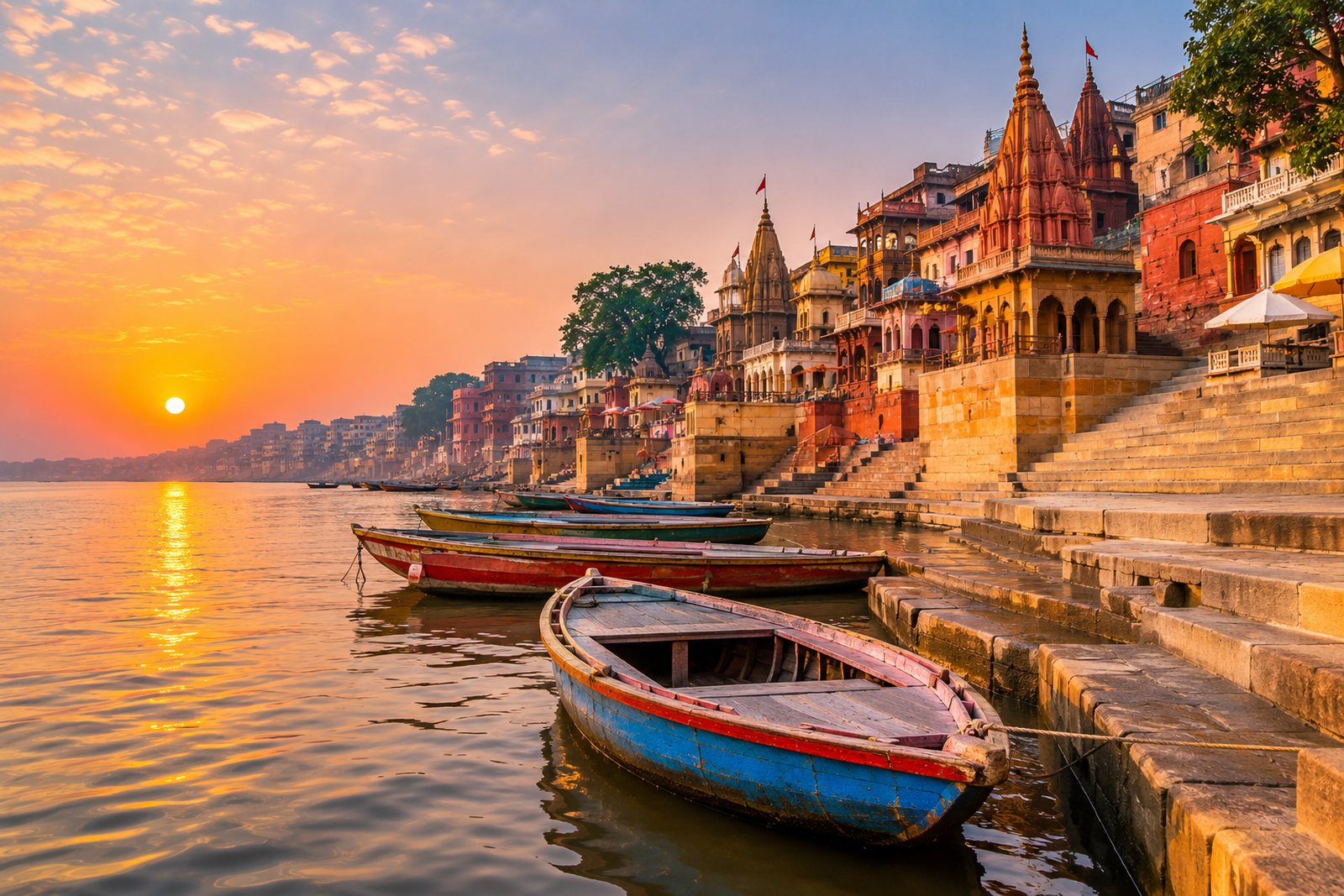
In the evening, the Ganga aarti at Dashashwamedh ghat is pure theatre: brass lamps, conches, bells and a crowd on the steps and in the boats. At sunrise, take a boat along the ghats while the city brushes its teeth in the river. Finish with kulhad chai, a Banarasi paan, and in winter a bowl of malaiyo, the morning milk foam that disappears once the sun gets strong.
BellaSafar's Kashi Vishwanath Darshan covers the temple, the ghats and the aarti with stays and transfers, and Varanasi Explorer gives you an extra day for Sarnath and the old city. If Kashi is one stop on a longer quest for all 12 Jyotirlingas, plan it in the cooler months.
How to plan your Kashi Vishwanath darshan
- Where: Vishwanath Gali near Dashashwamedh ghat, in old Varanasi. Lal Bahadur Shastri airport is around 25 km away. Varanasi Junction and Banaras stations connect to most big cities.
- Best time: October to March. Dev Deepawali, when the ghats are lit with lamps, is special. Summers are very hot, and Shravan Mondays and Mahashivratri bring enormous crowds.
- Darshan: Phones, bags and leather items are generally not allowed inside, so use the lockers. Mangala Aarti and special darshan are booked through the temple trust's official channels. Timings change, so check before you go.
- Dress: Modest, comfortable clothes. You may be barefoot on stone for a while.
- Touts: Ignore anyone in the lanes promising "VIP darshan". Use only official passes.
- How long: Two to three days for Varanasi. The temple visit itself depends on the queue.
- Combine with: Sarnath, around 10 km away, and Prayagraj, a few hours by road.
Our tip: Take the sunrise boat ride first, get off near the corridor's river entrance and walk up for darshan straight from the Ganga. The morning light on the gold shikhar is worth the 4:30 alarm.
Why Kashi stays with you
Kashi is loud, crowded and completely unbothered by your plans. It is also the one city where life and death sit together on the same steps without fuss. Stand in that courtyard with Ganga water in your hands and you understand why people say Shiva never left. Neither, in a way, do you.
Planning the yatra? Read our Varanasi trip plan or browse all Varanasi holiday packages.
Frequently asked questions
Who built the present Kashi Vishwanath temple?
The present temple was built in 1780 by Ahilyabai Holkar, the Maratha queen of Indore. Maharaja Ranjit Singh of Punjab later donated gold to cover its shikhars.
Why is Kashi called Avimukta?
Avimukta means never abandoned. Tradition holds that Shiva never leaves Kashi, and that the city rests on his trishul, so it survives even the end of the world.
What is the Kashi Vishwanath Dham corridor?
It is a large redeveloped complex, inaugurated in December 2021, that links the temple directly to the Ganga ghats with wide courtyards in place of the old narrow lanes.
How do I book Mangala Aarti at Kashi Vishwanath?
Mangala Aarti and special darshan are booked through the temple trust's official channels. Book early, carry ID, and avoid touts who promise VIP entry.
How many days are enough for Varanasi?
Two to three days is comfortable for Kashi Vishwanath darshan, a Ganga aarti, a sunrise boat ride, Kaal Bhairav and a half day in Sarnath.