Kanwar Yatra Haridwar: The Saffron Month of Shravan
In Shravan, kanwariyas in saffron carry Ganga jal from Haridwar to Shiva temples back home. What the Kanwar Yatra is, and what it means for your Haridwar trip.
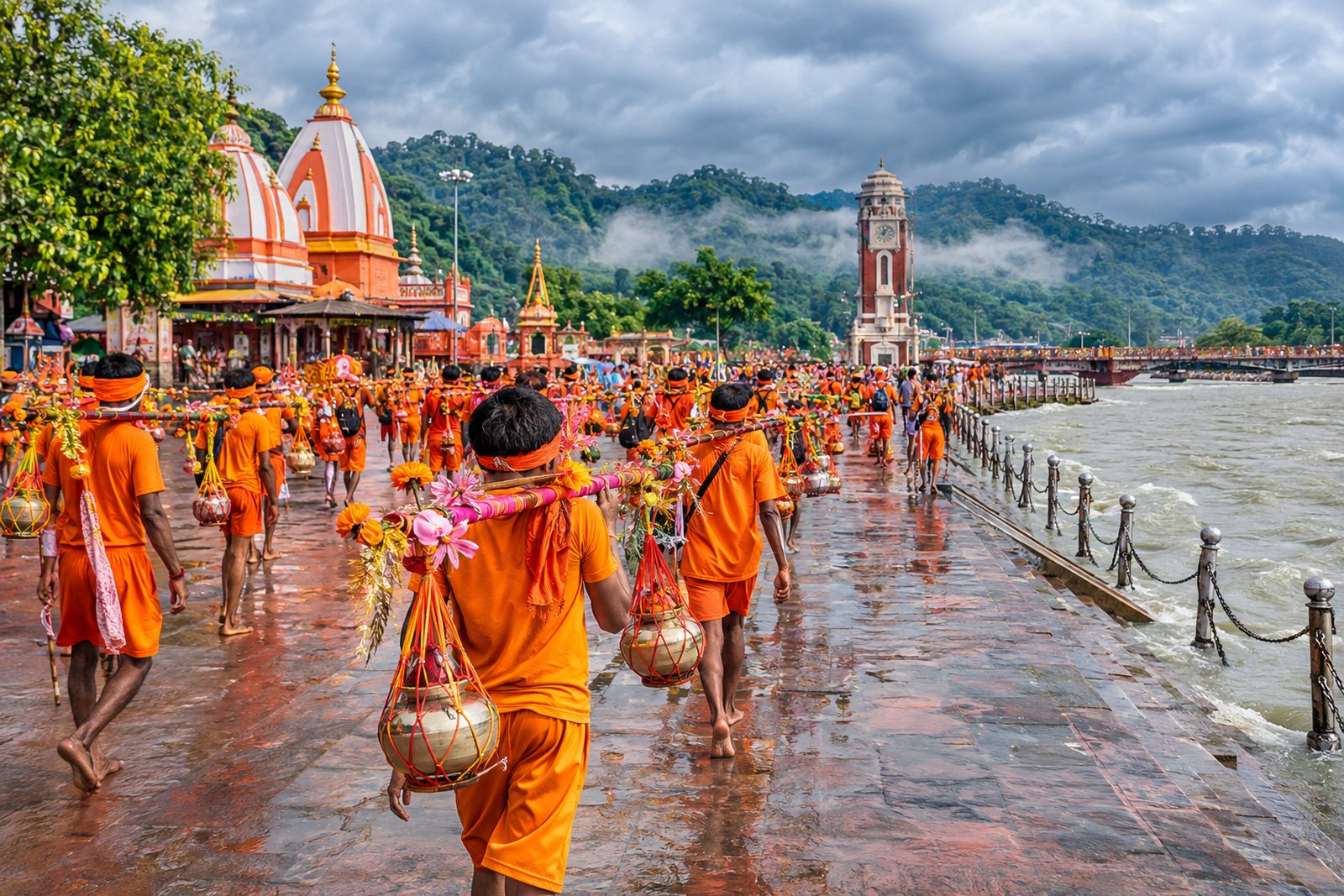
The highway smells of incense, diesel and wet earth. A line of young men in saffron T-shirts walks along the left edge, barefoot, each balancing a bamboo pole on one shoulder, a decorated pot of water swinging at each end. A truck with loudspeakers crawls beside them, blasting Bhole Baba bhajans. Someone shouts "Bam Bam Bhole!" and fifty voices answer. It is Shravan, the monsoon month of Shiva, and every road to Haridwar has turned saffron.
This is the Kanwar Yatra. If you are planning a Haridwar trip in July or August, you need to know about it, either to join it, to watch it, or to plan around it.
What is the Kanwar Yatra?
Kanwariyas, devotees of Lord Shiva, travel to Haridwar to collect Ganga jal, holy water from the Ganga, usually from around Har Ki Pauri. They carry it in pots hung from a bamboo pole called a kanwar, and then walk back, often for days and hundreds of kilometres, to offer the water on a Shiva linga at a temple near their home in Uttar Pradesh, Haryana, Delhi, Rajasthan and beyond.
The yatra takes place in the Hindu month of Shravan, usually July to August, and builds to its peak around Sawan Shivratri. Dates change every year with the lunar calendar. Haridwar is not the only source of water; Gaumukh, Gangotri, Rishikesh and other places on the Ganga also draw kanwariyas, and in Bihar and Jharkhand a separate great yatra runs from Sultanganj to Deoghar. But Haridwar is the centre of the North Indian Kanwar season.
The legend behind the water
According to Puranic stories, when the devas and asuras churned the ocean for amrit, a deadly poison called halahal came up first. To save the world, Shiva drank it and held it in his throat, which turned blue, giving him the name Neelkanth. Devotees believe that pouring cool Ganga water on the Shiva linga in Shravan soothes that burning. Other legends link the first kanwar to Parashurama or to Ravana. Like many traditions, the stories differ by region; the devotion is the same.
Did you know? A kanwar, once filled with Ganga jal, is traditionally not supposed to touch the ground until the water is offered. That is why you will see roadside camps with special stands where kanwariyas hang their kanwars while they rest.
Kinds of kanwar you will see
- Regular kanwar: Pilgrims walk at their own pace, resting at camps along the route.
- Khadi kanwar: The kanwar is never put down, even on stands, so a partner holds it while the other rests.
- Dak Kanwar: Teams carry the water in relays at a running pace, often with support vehicles, to reach the temple fast. Usually seen in the last days before Shivratri.
All along the routes, volunteers set up shivirs, camps offering food, water, first aid and a place to sleep. The scale is enormous. Officials have reported very large numbers of kanwariyas in recent years, and Haridwar's ghats can look like one long saffron river.
What it means for travellers
If you are visiting Haridwar during the yatra, be ready for:
- Road diversions: Authorities usually announce traffic restrictions on highways towards Haridwar and inside the city during the peak period. Some vehicles may not be allowed on certain routes. Check police advisories before you start.
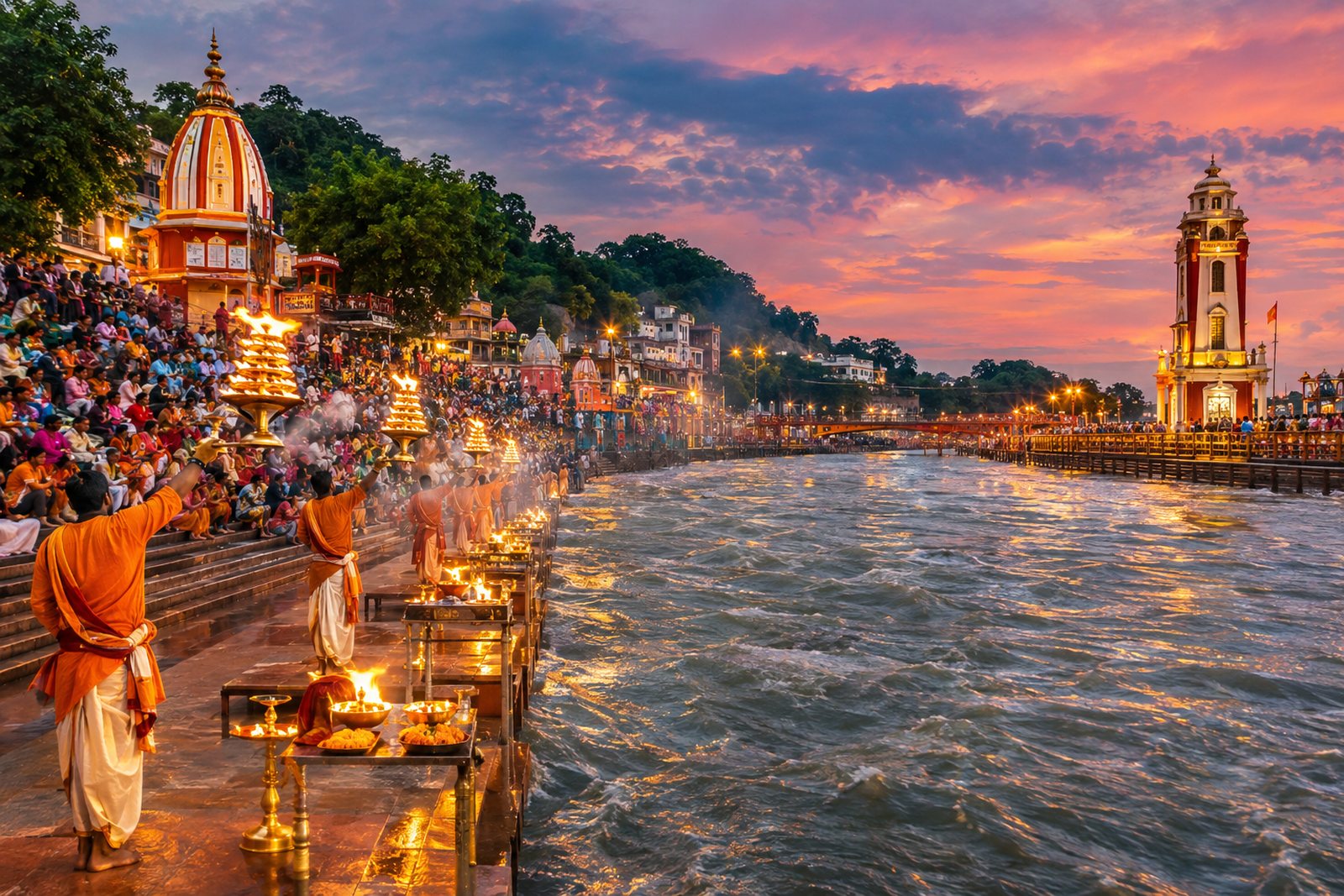
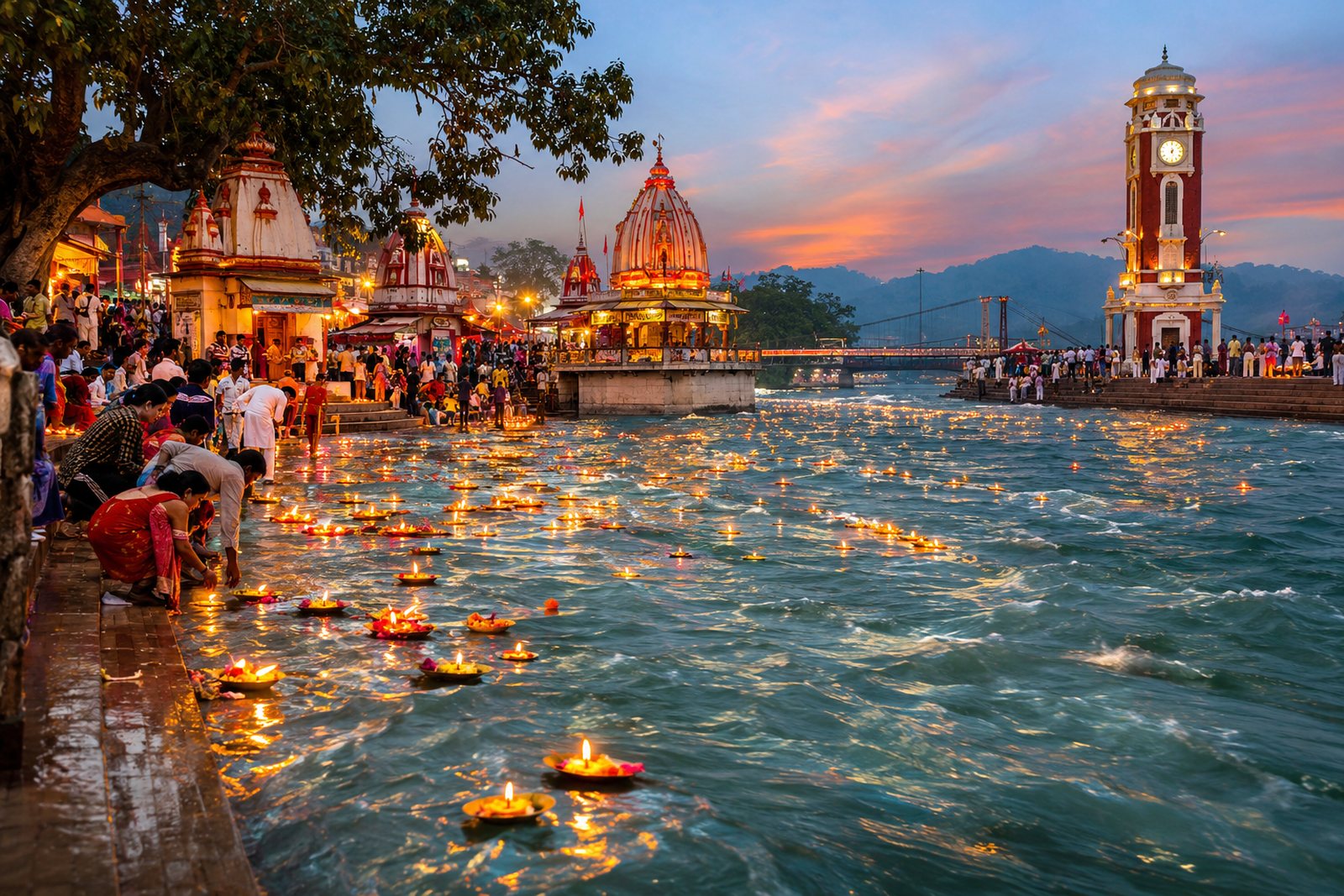
- Huge crowds: Har Ki Pauri and the ghats are packed, and the evening Ganga aarti becomes very crowded.
- Hotel pressure: Rooms fill up, especially closer to Shivratri.
- Monsoon: Heavy rain, a fast-flowing Ganga and landslides on hill roads beyond Haridwar. Bathe only at ghats with chains and lifeguards, and follow local instructions.
- Schools and offices: Some districts on the route close schools during the peak days.
Our tip: If you want to see the Kanwar Yatra without being swept into it, visit Haridwar in the early part of Shravan, stay near the ghats, watch from a safe spot in the morning, and avoid driving on the highways in the final days before Shivratri.
Prefer a calm Haridwar trip? Pick another month
For most families, the best time for a peaceful Haridwar trip is October to March, when the weather is pleasant and the Ganga aarti feels intimate. The Kedarnath and Badrinath route beyond also gets heavy rain and landslide risk in July and August, so pilgrims planning both usually avoid the peak monsoon.
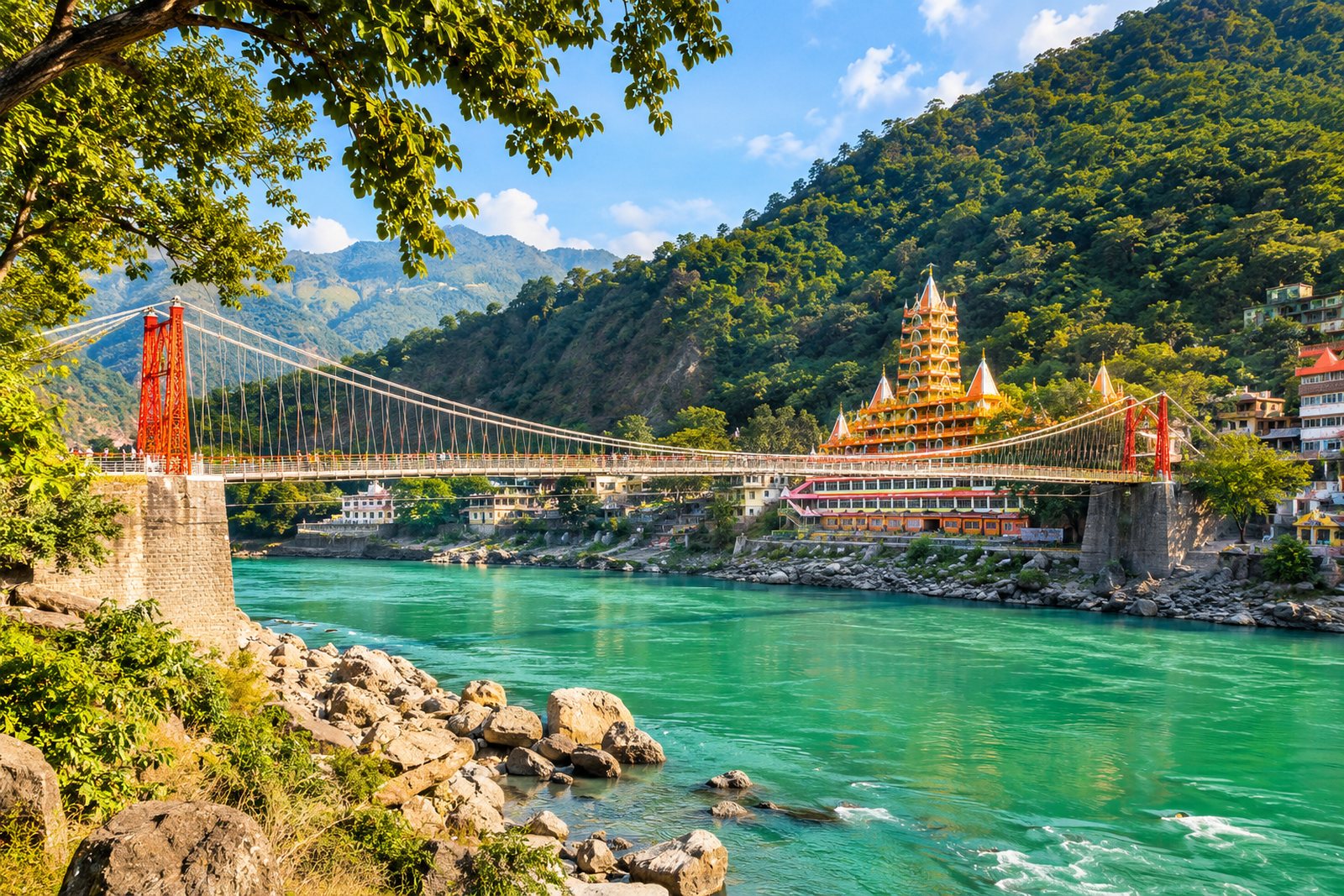
The Haridwar Darshan package gives you two nights with temples and Ganga aarti on one day and an ashram circuit with Chilla on the other, as per the package itinerary. Haridwar & Rishikesh adds a third night and a Rishikesh day for the ghats and bridges, and Do Dham Yatra goes on to Kedarnath and Badrinath, best planned outside the heavy monsoon weeks.
Quick notes for Shravan
- When: Shravan, usually July to August; dates vary every year.
- Peak: The last days before Sawan Shivratri.
- Check: Police and administration traffic advisories before travel.
- Respect: Give way to kanwariyas, never touch someone's kanwar, and keep calm in crowds.
- Scams: Use only official channels for any puja or donation.
You do not have to carry a kanwar to feel it. Stand at Har Ki Pauri on a Shravan morning, watch the pots being filled one after another, and you will see what faith on foot looks like.
Before you go, read our Haridwar Rishikesh trip guide or browse all Haridwar holiday packages.
Frequently asked questions
When is the Kanwar Yatra in Haridwar?
The Kanwar Yatra takes place in the Hindu month of Shravan, which usually falls in July and August. The peak builds up towards Sawan Shivratri. Exact dates change every year with the lunar calendar, so check the current year's dates.
What do kanwariyas do in Haridwar?
Kanwariyas come to Haridwar to collect Ganga jal, usually from around Har Ki Pauri, in pots hung on a bamboo pole called a kanwar. They then walk back, often hundreds of kilometres, to offer the water on a Shiva linga at a temple near home.
Is it a good idea to visit Haridwar during the Kanwar Yatra?
Only if you want to experience the yatra itself. Crowds are enormous, roads are diverted, and hotels fill up. For a calm Haridwar trip with Ganga aarti and sightseeing, choose another month.
Are roads closed during the Kanwar Yatra?
Yes, authorities usually announce traffic diversions and restrictions on highways towards Haridwar and in the city during the peak period. Some vehicles may not be allowed on certain routes. Check police and administration advisories before you travel.
What is Dak Kanwar?
Dak Kanwar is a form of the yatra where devotees carry the Ganga jal in relays at a running pace, often on vehicles with teams, to reach their temple quickly without stopping. It is usually seen in the last days before Shivratri.