Jaipur Street Food Trail: Pyaaz Kachori to Kulhad Lassi
Pyaaz kachori at breakfast, kulhad lassi at noon, ghewar in the walled city and kulfi at night: a full day of Jaipur street food, the way locals eat it.
Ask a Jaipur local where breakfast is and they will not point you to a hotel buffet. They will tell you to go stand on the pavement at eight in the morning, where a karahi the size of a cartwheel is already bubbling, and wait your turn for a pyaaz kachori so hot you have to pass it from hand to hand. Flaky outside, spicy onion inside, a spoon of tangy chutney on top. That is the Pink City saying good morning.
This Jaipur street food guide walks you through a whole day of eating, from that first kachori to a late-night kulfi, the way a friend from the walled city would. No shop names, because the best stall is usually the one with the longest local queue.
Morning: pyaaz kachori, mirchi bada and chai
Jaipur's breakfast is fried, and nobody apologises for it. The pyaaz kachori is the king, and the busiest spots tend to be around the railway station side of town and the older market roads. A good one shatters when you bite it, and the onion filling has fennel and a little sweetness.
Next to it in the karahi is the mirchi bada: a fat green chilli stuffed with spiced potato, dipped in besan batter and fried. It is less fiery than it looks, because these chillies are the large, milder kind. Then there is the mawa kachori, a sweet version filled with khoya and dry fruit and dipped in sugar syrup. Many visitors try it at breakfast and then need a nap.
Wash it down with a small glass of kadak chai. Morning in Jaipur is cool in winter, and standing in the sun with chai and kachori is one of the city's great small pleasures.
Midday: kulhad lassi on MI Road
By late morning, as the sun gets serious, Jaipur moves to lassi. MI Road, the long road between the walled city and the newer parts of town, is known for thick, sweet lassi served in a kulhad, a clay cup, often with a layer of malai on top. You almost need a spoon. Afterwards you drop the kulhad in the bin and the smell of wet clay stays with you a little.
This is also the time for a proper meal. A Rajasthani thali gives you the full picture in one go: dal baati churma (baked wheat balls with dal and a sweet crumbled churma), gatte ki sabzi in a yoghurt gravy, ker sangri made from desert beans and berries, bajra roti with a dollop of ghee, and a sweet at the end.
Did you know? Ker sangri started as desert food from dry Rajasthan, where ker berries and sangri beans could be dried and stored for months, and it became a festive dish over time.
Afternoon in the walled city: ghewar, chaat and golgappe
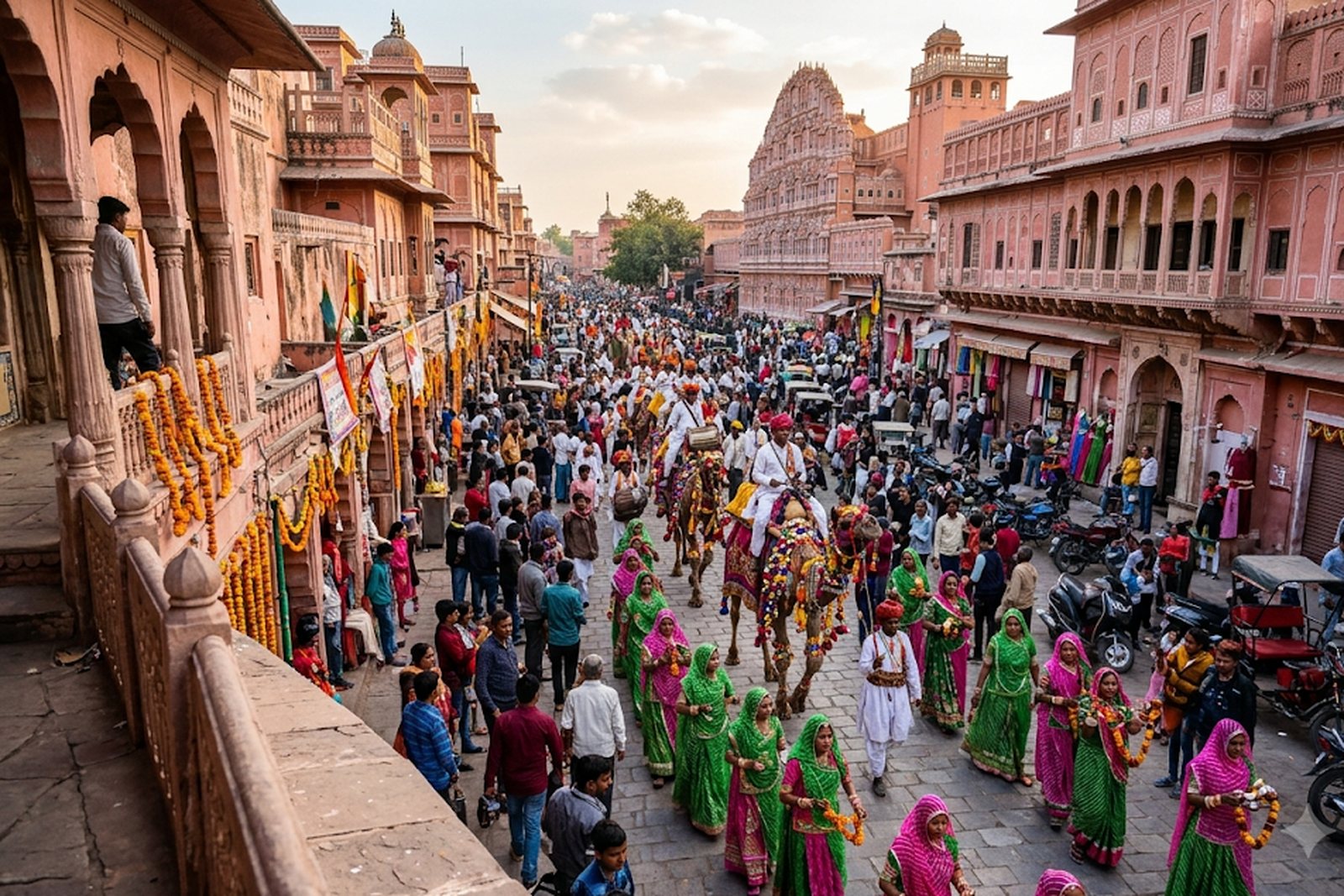
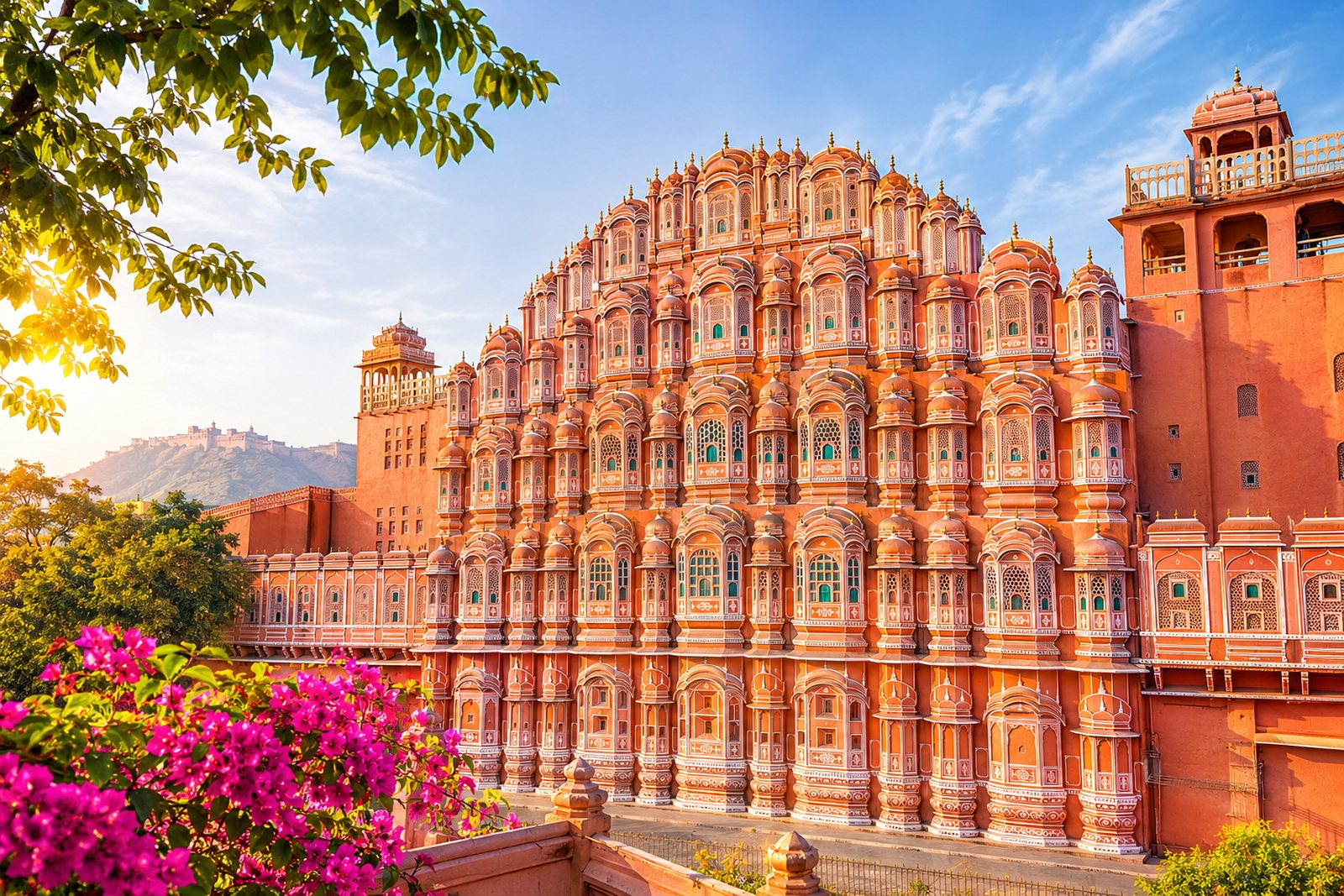
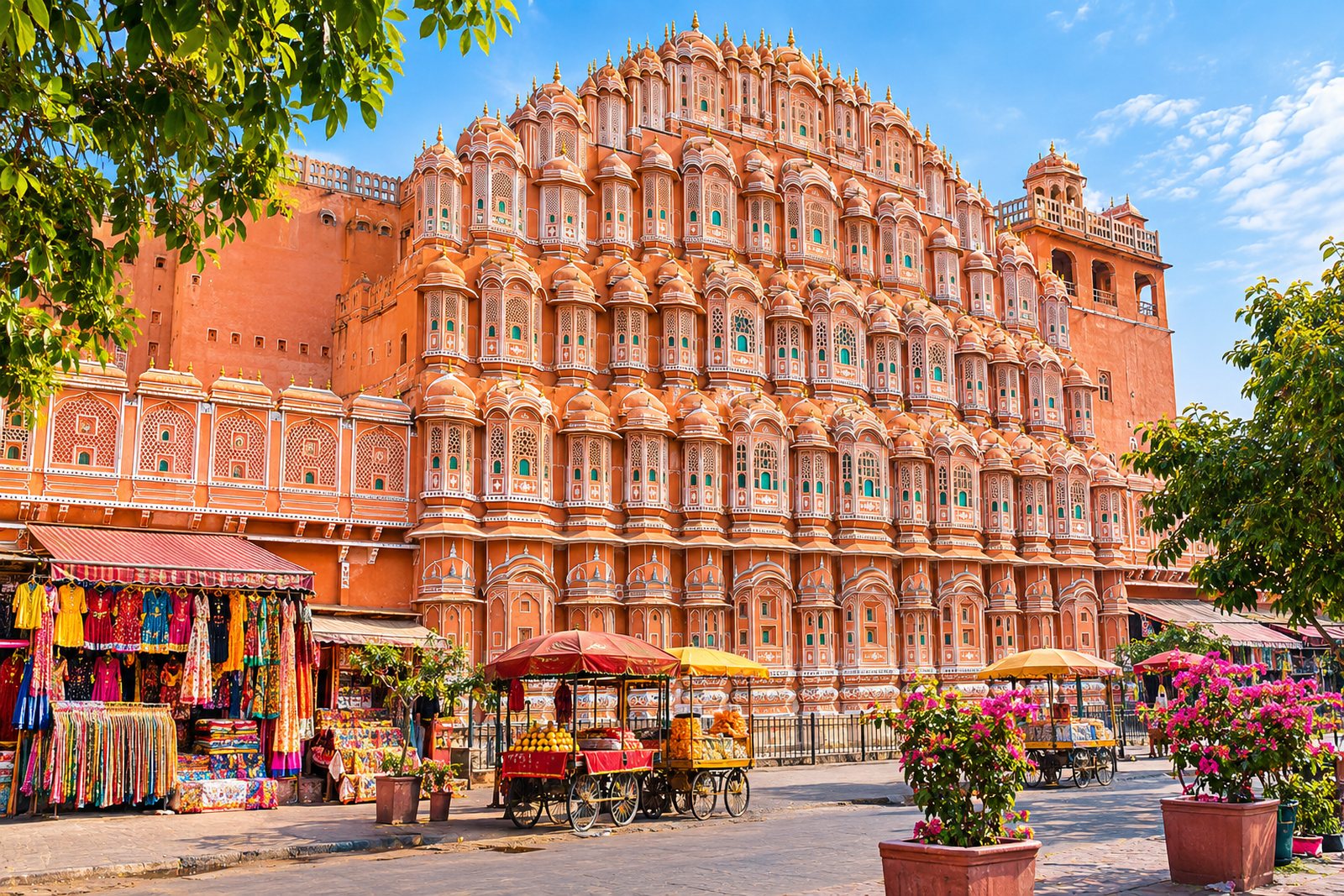
The old bazaars of the walled city, around Johari Bazaar, Bapu Bazaar and the lanes near Hawa Mahal, are where shopping and snacking happen together. Between bangle shops and block-print stalls you will find chaat carts with aloo tikki, dahi bhalla and papdi chaat, and golgappe with spicy and sweet pani.
Then ghewar. This disc-shaped, honeycomb-textured sweet is soaked in syrup and often topped with rabri or malai. It is most famous around Teej and the monsoon season, when every sweet shop stacks it high, but you can find it at other times of the year too. Plain, malai or rabri ghewar: pick one and share it, because it is very rich.
In winter, look for gajak and til sweets, especially around Makar Sankranti, when Jaipur's rooftops fill with kite flyers.
Evening: Hawa Mahal lights and night snacks
Evenings are for walking. Hawa Mahal and the old markets look lovely once the lights come on, and the street food gets a second wind: hot samosas, kachori again (no one judges), corn on the cob, and paneer or aloo tikki. Around the main city markets you will also find stalls selling moong dal pakodi, and in winter, bowls of hot gajar halwa.
If you are on an evening tour, as in some of our packages, you will see Albert Hall and Hawa Mahal lit up and come back with time for a night snack.
Late night: kulfi and rabri
End with kulfi. Jaipur's kulfi is dense, slow-melting and served in matkas or on sticks, in flavours like kesar-pista and malai. Rabri, thick reduced milk with layers of cream, is the other classic. A small bowl is enough. Two is a decision.
Our tip: Eat where locals queue and where the oil looks fresh. For kids and seniors, pick freshly fried items over pre-cut fruit or uncovered snacks, and carry your own water.
How to plan a Jaipur food day
- Start early. Kachori and chai are best before nine.
- Keep lassi for late morning, when it is hot.
- Do the walled city in the afternoon and shop as you snack.
- Leave the evening for lights, chaat and kulfi.
- Winter (October to March) is the most comfortable season for walking and eating outdoors.
- Go easy on the first day if your stomach is not used to heavy, fried food.
Where to stay for a Jaipur food trip
A hotel close to the walled city or MI Road side makes it easy to walk to food areas without long drives. Our packages include breakfast and dinner, so you can keep lunch and snacks for the street.
Jaipur City Break is two nights from Jaipur airport with an evening tour and a forts day, as per the package itinerary. Jaipur Weekend from Delhi suits a quick escape from the capital, and Jaipur with Shekhawati adds a day among the painted havelis of Mandawa and Nawalgarh.
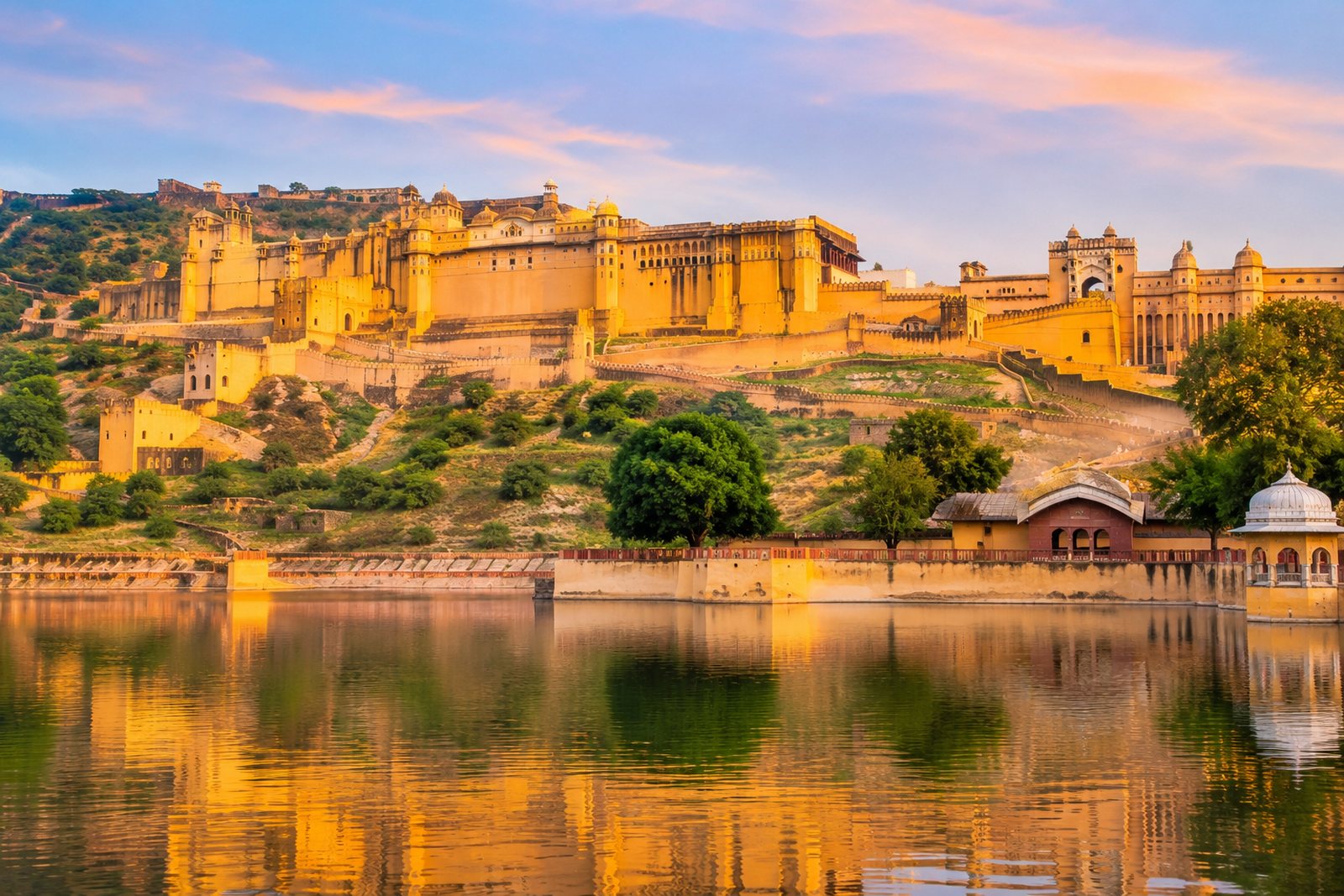
Jaipur is famous for its forts. But ask anyone who has been, and the thing they remember first is usually a kachori on a cold morning, eaten standing up.
For forts, palaces and nights, read our Jaipur trip plan, or browse all Jaipur holiday packages.
Frequently asked questions
What is the most famous street food in Jaipur?
Pyaaz kachori is Jaipur's best-known street food, usually eaten at breakfast with chutney, along with mirchi bada and mawa kachori.
Where can I find lassi in Jaipur?
MI Road is known for thick, sweet lassi served in clay kulhads, and you will find lassi in most old city markets too.
When is ghewar available in Jaipur?
Ghewar is most famous around Teej and the monsoon season, but many sweet shops sell it at other times of the year as well.
What is a traditional Rajasthani meal in Jaipur?
Dal baati churma is the classic, often served in a thali with gatte ki sabzi, ker sangri, bajra roti and a sweet.
Is Jaipur street food safe for kids and seniors?
Pick busy stalls with fresh oil, prefer freshly fried or cooked items, avoid uncovered cut fruit and carry your own water.