Howrah Bridge History: Built Without a Single Nut and Bolt
Opened in 1943 during the war, Kolkata's Howrah Bridge is held together by rivets, not nuts and bolts. The story of Rabindra Setu and how to see it best.
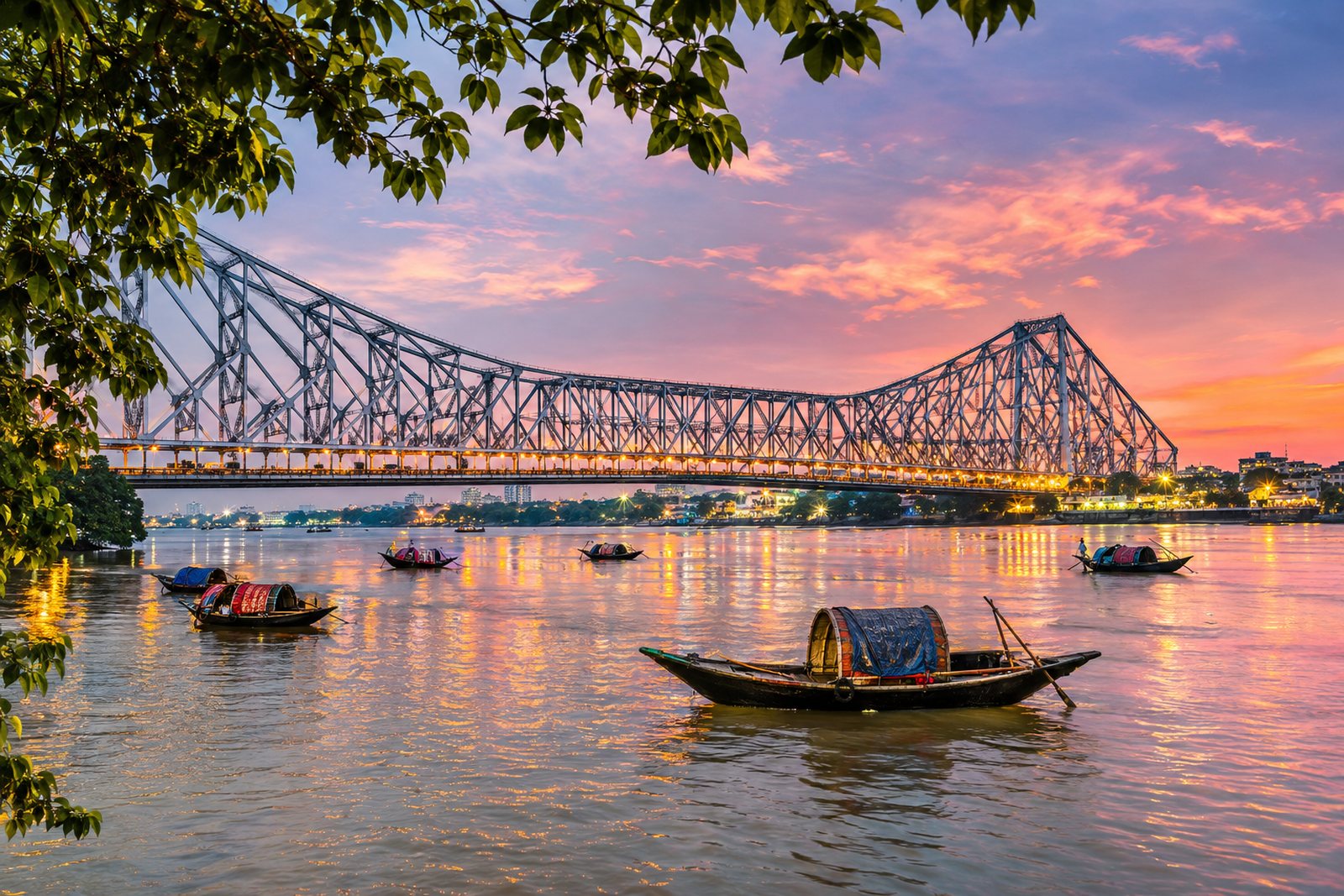
Here is a question to ask your Kolkata friend next time you are stuck in traffic on the bridge: how many nuts and bolts are holding this thing up?
The answer is none. Not one. The Howrah Bridge, the giant steel frame over the Hooghly that you have seen in a hundred Bengali films and on every second Kolkata postcard, is held together by rivets. Thousands upon thousands of them, hammered in hot during the Second World War.
Here is the story of the bridge, from the floating pontoon that came before it to the name Rabindra Setu, and the best ways to see it on your trip.
Before the bridge, a floating road
For a long time there was no bridge at all. Kolkata on the east bank and Howrah on the west were linked by ferries. Then in the 1870s a pontoon bridge was opened, a floating road resting on boats, which could be opened to let ships pass.
It worked, sort of. But Howrah station kept growing, the city kept growing, and the pontoon bridge was always going to be too small and too slow. The river was busy with ships, so piers in the water were a problem. The answer was a bridge that would cross the river in one great leap, with as little in the water as possible.
A cantilever in wartime
The design chosen was a cantilever bridge. In simple words, two huge steel arms reach out from each bank and meet in the middle, with a suspended span between them. No forest of pillars in the river.
Construction began in the 1930s. Then the world went to war. Steel from Britain became hard to get, and most of the steel for the bridge came from Tata Steel in Jamshedpur. For an Indian company at that time, it was a big moment.
The bridge was opened to traffic in 1943. There was no grand ceremony. With war in Asia and the fear of Japanese air raids on Calcutta, it is said the bridge simply opened quietly one day and people started walking across. A huge piece of engineering arrived the way a new neighbour does: without fuss.
Did you know? It is often reported that one of the biggest threats to the bridge's health has been human spit. Paan and gutka stains were found eating into the steel covers at the base of the pillars, and the authorities had to add protective covers and run awareness drives.
Rabindra Setu, and lakhs of feet every day
In 1965 the bridge was renamed Rabindra Setu, after Rabindranath Tagore. Very few people use the new name in daily talk. To almost everyone it is still Howrah Bridge, or just "the bridge".
Stand at one end in the morning and watch. Buses, taxis, handcarts, cycle vans loaded with sacks, office goers, porters with baskets on their heads, all moving across at once. It is one of the busiest bridges in the world, carrying a huge number of vehicles and lakhs of people every day. And it has done so for more than eighty years.
Mullick Ghat and the river below
The best way to understand the bridge is from below.
Walk to Mullick Ghat, right beside the bridge on the Kolkata side. In the early morning it hosts one of the biggest flower markets in the region. Mountains of marigold, sacks of rose petals, garlands being strung in seconds by expert hands. The smell, the noise and the river behind you make it one of the best mornings you can have in Kolkata.
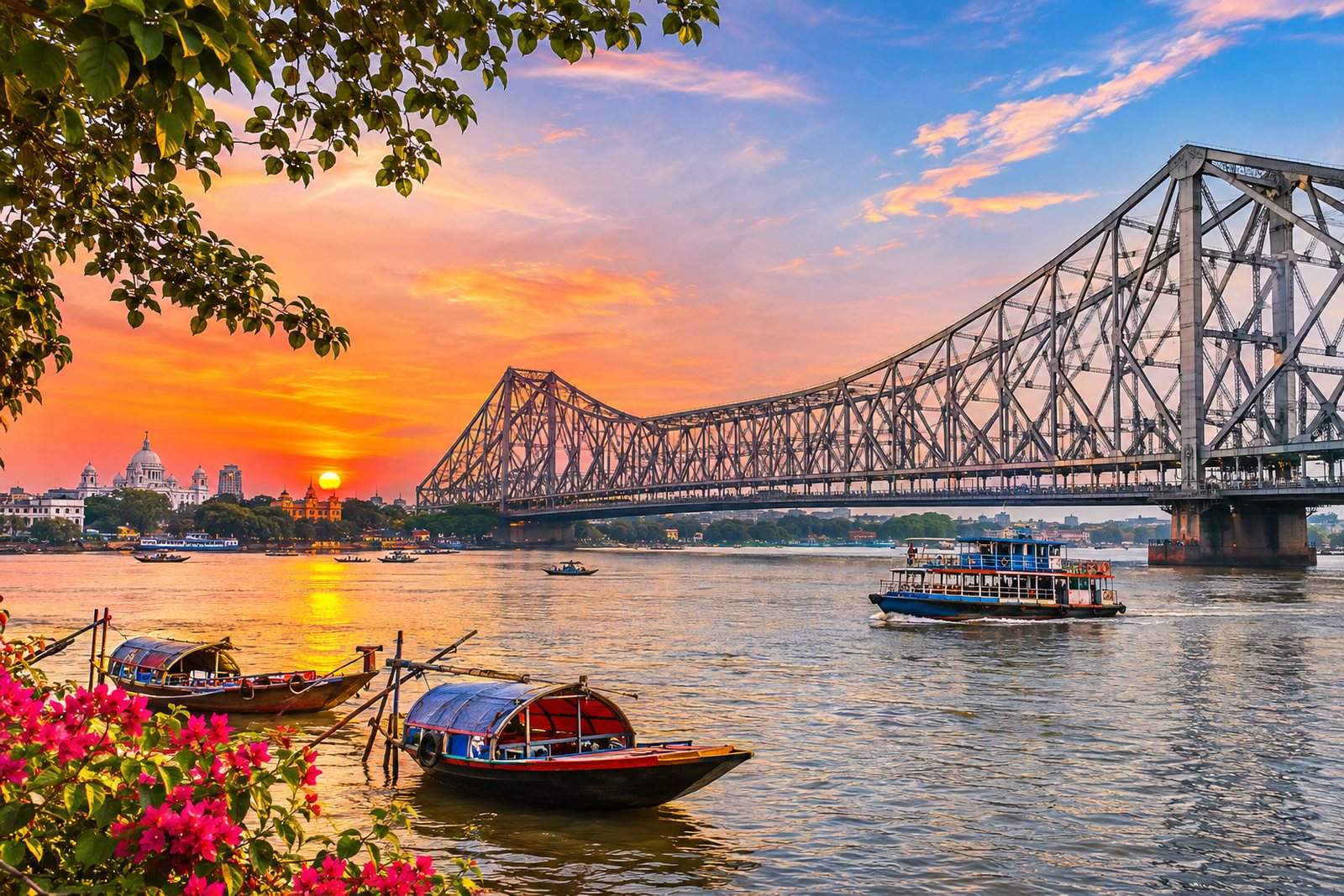
Then take a ferry across the Hooghly. Ten minutes on the water, the bridge rising over you, the old buildings of Howrah station on the other side. It costs very little and it is worth more than many paid tours.
In the evening, the riverside promenade near Millennium Park and the ghats along the Strand give a great view as the lights come on. Have a bhaar of chai, watch the boats, and do not hurry.
The Kolkata Explorer gives you 3 nights, with a full day for Howrah Bridge, the flower market and a North Kolkata heritage walk, as per the package itinerary, plus days for Victoria Memorial and the Dakshineswar, Belur Math and Kalighat temples. The shorter Kolkata City Break keeps it to 2 nights with Victoria Memorial and the temples, and you can see the bridge on your own in the evening.
How to see Howrah Bridge today
- Where: Over the Hooghly between Kolkata and Howrah, right next to Howrah railway station.
- Best time of day: Early morning for the flower market and soft light, evening for the lit-up view from the ghats.
- Best season: October to February. Summer is hot and humid, and the monsoon brings heavy rain.
- Walking across: You can walk across on the footpaths. It is crowded, so keep bags in front of you.
- Photography: Rules about photography on and around the bridge have changed at times for security reasons. Check locally and follow instructions from police.
- Combine with: Mullick Ghat flower market, a Hooghly ferry ride, the Strand and North Kolkata's old lanes.
Our tip: Take the ferry across at sunset and come back across the bridge on foot. Seeing it from the water and then from the inside of its steel frame is two different bridges.
A wartime bridge that stayed humble
The Howrah Bridge was built in a hurry, opened in silence and given a new name that nobody uses. And yet it may be the most loved structure in Kolkata. Every day it carries the city's weight, without a single bolt and without complaint.
Planning the rest of the city? Read our Victoria Memorial history, our Kolkata trip plan, or browse all Kolkata holiday packages.
Frequently asked questions
Is it true that Howrah Bridge has no nuts and bolts?
Yes, the Howrah Bridge is a riveted structure. Its steel members are joined with rivets rather than nuts and bolts, which is why it is often described as a bridge without a single nut or bolt.
When was Howrah Bridge built?
Construction of the present cantilever bridge began in the 1930s and it was opened to traffic in 1943, during the Second World War. It replaced an older floating pontoon bridge.
Why is Howrah Bridge called Rabindra Setu?
The bridge was renamed Rabindra Setu in 1965 in honour of Rabindranath Tagore, though most people still call it Howrah Bridge.
Which company supplied the steel for Howrah Bridge?
Most of the steel for the bridge was supplied by Tata Steel, at a time when wartime shortages made imported steel hard to get.
What is the best place to see Howrah Bridge?
The riverside ghats near the bridge, especially Mullick Ghat with its early morning flower market, and a ferry ride on the Hooghly give the best views. Millennium Park on the Kolkata side is also popular in the evening.