Hidimba and Bhima Legend: The Demoness Worshipped as a Goddess
In Manali, the rakshasi Hidimba married Bhima, raised Ghatotkach and became the goddess of the valley. The Hidimba Bhima legend, the temple's history and visit tips.
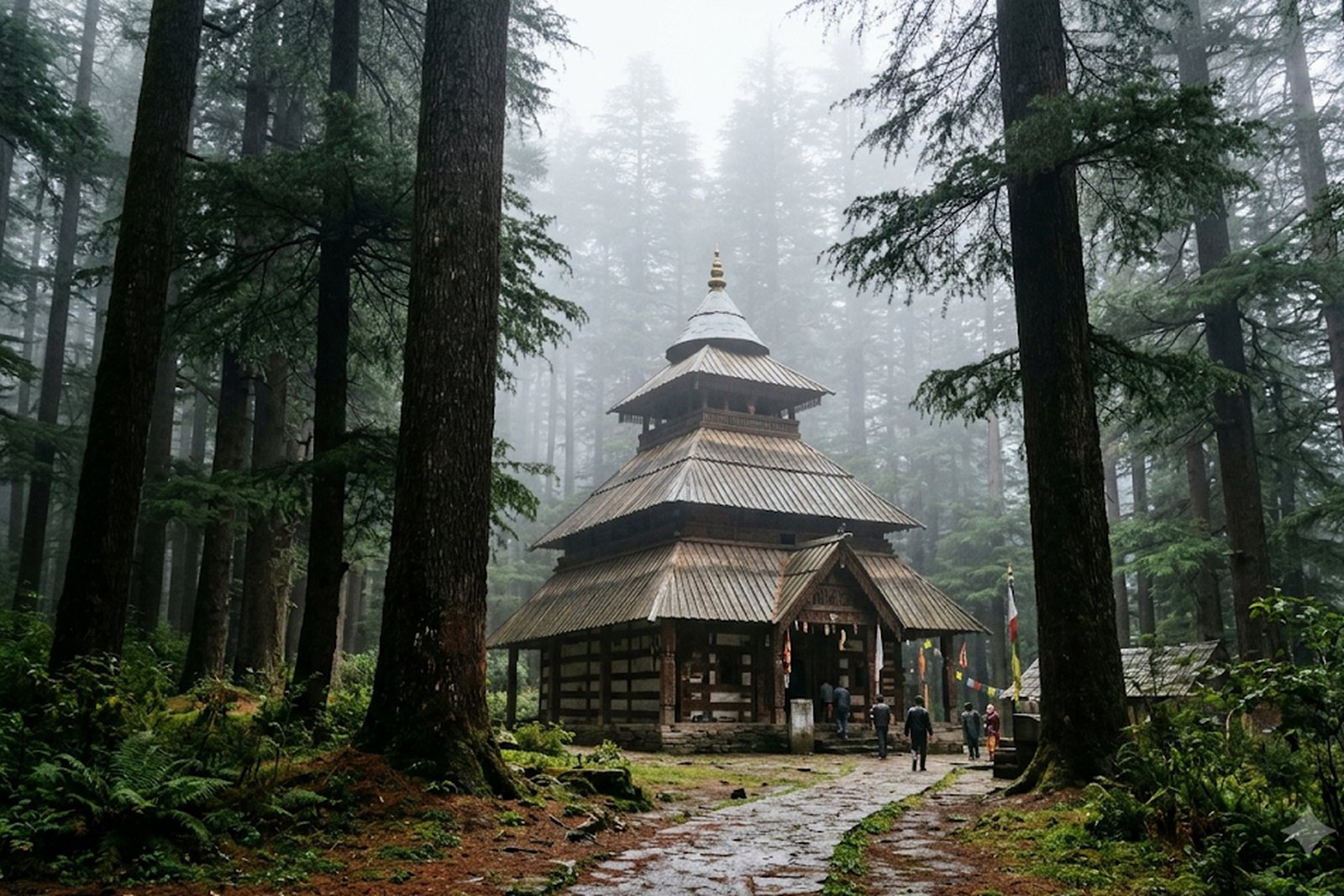
The first thing you notice is the smell. Cedar, wet earth, woodsmoke from somewhere down the slope. Then the light, coming down in thin strips between deodars so tall you have to tip your head right back to see where they end. And then, in a clearing, a temple that looks less built than grown, wooden roofs stacked one over another like a tall hat.
Inside, there is no grand idol. There is a rock, a small footprint carved on it, and a woman's name that the whole valley says with love: Hidimba.
This is the Hidimba Bhima legend, the Mahabharata story of a rakshasi who fell for a Pandava prince, how she came to be a goddess in Manali, and how to visit her forest temple today.
The legend: a sister sent to hunt
The Mahabharata tells it like this. After escaping the house of lac that was meant to burn them alive, the five Pandava brothers and their mother Kunti fled into a deep forest. Exhausted, they slept under a tree while Bhima, the strongest, kept watch.
Nearby lived a rakshasa called Hidimb and his sister Hidimba. Hidimb smelled humans and sent his sister to bring them in for dinner. She went. She saw Bhima, sitting awake in the dark, and forgot all about dinner.
Instead of attacking, she took a beautiful human form and told Bhima the truth: her brother was coming, and she wanted to save him. Hidimb arrived furious, found his sister betraying him, and charged. Bhima fought him and killed him.
What happened next surprises people who only know the Pandavas from TV serials. Hidimba asked to marry Bhima. Kunti agreed, and so did Yudhishthira, on a condition: Bhima would stay only until a child was born. Their son was Ghatotkach, who later fought for the Pandavas at Kurukshetra and died a hero's death there.
Bhima left, as agreed. Hidimba stayed in the forest.
From rakshasi to devi
The Mahabharata does not say where this forest was. Manali has no doubt. Local tradition says that after Bhima left, Hidimba gave up her old ways and did long tapasya on a rock in these woods, until she became a devi. The valley's people adopted her as their protector.
She became more than a village goddess. Hidimba is revered as the family deity of the old Kullu royal house, and she is closely tied to Kullu Dussehra. Tradition says the festival in Kullu does not begin until Hidimba Devi has arrived from Manali in her palanquin. Gods from hundreds of villages come down for that festival, but she is treated with special honour.
It is a striking idea, when you think about it. A demoness who chose love over her brother, raised a warrior son on her own, and ended up worshipped by kings.
What history says about the temple
The present temple is generally dated to the mid-16th century and credited to Raja Bahadur Singh of Kullu. It is built in the pagoda style of the western Himalaya: a stone base, carved wooden doorways, and a roof of stacked tiers topped with a brass finial. The doorway is full of carvings of animals, gods and figures from folk tales.
Inside, the sanctum is built around a natural rock rather than a sculpted image. Devotees believe this is the spot where Hidimba meditated, and the footprint on the rock is revered as hers.
Did you know? Horns of animals hang on the outer walls of the temple. They are a reminder that the hill traditions here are older and very different from those in the plains, and that Hidimba is a goddess of the forest as much as of the home.
The Ghatotkach shrine next door
A short walk from the temple, at the foot of a huge tree, is a small open shrine to Ghatotkach, Hidimba's son. Children love it because the tree is hung with bells, weapons and offerings. Many families do a quick parikrama of the tree before heading back down. It is easy to miss if you only follow the queue, so ask locally.
Visiting Hidimba Devi temple today: safety, timings, respect
- Where: in the Dhungri forest above Manali's main market, a short drive or an uphill walk of around twenty to thirty minutes.
- Crowds: May-June and holiday weekends bring long queues. Early morning is calmest.
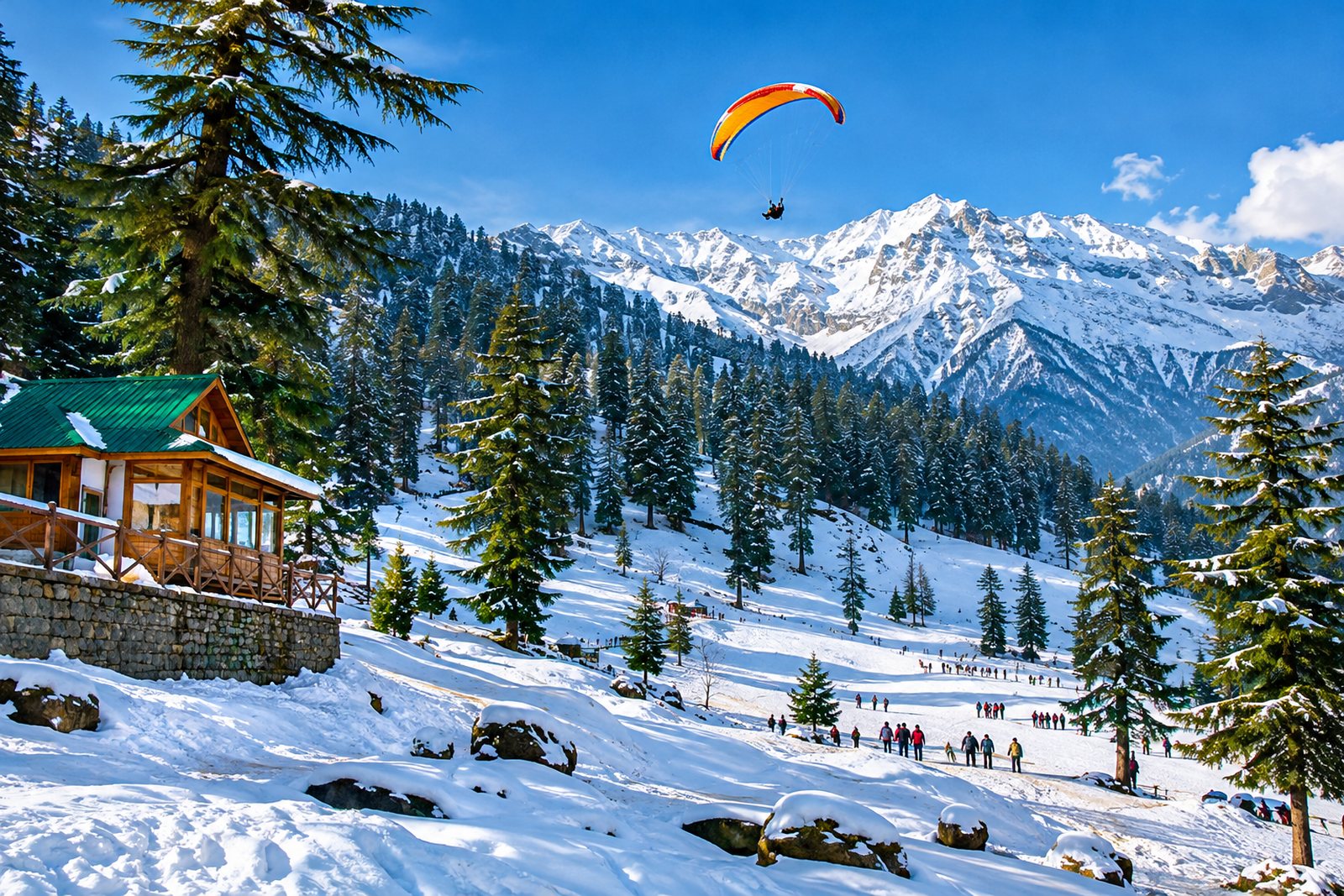
- Weather: the forest floor gets slippery after rain or snow. Wear shoes with grip, and give seniors an arm on the slope.
- Timings: generally open through the day, all year. Exact timings and any closures, especially in heavy snow, should be checked locally.
- Respect: remove footwear before entering, do not climb on the base, and ask before photographing inside.
- Yak and rabbit photos: you will be offered photos with animals and costumes near the gate. Agree on the amount first, or skip it.
- Combine with: Old Manali, Manu temple, Vashisht hot springs and an evening walk on the Mall.
Our tip: Go once at opening time, before the tour buses, and just sit on the stone ledge for ten minutes. The bells, the birds and the wind in the deodars are half the darshan.
BellaSafar's Manali Getaway gives you three nights in Manali, enough for Hidimba, Old Manali and a day at Solang, as per the package itinerary. Manali Adventure adds a fourth night and room for a Rohtang day when the pass is open, and Manali from Delhi includes the drive up from Delhi. Read our Manali trip plan for the full picture.
A goddess who chose for herself
Most legends ask you to pick sides: gods or demons, good or bad. Hidimba refuses to stay in one box. In a forest that smells of cedar and rain, that might be the most honest thing about her.
Planning the trip? Browse all Manali holiday packages.
Frequently asked questions
What is the Hidimba Bhima legend?
In the Mahabharata, the Pandavas were resting in a forest when the rakshasa Hidimb sent his sister Hidimba to catch them. She fell in love with Bhima instead. Bhima killed Hidimb, married Hidimba, and their son was Ghatotkach. Locals in Manali believe this happened in their valley.
Why is Hidimba worshipped as a goddess?
Local tradition says Hidimba gave up her rakshasa nature and did long penance in the forest after Bhima left, becoming a devi. She is revered as a protective goddess of the valley and the family deity of the old Kullu royal house.
Who built the Hidimba Devi temple?
The present wooden temple is generally dated to the mid-16th century and credited to Raja Bahadur Singh of Kullu. It is built around a rock where Hidimba is believed to have meditated.
Where is the Ghatotkach temple in Manali?
A small shrine to Ghatotkach stands a short walk from the Hidimba Devi temple, at the base of a large tree. Devotees visit both together.
What is the best time to visit Hidimba temple?
Early morning is calmest. The temple is open year round, though snow can make winter visits cold and slippery. Crowds peak in May-June and around holidays. Check timings locally.