Darjeeling First Flush: Spring Tea Season in the Hills
Fresh leaves on the bushes, pluckers on the slopes and cool spring mornings. A warm guide to Darjeeling's first flush season and how to plan your trip.
How do you drink a tea that some people wait all year for? Slowly. No milk, no sugar, no elaichi. A Darjeeling tea taster will tell you to slurp it loudly, the way your mother told you never to, so the air carries the flavour across your tongue.
That first sip of a spring tea is the whole point of a Darjeeling first flush trip. It is pale gold, closer in look to a green tea, and tastes of flowers and fresh leaves. If you only know the kadak chai of railway platforms, it will confuse you. Then it will spoil you. This guide covers what the first flush is, when it happens, what you can see on the slopes and how to plan a spring trip.
What exactly is the first flush?
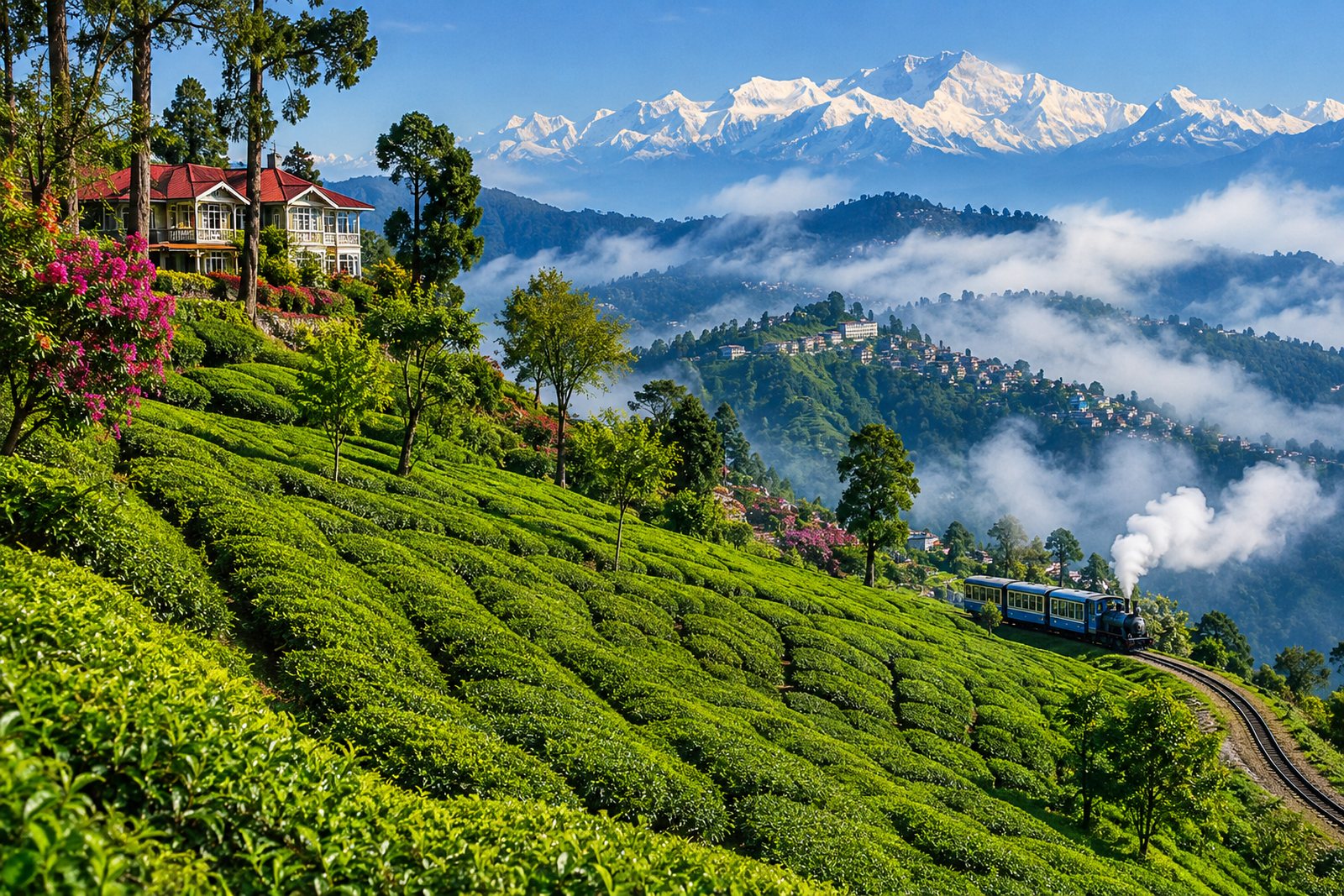
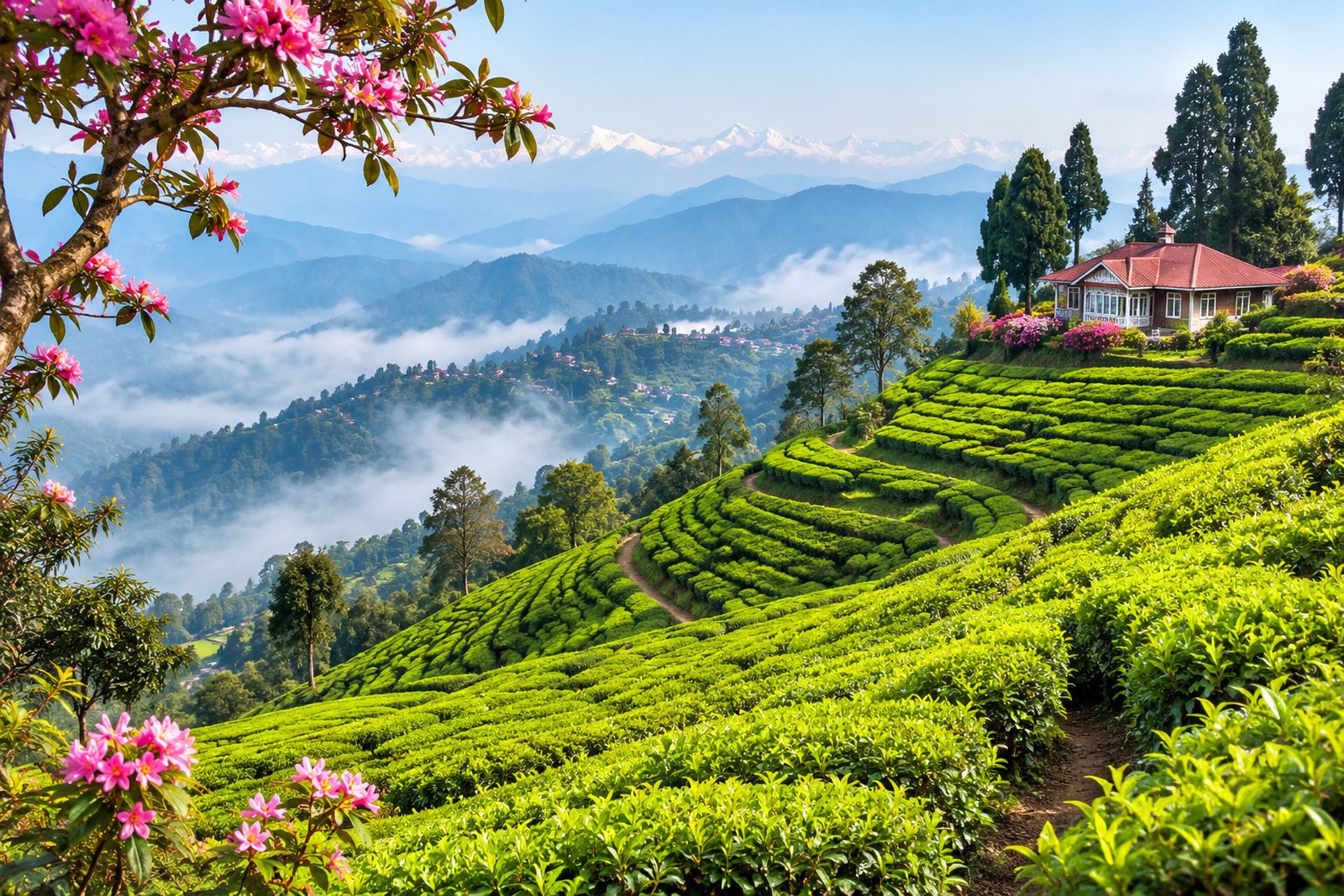
Through the cold months the tea bushes on Darjeeling's slopes go quiet. Growth slows and estates prune and tend the plants. Then, as spring warms the hills, the bushes push out their first tender shoots of the year. That growth is the "flush", and the first one is among the most prized.
Pluckers pick the young bud and leaves by hand, quick and precise, baskets on their backs held by a strap across the forehead. On a steep slope at 7 in the morning, watching them move between the rows is like watching a dance you could never learn.
The leaves then go to the estate factory for withering, rolling and drying. The result is a delicate, bright tea that buyers in many countries look out for each year.
Did you know? Darjeeling tea was among the first products in India to get a Geographical Indication (GI) tag. Only tea grown and processed in specified estates of the Darjeeling hills can legally be sold as Darjeeling tea.
When does it happen?
Generally from around late February or March into April. A late cold spell or a dry winter shifts it, so even estates cannot fix dates months ahead. March and April are your safest window. After that comes the second flush in early summer, with a deeper, muscatel taste that many people actually prefer.
What a spring day in Darjeeling feels like
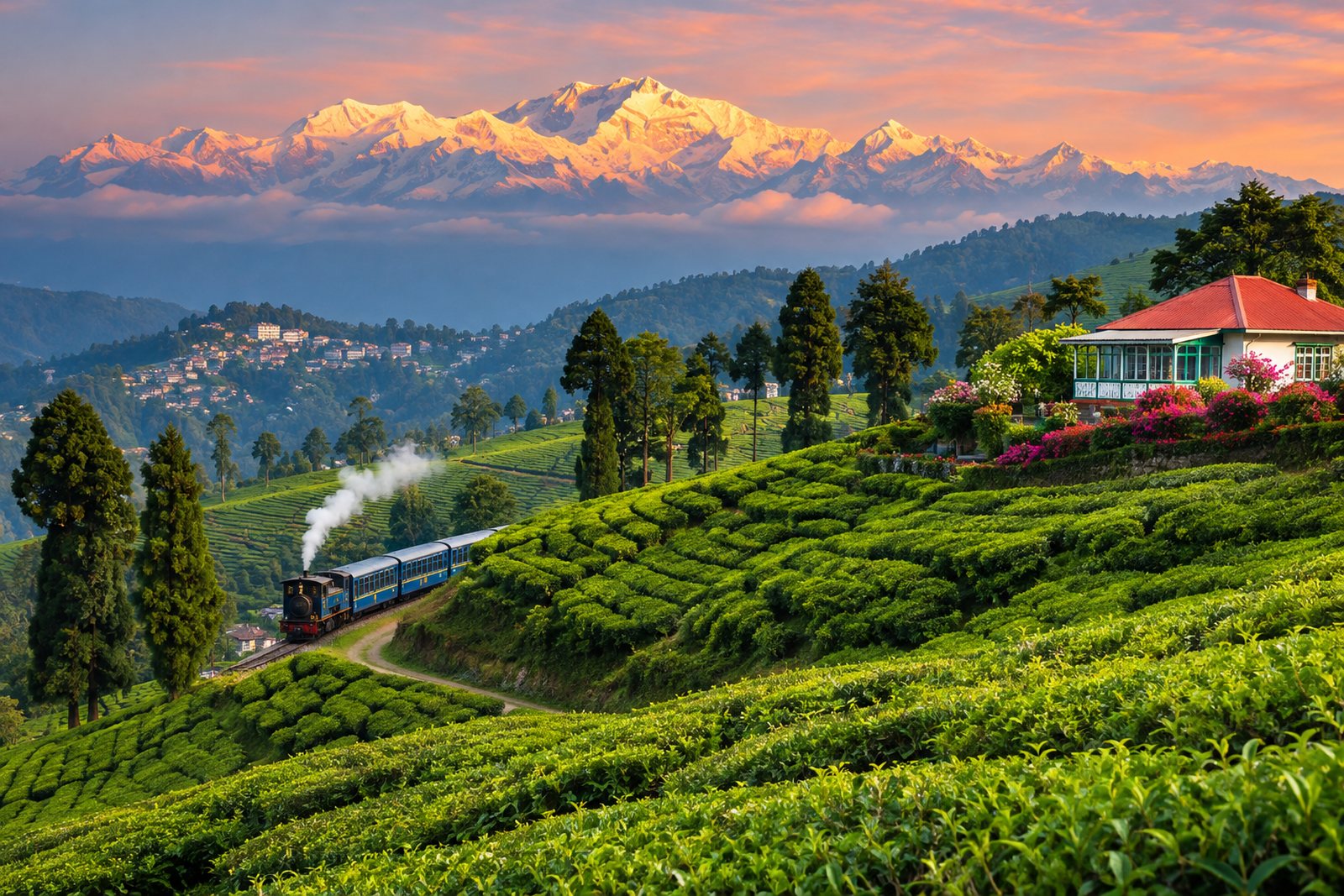
You wake at an unkind hour for Tiger Hill. In the jeep, someone is grumbling. At the top, a crowd in monkey caps holds paper cups of tea and waits. On a clear morning, Kanchenjunga catches the first light, pink, then gold, then white. Spring can be hazy on some days, so treat the view as a gift, not a guarantee.
Back in town, breakfast near Chowrasta on the Mall, with ponies and old men reading newspapers on benches. Then the tea gardens. Walk between the rows, smell the leaves, watch the plucking if it is on. Many visitors carry home a small packet of first flush bought from an estate or a reliable shop in town.
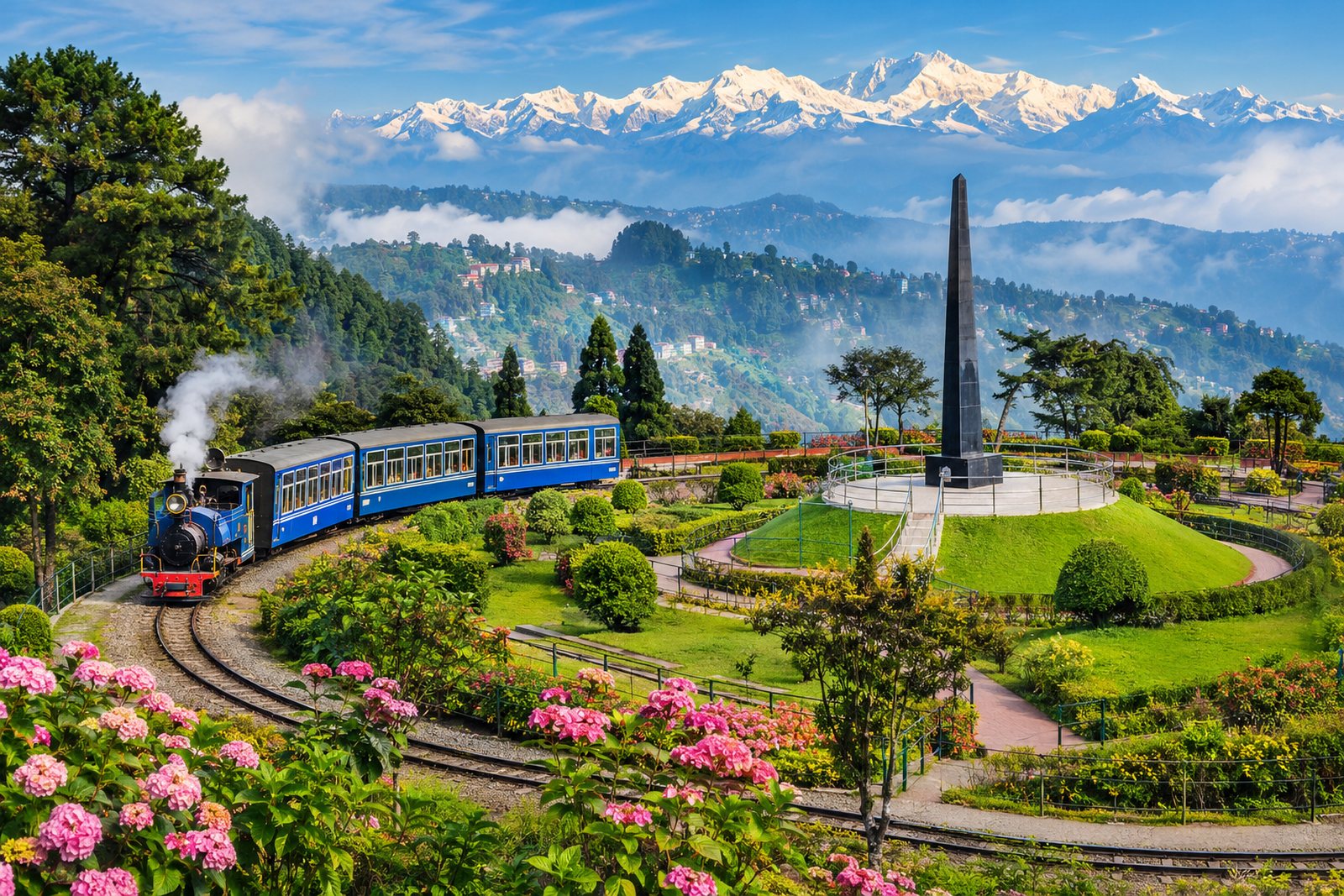
Afternoons are for the Darjeeling Himalayan Railway toy train if you have booked a joy ride, the Batasia Loop, the monastery at Ghoom, and momos with fiercely red chutney. Evenings cool down quickly. You will want a jacket.
Where to see tea gardens
- Around Darjeeling town: estates on the slopes below the Mall, some open for walks
- Kurseong: lower and greener, known as the land of white orchids, with tea slopes right beside the road
- Mirik: a lake town circled by tea gardens and pine forest, gentler and quieter
Packages for a first flush trip
The Darjeeling Getaway covers three nights with a start from Siliguri, which suits a quick spring break with Tiger Hill, town sightseeing and a garden visit as per the package itinerary.
Want more tea country? The Darjeeling Mirik Kurseong package runs five nights, with time for the lake and the lower tea slopes. And the Darjeeling & Kalimpong package adds Kalimpong's flower nurseries and monasteries across four nights.
How to taste tea like you mean it
- Ask for it plain. First flush with milk is a waste of a good leaf.
- Do not let it stew. A short steep keeps it light.
- Compare two cups side by side if a shop offers tasting. Even beginners notice the difference between flushes.
- Once home, store it in an airtight tin away from your masala dabba. Tea soaks up smells.
Our tip: Buy small quantities of two or three teas rather than one big packet. Back home, brew them for the family on a Sunday morning and let everyone pick a favourite. It beats another fridge magnet as a souvenir.
What to pack for Darjeeling in spring
- A warm jacket and a sweater; early mornings at Tiger Hill are cold
- A light rain layer; spring showers arrive without warning
- Comfortable shoes with grip for sloping garden paths
- Sunscreen; the sun is stronger than the cool air suggests
Crowd reality
Spring weather is pleasant, so the town is not empty. Weekends, and the summer holiday rush from May, fill Darjeeling and slow traffic on the hill road. Go in March or April on weekdays if you can, and book stays ahead.
The taste of a place
Most trips give you photos. This one gives you a flavour you can recognise years later. One day you will open a tin, smell those leaves, and be back on that slope at 7 in the morning, mist below you, pluckers moving between the rows, someone handing you a small cup of something pale and perfect.
Read our Darjeeling trip plan or browse all Darjeeling holiday packages.
Frequently asked questions
What is Darjeeling first flush tea?
First flush is the first tea plucked in spring, after the bushes rest through winter. The young leaves give a light, bright cup with a floral, slightly green taste, very different from strong Indian chai.
When is first flush season in Darjeeling?
Plucking of the first flush generally happens from around late February or March into April, depending on the weather that year. Second flush follows in early summer.
Can tourists visit tea gardens in Darjeeling?
Yes, several estates around Darjeeling and Kurseong allow visitors to walk the gardens, and some offer factory visits or tastings. Arrangements vary, so check locally before you go.
Is spring a good time to visit Darjeeling?
Spring is pleasant, with cool days, fresh green slopes and flowering rhododendrons higher up. Some days can be hazy, so try for Kanchenjunga views early in the morning.
How do I reach Darjeeling for a spring trip?
Most travellers fly to Bagdogra or take a train to New Jalpaiguri near Siliguri, then drive up to Darjeeling, which takes around three to four hours depending on traffic and road conditions.