Srinagar to Gulmarg Day Trip: Road via Tangmarg and Gondola Plan
A two-hour drive via Tangmarg, snow or meadows at the top, and the gondola to Kongdoori and beyond. How to plan the Srinagar to Gulmarg day trip well.
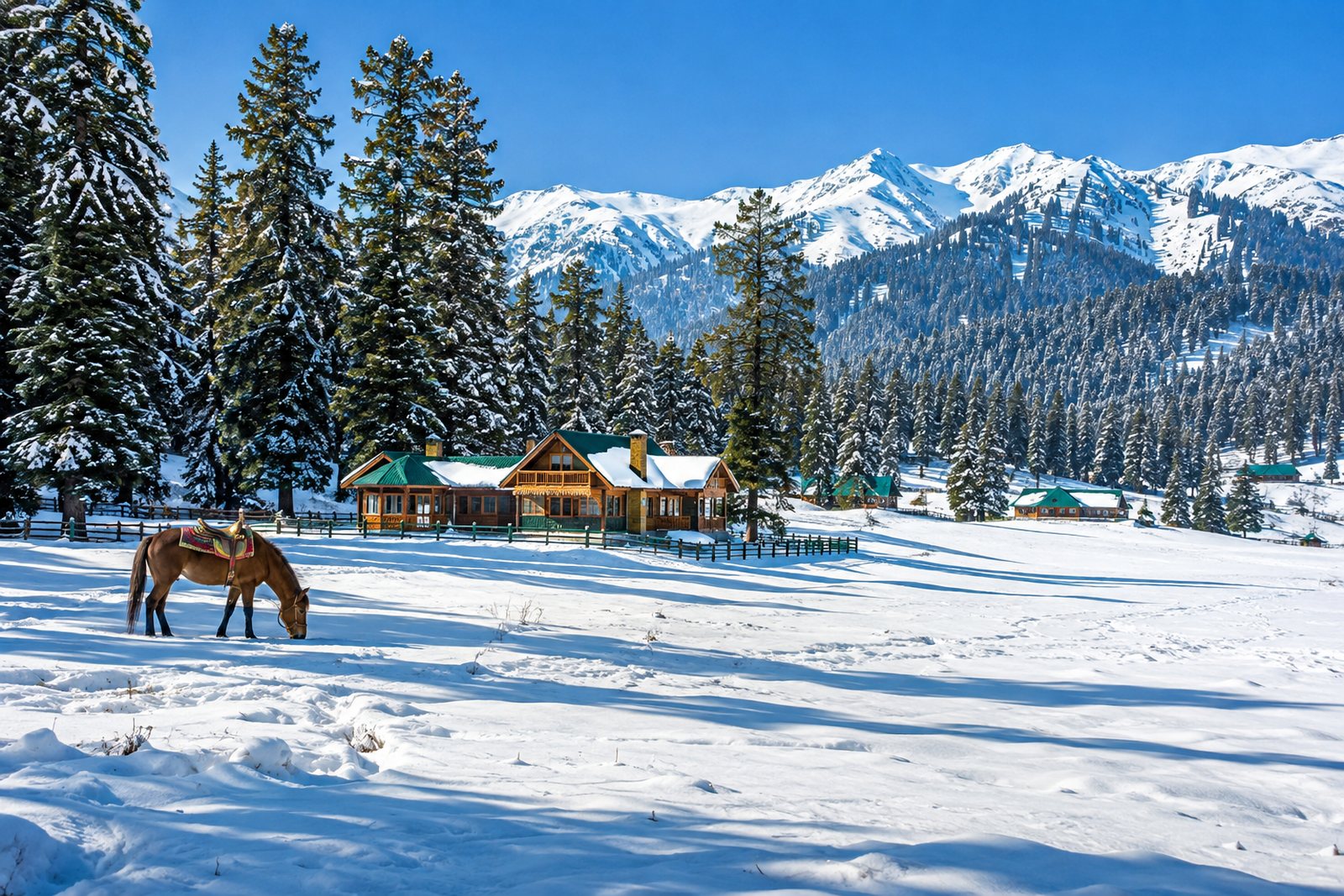
At Tangmarg, the driver pulls over without warning, gets out, and starts unrolling something heavy and clanking from the boot. Snow chains. Up ahead the road disappears into white pines, and a line of cars is doing exactly the same thing. "Ab upar chalenge, sahab," he says, wiping his hands on his pheran. Twenty minutes later you are in Gulmarg, the world has turned completely white, and the kids in the back have forgotten every complaint they ever had.
That is the winter version of the Srinagar to Gulmarg day trip. In spring and summer, the same road ends in green meadows instead. Either way, here is how to plan the day.
The drive: Srinagar to Tangmarg
Gulmarg is around 50 km from Srinagar, usually around 1.5 to 2 hours by road. Leave by seven or eight in the morning. The gondola queues build up later, and clouds often roll in after midday.
The first part of the drive is flat and gentle: out past Srinagar's outskirts, through villages with old wooden houses, mustard and paddy fields depending on the season, poplar and willow trees lining the road, and roadside stalls selling bread and kahwa. Many drivers stop at a chai spot somewhere around Magam or near Tangmarg. Try kahwa, the saffron-and-almond green tea, with a local bread. It is the right breakfast for cold weather.
Tangmarg: where the climb begins
Tangmarg is the small town at the foot of the Gulmarg climb. From here the road winds up through pine forest for the last stretch. In winter, this is the snow-chain point. Agree on chains with your driver before you start the day rather than negotiating at the roadside.
Tangmarg is also where many people get offered ponies, sledges, snow boots and coats for hire. Some of it is useful, especially gumboots if you have only sports shoes. Agree on the rate before using anything.
Our tip: Hire snow boots, not just a coat. Wet feet ruin a Gulmarg day faster than any cold wind, and most city shoes are not made for knee-deep snow.
The Gulmarg Gondola: how it works
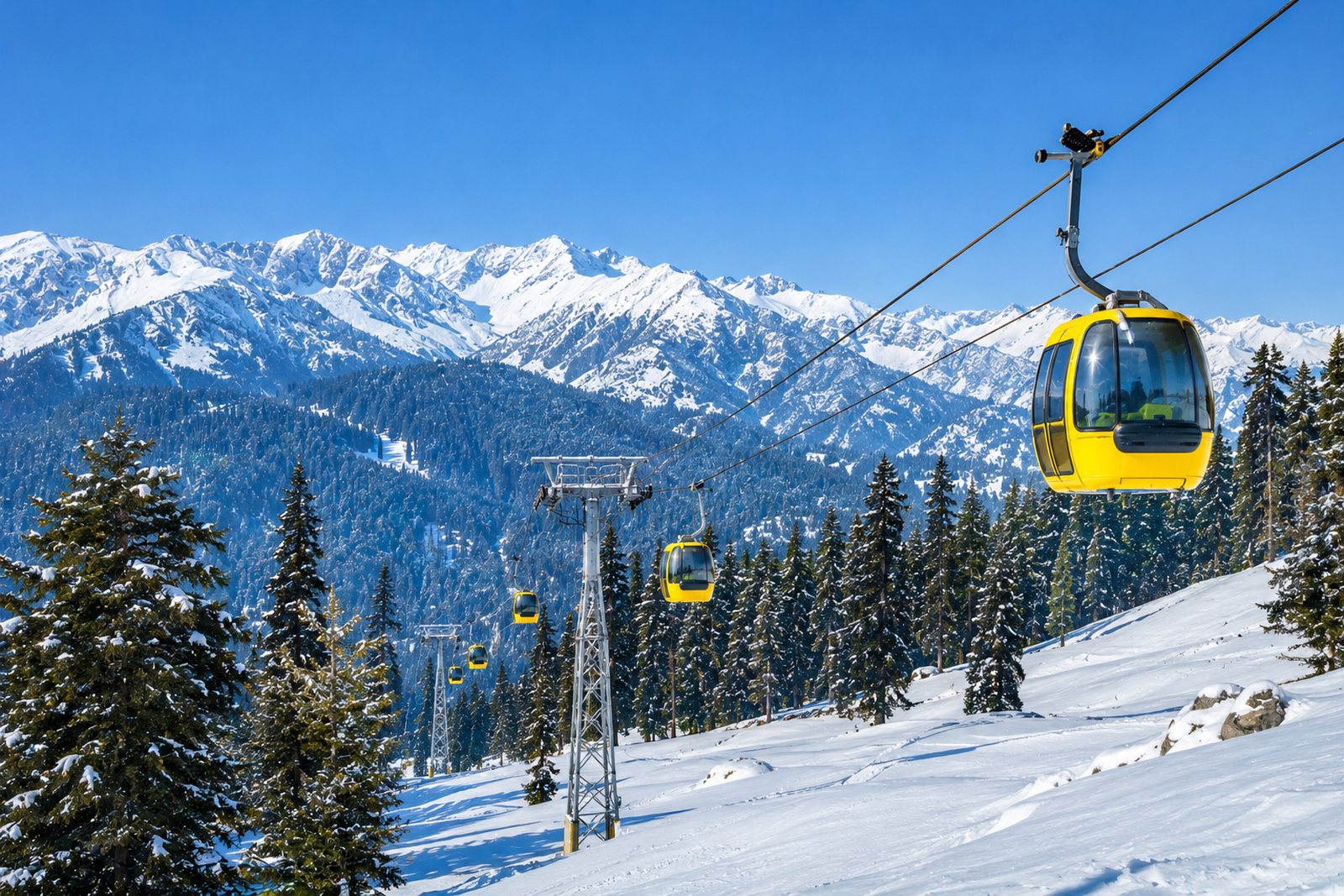
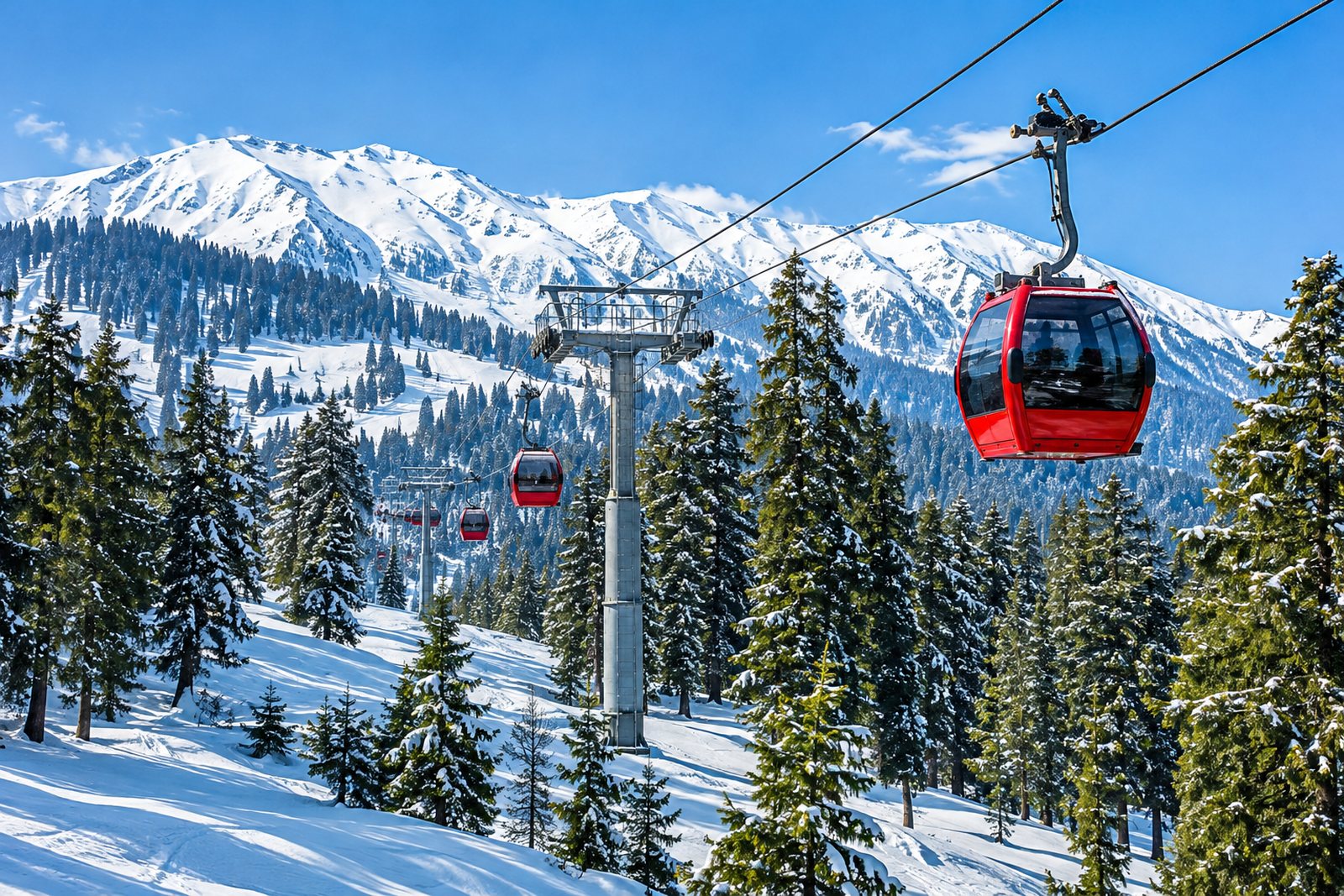
The gondola is why most people come, and it is the part to plan most carefully.
- Phase 1 goes from Gulmarg up to Kongdoori, a wide bowl with snow in winter and grassy slopes in summer. Sledging, short walks and snow play happen here. Fine for most families.
- Phase 2 goes higher, towards the shoulder of Apharwat peak, into serious high-altitude terrain with views across the Himalaya on a clear day. It is colder, windier, and often closed when weather is poor.
Book tickets in advance on the official cable car booking website; slots sell out in peak season. Keep plans flexible, because Phase 2 can shut at short notice for wind or snow. Seniors and anyone with breathing problems should stay at Kongdoori; the upper station is high, and the cold up there is a different level.
What to do at the top
In winter (roughly December to March): Sledging, a short ski lesson on the beginner slopes, snow fights, building a lopsided snowman. Gulmarg is India's best-known ski destination, and you will see skiers heading up to the higher slopes. Beginners can find instructors locally; check that they are registered.
In spring and summer: Gulmarg means "meadow of flowers", and from around April to June it lives up to it. Walks across the meadows, pony rides, the old St Mary's Church and the small hilltop Shiva temple, and one of the highest golf courses in the world.
Did you know? Gulmarg was a favourite summer retreat in colonial times, and its golf course dates back to that era. It still ranks among the highest golf courses anywhere.
Getting back to Srinagar
Start back by around four, especially in winter, when light goes early and the road can freeze. Your driver will remove chains below Tangmarg. By evening you are back in Srinagar, tired, slightly sunburnt from the snow glare, and ready for a plate of hot rogan josh or rajma-chawal.
Should you stay the night instead?
A day trip works, but Gulmarg after the day-trippers leave is a different place: quiet, cold, with stars you do not see in cities. If you have the time, one night is worth it.
The Kashmir Grand Tour does exactly this: a night in Gulmarg between Srinagar and Pahalgam, so the gondola day is not rushed, along with two nights in Srinagar with a Sonamarg excursion, two in Pahalgam and the last night back in Srinagar, as per the package itinerary.
Quick checklist for the day
- Leave Srinagar: Early morning.
- Gondola: Book online in advance; check weather on the day.
- Wear: Layers, gloves, a cap, sunglasses; hire snow boots in winter.
- Carry: Sunscreen, snacks, water, some cash.
- Know: Mobile signal can be patchy; keep your driver's number saved.
- Winter roads: Snow chains and slow driving after Tangmarg.
The road from Srinagar is short. The difference between the city and the top of the gondola is enormous. That is the magic of Gulmarg: two hours, and you are in another world.
Curious about its past? Read our Gulmarg history story or browse all Gulmarg holiday packages.
Frequently asked questions
How far is Gulmarg from Srinagar?
Gulmarg is around 50 km from Srinagar, usually around 1.5 to 2 hours by road via Tangmarg, depending on traffic and snow conditions.
Can I do Srinagar to Gulmarg as a day trip?
Yes, it is one of the most popular day trips from Srinagar. Leave early, do the gondola in the morning when skies are often clearer, and start back by late afternoon. Staying a night in Gulmarg gives a much calmer experience.
How do I book the Gulmarg gondola?
Gondola tickets are best booked in advance on the official cable car booking website, especially in peak season, as slots sell out. Phase 2 can close in bad weather, so keep plans flexible.
Do I need snow chains to reach Gulmarg?
In winter, after snowfall, vehicles often need snow chains for the climb from Tangmarg. Drivers usually arrange them; agree on it before you start rather than at the roadside.
When is the best time for a Gulmarg day trip?
December to March for snow and skiing, April to June for green meadows and flowers, and autumn for clear skies. Each season looks very different, so pick based on what you want to see.