Gulmarg History: From Meadow of Flowers to Ski Capital
Sultans came for its flowers, the British brought golf clubs and skis, and India made it a winter sports town. The story of Gulmarg, and how to visit today.
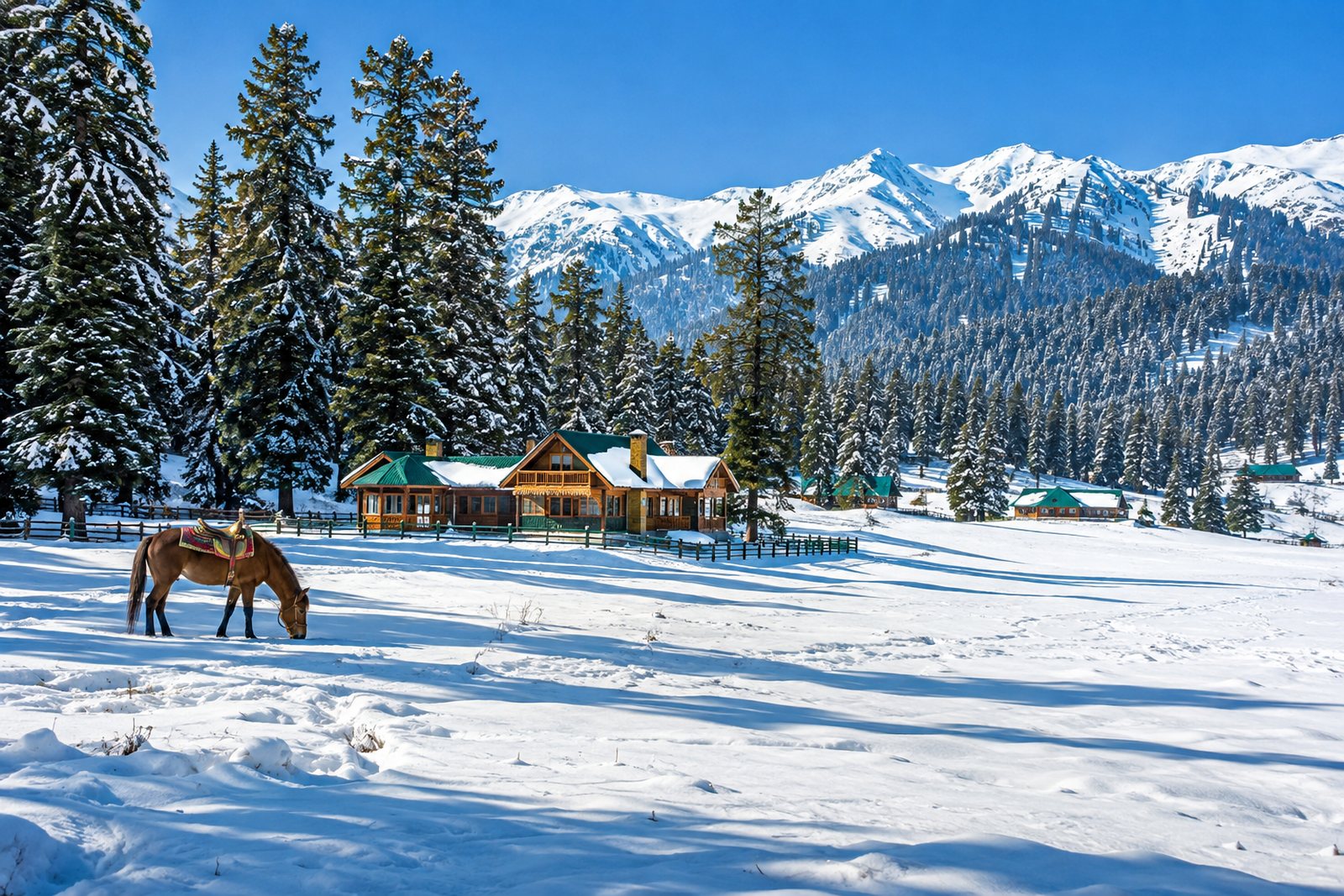
"Bhaiya, yeh sab safed kya hai?" a child asks from the back seat as the car climbs past Tangmarg, and the driver just smiles. Round the last bend the pine trees open out and there it is: a huge, bowl-shaped meadow, white from edge to edge, little huts dotted on it like someone forgot them there, and the Apharwat range standing behind like a wall.
That is Gulmarg, and its story is stranger than most hill stations. It was a flower meadow for sultans, a summer holiday camp for the British, a golf course, a ski slope, and now one of the busiest snow towns in India. Here is how the meadow got here, and how to see it properly.
Gaurimarg: the meadow before the name
Ask a Kashmiri elder and you may hear an older name first. Gaurimarg, the path of Gauri, Goddess Parvati. Local tradition holds that this was the meadow's name for a long time, and the old Shiva temple on the little hillock in the middle of the meadow keeps that memory alive.
Then, the story goes, a Kashmiri sultan of the 16th century came up here in spring, saw the grass covered in wild flowers, and called it Gulmarg. Gul is flower. Marg is meadow. The name stuck, and nobody has seriously tried to change it since.
Treat the exact sultan and year as tradition rather than a court record. Different books name different rulers. What everyone agrees on is the reason. In late spring, after the snow melts, this slope really does turn into a carpet of buttercups, daisies and forget-me-nots.
Mughal flowers and royal summers
The Mughal emperors loved Kashmir with a kind of obsession, and accounts say Jahangir collected wild flowers from these meadows. Whether or not every flower story is true, the Mughals made the Kashmir valley a summer retreat, and Gulmarg was part of that dream of cool air and green grass.
Later, under the Dogra rulers of Jammu and Kashmir, the meadow became a royal summer spot. The small temple on the hillock, often called the Maharani temple, is linked to the Dogra royal family. You will see it in a lot of old film songs too, so do not be surprised if your parents start humming something.
Golf, tents and the British summer
By the late 19th century British officers and their families were escaping the plains in summer, and Gulmarg was perfect. Flat-ish ground, cool air, a long ride from the heat of Punjab.
They did what the British always did in the hills. They built a church, a club and a golf course. St Mary's Church, a small stone church with a sloping roof, still stands near the meadow. The golf course was laid out in the early 1900s and is often described as one of the highest green golf courses in the world. Walk past it in July and you will see people teeing off with snow patches still visible on the peaks.
Did you know? Skiing in Gulmarg started with the British in the early 20th century, when a ski club was set up here. It means people have been sliding down these slopes for about a hundred years, long before winter holidays were a thing for most Indians.
How Gulmarg became India's ski capital
After independence, skiing slowly turned from a club hobby into a national thing. The Indian Army's High Altitude Warfare School is based in Gulmarg, and soldiers train on the same slopes. Government ski institutes came up, local boys became instructors, and families from Delhi and Mumbai started arriving in December just to see snow fall.
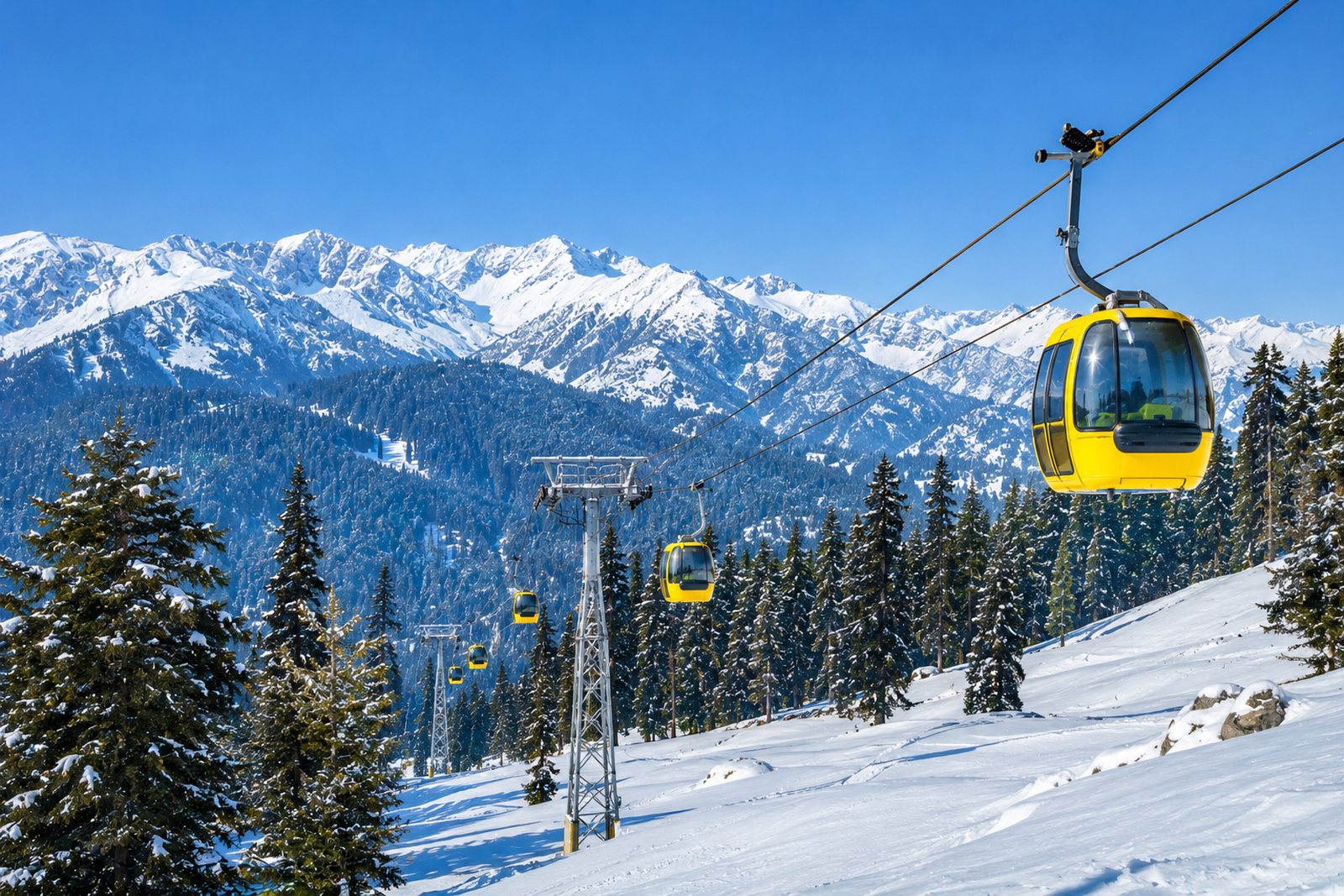
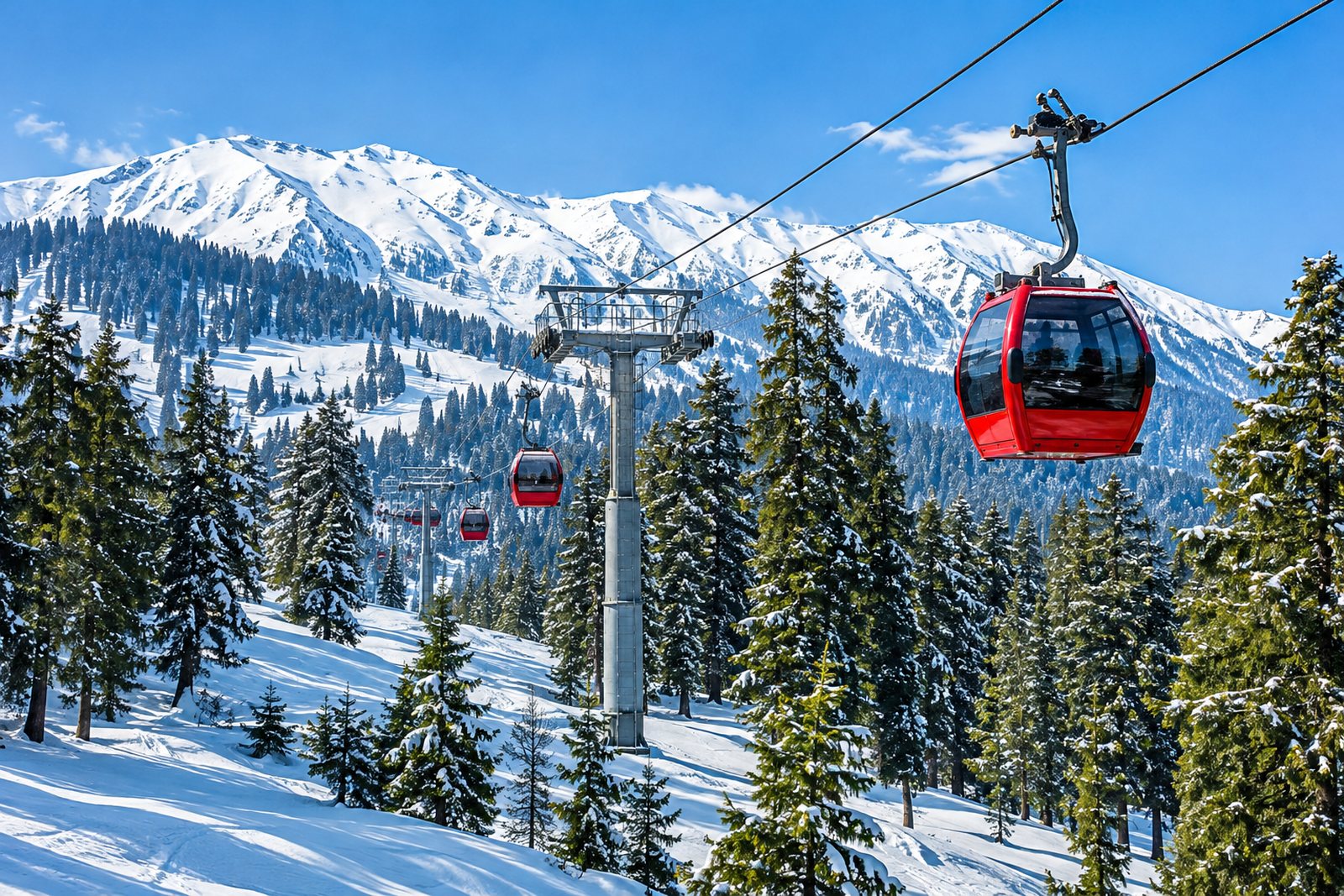
The real game changer was the Gulmarg Gondola. The first stage climbs to Kongdori. The second stage goes much higher, towards Apharwat, and is counted among the highest cable car rides in the world. On a clear day you look down on the meadow as if it were a cricket field.
In recent years Gulmarg has also hosted national winter sports events, which brings skiers from across the country. On those days the town is full of jackets, skis and very excited reporters.
Nearby places worth your time
- Khilanmarg: a smaller meadow above Gulmarg, reached by a walk or pony ride, with wide views when the weather is kind.
- Apharwat: the gondola's upper stage, snow for much of the year, very cold.
- Tangmarg and Drang: on the way up, with small streams and a frozen waterfall in deep winter.
- Srinagar: Dal Lake, the Mughal gardens and shikara rides, around two hours away.
Gulmarg works best as part of a full valley trip. BellaSafar's Kashmir Grand Tour keeps a night in Gulmarg, along with Srinagar, a Sonamarg excursion and two nights in Pahalgam, as per the package itinerary, so you are not rushing up and down the hill in one day.
How to visit Gulmarg today
- Getting there: Srinagar airport is the gateway. Gulmarg is around 2 hours by road via Tangmarg.
- Best time: December to March for snow and skiing. May to September for meadows, flowers and pleasant walks.
- Gondola: Tickets are booked through the official portal, and rides depend on weather. Check status on the day.
- Clothing: In winter you will need proper snow boots, gloves and layers. Hiring locally is common, but agree the rate before you take anything.
- Ponies and sledges: Fix the price and the route clearly before you start. Ask your driver or hotel for the going rate.
- Altitude: Most people are fine at this height, but walk slowly on the first day, especially seniors.
Our tip: If you stay the night, go out on the meadow just after sunrise. The day-trippers have not arrived yet, the snow is untouched, and the only sound is the crunch under your boots.
The meadow that keeps changing its job
Gulmarg has been a goddess's path, a sultan's garden, a sahib's golf course and a skier's playground. The meadow itself has not changed much. It just waits under the snow every winter and comes back with flowers every summer, no matter who is visiting.
Read our Kashmir tour plan or browse all Gulmarg holiday packages.
Frequently asked questions
What does the name Gulmarg mean?
Gulmarg means "meadow of flowers". Local tradition says it was earlier called Gaurimarg, after Goddess Gauri (Parvati), and a Kashmiri sultan gave it the name Gulmarg.
Who started skiing in Gulmarg?
Skiing began under the British in the early 20th century, when officers and their families set up a ski club here. After independence it grew into India's best-known ski destination.
Is Gulmarg golf course really old?
Yes. The British laid out a golf course on the meadow in the early 1900s, and it is often described as one of the highest green golf courses in the world.
When is the best time to visit Gulmarg?
December to March for snow and skiing, and roughly May to September for green meadows and flowers. Weather can change fast, so check road and gondola status locally.
Is Gulmarg a day trip from Srinagar?
Many people do it as a day trip, around 2 hours each way, but staying one night lets you see the meadow early morning and late evening when day crowds have left.