Guwahati Food Guide: Assamese Thali, Pitha and Khar
Khar first, tenga last, and pitha if Bihu is in the air. A local-style walk through Guwahati's food, from the Assamese thali to jolpan and tea.
"First the khar, then the rest." The lady at the next table in a small Guwahati eatery said it almost like a warning, watching a visitor from Pune reach straight for the fish curry. She was right. An Assamese meal has an order, and once you know it, the whole plate starts to make sense.
This Guwahati food guide walks you through that plate, then out onto the streets: breakfast jolpan, the sour curries, Bihu pitha, and the tea that ties everything together.
How to eat an Assamese thali in Guwahati
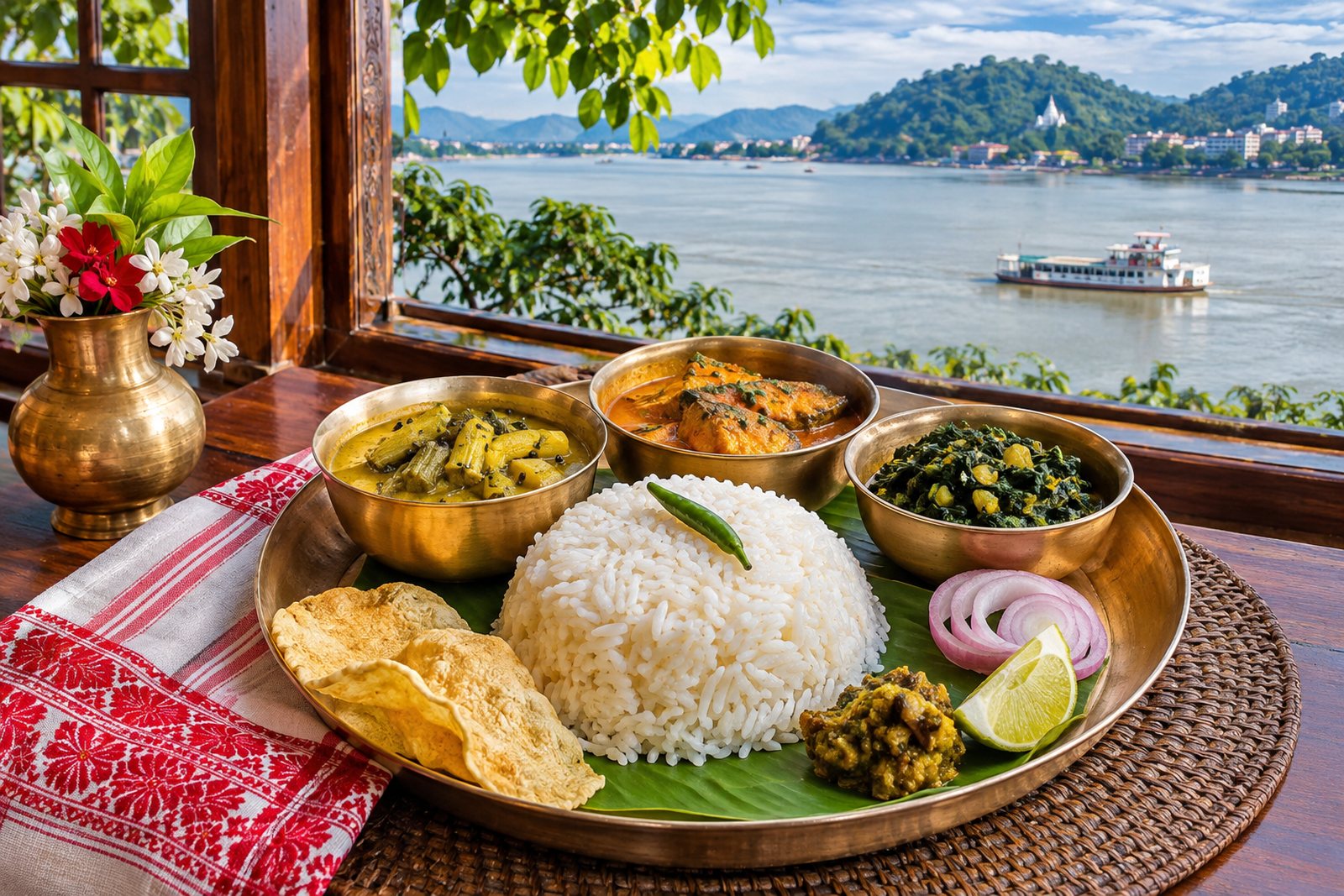
An Assamese thali usually arrives on a bell-metal plate with a mound of rice in the middle and small bowls around it. Do not rush it. The meal moves from mild and alkaline to sour, and the sequence is the point.
- Khar: The opener. Raw papaya, pulses or greens cooked with a liquid traditionally filtered through the ash of burnt banana peel. It tastes faintly soapy-smooth, earthy, a little odd for the first spoon. By the third spoon, you get it.
- Pitika: Mashed things, simply done. Aloo pitika with mustard oil, raw onion and green chilli is the comfort food of every Assamese home. You may also see brinjal or fish pitika.
- Bhaji and saag: Light stir-fried greens and vegetables, often with very little masala.
- Dal: Thin, mild, sometimes with a squeeze of lime.
- Meat or fish: Duck curry, pork with bamboo shoot, or chicken, depending on where you eat.
- Tenga: The closer. A sour fish curry that cleans the palate.
Notice how gentle the spices are. Assamese cooking leans on mustard oil, ginger, herbs and sourness rather than heavy masala.
Khar and tenga: the two tastes to try
If you eat only two things in Guwahati, make them khar and tenga.
Khar is the one that surprises people. Families in Assam have made it for generations, and older cooks will tell you it is good for digestion. Ask for it with papaya if you are unsure; it is the most beginner-friendly version.
Masor tenga is the opposite mood: bright, sour, fresh. The sourness can come from tomato, lemon, or ou tenga, the elephant apple. On a sticky summer afternoon, a bowl of tenga with rice is exactly what your body wants.
Did you know? The bhut jolokia, the ghost pepper that once held the title of the world's hottest chilli, comes from the North-East. In Assam it is used sparingly, sometimes just rubbed on the plate or added as a few drops of pickle. Go slow.
Jolpan: breakfast the Assamese way
Ask an Assamese friend about jolpan and watch their face soften. It is the traditional light meal, eaten in the morning or offered to guests.
The base is usually flattened rice (chira), puffed rice or a sticky rice preparation, soaked or mixed with curd or cream and jaggery. Simple, cooling, filling. During Bihu, jolpan is laid out with pitha and laru, little sweet balls of coconut or sesame.
You will not find jolpan on every menu; Assamese-cuisine restaurants and homestays are your best bet.
Pitha and Bihu: when Guwahati smells of sesame
Come in mid-January, around Magh Bihu (also called Bhogali Bihu), and the city smells of roasted sesame and jaggery. This is the harvest festival, and pitha are made at home by the dozen.
Look out for:
- Til pitha: Thin rice-flour rolls filled with sesame and jaggery.
- Narikol pitha: With a coconut filling.
- Ghila pitha: Fried, slightly chewy, sweet or salty.
Rongali Bihu in April is the spring festival, with more dancing and music, and pitha appear again. Exact festival dates follow the calendar, so check before you plan around them. Outside Bihu, sweet shops and some street stalls still sell pitha, though home-made ones during the festival are on another level.
Street snacks and evening bites
As evening sets in near the riverside and the markets, the snack trail begins. Momos are everywhere, a sign of how close the hill states are. You will see steamed and fried versions with fiery red chutney.
Other things worth trying:
- Ghugni or chana chaat from evening stalls
- Fish fry and pakoras by the riverside
- Pork or chicken skewers in food streets
Our tip: pair your snack walk with a Brahmaputra sunset. The river is wide enough here to make the city go quiet for a minute.
Assam tea, properly
You are in the state that gives India so much of its tea. Do not leave with only a hotel teabag memory.
Order a red tea (lal saah), without milk, to taste the malty strength of Assam leaves. Then try a milky, sweet cup at a roadside stall for contrast. Tea shops sell loose-leaf packs by grade; ask the shopkeeper to explain CTC versus orthodox leaf.
Vegetarian, Jain and family tips
Guwahati is easier for vegetarians than many people assume. Rice, dal, khar, pitika, saag, bhaji and most pitha are vegetarian. The catch: dried fish and fish stock sneak into some dishes, so ask clearly.
- Say "no fish, no dry fish, no meat" when ordering in small places.
- Jain travellers should ask about onion and garlic; many pitika use raw onion.
- For kids, pitha, jolpan with jaggery and plain rice-dal are safe starters.
- Seniors with sensitive stomachs usually do well with Assamese food because it is low on heavy spice.
Where food fits in a Guwahati trip
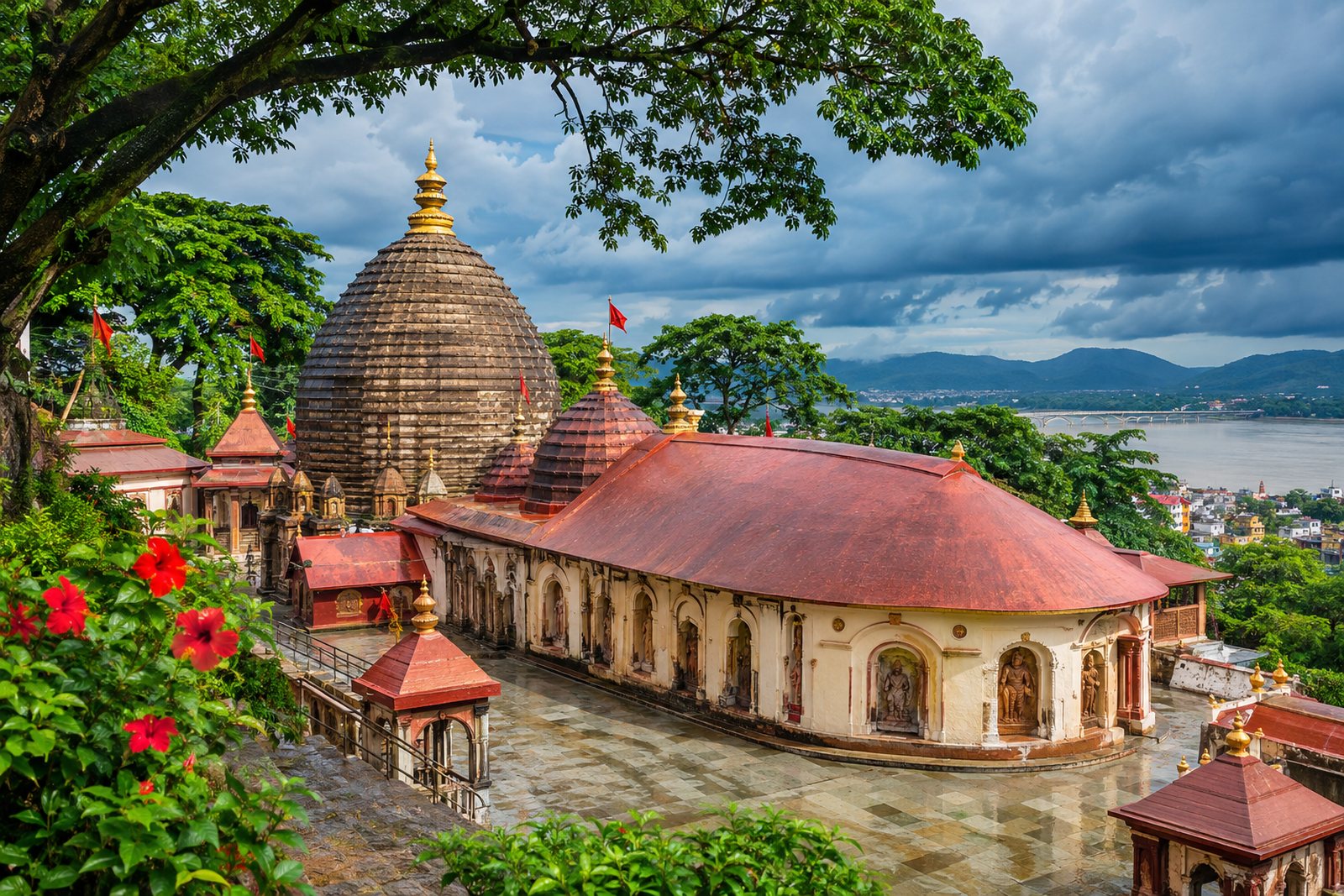
Most travellers come to Guwahati for Kamakhya darshan, Umananda island and a Brahmaputra cruise, and food happens around those plans. That is how it should be.
The Guwahati Explorer gives you three nights in the city, with a day out to Shillong and another to Hajo and the silk village of Sualkuchi, as per the package itinerary. That third day is a good chance to eat simply in smaller towns. If you are short on time, Guwahati & Shillong keeps you two nights in Guwahati with a Shillong day trip, and you can save your thali for the evening you return.
A plate that tells you about the place
Assamese food does not shout. It is rice and river fish, greens from the backyard, sour fruits and a little fire from a chilli you were warned about. Eat it slowly and in order, and Guwahati makes more sense than any guidebook could explain.
Planning the North-East? Read our Guwahati Shillong trip guide or browse all Guwahati holiday packages.
Frequently asked questions
What is khar in Assamese food?
Khar is a mildly alkaline dish made with a liquid traditionally filtered through the ash of dried banana peel. It is cooked with raw papaya, pulses or vegetables and is eaten at the start of an Assamese meal.
What is masor tenga?
Masor tenga is a light, sour fish curry, usually soured with tomato, lemon or elephant apple. It is eaten towards the end of the meal and is a summer favourite.
When can I eat pitha in Guwahati?
Pitha is made at home in large quantities around Magh or Bhogali Bihu in mid-January, and again during Rongali Bihu in April. Some sweet shops and food stalls keep them through the year.
Is Guwahati good for vegetarian travellers?
Yes. Rice, dal, khar, aloo pitika, saag, bhaji and many pithas are vegetarian. Ask whether a dish has fish or dried fish before ordering, as it is used often.
What food should I bring back from Guwahati?
Most travellers carry Assam tea, packed pitha, and sometimes bhut jolokia pickle or dried bamboo shoot. Check airline rules for liquids and pickles before packing.