Ambubachi Mela Legend: Why Kamakhya Temple Closes for Three Days
Every June, Kamakhya's doors shut for three days and sadhus fill Nilachal hill. The Ambubachi Mela legend, what history says, and how to plan a visit.
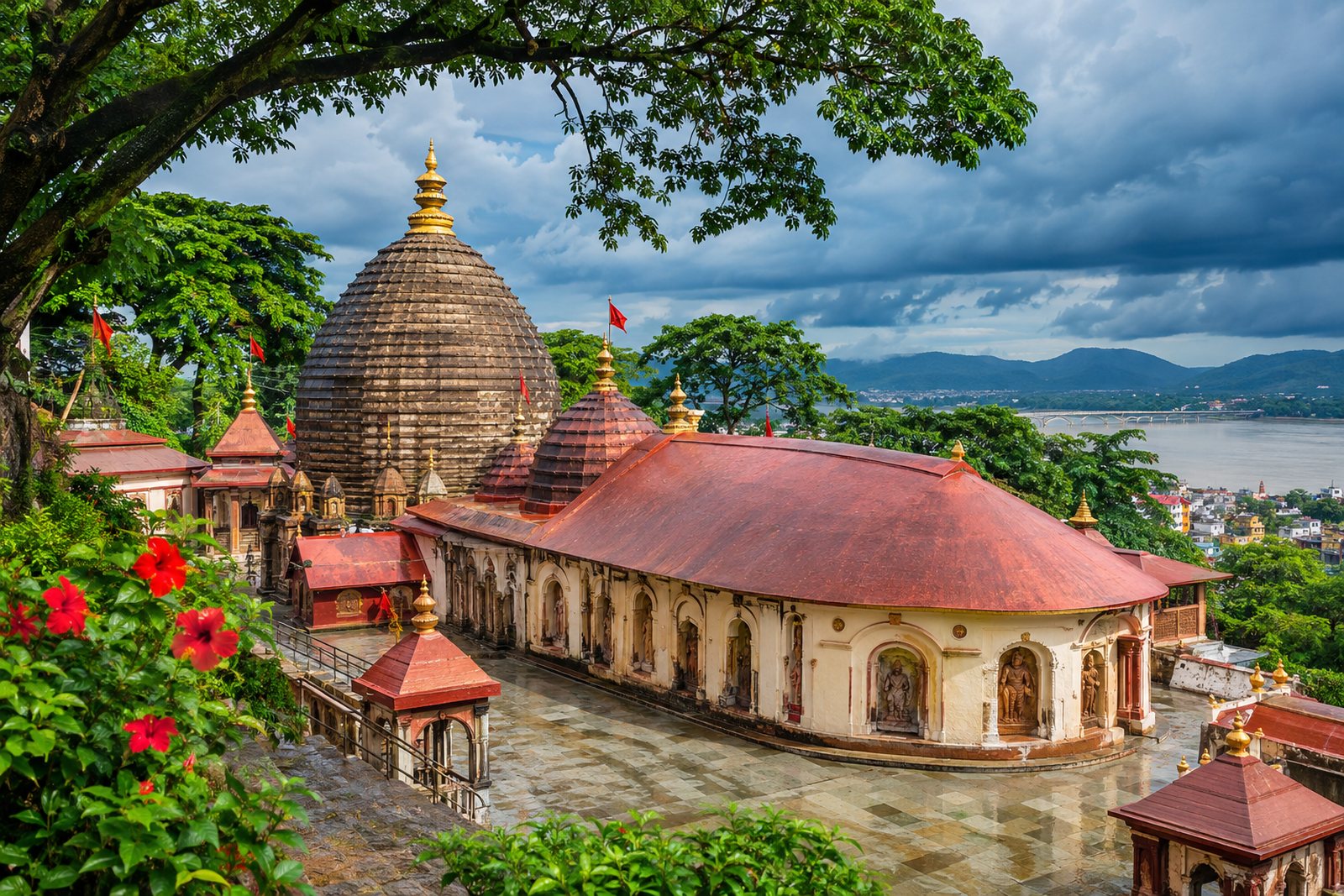
The rain has been falling on Nilachal hill since morning, warm and heavy, the way June rain falls in Guwahati. On the steps leading up to the temple, a sadhu with ash on his arms has made a little shelter from a plastic sheet. Next to him a family from Kolkata is unpacking puffed rice. Further up, the doors of the sanctum are shut, and nobody is trying to open them.
For three days, nobody will.
This is the Ambubachi Mela at Kamakhya, one of the most unusual festivals in India. A temple that closes on purpose, and lakhs of people who come anyway. Here is the legend behind it, what history tells us about Kamakhya, and how to plan your own visit.
The legend of Kamakhya and Sati
The story begins with grief.
Sati, daughter of the king Daksha, had married Shiva against her father's wishes. When Daksha held a great yagna and insulted Shiva in front of everyone, Sati could not bear it. She gave up her life in the sacrificial fire.
Shiva's sorrow was terrible. He lifted Sati's body onto his shoulder and began a dance of destruction that shook the worlds. To stop it, Vishnu released his Sudarshan chakra, which cut Sati's body into pieces. Wherever a piece fell on earth, a Shakti Peetha arose.
According to the Kalika Purana and Assamese tradition, the yoni of Sati fell here, on Nilachal hill above the Brahmaputra. That is why Kamakhya is worshipped not through an idol but through a natural cleft in the rock, deep inside a cave-like sanctum, kept wet by an underground spring. The goddess here is the creative power of the universe itself, the mother of all life.
Why the temple closes during Ambubachi
Now comes the part that surprises first-time visitors.
Every year in the month of Ashadha, when the monsoon is at its peak, devotees believe the goddess goes through her yearly menstrual cycle. During these days, the sanctum is closed. No darshan. No regular puja. On the fourth day, after ritual bathing and purification, the doors open again and the crowds pour in.
Folk belief says that even the Brahmaputra turns faintly red during these days. Some people explain this with iron-rich soil or the sindoor used in worship. Devotees simply see it as a sign. Either way, it is part of the legend, not something you should expect to photograph.
In many parts of rural Assam, the same idea extends to the land. Traditionally, people avoid ploughing, digging or sowing during Ambubachi, because Mother Earth is believed to be resting too. A festival of a goddess's body becomes a pause for the whole countryside.
Did you know? The most prized prasad at Ambubachi is a small piece of red cloth, called raktabastra, believed to have covered the sacred stone during the closed days. Devotees carry it home and keep it in their puja shelves for years.
What history says about Kamakhya
Kamakhya has been a major centre of Shakti and tantric worship for many centuries, and it is mentioned in medieval texts like the Kalika Purana. The temple has been damaged and rebuilt more than once. Historians generally credit the present structure to a 16th-century rebuilding under the Koch king Naranarayan, with later additions by the Ahom rulers, who were among its great patrons.
Look at the dome and you will see something you do not find in north or south Indian temples: a rounded, beehive-like shikhar sitting on a lower base, a local style often called the Nilachal type. Around the main temple are shrines of the ten Mahavidyas, the ten wisdom goddesses of tantric tradition.
Kamakhya is one of the temples where the old tradition of animal bali still continues. If that may upset children or anyone in your group, it helps to know in advance and plan the route around the temple complex accordingly.
Visiting Kamakhya during Ambubachi, and outside it
- When: Ambubachi falls in the second half of June. Exact dates vary each year, so check temple announcements.
- Crowds: lakhs of devotees, sadhus and tantrics come. Trains and hotels in Guwahati fill early, so book well ahead.
- Darshan: the sanctum is closed for three days. If darshan is your main aim, plan for the days after reopening, and expect very long queues.
- Weather: June is hot, humid and rainy. Carry an umbrella, light cotton clothes and footwear that grips wet stone.
- Calmer season: October to April is far easier for families and elders.
- Tickets: use only official temple counters for any special darshan. Ignore anyone offering shortcuts.
- Respect: dress modestly, ask before photographing sadhus, and follow temple volunteers.
Our tip: If you visit outside the mela, go early in the morning on a weekday. The queue moves faster, and the walk down the hill afterwards, with the Brahmaputra below, is a quiet reward.
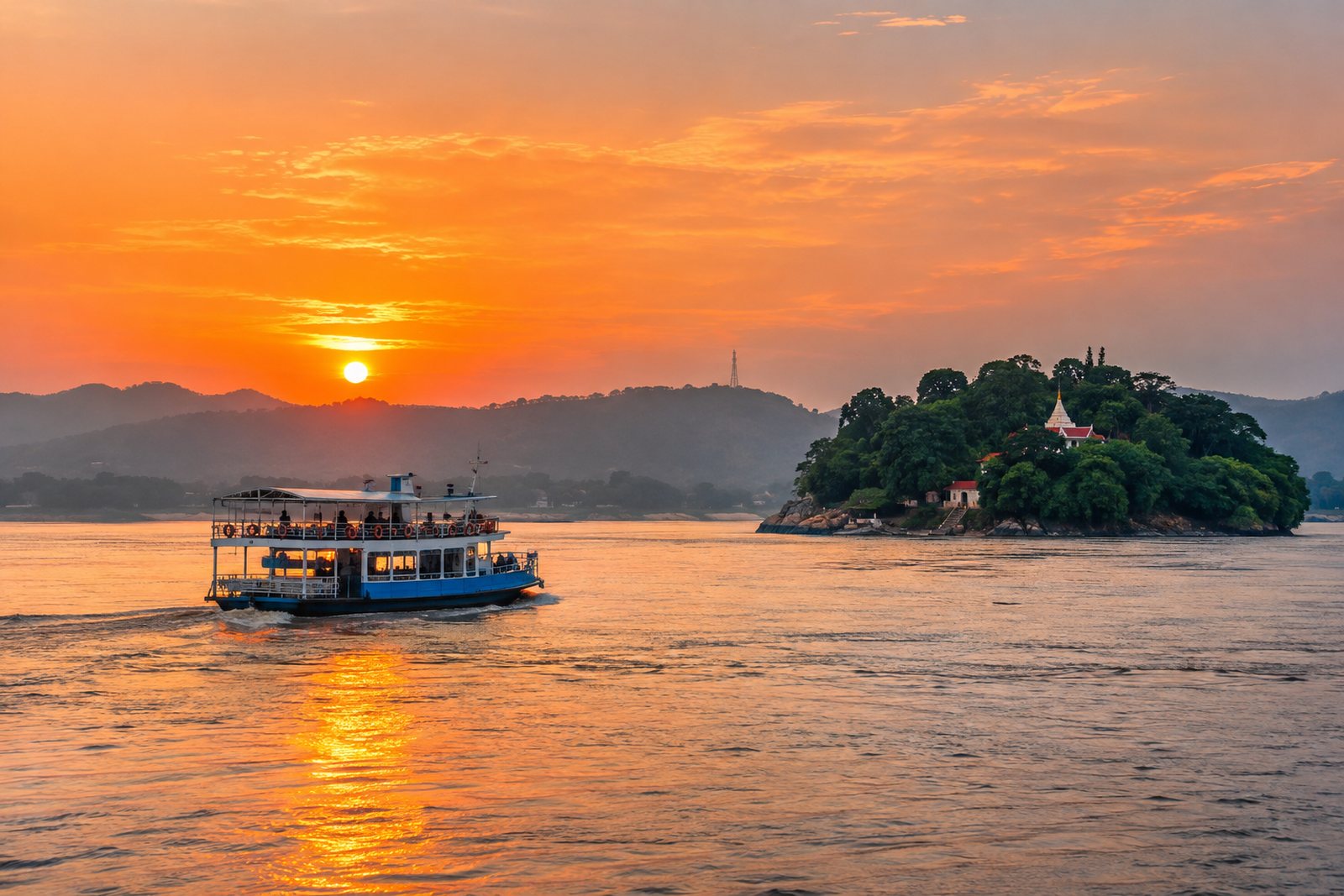
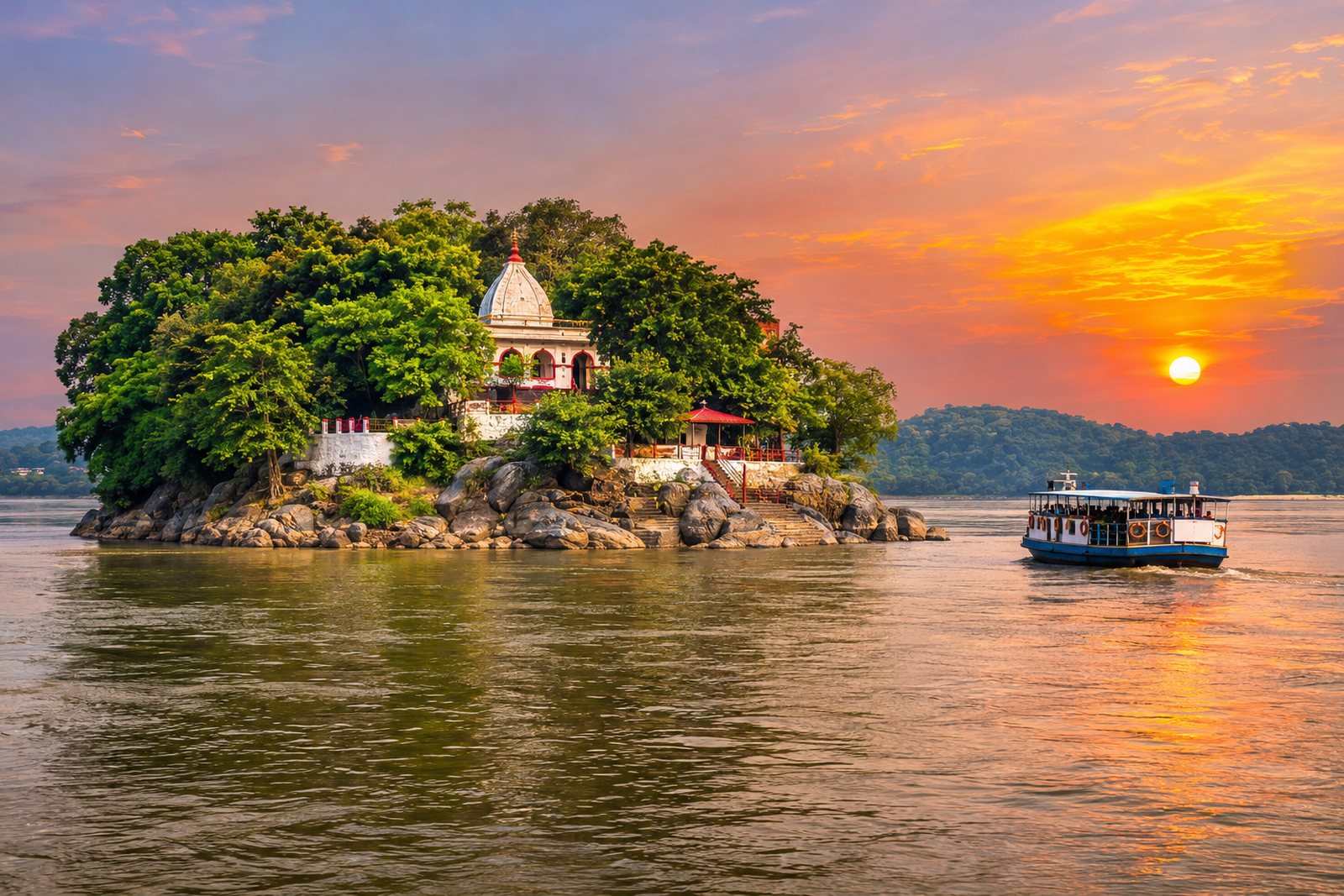
BellaSafar's Guwahati & Shillong gives you two nights in Guwahati with Kamakhya darshan, Umananda island, a Brahmaputra cruise and a Shillong day trip, as per the package itinerary. With an extra day, Guwahati Explorer adds Hajo, the Sualkuchi silk village and Madan Kamdev.
A festival that honours what others hide
In many homes, menstruation is still spoken of in whispers. At Kamakhya, it is the centre of a festival, a reason for lakhs to gather, a sign that the goddess is alive. Whatever you believe, that is worth sitting with for a while, on a wet step on Nilachal hill.
Planning your trip? Read our Guwahati Shillong trip plan or browse all Guwahati holiday packages.
Frequently asked questions
What is the Ambubachi Mela?
Ambubachi Mela is an annual festival at Kamakhya temple in Guwahati, held in June. Devotees believe the goddess goes through her yearly menstrual cycle, so the temple is closed for three days and reopens on the fourth.
Why is Kamakhya temple closed during Ambubachi?
Tradition says the goddess, and Mother Earth with her, is resting during her cycle. The sanctum is closed for three days, and darshan resumes after ritual purification on the fourth day.
When is Ambubachi Mela held?
It falls in the Assamese month of Ashadha, usually in the second half of June. Exact dates vary each year, so check the Kamakhya temple announcements before you plan.
What prasad is given at Ambubachi Mela?
Devotees receive a piece of red cloth, called raktabastra or angabastra, believed to be blessed by the goddess, along with other prasad. Collect it only from official temple distribution.
Is Ambubachi Mela a good time for a family trip?
It is a powerful spiritual experience but very crowded, humid and rainy. Families who want an easy darshan usually prefer October to April and avoid the three closed days.